
Imagine you’ve spent years building a reputation for a specific product. Suddenly, someone else can sell the exact same thing for half the price. In the pharmaceutical world, this is known as the "patent cliff," and it’s terrifying for brand-name drug manufacturers. But there’s a loophole-a strategic move that lets these companies stay in the game even after their patents expire. It’s called launching an authorized generic.
This isn’t just about slapping a new label on a bottle. It’s a calculated business maneuver designed to protect revenue, confuse competitors, and keep patients on the original formulation. If you’re trying to understand why big pharma companies do this, you need to look beyond simple cost-cutting. You’re looking at a complex mix of regulatory loopholes, market segmentation, and defensive warfare.
What Exactly Is an Authorized Generic?
To get the strategy right, we first need to define the product. An authorized generic is identical to its brand-name counterpart. We aren’t talking about a different manufacturer making a similar pill. We are talking about the brand-name manufacturer producing the exact same drug, with the exact same active and inactive ingredients, under the same New Drug Application (NDA). The only difference? The label. Sometimes the color changes. Often, the price drops significantly.
Think of it like this: A luxury car company decides to sell the exact same sedan, built on the same assembly line, but without the expensive logo on the hood. It’s the same machine, just marketed differently. According to FDA documentation, these products bypass the Abbreviated New Drug Application (ANDA) process required for traditional generics. This means they don’t need to prove bioequivalence because they are the equivalent-they are the original.
| Feature | Brand-Name Drug | Authorized Generic | Traditional Generic |
|---|---|---|---|
| Manufacturer | Original Brand Company | Original Brand Company | Different Competitor |
| Ingredients | Proprietary Formula | Identical to Brand | Same Active; Different Inactive Allowed |
| Regulatory Pathway | New Drug Application (NDA) | Uses Original NDA | Abbreviated New Drug Application (ANDA) |
| Price Point | Premium | Generic-Level (Lower) | Lowest |
| FDA Approval Needed? | Yes (Full Review) | No (Notification Only) | Yes (Bioequivalence Proof) |
The Defensive Shield: Protecting Revenue from Patent Cliffs
The primary reason brand companies launch authorized generics is defense. When a patent expires, the financial impact is brutal. Industry analysts note that blockbuster drugs often see an 80% to 90% drop in revenue within the first year of generic competition. That’s not a slow decline; it’s a cliff.
By launching an authorized generic, the brand manufacturer doesn’t have to choose between losing everything or keeping prices high and losing market share. They can capture the price-sensitive segment of the market themselves. Instead of a competitor taking 100% of the generic sales, the original company might retain 15% to 20% of that volume through their own authorized version. For a drug earning $1 billion annually, preserving even a fraction of that post-patent market translates to hundreds of millions of dollars saved.
This strategy was highlighted in a 2022 analysis by Health Affairs, which documented 854 authorized generic launches in the U.S. between 2010 and 2019. The data shows this isn’t a rare tactic; it’s a widespread industry standard for managing the end-of-life cycle for profitable medications.
Exploiting the Hatch-Waxman Act and Exclusivity Periods
Here is where the strategy gets tricky. The U.S. operates under the Hatch-Waxman Act, which grants the first generic applicant a 180-day period of exclusivity. During these six months, no other generic competitor can enter the market. This creates a temporary monopoly for that first generic maker, allowing them to charge higher prices than usual.
Brand manufacturers hate this windfall for their competitors. So, what do they do? They launch an authorized generic during those 180 days. Since the authorized generic is made by the brand itself, it doesn’t count against the exclusivity window in the same way. It directly competes with the sole generic entrant.
A 2011 report by the Federal Trade Commission (FTC) found that when innovator companies launched authorized generics during this exclusivity period, prices dropped significantly compared to markets without them. While this benefits consumers, it strategically limits the profit margin for the generic competitor. It sends a message: "If you challenge our patent, we will crush your margins." This can discourage aggressive generic litigation in the future.
Market Segmentation and Price Discrimination
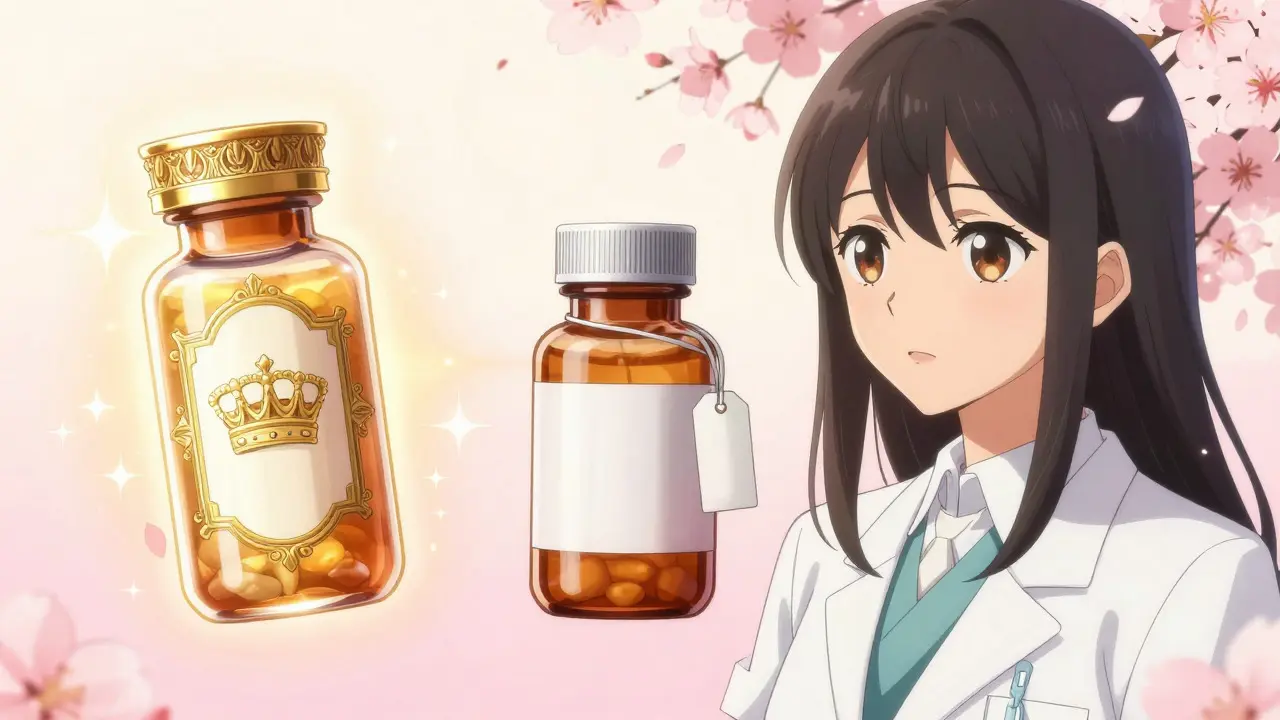
Economists call this "price discrimination," but in plain English, it means selling the same product at different prices to different groups. Not every patient or insurance payer reacts the same way to price hikes. Some insurers demand the cheapest option immediately. Others, particularly private payers or patients loyal to a brand, are willing to pay more for the perceived reliability of the original packaging.
Authorized generics allow pharmaceutical companies to serve both worlds simultaneously. They maintain the premium-priced brand for those who value the established identity while capturing the budget-conscious segment with the authorized generic. This dual-market approach prevents total market share erosion. According to consumer research cited by Roper Public Affairs & Media, over 80% of Americans want the option of authorized generics, likely because they trust the formulation hasn’t changed.
This is particularly crucial for drugs with narrow therapeutic indices-medications where small changes in absorption can affect clinical outcomes. Patients on these drugs often fear switching to a traditional generic with different inactive ingredients. An authorized generic offers continuity of care with the exact same formula, easing patient anxiety while lowering costs.
Speed to Market: Bypassing the ANDA Process
Time is money in pharmaceuticals. Traditional generics must go through the Abbreviated New Drug Application (ANDA) process, which involves proving bioequivalence to the FDA. This timeline can take 18 to 24 months. By the time a traditional generic is approved, the brand company might already be planning its exit.
Authorized generics bypass this entirely. Because they are produced under the original New Drug Application (NDA), they don’t need separate FDA approval for safety or efficacy. The brand company simply notifies the FDA. This regulatory shortcut allows manufacturers to respond rapidly to emerging generic threats. If a competitor files a patent challenge, the brand can quickly introduce an authorized generic to stabilize the market before the legal battle concludes.
This speed also preserves manufacturing infrastructure. Many brand companies have massive factories dedicated to specific drugs. If they lose all sales to generics, those facilities sit idle. By continuing to produce the drug as an authorized generic, they keep the lines running and workers employed, maximizing the return on their existing capital investment.
Real-World Examples of the Strategy in Action
You don’t have to look far to see this strategy at work. Consider Celebrex, a popular anti-inflammatory drug. Pfizer launched Greenstone Pharmaceuticals, a subsidiary specifically designed to handle authorized generics. When Celebrex faced generic competition, Greenstone released the authorized generic version, capturing significant market share that would have otherwise gone to rivals.
Another example is Colcrys, used to treat gout. Prasco Laboratories launched the authorized generic colchicine, maintaining control over the supply chain and pricing dynamics. Similarly, Watson/Activas has used this model with Concerta, releasing methylphenidate ER as an authorized generic. These cases demonstrate that major players view this not as a desperate measure, but as a core component of their lifecycle management strategy.
The Future: Authorized Biosimilars and Regulatory Scrutiny
The landscape is evolving. As biologic drugs-complex proteins used to treat conditions like cancer and autoimmune diseases-face patent expirations, the industry is eyeing "authorized biosimilars." However, the regulatory pathway here is murkier. Current FDA guidance doesn’t explicitly address how authorized versions of biologics should be handled, creating both uncertainty and opportunity.
Meanwhile, regulators are watching closely. The FTC continues to monitor authorized generics for potential anti-competitive effects. While the evidence suggests net consumer benefits through lower prices, commissioners remain concerned about whether brand companies are using these products to unfairly block competition. As the industry shifts toward value-based pricing and outcomes-based contracts, we can expect authorized generics to become even more sophisticated, potentially integrated into complex reimbursement models rather than just simple price cuts.
Are authorized generics safe?
Yes. Authorized generics contain the exact same active and inactive ingredients as the brand-name drug. They are manufactured by the same company under the same quality standards. The only differences are usually the label, packaging, and sometimes the pill color or imprint.
Why would a brand company lower its own prices?
It seems counterintuitive, but it’s about preservation. When a patent expires, revenue can drop by 80-90%. By offering an authorized generic, the company captures some of the market share that would otherwise go entirely to competitors. It’s better to make less per unit but keep the customer than to lose the customer completely.
Do doctors prefer prescribing authorized generics?
Many doctors do, especially for sensitive medications. Since the formulation is identical to the brand, physicians know exactly how it will perform in the patient’s body. This reduces the risk associated with switching to a traditional generic that might have different inactive ingredients.
How does this affect insurance coverage?
Insurance plans often favor the lowest-cost option. Since authorized generics are priced similarly to traditional generics, insurers may automatically switch patients to the authorized version to save money, unless the doctor specifies "Dispense as Written" for the brand name.
Is this practice common in countries outside the US?
While the concept exists globally, the specific regulatory framework that makes authorized generics so powerful in the U.S.-particularly regarding the Hatch-Waxman Act and exclusivity periods-is unique to American law. Other countries have different patent linkage systems, making this specific strategy less prevalent or effective elsewhere.