
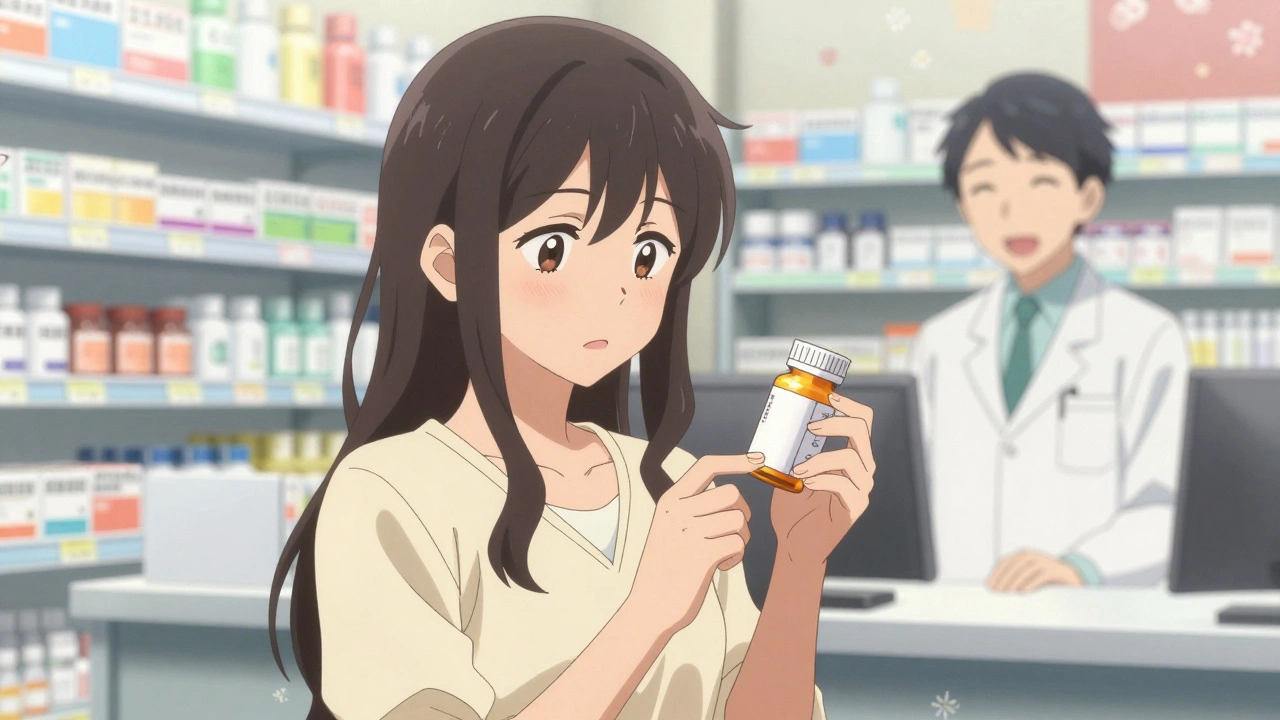
Every year, over a million people in the U.S. are harmed by medication errors - and many of these mistakes happen right at the pharmacy counter. You might think your doctor wrote the right prescription and the pharmacist filled it correctly, but that’s not always true. The truth is, prescription verification is your last line of defense. And if you don’t check it, no one else will.
Why Your Prescription Might Be Wrong
Pharmacies are busy. Pharmacists are stretched thin. Even with barcode scanners and electronic systems, mistakes still happen. A pill bottle can be labeled with the wrong name, the wrong dose, or even someone else’s medication. According to the Centers for Medicare & Medicaid Services, about 12.7% of pharmacy claims reviewed in 2022 had errors that could have been caught if the patient had checked their prescription. The most common errors? Wrong strength (like getting 10mg instead of 5mg), wrong quantity (100 pills instead of 30), and wrong patient (your name on someone else’s bottle). These aren’t rare. One pharmacist on Reddit with 12 years of experience said he sees these mistakes weekly. And here’s the scary part: most of them are easy to catch - if you take two minutes to look.The 7-Point Prescription Verification Checklist
You don’t need to be a doctor to spot a mistake. You just need to know what to look for. Here’s your simple, step-by-step checklist - use it every single time you pick up a new prescription.- Check your name and date of birth - Does the label say your full legal name? Not “John J.” or “J. Smith”? Does the date of birth match yours exactly? This is the first thing pharmacists are supposed to verify, but they sometimes skip it when rushing. If your name is even slightly off, speak up.
- Match the medication name and strength - Look at the label. Is it the exact drug your doctor prescribed? If you take Lisinopril 10mg, but the bottle says Lisinopril 20mg, that’s a problem. Generic names can be confusing - make sure it’s not a similar-sounding drug like Losartan. Ask: “Is this the same as what my doctor ordered?”
- Count your pills - Don’t just take the bottle and go. Open it and count. If your prescription says 30 tablets and you count 28, ask why. Twenty-two percent of quantity errors are caught only when patients count the pills right away.
- Verify the NDC number - The National Drug Code (NDC) is the 10- or 11-digit number on the label. It’s unique to each drug, strength, and manufacturer. You can type it into the FDA’s NDC Directory online (or ask the pharmacist to show you on their screen). If the NDC doesn’t match the drug you expect, something’s wrong.
- Read the instructions - Does it say “take one tablet by mouth daily”? Or “take one tablet twice daily”? If the instructions are unclear, smudged, or written in abbreviations like “QD” or “BID,” ask for clarification. Over 18% of medication errors come from confusing directions.
- Check the expiration date and packaging - Is the bottle sealed? Is the expiration date more than a year away? Expired medications are rare, but they happen. Datalogic’s 2023 report found 4.1% of recalled drugs still reach patients because no one checked the date.
- For controlled substances, confirm the address - If you’re picking up opioids, stimulants, or other controlled drugs, the pharmacist is legally required to verify your current address. If they don’t ask, ask them: “Did you confirm my address on file?” This step is mandatory under DEA rules and helps prevent fraud.
What to Say to the Pharmacist
You don’t have to be rude. You don’t have to argue. But you do have to speak up. Most pharmacists appreciate it - 78.4% say patient verification is essential to safety. Here’s what to say, word for word:- “Can you please show me the actual bottle before you label it?”
- “I’ve taken this before. Is this the same strength?”
- “Can you read the instructions out loud so I can make sure I understand?”
- “What should I do if I miss a dose?”
Common Problems - And How to Fix Them
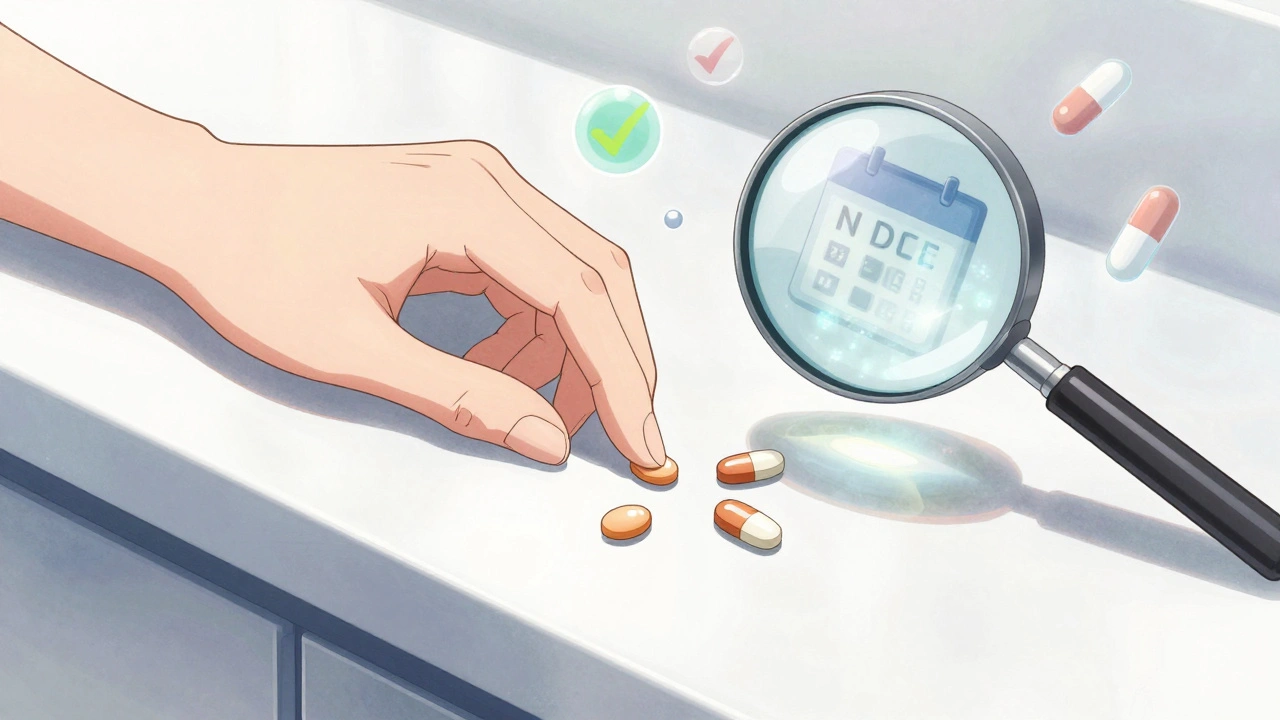
You might run into roadblocks. Here’s how to handle them:- Small print on the label? - Ask for a magnifying glass. Most pharmacies keep them behind the counter. Or use your phone’s camera to zoom in. You’d be surprised how clear it looks on screen.
- Generic vs. brand name confusion? - If you’re used to taking “Lipitor” but get “Atorvastatin,” that’s normal. But confirm the strength and manufacturer. Ask: “Is this the same as my old pill?”
- Pharmacist seems rushed or dismissive? - Say: “I’m sorry, but I’ve had a bad experience before. I just want to make sure this is right.” Most will slow down. If they don’t, go to another pharmacy. Your safety matters more than convenience.
What’s Changing in Pharmacies Right Now
Pharmacies are slowly improving. Since 2015, 92.6% of pharmacies now use barcode scanners to match prescriptions with pills - up from less than half. That’s cut identification errors by over 80%. Some chains like CVS and Walgreens now have “patient verification stations” - tablets where you can scan your prescription and see a picture of the pill before you take it. The FDA now requires every prescription bottle to have a product identifier with the NDC, serial number, lot number, and expiration date. This makes it easier to track fake or recalled drugs. By 2024, the American Society of Health-System Pharmacists plans to roll out a national patient verification checklist - so this isn’t just your idea. It’s becoming standard.
Why This Matters More Than You Think
This isn’t about being paranoid. It’s about control. You’re the only person who knows what your body feels like. If you get a pill that looks different, smells different, or doesn’t match what you’ve taken before - trust that feeling. Studies show that when patients verify their prescriptions, medication errors drop by up to 37.2%. That’s not a small number. It means fewer hospital visits, fewer bad reactions, fewer trips to the ER. And the cost savings? For every dollar spent on patient verification, the healthcare system saves $8.73 in avoided errors. You don’t need to be an expert. You just need to be careful. Take the time. Ask the questions. Look at the bottle. Count the pills. Say something if something feels off.What to Do If You Spot an Error
If you catch a mistake:- Don’t take the medication.
- Ask the pharmacist to double-check the original prescription from your doctor.
- Request a new, corrected bottle.
- If they refuse or brush you off, ask to speak to the manager.
- Report it to the pharmacy’s customer service and to your state’s Board of Pharmacy. Your report helps protect others.
Final Thought
Your prescription isn’t just a piece of paper. It’s a promise - that you’ll get the right drug, in the right dose, at the right time. But that promise only works if you hold the pharmacy to it. You’re not being difficult. You’re being smart. Next time you walk up to the counter, pause. Look. Ask. Count. Speak up. That two minutes might save your life.What should I do if I don’t recognize the pill in my bottle?
If the pill looks different - different color, shape, or imprint - don’t take it. Ask the pharmacist to confirm it matches the prescription. You can also use a pill identifier tool online (like the one on Drugs.com) by entering the imprint, color, and shape. If it still doesn’t match, request a new bottle and report the issue.
Can I verify my prescription online before going to the pharmacy?
Some pharmacies offer online portals where you can view your prescription details before pickup. But you can’t verify the actual medication until you have the physical bottle. Online info helps you prepare questions, but it doesn’t replace checking the pill itself. Always verify in person.
Are generic medications less safe than brand names?
No. Generic medications contain the same active ingredient, strength, and dosage form as brand names and are approved by the FDA. But the shape, color, or imprint may differ. That’s normal. What’s not normal is if the name or strength is wrong. Always check the label - even with generics.
What if I’m picking up a prescription for someone else?
If you’re picking up for a family member, make sure the label has their full name and date of birth - not yours. Double-check the medication name and dosage. If you’re unsure, call the pharmacy ahead of time to confirm the prescription details. Never assume the pharmacy will catch a mix-up.
Do mail-order pharmacies have more errors?
Yes. Studies show mail-order pharmacies have slightly higher error rates - about 1.7 errors per 100 prescriptions compared to 1.2 for in-person pharmacies. Without face-to-face interaction, it’s easier for labels to get mixed up. Always verify the bottle as soon as it arrives. Count the pills. Check the label. Don’t wait until you’ve taken a dose.
Can I ask the pharmacist to show me the original prescription?
Yes. You have the right to ask to see the original prescription or a copy of it. Pharmacists are required to keep it on file. Seeing the doctor’s handwriting or electronic order can help you confirm the dosage, frequency, and drug name. Don’t be shy - this is a standard safety step.
What if the pharmacy won’t correct my prescription?
If the pharmacy refuses to fix an error, ask to speak to the manager. If that doesn’t work, contact your doctor to confirm the prescription and request a new one. Then report the pharmacy to your state’s Board of Pharmacy. Your report helps prevent others from being harmed.
john damon
December 11, 2025 AT 14:22matthew dendle
December 13, 2025 AT 09:31Jimmy Kärnfeldt
December 15, 2025 AT 08:50Ariel Nichole
December 15, 2025 AT 21:36Monica Evan
December 16, 2025 AT 03:25Taylor Dressler
December 17, 2025 AT 02:24Aidan Stacey
December 18, 2025 AT 14:28Jean Claude de La Ronde
December 20, 2025 AT 05:59Jim Irish
December 20, 2025 AT 06:49Mia Kingsley
December 20, 2025 AT 08:22Katherine Liu-Bevan
December 21, 2025 AT 09:16Kristi Pope
December 22, 2025 AT 00:03Aman deep
December 22, 2025 AT 13:14Sylvia Frenzel
December 23, 2025 AT 01:59Paul Dixon
December 24, 2025 AT 06:16