

Waking up with an urgent need to use the bathroom is not a normal part of your morning routine. For millions of people living with ulcerative colitis, a chronic inflammatory bowel disease that causes sores in the lining of the large intestine and rectum, this urgency is a daily reality. It is more than just stomach pain or occasional discomfort. It is a condition where your immune system mistakenly attacks your own body, leading to continuous inflammation and ulcers in the colon. Understanding how this disease works and what you can do about it is the first step toward taking back control of your life.
What Is Ulcerative Colitis?
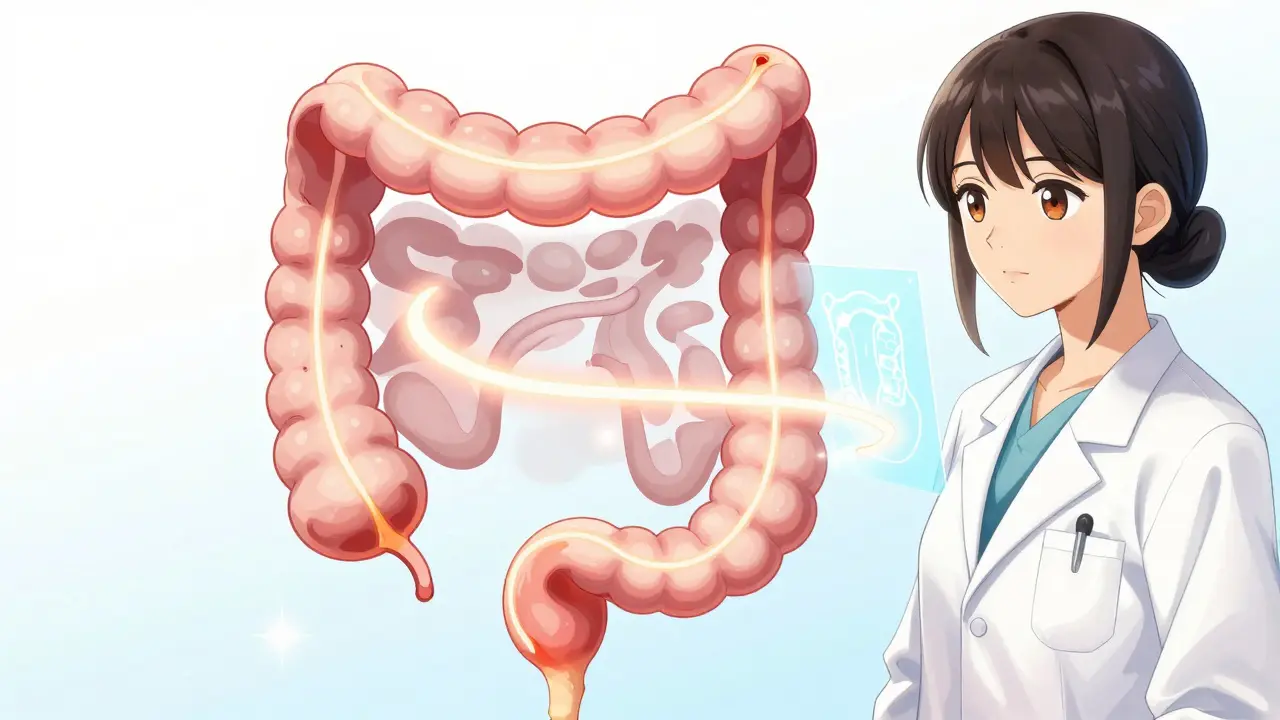
At its core, ulcerative colitis (UC) is a form of inflammatory bowel disease (IBD). Unlike irritable bowel syndrome (IBS), which is functional and does not cause tissue damage, UC is structural. It physically damages the inner lining of your digestive tract. The inflammation starts in the rectum and spreads continuously upward through the colon. There are no "skip areas" of healthy tissue in between inflamed patches, which distinguishes it from Crohn's disease. This continuous spread means that if you have UC, the damage follows a predictable path, making diagnosis and monitoring somewhat more straightforward for gastroenterologists.
The exact cause remains unknown, but medical experts agree it involves a combination of genetics, environment, and immune system dysfunction. If you have a family history of IBD or autoimmune conditions like psoriasis, your risk increases. Additionally, people of Caucasian or Ashkenazi Jewish descent tend to have higher rates of the disease. While stress and certain foods do not cause UC, they can absolutely trigger a flare-up, turning a quiet period into a chaotic one.
Types of Ulcerative Colitis and Symptoms
Not all cases of UC look the same. The severity and location of the inflammation determine your specific subtype and symptoms. Here is how the disease typically presents:
- Ulcerative Proctitis: This is the mildest form, affecting only the rectum (the last 6 inches of the large intestine). You might experience rectal bleeding and pain, but your stool consistency may remain normal. The cancer risk here is the lowest among all subtypes.
- Proctosigmoiditis: Inflammation extends from the rectum into the sigmoid colon (the lower left side). Symptoms include bloody diarrhea, cramping on the left side of the abdomen, and constipation.
- Left-Sided Colitis: The inflammation reaches from the rectum up to the splenic flexure (near the spleen). You will likely experience bloody diarrhea, abdominal pain, and weight loss.
- Pancolitis: Also known as universal colitis, this affects the entire colon. It is the most severe form, causing violent diarrhea, high fever, significant weight loss, and fatigue. Patients with pancolitis often have more than 10 bowel movements a day.
A hallmark symptom across all types is bloody diarrhea. However, you may also experience tenesmus-a distressing sensation that you need to pass stool even when your bowels are empty. Other common signs include abdominal cramps, urgency, and in severe cases, fever and dehydration. About 25-40% of patients also suffer from extraintestinal manifestations, meaning the inflammation affects other parts of the body, such as joints (arthritis), eyes (iritis), or skin (rashes).
Ulcerative Colitis vs. Crohn's Disease
It is easy to confuse UC with Crohn's disease since both fall under the IBD umbrella. However, knowing the difference matters for treatment. Here is a quick comparison:
| Feature | Ulcerative Colitis | Crohn's Disease |
|---|---|---|
| Location | Only the colon and rectum | Any part of the GI tract (mouth to anus) |
| Inflammation Pattern | Continuous, starting from the rectum | Patchy "skip lesions" with healthy areas in between |
| Depth of Damage | Inner lining only (mucosa) | Can penetrate all layers of the intestinal wall (transmural) |
| Surgery Outcome | Colectomy can cure the disease | Surgery manages complications but does not cure |
This distinction is crucial because treatments that work for one may not be as effective for the other. For instance, medications that target the gut lining specifically are often preferred for UC, while Crohn's may require broader immunosuppression due to deeper tissue involvement.
Diagnosis and Monitoring
You cannot diagnose UC based on symptoms alone. A gastroenterologist will typically start with blood tests to check for anemia (low red blood cell count) and markers of inflammation like C-reactive protein (CRP). Stool tests help rule out infections that mimic UC symptoms. However, the gold standard for diagnosis is a colonoscopy a procedure using a flexible tube with a camera to examine the entire colon.
During a colonoscopy, the doctor looks for the characteristic continuous inflammation and takes biopsies (small tissue samples) to confirm the diagnosis. Once diagnosed, regular monitoring is essential. Patients with long-standing UC, especially those with pancolitis, face a higher risk of colorectal cancer. Therefore, surveillance colonoscopies are scheduled every 1-3 years depending on disease extent and severity. This proactive approach allows doctors to detect dysplasia (pre-cancerous changes) early, significantly improving outcomes.
Remission Strategies: Medications and Lifestyle
The goal of UC treatment is not just to stop a flare-up but to achieve and maintain clinical remission-a state where symptoms disappear and the colon heals. Treatment follows a "step-up" approach, starting with milder medications and escalating if needed.
Medication Options
- Aminosalicylates (5-ASAs): Drugs like mesalamine are the first line of defense for mild to moderate UC. They reduce inflammation directly in the gut lining. They come in oral pills, enemas, or suppositories depending on where the inflammation is located.
- Corticosteroids: Used for short-term relief during moderate to severe flares. Prednisone is common, but it is not meant for long-term use due to serious side effects like bone thinning and diabetes.
- Immunomodulators: Medications like azathioprine slow down the immune system’s attack on the colon. They take weeks to months to work but are useful for maintaining remission.
- Biologics: These are targeted therapies (e.g., infliximab, adalimumab) that block specific proteins involved in inflammation. They are highly effective for moderate to severe UC and have revolutionized care for many patients.
Lifestyle and Dietary Adjustments
While food doesn’t cause UC, it can aggravate symptoms. During a flare, sticking to a low-residue diet (low fiber, easily digestible foods) can give your gut a rest. Avoid spicy foods, alcohol, caffeine, and dairy if you are lactose intolerant. Keep a food diary to identify your personal triggers.
Stress management is equally important. High stress levels can worsen inflammation. Techniques like mindfulness meditation, yoga, or cognitive behavioral therapy (CBT) have shown promise in helping patients manage stress-related flares. Regular, gentle exercise can also improve overall well-being and reduce fatigue.

When Surgery Becomes Necessary
Despite best efforts with medication, some patients develop complications or fail to respond to therapy. In these cases, surgery may be the only option. The most common procedure is a total proctocolectomy, where the entire colon and rectum are removed. To avoid having a permanent bag outside the body, surgeons often create an ileal pouch-anal anastomosis (IPAA), also known as a J-pouch. This internal reservoir allows you to pass stool naturally through the anus. While major surgery, it offers a potential cure for UC, as the diseased tissue is completely removed.
Living Well with Ulcerative Colitis
Living with UC requires patience and advocacy. Work closely with your healthcare team to adjust treatments as needed. Do not ignore symptoms; early intervention prevents severe flares. Join support groups to connect with others who understand the unique challenges of IBD. Remember, while UC is a lifelong condition, modern medicine offers powerful tools to keep it in check. Many people with UC lead full, active lives, travel, work, and enjoy their days without being defined by their diagnosis.
Is ulcerative colitis curable?
Medically, there is no drug-based cure for ulcerative colitis. However, surgical removal of the colon and rectum (colectomy) is considered a cure because the disease only affects these organs. Most patients manage the condition long-term with medications that induce and maintain remission.
What foods should I avoid with ulcerative colitis?
There is no universal "UC diet," but common triggers include high-fiber foods (during flares), dairy products, spicy foods, alcohol, and caffeine. Each person reacts differently, so keeping a food diary helps identify specific triggers that worsen your symptoms.
How does stress affect ulcerative colitis?
Stress does not cause ulcerative colitis, but it can trigger flare-ups or worsen existing symptoms. Managing stress through techniques like meditation, yoga, or therapy can help reduce the frequency and severity of flares.
What is the difference between UC and Crohn's disease?
Ulcerative colitis affects only the colon and rectum with continuous inflammation, while Crohn's disease can affect any part of the gastrointestinal tract with patchy inflammation. UC is limited to the inner lining, whereas Crohn's can penetrate deeper layers of the intestinal wall.
Can ulcerative colitis lead to colon cancer?
Yes, long-standing ulcerative colitis, especially involving the entire colon (pancolitis), increases the risk of colorectal cancer. Regular surveillance colonoscopies are recommended to detect pre-cancerous changes early and prevent progression.