
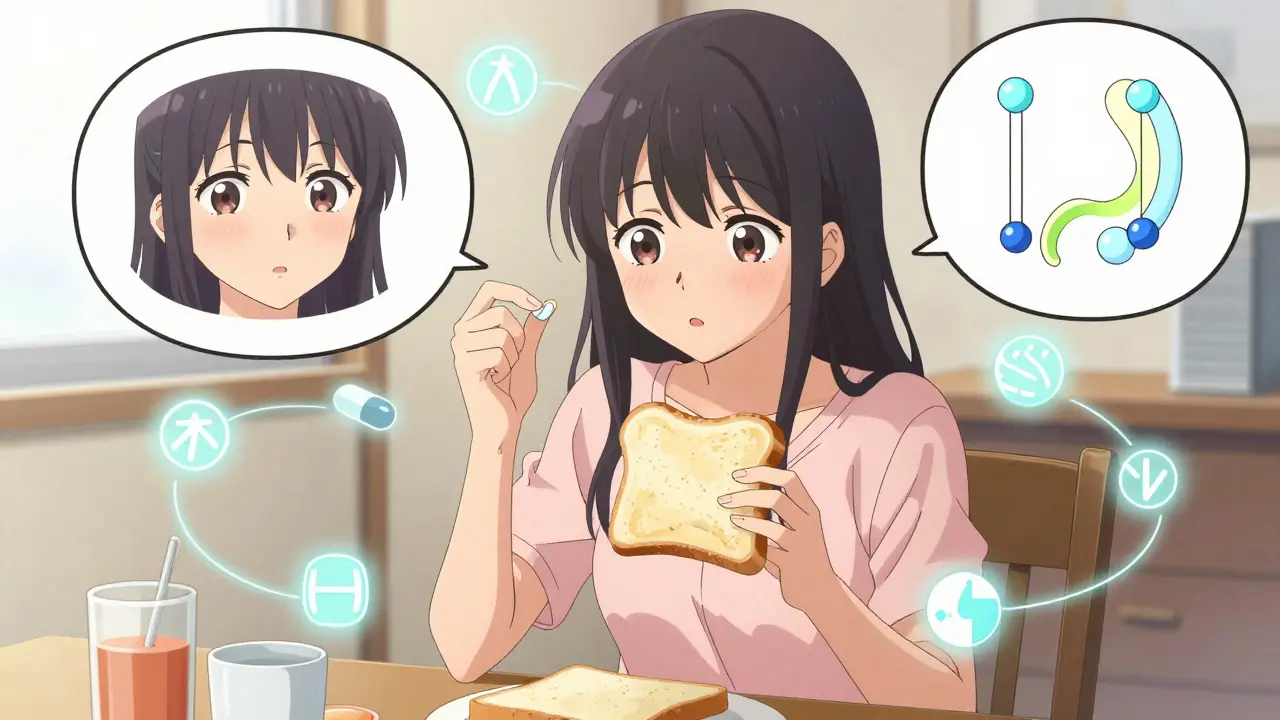
It’s not just about taking your pill - it’s about when you take it. Many people assume that as long as they swallow their medication, it will work the same way. But what you eat - or don’t eat - around the time you take your pill can make the difference between it working perfectly or not working at all. For some drugs, food can cut absorption by half. For others, skipping food can land you in the hospital. This isn’t guesswork. It’s science. And it’s more common than you think.
Why Food Changes How Your Medicine Works
Your stomach isn’t just a chute for pills. It’s a chemical factory. When you eat, your body shifts gears: acid levels rise and fall, bile flows, digestion slows or speeds up. All of that affects how drugs get into your bloodstream.
Take levothyroxine, the most common thyroid medication. Food - even a small snack - can drop its absorption by 20% to 50%. That means if you take it with breakfast, your body might be getting only half the dose you think you are. Over time, that can throw off your TSH levels, leaving you tired, gaining weight, or feeling depressed - even if you’re "taking your meds."
On the flip side, ibuprofen or naproxen can burn holes in your stomach lining if taken on an empty stomach. Food acts like a buffer, reducing the risk of ulcers by up to 70%. That’s not a suggestion - it’s a safety rule backed by data from over 10,000 hospitalizations a year linked to NSAID misuse.
The science behind this comes down to three main things:
- Stomach acid: Some drugs, like penicillin V, break down in high pH. Food raises pH, making them less effective.
- Gastric emptying: A fatty meal can delay stomach emptying by over 90 minutes. That delays absorption for time-sensitive drugs like levothyroxine.
- Binding agents: Calcium in milk, iron in cereal, or even antacids can grab onto antibiotics like tetracycline and pull them out of your system before they even get absorbed.
Medications That Must Be Taken on an Empty Stomach
These aren’t optional. Skipping this rule can make your treatment fail - or worse.
- Levothyroxine (Synthroid): Must be taken 1 hour before breakfast. Even coffee with cream can interfere. Studies show patients who take it with food need 30% higher doses to reach the same hormone levels. That’s why some people take it at 4 a.m. and wait 90 minutes.
- Alendronate (Fosamax): This osteoporosis drug needs an empty stomach and a full glass of water. If taken with food, absorption drops by 60%. That means your bones don’t get the protection they need.
- Sucralfate (Carafate): Used for ulcers. It only works if it coats the stomach lining before food arrives. Take it 1 hour before meals - or it’s useless.
- Ampicillin: A common antibiotic. Food cuts peak blood levels by 35% and total exposure by 28%. That’s enough to let bacteria survive and grow resistant.
- Zafirlukast (Accolate): For asthma. Food slashes absorption by 40%. Skipping the empty-stomach rule means more flare-ups.
- Omeprazole (Prilosec) and Esomeprazole (Nexium): These proton pump inhibitors need to be taken 30-60 minutes before food. Why? Because food triggers acid production. If you take them after eating, they’re too late to block it.
The FDA recommends the "2-1-2 Rule" for these: take them 2 hours after eating, 1 hour before eating, or 2 hours after eating. No exceptions.
Medications That Need Food to Work Right
Some pills literally can’t do their job without food. Taking them alone doesn’t just reduce effectiveness - it increases danger.
- NSAIDs (ibuprofen, naproxen, aspirin): Food cuts stomach irritation by 50-70%. For high-dose aspirin, it drops ulcer risk from 25% to 8%. If you take these on an empty stomach, you’re gambling with internal bleeding.
- Duloxetine (Cymbalta): This antidepressant causes nausea in 40% of users on an empty stomach. With food, that drops to 10%. A simple change - eat first - can make tolerating treatment possible.
- Atorvastatin (Lipitor) and Simvastatin (Zocor): These statins absorb better with food. But here’s the catch: grapefruit juice. It can spike statin levels by 300-500%, raising your risk of muscle damage by 15 times. Avoid it completely.
- Griseofulvin: An old antifungal. Food boosts absorption by 50% because bile from meals helps dissolve it. No food? No cure.
- Mesalamine: Used for Crohn’s and ulcerative colitis. One patient on HealthUnlocked said taking it with food cut daily nausea from 100% to once a month. That’s life-changing.
The Hidden Cost of Getting It Wrong
It’s not just about feeling sick. Getting food timing wrong costs billions.
According to the American Pharmacists Association, 30% of medication non-adherence comes from confusion over food rules. That adds up to $290 billion a year in avoidable healthcare costs. Think about that: nearly a third of people not taking their meds properly - not because they forget, but because they didn’t know how to take them.
And it’s not just patients. A 2021 JAMA study found pharmacists gave food-timing advice 92% of the time - but doctors only did it 45% of the time. That means patients are often left guessing.
On Reddit, users share horror stories: thyroid patients with wild TSH swings, people with GERD who thought their PPIs weren’t working - until they realized they took them after pizza. Drugs.com reviews show 37% of complaints about PPIs relate to timing errors. And in a 2022 survey, 65% of patients admitted they never checked food instructions. 41% of them saw reduced effectiveness. 29% had worse side effects.
How to Get It Right
You don’t need to be a pharmacist to get this right. Here’s how to make it simple:
- Read the label. Look for "take on empty stomach" or "take with food." If it’s not clear, ask your pharmacist.
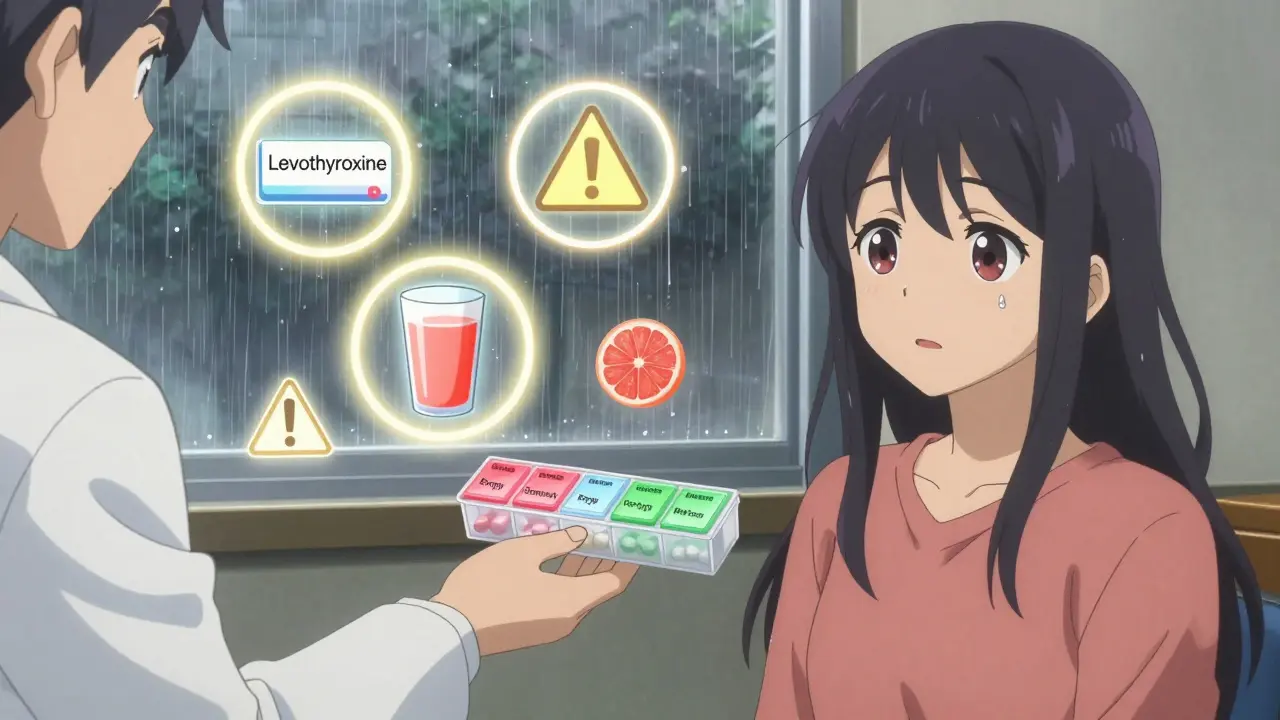
- Use color-coded stickers. CVS and Walgreens now put red stickers on bottles for empty-stomach meds, green for with-food. That visual cue cuts errors by 37%.
- Use a pill organizer with labels. Separate your meds into "before food" and "with food" compartments. A 2022 study showed this improves adherence by 35%.
- Set phone alerts. Apps like Medisafe and GoodRx now send reminders: "Take Synthroid - wait 60 minutes before eating." Users cut timing errors by 28%.
- Stagger your doses. If you take an empty-stomach med at 7 a.m. and a with-food med at 8 a.m., you can still eat breakfast at 8:30. You’re not sacrificing routine - you’re optimizing it.
And if you’re on multiple meds? Ask your pharmacist for a personalized timing chart. Many pharmacies now offer this for free.
What’s Changing in the Future
Good news: science is catching up. New formulations are being designed to ignore food entirely.
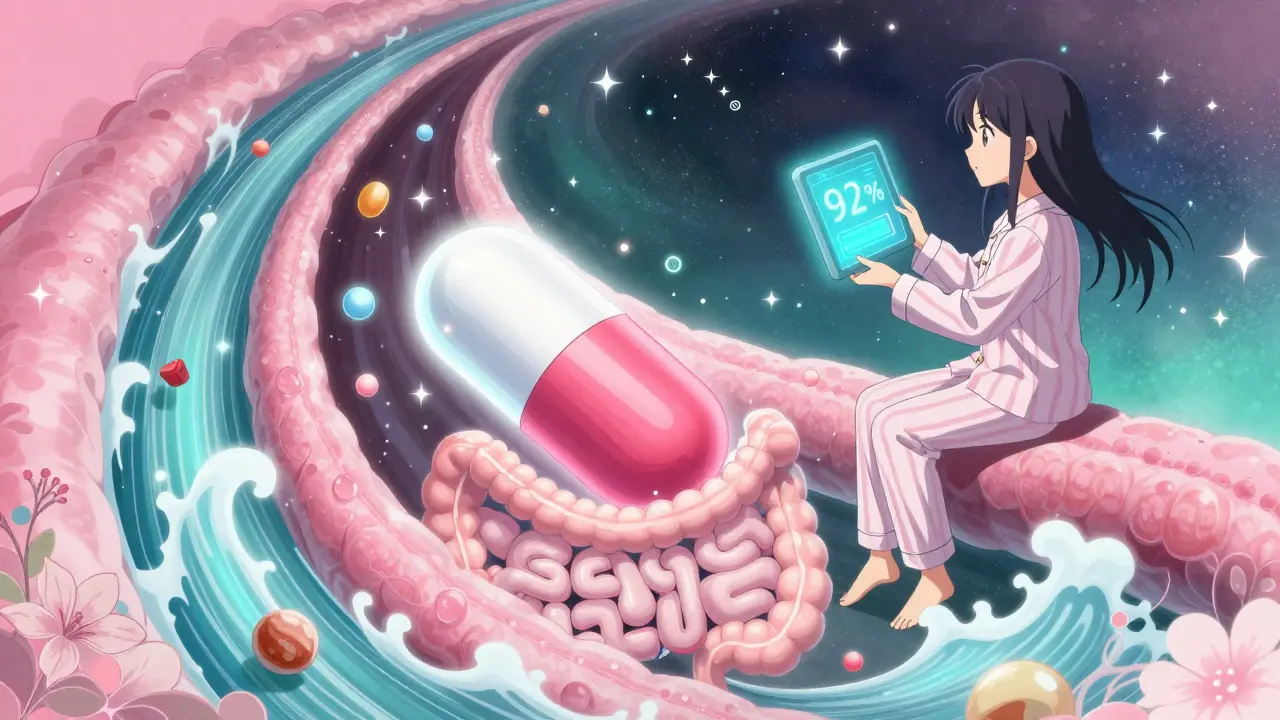
Johnson & Johnson’s Xarelto Advanced, approved in 2023, uses a pH-sensitive coating that works whether you eat or not. Its variability is just 8% - compared to 35% in the old version. The University of Michigan is testing nanoparticle levothyroxine that bypasses stomach acid altogether. Early results show 92% consistent absorption - fed or fasted.
But here’s the truth: 75% of medications today still need food timing rules. Even if new drugs come out, you’ll still be taking older ones. Understanding the basics isn’t outdated - it’s essential.
Dr. Richard Hoppu from the University of Helsinki predicts personalized food-timing algorithms will be standard within five years. Imagine an app that knows your gastric emptying rate and tells you exactly when to take your pill. But until then? The old rules still work - if you follow them.
When in Doubt, Ask
Pharmacists are trained for this. They see hundreds of patients a week. They know which pills are sensitive. They’ve read the studies. Don’t be shy. Walk in, say: "I’m not sure if I should take this with food or not." They’ll check the label, pull up the manufacturer’s guidelines, and give you a clear answer.
And if you’re still unsure? Take it on an empty stomach. It’s usually safer than guessing. Most drugs are designed to be taken without food if the instructions are unclear. Food is the variable - not the solution.
Medication isn’t magic. It’s chemistry. And chemistry doesn’t care if you’re busy, tired, or forgot. It just reacts. Get the timing right - and your medicine will do its job.
Can I take my medication with water if it says "empty stomach"?
Yes. Water is fine. The rule "empty stomach" means no food - not no liquid. A full glass of water is actually recommended for many medications to help them pass through your stomach without sticking or irritating the lining. Just avoid juice, milk, coffee, or anything with calories or minerals.
What if I accidentally take a medication with food?
Don’t panic. Skip the next dose if it’s close to mealtime. For example, if you took levothyroxine with breakfast, wait until the next morning to take your next dose. Don’t double up. For drugs like NSAIDs, if you took them without food and feel fine, you’re likely okay - but take the next dose with food. If you feel stomach pain, nausea, or dizziness, call your pharmacist. They can tell you if it’s a concern.
Do I need to wait 2 hours after eating to take a medication on an empty stomach?
It depends. The FDA defines "empty stomach" as 1 hour before or 2 hours after a meal. But the key is gastric emptying time. A light snack (like toast) empties faster than a greasy burger. If you’re unsure, wait 2 hours after a full meal. For most people, waiting 1 hour after a light snack is enough. When in doubt, follow the 2-hour rule - it’s the safest bet.
Why does grapefruit juice affect statins?
Grapefruit juice blocks an enzyme in your liver (CYP3A4) that normally breaks down statins like simvastatin and atorvastatin. Without that enzyme, the drug builds up in your blood - sometimes to dangerous levels. A single glass can raise levels by 300-500%. That raises your risk of rhabdomyolysis - a serious muscle breakdown that can damage kidneys. Avoid grapefruit juice completely if you’re on these statins. Other citrus fruits like oranges are safe.
Can I take my morning meds with my coffee?
Only if your pharmacist says yes. Coffee itself isn’t the problem - it’s the cream, sugar, or milk. Even a splash of dairy can interfere with levothyroxine, alendronate, or certain antibiotics. Black coffee alone may be okay for some drugs, but it’s not worth the risk. Wait at least 30-60 minutes after taking your pill before drinking coffee. Better yet: take your meds before you brew your coffee.
Sandy Wells
March 22, 2026 AT 20:02My doctor never mentioned food. So I assume it's fine.
Bryan Woody
March 23, 2026 AT 18:29Chris Dwyer
March 23, 2026 AT 18:38Timothy Olcott
March 24, 2026 AT 12:57They want you confused so you keep buying pills!
My cousin took his meds with orange juice and his TSH dropped 50% in 3 weeks!!
They don't want you to know this!!
🚩🚩🚩
Jackie Tucker
March 25, 2026 AT 03:40Thomas Jensen
March 25, 2026 AT 15:34Solomon Kindie
March 26, 2026 AT 17:12Who wrote this a 5th grade textbook?
Also why are we assuming everyone has access to pharmacists who give out color stickers
What about people on Medicaid who get meds from a 7-eleven in rural Alabama
And why is everyone so obsessed with TSH levels
Is that the new religion now
Thyroid = salvation
Natali Shevchenko
March 27, 2026 AT 13:48Johny Prayogi
March 28, 2026 AT 20:21Nicole James
March 29, 2026 AT 00:52Nishan Basnet
March 30, 2026 AT 12:43Allison Priole
March 30, 2026 AT 22:15Casey Tenney
March 31, 2026 AT 14:46Desiree LaPointe
April 1, 2026 AT 15:03