

For millions of people around the world, statin medications are a daily part of life. They’re prescribed to lower cholesterol, prevent heart attacks, and reduce the risk of stroke. But for some, the promise of a healthier heart comes with an unexpected price: persistent muscle pain. If you’ve been told to take a statin and you’re wondering whether the benefits are worth the discomfort, you’re not alone. The truth is, statins work - really well - but they’re not without risks. Understanding both sides helps you make a smarter choice with your doctor.
How Statins Actually Lower Cholesterol
Statins don’t just reduce cholesterol numbers on a lab report. They target the root of the problem: your liver. Your body makes about 75% of its cholesterol naturally, mostly in the liver. Statins block an enzyme called HMG-CoA reductase, which is the main switch your liver uses to produce cholesterol. When that switch is turned down, your liver starts pulling more LDL (bad) cholesterol out of your bloodstream to use for its own needs.
This isn’t just theory. In real patients, statins typically lower LDL cholesterol by about 70 mg/dL (1.8 mmol/L). That’s a big drop. High-intensity statins like atorvastatin 40-80 mg or rosuvastatin 20-40 mg can cut LDL by more than 50%. Even moderate doses like simvastatin 20-40 mg bring down LDL by 35-45%. These numbers aren’t small - they translate directly into fewer heart attacks and strokes.
Studies like the Scandinavian Simvastatin Survival Study and the Heart Protection Study showed that for every 1 mmol/L drop in LDL, the risk of a major heart event falls by about 22%. Over time, that adds up. People on statins see about a 60% reduction in heart attacks and a 17% lower chance of stroke. For someone with existing heart disease or diabetes, that’s life-changing.
Statins also do more than just lower cholesterol. They reduce inflammation in blood vessels, stabilize fatty plaques so they’re less likely to rupture, and improve how well the inner lining of arteries functions. These effects happen even before LDL drops significantly - which is why some people feel better on statins before their numbers change.
The Most Common Complaint: Muscle Pain
While statins protect your heart, they can also hurt your muscles. Muscle pain, weakness, or cramps are the most common reason people stop taking them. About 5% to 10% of users report muscle discomfort. In rare cases, it can go further - to rhabdomyolysis, a serious condition where muscle tissue breaks down and can damage the kidneys. But that happens in fewer than 1 in 10,000 people per year.
The pain isn’t always the same. Some people feel a dull ache in their thighs or shoulders. Others get sharp cramps at night. A lot of patients describe it as feeling like they’ve been working out hard - even when they haven’t moved much. It often shows up after a few weeks or months, not right away.
Not everyone who feels muscle pain is actually having a statin reaction. Sometimes, it’s just aging, lack of movement, or another condition. But because the timing lines up, many assume it’s the medication. That’s why doctors don’t automatically blame statins - they check creatine kinase (CK) levels in the blood. If CK is normal and the pain is mild, it’s likely not dangerous. But if CK is high, or if the pain is severe, that’s a red flag.
What’s frustrating is that muscle pain often goes underreported. Many people don’t tell their doctor because they think it’s normal or they’re afraid of being told to stop the drug. But if you’re suffering, you need to speak up. There are options.
What to Do If You Have Muscle Pain
Stopping statins cold turkey is not the answer. The heart protection they offer fades fast. Studies show nearly half of people stop taking them within a year - and their risk of heart attack rises right along with it.
Instead, talk to your doctor about these steps:
- Try a different statin. Not all statins affect muscles the same way. Simvastatin is more likely to cause muscle issues than pravastatin or fluvastatin. Switching from simvastatin to pravastatin often helps - even if the LDL reduction is slightly less, the muscle pain may disappear.
- Lower the dose. Sometimes, half a pill is enough. A 10 mg dose of atorvastatin might still cut LDL by 35-40%, which is enough for many people. Less drug = less chance of side effects.
- Take it every other day. For some, taking the statin every other day works just as well as daily. This gives muscles time to recover between doses.
- Check for drug interactions. Grapefruit juice, certain antibiotics (like clarithromycin), and even some antifungal meds can boost statin levels in your blood and make muscle pain worse. Review all your medications with your doctor.
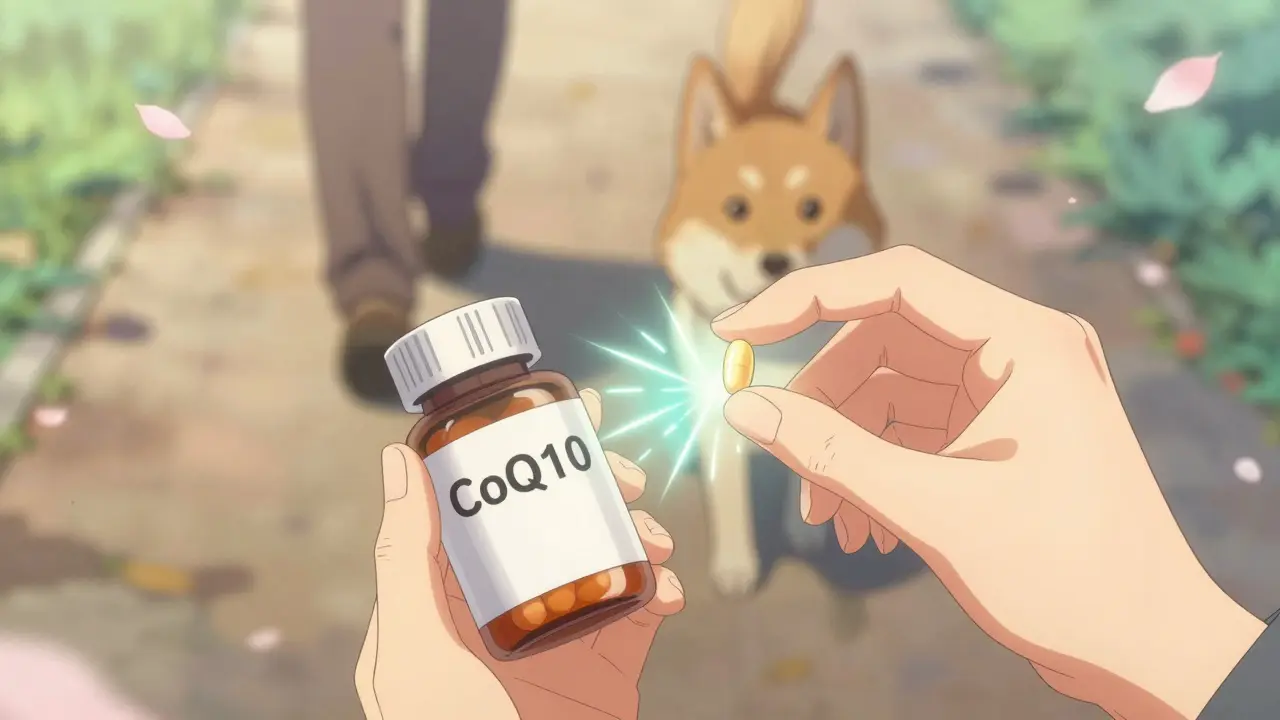
- Try coenzyme Q10. Statins lower not just cholesterol, but also coenzyme Q10 - a compound your muscles need for energy. Some studies show supplementing with 100-200 mg daily helps reduce muscle pain. It’s not a cure-all, but it’s low-risk and worth a try.
One patient in Durban, South Africa, switched from rosuvastatin to pravastatin after six months of leg cramps that made walking painful. Within three weeks, the cramps vanished. His LDL only rose by 8 mg/dL - a small trade-off for being able to walk his dog again.
Who Benefits Most - And Who Should Be Cautious
Statins aren’t for everyone. They’re most valuable for people who already have heart disease, diabetes, or a high risk of heart attack based on factors like age, blood pressure, smoking, or family history. For them, the benefits are clear: fewer hospital visits, fewer stents, fewer deaths.
But for someone with low risk - say, a 50-year-old with slightly high cholesterol but no other issues - the math changes. The absolute benefit is smaller. The chance of preventing a heart attack might be 1 in 100 over five years. In that case, muscle pain becomes a bigger deal. You have to ask: Is this worth it for me?
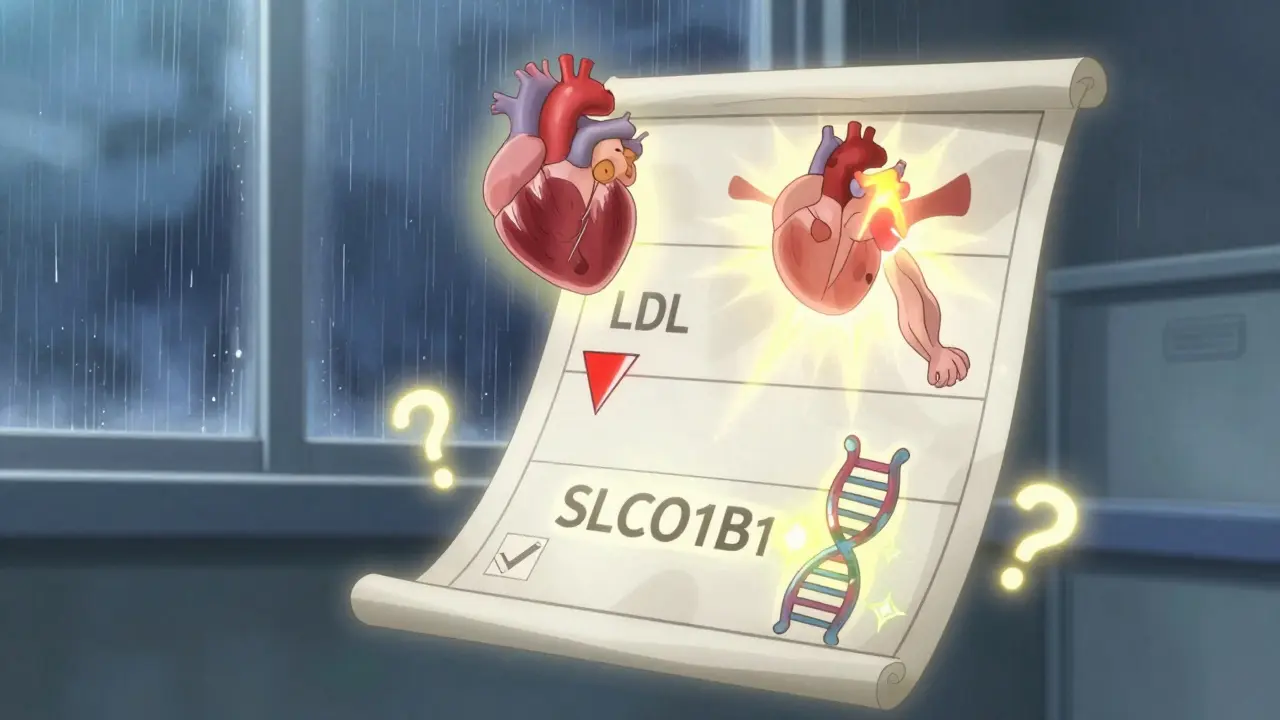
Genetics also play a role. A gene called SLCO1B1 affects how your body processes statins. People with a certain variant are more likely to get muscle pain on simvastatin. Testing for this isn’t routine yet, but if you’ve had bad reactions to statins before, it’s worth asking your doctor about.
Older adults, people with kidney disease, and those on multiple medications are also at higher risk for side effects. That doesn’t mean they can’t take statins - it just means they need closer monitoring and lower doses.
Real Numbers, Real Choices
Let’s say you’re a 62-year-old man with high LDL and high blood pressure. You’ve never had a heart attack. Your doctor says you have a 15% chance of having one in the next 10 years. Taking a statin might lower that to 10%. That’s a 5% absolute risk reduction. That means 20 people like you would need to take statins for 10 years to prevent one heart attack.
But for every 100 people taking statins, about 5-10 will get muscle pain. So in your group of 20, maybe one person will have side effects strong enough to quit.
That’s the trade-off. It’s not about being perfect. It’s about making a choice based on your body, your risk, and your tolerance for discomfort.
And here’s the thing: statins are cheap. Generic atorvastatin costs as little as $4 a month in many places. That’s less than a daily coffee. The cost isn’t the barrier - the discomfort is.
What Comes Next
Researchers are working on better statins. One study from Stanford in 2023 showed that statins protect blood vessels in ways we didn’t fully understand before. Scientists now think they might be able to design drugs that keep the vascular benefits without touching muscles at all.
For now, though, we work with what we have. And what we have works - if you can tolerate it.
If you’re on a statin and feeling fine? Keep taking it. If you’re on one and hurting? Don’t suffer in silence. Talk to your doctor. Try a different one. Adjust the dose. Add CoQ10. Give it time. There’s almost always a way to get the heart protection you need without the muscle pain.
Statins aren’t magic. But for the right person, they’re one of the most powerful tools we have to live longer, healthier lives. The trick is finding the version that fits you - not just your numbers, but your body.
Do statins really prevent heart attacks?
Yes. Multiple large studies show statins reduce the risk of heart attack by about 30% in people with existing heart disease or high risk. For every 1 mmol/L drop in LDL cholesterol, the risk of major heart events falls by 22%. The benefits are strongest for those with diabetes, high blood pressure, or a family history of early heart disease.
Can muscle pain from statins be reversed?
Almost always. If muscle pain is caused by the statin, switching to a different type (like pravastatin instead of simvastatin), lowering the dose, or taking it every other day usually helps within weeks. Stopping the drug entirely will resolve symptoms in most cases, but that also removes the heart protection. Work with your doctor to find a balance.
Is it safe to take CoQ10 with statins?
Yes. CoQ10 is a natural supplement that your body makes, and statins lower its levels. Taking 100-200 mg daily may help reduce muscle pain and fatigue in some people. It’s not proven to work for everyone, but it’s safe, inexpensive, and worth trying if you’re experiencing side effects.
What’s the difference between high-intensity and moderate-intensity statins?
High-intensity statins (like atorvastatin 40-80 mg or rosuvastatin 20-40 mg) lower LDL by 50% or more. Moderate-intensity (like atorvastatin 10-20 mg or simvastatin 20-40 mg) lower LDL by 30-49%. High-intensity is usually for people with very high risk, like those who’ve had a heart attack. Moderate is often enough for others. Lower intensity means fewer side effects.
Should I get genetic testing before starting statins?
Not routinely - but if you’ve had muscle pain on one statin and it didn’t go away, or if you have a family history of statin side effects, ask about SLCO1B1 gene testing. This gene affects how your body breaks down simvastatin. If you carry a risky variant, your doctor might avoid simvastatin altogether and choose a safer option.
Can I stop statins if my cholesterol is normal now?
Usually not. Statins don’t cure high cholesterol - they manage it. If you stop, your liver will start making cholesterol again, and your levels will likely return to where they were. For people with heart disease or high risk, stopping increases the chance of a heart attack or stroke. Always consult your doctor before stopping.
Elizabeth Ganak
December 27, 2025 AT 13:11I switched from simvastatin to pravastatin last year after months of leg cramps that made climbing stairs feel like a workout. Within two weeks, I could walk my dog again without wincing. My LDL only went up by 5 points - totally worth it. Also, I started taking CoQ10 and honestly? I feel more energetic. No more afternoon naps just to survive the day.
Nicola George
December 28, 2025 AT 08:49Oh wow, so statins are the new ‘just drink more water’ fix for everything? 😏 I’ve got a friend who stopped hers, started eating avocado toast daily, and her cholesterol dropped faster than her ex’s texts. Maybe we should just rename statins to ‘The Guilt Pill’?
Raushan Richardson
December 30, 2025 AT 04:02YES to CoQ10! I was skeptical too, but after my doc suggested it, I felt like I got my energy back. I’m 58, work two jobs, and I wasn’t gonna let muscle pain steal my life. Also, switching to a lower dose made a HUGE difference - no more waking up feeling like I ran a marathon in my sleep. You don’t have to suffer to be healthy!
Robyn Hays
December 31, 2025 AT 13:14It’s wild how something so biochemically elegant - blocking HMG-CoA reductase like a molecular bouncer at the liver’s cholesterol club - can also trip up your mitochondria like a rogue Wi-Fi signal. I’ve seen patients who swear statins turned them into walking Jell-O, yet their LDLs are pristine. The real magic? Finding the version that doesn’t turn your quads into a symphony of cramps. Pravastatin’s like the chill cousin of statins - quiet, reliable, doesn’t yell at your muscles.
Liz Tanner
December 31, 2025 AT 17:51For anyone considering stopping statins because of muscle pain: please don’t assume it’s the drug. I had a patient with fibromyalgia who blamed her statin for pain that was actually from her underlying condition. Get your CK levels checked. Don’t self-diagnose. And if it’s truly the statin? There are so many options. You’re not stuck. You’re not failing. You’re just figuring out what works for your body.
Kylie Robson
January 2, 2026 AT 04:30Statins reduce LDL-C via competitive inhibition of HMG-CoA reductase, which downregulates endogenous cholesterol synthesis, leading to upregulation of LDL receptors on hepatocytes - thereby increasing clearance of circulating LDL particles. The 22% relative risk reduction per 1 mmol/L LDL-C lowering is derived from meta-analyses of RCTs such as CTT Collaboration (2010), with absolute risk reduction dependent on baseline CV risk. Muscle symptoms are likely mediated by mitochondrial dysfunction due to reduced coenzyme Q10 and possibly altered calcium homeostasis. SLCO1B1 polymorphisms (e.g., rs4149056) significantly increase simvastatin myopathy risk (OR 4.5). CoQ10 supplementation has only marginal evidence (Cochrane 2015), and dose reduction is preferred over discontinuation.
Caitlin Foster
January 3, 2026 AT 09:03So let me get this straight… you’re telling me I can’t just take a pill and then eat a whole pizza?!!?? I thought medicine was supposed to fix stuff, not make me feel like a soggy sock?!?! I switched to pravastatin and now I can lift my arms again - and yes, I cried. But also… I’m alive. And my dog still loves me. So yeah. Statins: 1. Pizza: 0.
Todd Scott
January 4, 2026 AT 17:23As someone who’s lived in three countries and worked in rural clinics from Kansas to Kenya, I’ve seen statins change lives - but also seen people stop them because they didn’t understand why they were taking them. In South Africa, I had a woman who couldn’t walk to the market because of cramps. We switched her to low-dose rosuvastatin, added CoQ10, and within a month, she was selling tomatoes again. The key isn’t just the drug - it’s communication. People need to know this isn’t a punishment. It’s a tool. And tools can be adjusted. You don’t have to choose between your heart and your legs. You just need a doctor who listens.
Olivia Goolsby
January 5, 2026 AT 04:49Statins? Yeah, right. Big Pharma’s way of turning healthy people into lifelong pill-poppers while they rake in billions. They don’t tell you that cholesterol isn’t even the real villain - inflammation is. And guess what? They don’t have a patent on turmeric. Or garlic. Or walking. But oh no - we gotta take a synthetic enzyme blocker that makes your legs feel like they’re full of wet cement? And they call this ‘medicine’? Meanwhile, the real cause of heart disease? Sugar. Stress. Sitting. And the fact that we’ve been lied to for 50 years. I stopped my statin. My energy came back. My legs stopped screaming. And my cholesterol? Still higher than my ex’s excuses - but at least I’m alive without being drugged.