

You sit down for a meal, but the bread feels like sandpaper. You blink, but your eyes burn as if you’ve been staring at a screen all day without a break. If this sounds familiar, it might not just be aging or allergies. It could be Sjögren’s syndrome, an autoimmune disorder where the immune system attacks moisture-producing glands. While many people associate this condition solely with dry eyes and mouth, it is actually a systemic disease that can impact joints, lungs, nerves, and overall energy levels. Understanding what is happening inside your body is the first step toward managing it effectively.
First described by Swedish ophthalmologist Henrik Sjögren in 1933, this condition remains one of the most misunderstood autoimmune diseases today. According to the American College of Rheumatology, approximately 4 million Americans live with Sjögren’s syndrome. The vast majority-about 90%-are women, typically diagnosed between the ages of 45 and 55. But here is the catch: the average person waits nearly three years after symptoms start before getting a correct diagnosis. Why? Because the symptoms are invisible, gradual, and easily mistaken for stress, aging, or other common ailments.
What Is Actually Happening in Your Body?
To understand Sjögren’s, you have to look at how your immune system works. Normally, your immune system acts like a security team, identifying and destroying foreign invaders like viruses and bacteria. In autoimmune diseases, that security team gets confused. It starts attacking your own healthy cells.
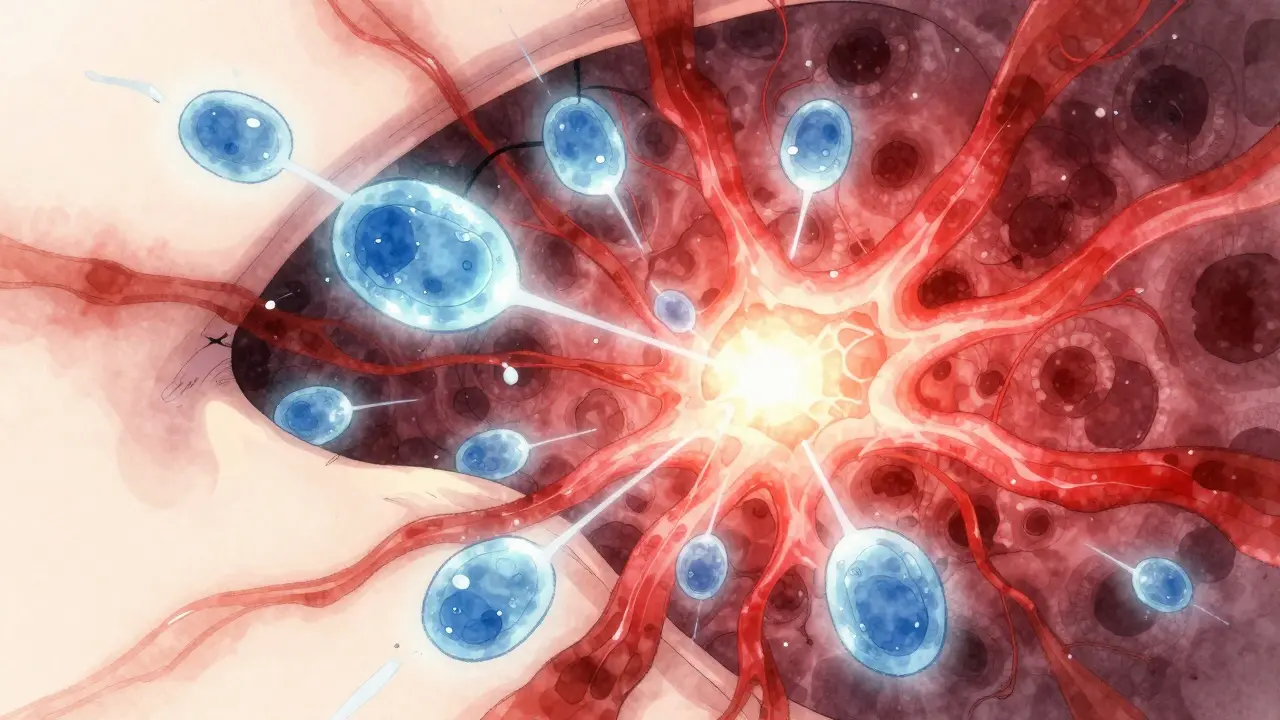
In the case of Sjögren’s syndrome, the primary targets are the exocrine glands-specifically the lacrimal glands (which produce tears) and the salivary glands (which produce saliva). When these glands are attacked, they become inflamed and damaged, leading to reduced production of fluids. This isn’t just about being thirsty or having tired eyes; it’s a chronic inflammatory process that can spread beyond the glands.
Doctors classify the condition into two types:
- Primary Sjögren’s Syndrome: Occurs on its own, without another autoimmune disease.
- Secondary Sjögren’s Syndrome: Develops alongside another autoimmune disorder, such as rheumatoid arthritis or lupus. About 30-50% of cases fall into this category.
The exact cause remains unknown, but research suggests a combination of genetic predisposition and environmental triggers. Certain gene changes make some people more susceptible, while factors like viral or bacterial infections may act as the spark that ignites the immune response.
Beyond Dryness: Recognizing the Full Spectrum of Symptoms
If you think Sjögren’s is just about dry eyes and mouth, you’re missing half the picture. Yes, xerophthalmia (dry eyes) and xerostomia (dry mouth) are the hallmark signs, but the disease often presents with a wide range of systemic symptoms that can severely impact daily life.
Dry Eyes: It’s not just discomfort. Patients often describe a gritty, sandy sensation, redness, burning, and blurred vision. Without enough tears, the surface of the eye can become scratched or infected.
Dry Mouth: Saliva does more than moisten food. It aids digestion, protects teeth from decay, and helps with speech. When saliva production drops, eating dry foods like crackers becomes difficult. More importantly, the risk of cavities, tooth loss, and oral infections skyrockets. The National Institute of Dental and Craniofacial Research notes that patients face a 5-10 times higher risk of dental issues compared to the general population.
Systemic Symptoms:
- Fatigue: Approximately 70% of patients report extreme fatigue that doesn’t improve with rest. This isn’t normal tiredness; it’s a deep, bone-weary exhaustion.
- Pain: Joint and muscle pain affects 30-50% of patients. Unlike rheumatoid arthritis, this pain rarely causes joint destruction, but it can be persistent and debilitating.
- Skin Issues: Up to 20% experience dry, itchy skin or specific rashes on hands and feet.
- Nerve Damage: About 10-15% develop neuropathy, causing numbness, tingling, or pain in the extremities.
- Vaginal Dryness: Affects roughly 50% of female patients, significantly impacting quality of life and intimacy.
- Lung Involvement: Around 25% develop pulmonary issues, manifesting as a persistent dry cough or increased susceptibility to infections.
Many patients also report "brain fog"-cognitive difficulties that affect memory, concentration, and word-finding. This symptom is often overlooked but can be just as disruptive as physical pain.
The Diagnostic Challenge: Why It Takes So Long
One of the biggest hurdles in treating Sjögren’s syndrome is the delay in diagnosis. With an average diagnostic window of 2.8 years, many patients see multiple doctors before finding answers. Primary care physicians might attribute symptoms to allergies, acid reflux, or dehydration. Dentists might simply suggest drinking more water.
Diagnosis requires a multidisciplinary approach, involving rheumatologists, ophthalmologists, and dentists. There is no single test for Sjögren’s. Instead, doctors use a combination of criteria established by the American College of Rheumatology and the European League Against Rheumatism (EULAR).
| Test Type | Procedure | Positive Indicator |
|---|---|---|
| Tear Production Test (Schirmer’s Test) | A small strip of paper is placed under the eyelid to measure tear volume. | Less than 5mm of wetting in 5 minutes. |
| Salivary Flow Rate | Measuring unstimulated saliva output over time. | Less than 1.5mL in 15 minutes. |
| Blood Tests | Checking for specific autoantibodies. | Presence of anti-SSA/Ro or anti-SSB/La antibodies (found in 60-70% of cases). |
| Minor Salivary Gland Biopsy | Removing a tiny piece of tissue from the lip to examine under a microscope. | Focal lymphocytic sialadenitis with a focus score ≥1. |
| Ocular Staining Score | Using special dyes to highlight damage on the eye surface. | Score ≥5 indicates significant dryness and damage. |
Recent advancements have introduced salivary gland ultrasound as a non-invasive tool, showing high sensitivity (85%) and specificity (92%) for diagnosis. However, access to specialized testing varies widely, contributing to the diagnostic gap.
Managing the Condition: Treatment Strategies That Work
There is currently no cure for Sjögren’s syndrome, but treatments can effectively manage symptoms and prevent complications. The goal is to replace missing fluids, reduce inflammation, and address systemic issues.
Replacing Moisture:
- Eyes: Preservative-free artificial tears are the first line of defense, used 8-10 times daily. For severe cases, cyclosporine or lifitegrast eye drops may be prescribed to reduce inflammation.
- Mouth: Sugar-free gum and lozenges stimulate saliva flow. Saliva substitutes can be used 5-7 times daily. Fluoride rinses and frequent dental check-ups (every 3-4 months) are crucial to prevent cavities.
- Skin and Vagina: Regular moisturizers and lubricants help alleviate dryness and discomfort.
Medications to Stimulate Glands:
Prescription drugs like pilocarpine (5mg three times daily) or cevimeline (30mg three times daily) can stimulate saliva and tear production. Clinical studies show that 60-70% of patients experience moderate improvement with these medications. However, they can cause side effects like sweating or flushing.
Addressing Systemic Symptoms:
For joint pain and fatigue, hydroxychloroquine is commonly prescribed, though only 30-40% of patients find significant relief. In cases of severe organ involvement or nerve damage, immunosuppressants may be necessary. Recently, in June 2023, the FDA approved Efgartigimod (Vyvgart Hytrulo), marking the first new targeted treatment for Sjögren’s in two decades. Early trials showed a 35% improvement in dry mouth symptoms compared to placebo.
Lifestyle Adjustments:
Small changes can make a big difference. Using a humidifier at home (maintained at 40-60% humidity) adds moisture to the air. Avoiding dry environments, quitting smoking, and staying hydrated are essential. Dietary adjustments, such as adding sauces or broths to dry foods, can make meals more manageable.

Living with Sjögren’s: The Emotional and Social Impact
The physical symptoms are challenging, but the emotional toll is often underestimated. A 2022 survey by the Sjögren’s Syndrome Foundation found that 42% of patients reported depression symptoms, significantly higher than the general population. The invisibility of the disease leads to feelings of isolation and frustration, especially when healthcare providers dismiss symptoms as minor.
Patients frequently report feeling minimized during medical appointments. One patient shared on MySjogrensTeam, "The vaginal dryness component is rarely discussed but has devastated my relationship." Another noted on Reddit, "The 'brain fog' is what surprises people most-I've had colleagues think I was incompetent during meetings when I was just struggling to find words due to cognitive difficulties from fatigue."
Support groups, both online and offline, play a critical role in coping. Communities like r/Sjogrens on Reddit provide a space for sharing experiences, tips, and encouragement. Learning to advocate for yourself and educating loved ones about the condition can help bridge the gap between understanding and support.
Future Outlook: Research and Hope
While Sjögren’s syndrome is chronic, the prognosis for life expectancy is generally good. About 90% of patients have a normal life span. However, there is a slightly elevated risk (4-5%) of developing non-Hodgkin lymphoma, requiring regular monitoring.
Research is accelerating. The National Institutes of Health launched the Sjögren’s Precision Medicine Network (SPMN) in March 2023, enrolling 5,000 patients to develop personalized treatments based on biomarker profiles. The TARGET initiative aims to identify genetic markers that predict disease severity. Additionally, new classification criteria incorporating ultrasound findings are improving early detection.
Despite these advances, funding remains disproportionately low compared to other autoimmune diseases. Advocacy and awareness campaigns have increased diagnosis rates by 15% annually over the past five years, but much work remains to ensure timely and accurate care for all patients.
Is Sjögren’s syndrome contagious?
No, Sjögren’s syndrome is not contagious. It is an autoimmune disease caused by the body’s immune system attacking its own tissues, not by a virus or bacteria that can be passed to others.
Can Sjögren’s syndrome go into remission?
Yes, many patients experience cycles of remission and exacerbation. During remission, symptoms may be mild or absent, but the underlying autoimmune activity remains. Proper management can help maintain longer periods of stability.
What foods should I avoid with Sjögren’s?
There is no specific diet for Sjögren’s, but you should avoid dry, hard, or spicy foods that can irritate the mouth. Acidic foods and sugary snacks can increase the risk of cavities due to reduced saliva. Opt for moist, soft foods and stay hydrated.
Does Sjögren’s syndrome affect life expectancy?
For most patients, life expectancy is normal. However, there is a slightly increased risk (4-5%) of developing non-Hodgkin lymphoma, so regular medical monitoring is important. Quality of life can be impacted by symptoms, but effective management can mitigate this.
How is Sjögren’s different from lupus or rheumatoid arthritis?
While all are autoimmune diseases, Sjögren’s primarily targets moisture-producing glands. Lupus can affect multiple organs including the skin, kidneys, and brain, while rheumatoid arthritis mainly targets the joints. Sjögren’s can occur alone or alongside these conditions (secondary Sjögren’s).
What specialist should I see for Sjögren’s?
A rheumatologist is the primary specialist for diagnosing and managing Sjögren’s syndrome. You may also need care from an ophthalmologist for eye symptoms, a dentist for oral health, and other specialists depending on systemic involvement.