

SGLT2 Inhibitor DKA Risk Assessor
Select all scenarios that currently apply to you to evaluate your potential risk level for developing euglycemic DKA while taking SGLT2 inhibitors.
Acute Illness
You are currently fighting an infection, have a fever, the flu, or are vomiting.
Low Carb/Keto Diet
You are following a ketogenic diet, fasting, or significantly restricting carbohydrates.
Low Insulin Levels
You have Type 1 diabetes, or Type 2 with known low insulin production (low C-peptide).
Upcoming Surgery
You are preparing for a medical procedure requiring fasting within the next few days.
Excessive Alcohol Use
You have engaged in binge drinking or excessive alcohol consumption recently.
Physical Symptoms
You are experiencing nausea, abdominal pain, extreme fatigue, or rapid breathing.
Results will appear here
Select applicable scenarios and click assess to see your personalized risk evaluation and action plan.
Imagine feeling terrible-nauseous, tired, breathing fast-but checking your blood sugar and seeing a number that looks almost normal. For people taking SGLT2 inhibitors are a class of diabetes medications that lower blood glucose by removing it through urine, including popular drugs like Jardiance, Farxiga, and Invokana, this scenario is not just possible; it is a documented medical emergency known as euglycemic diabetic ketoacidosis (euDKA). While these drugs offer significant heart and kidney benefits, they carry a unique risk that can catch patients and doctors off guard because the classic warning sign of high blood sugar is missing.
How SGLT2 Inhibitors Change the Game for Diabetes
To understand the risk, you first need to know how these drugs work differently from older treatments. Traditional diabetes meds often focus on making the pancreas release more insulin or helping the body use existing insulin better. SGLT2 inhibitors take a different route. They target the kidneys specifically.
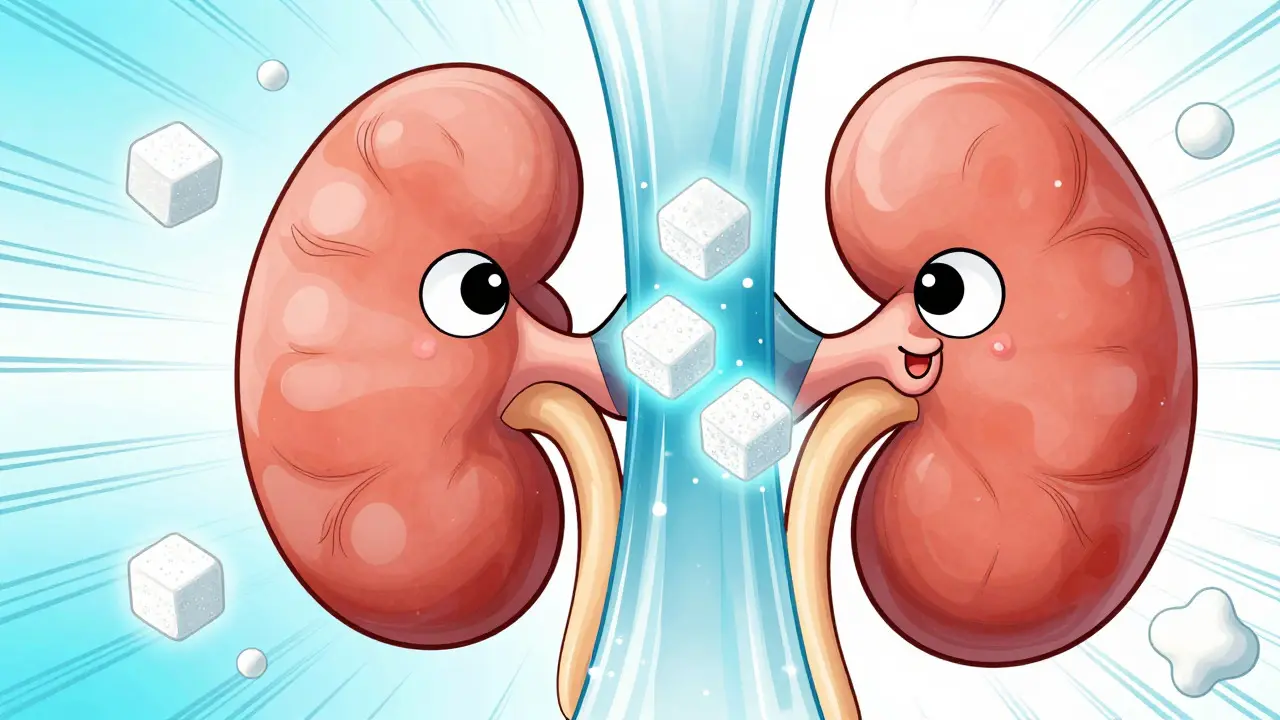
Your kidneys normally filter waste but also reabsorb useful nutrients, including glucose, back into your bloodstream. The SGLT2 protein is responsible for this reabsorption. When you take an SGLT2 inhibitor, you block that process. The result? Your kidneys flush out excess sugar through your urine instead of keeping it in your blood. This mechanism lowers blood glucose levels independently of insulin, which is why these drugs are effective even if your beta-cell function is declining.
This shift has major implications for metabolism. Because your body is losing calories (sugar) through urine, it may start breaking down fat for energy at a higher rate than usual. Fat breakdown produces ketones. In small amounts, ketones are harmless. But when production outpaces usage, ketones build up, turning your blood acidic. This is the core mechanism behind the increased risk of ketoacidosis associated with this drug class.
The Silent Threat: Understanding Euglycemic DKA
Diabetic ketoacidosis (DKA) is typically associated with Type 1 diabetes and involves dangerously high blood sugar levels (usually above 250 mg/dL). Doctors have been trained to look for hyperglycemia as the primary red flag. However, SGLT2 inhibitors disrupt this pattern.
Because the drug is actively lowering blood glucose via urine excretion, a patient can develop severe ketoacidosis while their blood sugar remains below the traditional diagnostic threshold. This condition is called euglycemic DKA (euDKA). Research indicates that euDKA accounts for 30-40% of all DKA cases in patients using SGLT2 inhibitors. In many of these cases, blood glucose levels hover between 100 and 200 mg/dL-ranges that might otherwise be considered acceptable or only mildly elevated.
This "normal" reading creates a dangerous blind spot. A patient might feel ill but assume they are fine because their meter shows a safe number. Consequently, they delay seeking help. By the time they arrive at the hospital, the acidosis can be severe, leading to rapid deterioration. The mortality rate for SGLT2-associated DKA has been reported around 4.3%, nearly double that of traditional DKA, largely due to this delayed diagnosis.
Who Is Most at Risk?
Not everyone taking these medications will experience ketoacidosis. The absolute risk remains low, estimated at roughly 0.1 to 0.5 events per 100 patient-years. However, certain factors significantly increase vulnerability. Understanding your personal risk profile is crucial for safe usage.
| Risk Factor Category | Specific Triggers | Why It Increases Risk |
|---|---|---|
| Physiological State | Low insulin levels, Type 1 diabetes history | Insulin is required to stop ketone production. Low insulin + SGLT2 = rapid ketosis. |
| Acute Illness | Infection, fever, flu | Stress hormones raise blood sugar and ketones; reduced food intake worsens the imbalance. |
| Dietary Changes | Keto diet, fasting, very low-carb eating | Already elevating ketone production; adding SGLT2 pushes the system over the edge. |
| Medical Procedures | Surgery requiring fasting | Fasting reduces carbohydrate intake while stress increases metabolic demand. |
| Lifestyle Factors | Binge drinking, excessive alcohol use | Alcohol inhibits gluconeogenesis and promotes ketone formation. |
Patient selection matters immensely. Guidelines suggest avoiding SGLT2 inhibitors in patients with a history of DKA, those with Type 1 diabetes (unless under strict specialist supervision), or individuals with "insulinopenic" Type 2 diabetes-meaning their pancreas produces very little insulin. If your C-peptide level (a marker of insulin production) is below 1.0 ng/mL, your risk jumps significantly compared to those with higher levels.
Recognizing the Symptoms Early
Since you cannot rely on your blood glucose meter alone, you must become adept at recognizing physical symptoms. The signs of euDKA are similar to traditional DKA but often appear more insidiously because the patient feels "stable" numerically.
- Nausea and Vomiting: Often the first sign, easily mistaken for a stomach bug.
- Abdominal Pain: Can range from mild discomfort to sharp pain.
- Extreme Fatigue: A sense of exhaustion that doesn't improve with rest.
- Shortness of Breath: Known as Kussmaul breathing, this is the body's attempt to blow off excess acid through respiration. Breathing becomes deep and rapid.
- Fruity Breath: Caused by acetone, a type of ketone exhaled through the lungs.
- Confusion or Lethargy: Indicates the acidosis is affecting brain function.
If you experience any combination of these symptoms while on an SGLT2 inhibitor, do not wait. Do not check your blood sugar and dismiss the issue if it looks okay. Check your ketones immediately.
Action Plan: What to Do When You Feel Sick
The American Diabetes Association and other health bodies have updated their guidelines to address this specific risk. Here is a practical protocol for patients on SGLT2 inhibitors during times of illness or stress.
- Check Ketones: Keep urine ketone strips or a blood ketone meter at home. If you feel unwell, test immediately. Blood ketone meters are generally more accurate and faster.
- Interpret Results: If ketones are moderate to large (or blood ketones >1.5 mmol/L), seek medical attention immediately, regardless of your blood glucose reading.
- Hold the Medication: If you are sick, reducing food intake, or preparing for surgery, stop taking your SGLT2 inhibitor. This is often referred to as "sick day management." Restart only after you have been well and eating normally for at least 3 days.
- Stay Hydrated: Dehydration concentrates ketones and worsens acidosis. Drink water consistently unless instructed otherwise by a doctor.
- Maintain Carbohydrate Intake: During illness, try to maintain some carbohydrate consumption to prevent the body from switching entirely to fat burning, unless directed otherwise by a healthcare provider.

Regulatory Updates and Safety Measures
Global health agencies have taken notice of this risk. The European Medicines Agency (EMA) completed a formal review in June 2023, updating safety recommendations for all SGLT2 inhibitors authorized in the EU. Similarly, the FDA issued warnings starting in 2015, requiring label updates to highlight the risk of euDKA.
These regulatory actions emphasize that healthcare providers must consider ketoacidosis in patients presenting with consistent symptoms, even if blood sugar levels are not high. The UK’s Medicines and Health Products Regulatory Agency (MHRA) also issued warnings regarding the combination of SGLT2 inhibitors with insulin, noting that reducing insulin doses too aggressively while on these drugs can trigger DKA.
Despite these risks, the consensus among endocrinologists is that for most Type 2 diabetes patients, the cardiovascular and renal benefits of SGLT2 inhibitors outweigh the DKA risk. Landmark trials like EMPA-REG OUTCOME and CANVAS demonstrated significant reductions in heart failure hospitalizations and kidney disease progression. The key is informed usage-balancing the profound long-term benefits against the manageable, albeit serious, acute risks.
Future Directions and Newer Alternatives
Research continues to evolve. Pharmaceutical companies are developing next-generation agents, such as SGLT1/2 dual inhibitors (e.g., licogliflozin), which may offer similar benefits with a potentially lower risk of genital infections and perhaps altered metabolic profiles regarding ketosis. Additionally, machine learning models are being validated to predict DKA risk before initiating therapy, allowing for more personalized prescribing.
For now, the best defense is knowledge. SGLT2 inhibitors are powerful tools in diabetes management, but they require a slightly different approach to monitoring. By understanding the mechanics of euDKA and staying vigilant about symptoms beyond blood glucose numbers, you can safely harness the benefits of these medications.
Can SGLT2 inhibitors cause DKA in Type 2 diabetes patients?
Yes. While DKA is more common in Type 1 diabetes, SGLT2 inhibitors increase the risk of euglycemic DKA in Type 2 diabetes patients, particularly those with low insulin production or during periods of stress like illness or surgery.
What is euglycemic DKA?
Euglycemic DKA is a form of diabetic ketoacidosis where blood glucose levels remain relatively normal (typically below 250 mg/dL) despite the presence of high ketones and acidosis. This makes it harder to diagnose based on blood sugar alone.
Should I stop taking my SGLT2 inhibitor if I get sick?
Generally, yes. Medical guidelines recommend temporarily discontinuing SGLT2 inhibitors during acute illness, especially if you are eating less or vomiting. Consult your doctor for specific instructions, but stopping the drug for at least 3 days until fully recovered is standard advice to reduce DKA risk.
How do I check for ketones at home?
You can use urine ketone test strips available at pharmacies or purchase a blood ketone meter. Blood ketone meters provide a more accurate and immediate reading. Test if you experience nausea, vomiting, abdominal pain, or unusual fatigue.
Are there specific SGLT2 inhibitors with higher DKA risk?
All SGLT2 inhibitors (canagliflozin, dapagliflozin, empagliflozin, ertugliflozin) carry this risk. Some studies suggest higher doses may increase the likelihood, but the risk is present across the class. Individual patient factors like insulin levels matter more than the specific brand.
Can I take SGLT2 inhibitors if I am on a ketogenic diet?
Caution is advised. Since ketogenic diets already elevate ketone production, adding an SGLT2 inhibitor can push ketone levels into a dangerous, acidic range. Discuss this combination carefully with your healthcare provider and monitor ketones closely.
Kevin Burke
July 20, 2026 AT 00:35The fundamental paradox of modern medicine is that we cure the symptom while creating a new disease state. SGLT2 inhibitors are not just drugs; they are metabolic disruptors that force the body into a pseudo-starvation mode regardless of caloric intake. This is not merely a side effect; it is a philosophical statement on how we treat chronic conditions by ignoring systemic balance. The patient becomes a slave to monitoring ketones because the drug has severed the natural feedback loop between glucose and insulin. It is arrogant to assume that lowering blood sugar via urine excretion is benign when it fundamentally alters the fuel source of every cell in the body. We are trading hyperglycemia for acidosis, which is arguably more insidious because it hides behind normal numbers. The medical establishment prefers this trade-off because it simplifies their metrics, but for the individual, it is a precarious tightrope walk.
Sinead Doyle
July 20, 2026 AT 19:59thats because the big pharma labs know exactly what they r doing and they dont care about us. euDKA is just another way to keep people dependent on testing kits and hospital visits. its a conspiracy to make diabetes unmanageable so you stay on their payroll forever. the FDA warnings are too late and probably paid off by the manufacturers. i have seen documents that suggest they knew about the ketoacidosis risk since 2010 but buried it. trust no one who sells these pills. they want you sick enough to need help but healthy enough to pay bills. check your own c-peptide levels because the doctors will lie to you about your insulin production. they push empagliflozin because it has the biggest marketing budget not because it is safe. stay awake out there.
Samuel Friday
July 20, 2026 AT 20:00It is truly pathetic how many people here seem relieved that their blood sugar is 'normal' without understanding the biochemical catastrophe occurring beneath the surface. You are essentially drinking poison and feeling fine until your blood turns acidic. The mortality rate doubling is not a statistic; it is a indictment of lazy prescribing habits. If your endocrinologist cannot explain the mechanism of euglycemic DKA to you in plain English, fire them immediately. They are treating numbers on a screen, not human beings. The fact that you can die with a blood glucose of 150 mg/dL should terrify anyone taking these drugs. Most patients are too ignorant to read the label, so they rely on incompetent providers who copy-paste prescriptions. It is an elitist system where only those who educate themselves survive.
Arun Krishnan
July 20, 2026 AT 20:40Hey everyone, let's try to look at this positively. These drugs do save hearts and kidneys, which is huge. Just be careful and listen to your body. If you feel weird, stop the med and call your doctor. It is manageable if you know the signs. Don't panic, just be aware. Many people take them safely every day. Keep hydrated and eat some carbs when you are sick. You got this!
Bobby Christiansen
July 21, 2026 AT 15:24Oh please, Arun, stop acting like everything is sunshine and rainbows! These drugs are dangerous and you are downplaying a real killer. People are dying because doctors are pushing these meds for weight loss trends now too. It is selfish and reckless. I had a cousin who almost died from this and his doctor said it was rare. Rare doesn't mean it won't happen to you. Stop being so naive and think about the families left behind. It is morally wrong to sell a drug that requires constant vigilance for basic survival. Wake up people!
Jasmine Agito
July 21, 2026 AT 17:09I appreciate the detailed breakdown of the symptoms. As someone who works in clinical pharmacy, seeing the distinction between traditional DKA and euglycemic DKA is crucial for patient education. Often, patients dismiss nausea as a stomach bug, delaying critical intervention. The recommendation to hold the medication during illness is standard practice, yet adherence is poor. Patients often fear missing a dose more than they fear the potential acidosis. We need better communication tools to ensure patients understand that 'sick day management' is non-negotiable. Blood ketone meters are indeed superior to urine strips for early detection, though cost remains a barrier for many. Education is our best defense here.
anna arifiana
July 22, 2026 AT 05:14While the article presents a compelling argument regarding the risks, one must consider the broader context of metabolic health, which is often overlooked in these discussions. The emphasis on carbohydrate maintenance during illness is somewhat contradictory to the low-carb lifestyle that many patients adopt alongside these medications. Furthermore, the reliance on self-monitoring places an undue burden on the patient, assuming a level of health literacy that is unfortunately not universal across all demographics. It is also worth noting that the regulatory bodies have been slow to act, suggesting a systemic failure rather than just an individual risk factor. The complexity of the metabolic shift induced by SGLT2 inhibitors requires a nuanced approach that goes beyond simple binary instructions.
Kyle Bonnette-Lykens
July 24, 2026 AT 00:24the risk is low. most people are fine. stop making it scary.
Tony Malvagna
July 25, 2026 AT 11:12yo kyle you dont get it. its not about stats its about your life. if you are type 1 or low insulin you are playing russian roulette. the body breaks down fat too fast and you get acidic blood. its like your internal battery is short circuiting. you need to respect the chemistry. dont be stupid and ignore the signs. check your ketones bro. its easy. just buy the strips. live to fight another day.
Jamie Rogers
July 26, 2026 AT 05:02This is such vital information! I wish every patient received this handout when starting Jardiance or Farxiga. The concept of 'euglycemic' DKA is terrifying because it removes the primary warning sign we all rely on. I've seen friends who felt terrible but checked their sugar, saw a 120, and went back to bed. That could have been fatal. The advice to maintain carbohydrate intake during sickness is counterintuitive for diabetics used to restricting carbs, but it makes perfect sense physiologically. Please share this with anyone you know on these meds. Awareness saves lives!
Angie Lara
July 26, 2026 AT 16:44In my experience working with diverse communities, the language barrier often complicates this message. Many patients hear 'ketones' and think of pregnancy tests or something else entirely. Simplifying the instruction to 'if you feel sick, stop the pill and test' helps. Also, cultural attitudes towards fasting during religious periods add another layer of risk. We need culturally sensitive materials that explain why breaking a fast might be medically necessary to prevent acidosis. It is not just about biology, it is about context.
Ed Ostrego
July 28, 2026 AT 05:28Let's crush this! Knowledge is power. If you are on these meds, you are already winning against diabetes. Now just add this safety net. Check your ketones if you feel off. Drink water. Eat some toast if you are sick. You are stronger than this condition. Stay proactive and stay healthy! Let's go team diabetes warriors!
Marie-Gladys Darcelin
July 29, 2026 AT 23:38It is absolutely scandalous that the medical community continues to prescribe these agents with such cavalier disregard for the potential lethality of euglycemic ketoacidosis. The 'silent threat' is not silent; it screams through nausea and fatigue, yet patients are conditioned to ignore these signals because their glucometer displays a reassuring number. This is a failure of informed consent. Patients deserve to know that their treatment plan involves a significant risk of metabolic collapse that defies conventional diagnostic criteria. Until prescribers mandate ketone testing protocols for all initiations, they are practicing negligence disguised as innovation.
neal vince
July 31, 2026 AT 01:37You are all missing the point about the renal benefits. The EMPA-REG trial showed a 14% reduction in cardiovascular death. That is massive. The risk of DKA is 0.1 to 0.5 per 100 patient-years. Do the math. For every 1000 patients treated for a year, maybe 1 to 5 get DKA. But hundreds avoid heart attacks. The risk-benefit ratio is heavily skewed in favor of the drug. People who complain about this risk are likely the ones who don't take their meds anyway. It is about population health outcomes, not anecdotal horror stories. The guidelines exist for a reason. Follow them.
Emily Schor
July 31, 2026 AT 22:37I agree with Neal. The data supports the benefits. I have been on dapagliflozin for three years with no issues. I just make sure to drink plenty of water and I stopped the med last week when I had the flu. My doctor told me to do that. It seems manageable if you follow the rules. Good article overall.