
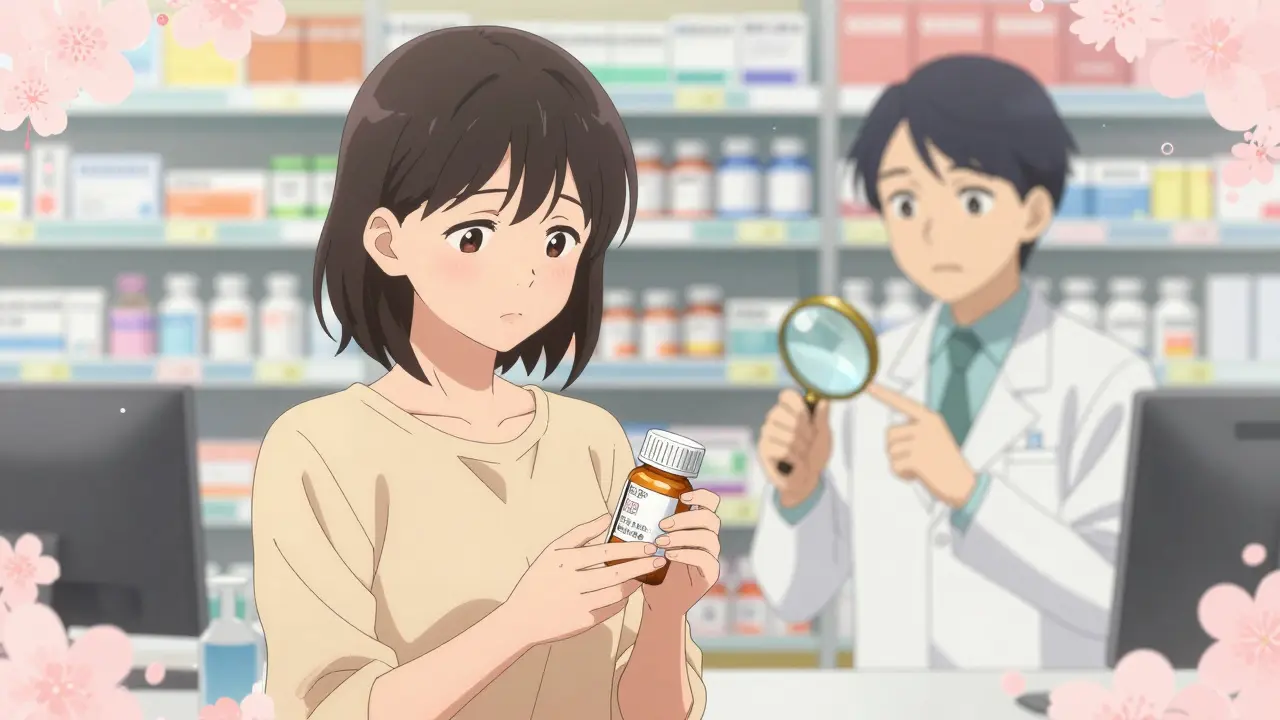
Every year, over 1.3 million medication errors happen in the U.S. - and nearly a quarter of them come from simple misunderstandings about your prescription label. You pick up your pills, glance at the tiny print, and walk out. But what if that label says something you didn’t expect? What if the dosage is different? What if it needs to be kept cold and you left it on the counter for weeks? These aren’t rare mistakes. They’re preventable - if you know what to ask.
What’s the exact name of this medicine?
Prescription labels list both the brand name and the generic name. Sometimes they’re side by side. Other times, only the brand name shows up. That’s a problem. If your doctor told you you’re on lisinopril, but the label says Prinivil, you might think it’s a new drug. Or worse - you might skip it because you don’t recognize the name. Always confirm: Is this the same medicine my doctor prescribed? Generic drugs are chemically identical to brand names, but the packaging and shape can look totally different. If it doesn’t match what you expected, ask the pharmacist to double-check with your prescriber’s original order.Why am I taking this?
Many labels just say “for hypertension” or “for pain.” That’s not enough. Ask: What condition is this meant to treat? Maybe you were prescribed an antibiotic for a sinus infection, but the label doesn’t say that. If you don’t know why you’re taking it, you might stop early - or worse, take it when you shouldn’t. A 2023 study found that patients who could explain their medication’s purpose in their own words were 47% less likely to have an adverse reaction. Don’t assume the pharmacist knows your full history - tell them what you think it’s for, and let them confirm.How and when do I take this?
Look at the directions. Do they say “take one by mouth daily”? That sounds simple - until you realize it means every morning on an empty stomach. Or maybe it says “take with food,” but doesn’t specify what kind. Some meds, like certain antibiotics, lose effectiveness if taken with dairy. Others, like statins, work better at night. Ask: Should I take this before, during, or after meals? Is there a specific time of day that matters? Can I crush or split this pill? Never guess. A single wrong dose can cause serious harm - especially with blood thinners, insulin, or opioids.How long should I take this?
Antibiotics are the classic example. You feel better after three days - so you stop. But that’s how resistant bacteria are born. Other drugs, like antidepressants or blood pressure meds, need weeks to work. If you stop too soon, you risk relapse. If you keep taking them too long, you risk side effects. Ask: Is this a short-term or long-term medication? Do I need to taper off, or can I stop cold turkey? Some meds, like corticosteroids, can cause dangerous withdrawal if stopped suddenly. The label won’t always say that. Only the pharmacist can tell you.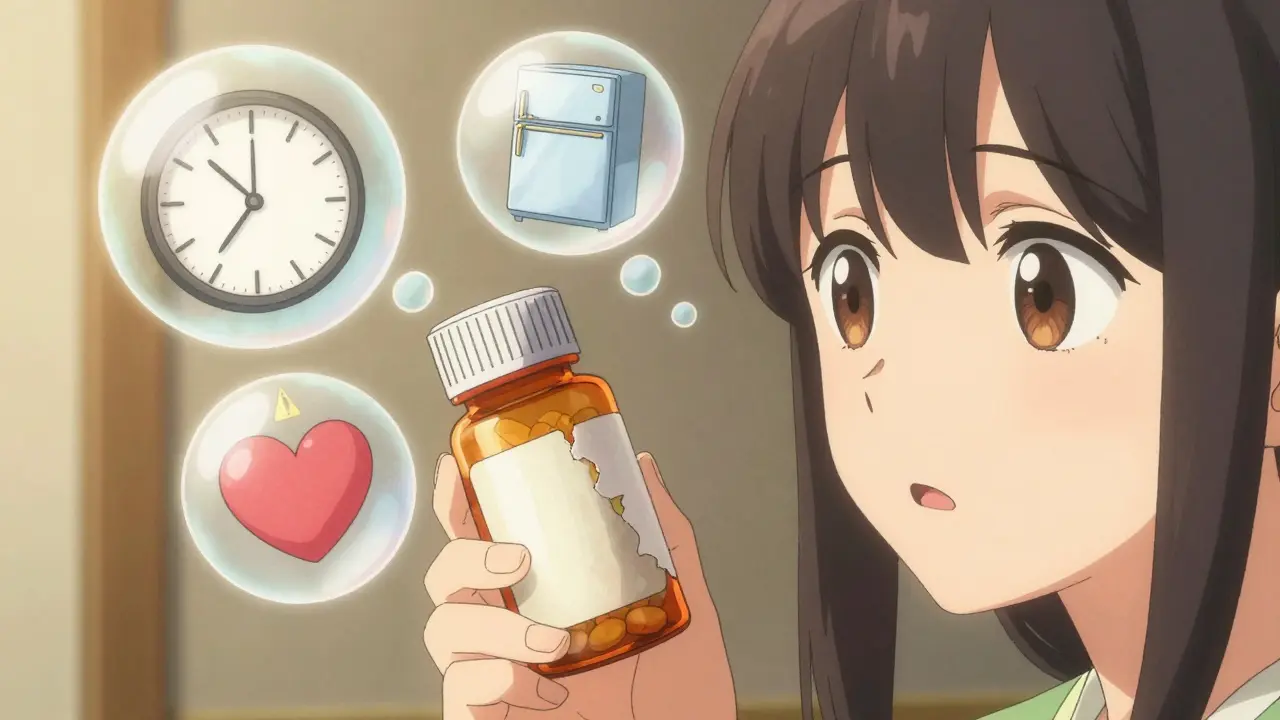
What are the side effects I should watch for?
Most labels list side effects in tiny print. But they don’t tell you which ones are common versus dangerous. Ask: Which side effects are normal and which mean I need to call my doctor? For example, dizziness on a new blood pressure med? Common. Swelling in your throat or trouble breathing? Emergency. The FDA requires Medication Guides for 107 high-risk drugs - including opioids, estrogen, and isotretinoin - but many patients never get them. If you don’t see a separate printed guide, ask for one. And if you’re on multiple meds, ask if any of them interact dangerously together.How should I store this?
You’d be surprised how many people keep their meds in the bathroom cabinet - hot, humid, and full of steam. That’s bad for most drugs. Seventy-eight percent of prescriptions need room temperature storage (68-77°F). Fifteen percent need refrigeration (36-46°F). Some, like insulin or certain eye drops, lose potency fast if left out. Ask: Does this need to be kept cold? Should I keep it in the original bottle? Can I transfer it to a pill organizer? One patient in a 2023 Consumer Reports survey left her blood pressure med at room temperature for two weeks - because the storage note was on the back of the label in 8-point font. She didn’t realize it was no longer effective.Can I still take this after the expiration date?
Expiration dates aren’t arbitrary. The FDA requires manufacturers to prove the drug stays safe and effective until that date - if stored properly. But many people assume it’s a “use-by” date, not a “potency-by” date. Ask: Is this still good? For most pills, it’s safe to take a few months past the date - but not for insulin, nitroglycerin, or liquid antibiotics. Those can break down and become dangerous. If you’re unsure, bring it back to the pharmacy. They’ll check the batch and tell you if it’s still usable.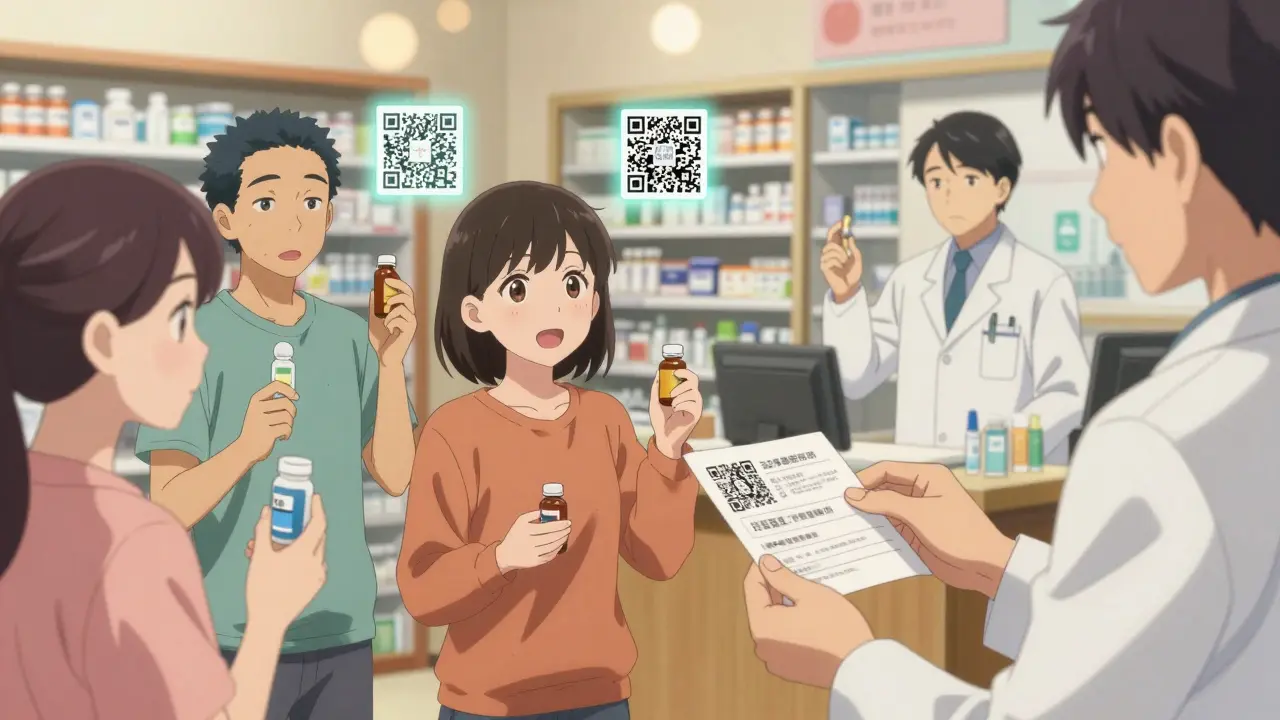
How many refills do I have left?
This seems obvious - but pharmacies sometimes miscount. Or your insurance changes coverage mid-cycle. Or your doctor didn’t authorize refills yet. Ask: How many refills are left? Do I need a new prescription for the next batch? If you’re on a long-term med like thyroid hormone or metformin, running out for even a few days can cause serious health setbacks. And if you’re on Medicare Part D, your coverage might have changed - so your refill might not be covered anymore. Always confirm before you leave the counter.Is there a simpler way to understand this?
If the label is too small, the language is confusing, or English isn’t your first language - you’re not alone. About 80 million U.S. adults struggle with health literacy. The good news? Most pharmacies offer help. Ask: Can I get a large-print version? Do you have a translation in Spanish, Vietnamese, or another language? Can you explain this out loud, and let me repeat it back to you? That last one - repeating instructions - is one of the most effective safety tools. Independent pharmacies do this routinely. Chain pharmacies are catching up. If they say no, ask to speak to the pharmacist, not just the technician. You have the right to understand your meds.Are there digital tools to help?
More pharmacies now offer QR codes on labels that link to short videos showing how to take the medicine. Some even use AI systems that adjust the explanation based on your health literacy level. Ask: Do you have a video or app that explains this? In pilot programs, these tools reduced errors by over 40%. The FDA is pushing for all high-risk meds to include scannable codes by 2026. Even if your pharmacy doesn’t have it yet, ask if they plan to. You’re not just asking for convenience - you’re asking for safety.What if something doesn’t look right?
Sometimes the pill looks wrong. The color, size, or imprint doesn’t match your last refill. The bottle says “30 tablets,” but there are only 28. The label has a typo - “take 2 tablets twice daily” instead of “once daily.” Don’t ignore it. Call the pharmacy back. Even if you’re embarrassed, speak up. A 2023 Reddit thread with over 1,200 upvotes showed that patients who questioned odd labels caught errors 58% of the time. One person noticed their blood thinner was labeled as a diabetes drug - and saved themselves from a stroke.Taking a few extra minutes at the pharmacy counter isn’t being difficult. It’s being smart. You wouldn’t drive a car without checking the fuel gauge. Don’t take a pill without checking the label. The system isn’t perfect - labels are cluttered, fonts are tiny, and rules vary by state. But you have power. Ask the questions. Demand clarity. Your life might depend on it.
Carlos Narvaez
December 25, 2025 AT 21:26Most people don’t realize pharmacies are profit centers disguised as healthcare providers. The label is intentionally cluttered to discourage questions. You think you’re getting care? You’re getting a receipt.
Ask for the Medication Guide? They’ll hand you a pamphlet printed in 5-point font.
Don’t be fooled.
This system is designed to keep you passive.
And you’re falling for it.
Rick Kimberly
December 26, 2025 AT 21:24While the post appropriately emphasizes patient advocacy, it is worth noting that the structural inefficiencies in pharmaceutical labeling are not solely attributable to negligence, but also to regulatory fragmentation across state and federal jurisdictions. The FDA’s labeling requirements, while rigorous, do not mandate legibility standards or patient-centric formatting, leaving implementation to commercial pharmacies with varying priorities. A standardized, ADA-compliant digital label interface - accessible via QR code and voice synthesis - would significantly mitigate the cognitive burden on patients with low health literacy. This is not merely a communication issue; it is a public health infrastructure failure.
sagar patel
December 28, 2025 AT 00:27My aunt took her blood pressure medicine for two years because the label said 'once daily' but she thought it meant 'every day' not 'one pill per day'. She ended up in the hospital. No one asked. No one checked. This is not a question. This is a warning.
Linda B.
December 28, 2025 AT 21:52Did you know the FDA allows pharmacies to use generic labels that don’t even mention the drug’s purpose? It’s not an accident. It’s a control mechanism. The pharmaceutical-industrial complex wants you confused. If you don’t understand your meds, you’ll keep refilling them. Forever. And they’ll keep billing your insurance. Ask for the original prescription sheet from your doctor. That’s the only document that’s legally binding. Everything else? Marketing.
They don’t want you to know this.
But now you do.
Bailey Adkison
December 29, 2025 AT 21:56You think asking questions at the pharmacy is brave? It’s just basic hygiene. If you don’t verify your meds, you’re not being proactive - you’re being negligent. People die because they assume. Assumption is the lazy person’s version of suicide. And don’t even get me started on pill organizers. That’s how you end up with three different blood thinners in one slot. You’re not saving time. You’re signing your own death warrant.
Stop being cute. Ask the damn questions.
Ben Harris
December 31, 2025 AT 09:04I used to work at a chain pharmacy. The script says 'take one daily' but the label says 'take one every 12 hours' because the tech miskeyed it. The pharmacist didn’t catch it. The patient didn’t notice. She ended up with a heart attack.
Now I only take meds from my cousin who’s a nurse. She prints the label herself. She knows what she’s doing.
Don’t trust the system. Build your own.
And yes I know this sounds extreme.
But I’m alive.
And they’re not.
Harbans Singh
January 1, 2026 AT 06:29My dad came from India and didn’t speak much English. He took his diabetes meds wrong for months because the label said 'take after meals' and he thought that meant after dinner only. We found out because he got dizzy every afternoon.
Now we always ask for the big print version and have the pharmacist read it out loud. He repeats it back. Simple. Free. Effective.
Don’t let pride get in the way of your life.
Ask. Even if you feel stupid.
They’ve seen it all before.
Justin James
January 2, 2026 AT 13:15Here’s the real truth nobody wants to admit: the entire prescription system is a rigged game designed to keep you dependent. The labels are intentionally confusing because if you understood your meds, you’d start questioning why you need them at all. Why are you on five drugs when you only have one condition? Why does your antidepressant come with a 17-page warning about suicidal ideation? Why does your blood pressure med say 'may cause impotence' but no one ever tells you that until you’re 60 and wondering why your marriage is falling apart?
They don’t want you thinking. They want you swallowing. And the label? It’s not a guide. It’s a distraction. A smokescreen. A placebo for your sense of control.
And the worst part? You’re still going to take it anyway.
Because you’ve been trained to believe the system has your back.
It doesn’t.
It never did.
Zabihullah Saleh
January 3, 2026 AT 14:58There’s a quiet dignity in asking for clarity. In a world that tells you to be silent, to comply, to trust authority - choosing to ask is radical. Not loud. Not angry. Just quiet. Persistent. Like a monk asking for the meaning of a single word in a sacred text.
Pharmacies should be temples of care, not checkout lanes.
But they’re not.
So we make them so - one question at a time.
It’s not about winning.
It’s about remembering we’re human.
And we deserve to understand what we’re putting into our bodies.
Winni Victor
January 4, 2026 AT 20:43Oh sweet baby Jesus I’m so tired of this. You think the pharmacist cares? They’re counting down the minutes until their shift ends. The label is a joke. The 'Medication Guide'? Printed on tissue paper. The 'QR code'? Links to a 10-minute corporate video narrated by a guy who sounds like he’s reading a cereal box.
And you want me to ask questions?
Like I’m gonna walk into CVS at 7pm with my 37 prescriptions and say 'excuse me, could you please explain why this blue pill is supposed to make me stop crying when it also makes me hallucinate spiders?'
No.
I’m just gonna take it.
And hope the spiders are friendly.
Terry Free
January 4, 2026 AT 22:09Let’s be clear: if you’re taking statins, you’re already part of the problem. Statins are overprescribed to people with LDLs of 130 because Big Pharma wants you hooked. The label says 'for cholesterol' - but nobody tells you it’s a Band-Aid on a bullet wound. You’re not fixing your diet. You’re not moving. You’re just swallowing a chemical to feel better about your life choices.
So yes - ask about the label.
But also ask why you’re on it in the first place.
Because if you’re asking about the label, you’re already one step ahead of the 99% who don’t even know what statin means.
Sophie Stallkind
January 5, 2026 AT 01:54It is imperative that patients be afforded the opportunity to verify the accuracy of their prescribed medications through direct consultation with a licensed pharmacist. The legal and ethical obligation of the pharmacy to ensure patient comprehension is not merely a best practice - it is a fiduciary duty. One must not underestimate the gravity of miscommunication in pharmacotherapy, particularly among elderly, non-native, or cognitively impaired populations. A standardized, verified verbal confirmation protocol - wherein the patient paraphrases dosage instructions in the presence of a witness - should be implemented universally. This is not optional. It is medicine.
Gary Hartung
January 6, 2026 AT 06:20Okay but have you considered that the real issue isn’t the label? It’s that your doctor didn’t explain it to you in the first place? I mean, you get 7 minutes with your GP, they scribble a script, you go to the pharmacy, and now you’re supposed to be a medical detective? That’s not a failure of the label - that’s a failure of the entire healthcare model.
And don’t even get me started on insurance companies that force generic switches every 3 months. One week you’re on lisinopril, next week it’s Zestril, then it’s a different generic with a different color and shape. You’re not supposed to notice - but you do. And then you panic.
So yeah - ask the questions.
But also - fire your doctor.
And your pharmacy.
And your insurance.
And maybe just start growing your own herbs.