
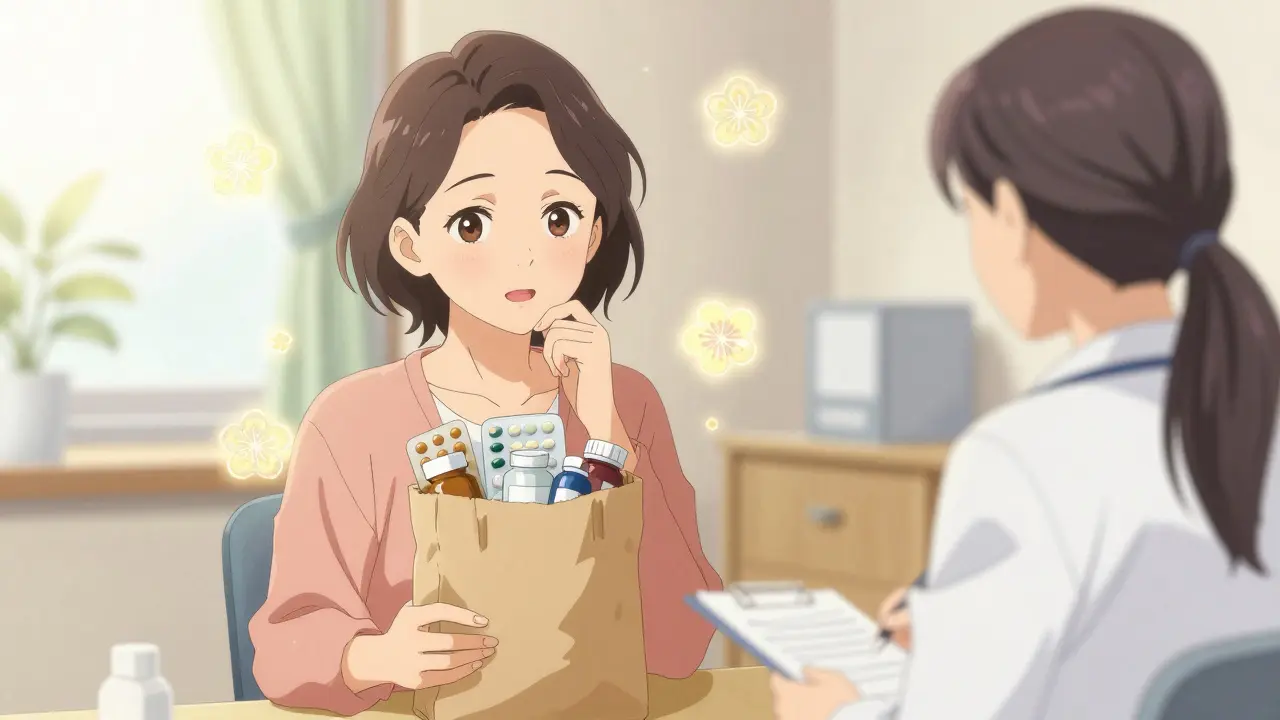
After menopause, your body changes in ways that affect how medicines work - and how they might hurt you. Many women in this stage of life take four or five prescriptions daily. Add over-the-counter drugs, supplements, and vitamins, and it’s easy to lose track. But here’s the real issue: medication safety isn’t just about taking pills correctly. It’s about knowing which ones are still right for you - and which ones could be dangerous.
Why Your Body Responds Differently After Menopause
Your liver and kidneys don’t process drugs the same way after menopause. Estrogen levels drop, and that shifts how your body breaks down medications. Oral estrogen, for example, goes straight to your liver first. That’s why it increases your risk of blood clots - by 30% to 50% compared to patches or gels. Transdermal estrogen skips that first pass. It’s safer for women with a history of clotting, high triglycerides, or even diabetes.Even common drugs like statins, blood pressure pills, and painkillers behave differently. A 70-year-old woman metabolizing simvastatin may build up toxic levels faster than a 40-year-old. That’s why dosages often need to be lowered - not because you’re weak, but because your biology changed.
Hormone Therapy: The Good, the Bad, and the Nuanced
Many women wonder if they should restart hormone therapy after menopause. The answer isn’t yes or no - it’s "it depends." The U.S. Preventive Services Task Force says combined estrogen-progestin therapy should not be used to prevent heart disease, dementia, or osteoporosis. Why? Because the risks - breast cancer, stroke, blood clots - outweigh the benefits. But for women under 60 or within 10 years of menopause, hormone therapy can still be a tool to manage hot flashes, night sweats, and vaginal dryness.Here’s what the data shows:
- Oral estrogen + progestin (like Prempro) raises breast cancer risk by 24% after 5+ years.
- Estrogen alone (for women who’ve had a hysterectomy) shows no significant increase in breast cancer risk - and may even lower it slightly.
- Transdermal estrogen (patch or gel) cuts venous clot risk by more than half compared to pills.
- Tibolone, used in Europe, reduces fractures but increases stroke risk by 58%.
Non-hormonal options exist. SSRIs like paroxetine can reduce hot flashes by 50-60%. But they can also cause low libido or difficulty orgasming in up to 40% of users. Gabapentin and clonidine help too - but they’re not magic bullets. The key? Match the treatment to your biggest concern: symptoms? Bone health? Heart risk?
Polypharmacy: The Silent Killer
Forty-four percent of women over 65 take five or more medications. That’s not unusual. But here’s the problem: 15% of those prescriptions are potentially inappropriate. The Beers Criteria lists 30 drugs to avoid in older adults. Think long-acting benzodiazepines like diazepam - they increase hip fracture risk by 50%. Or NSAIDs like diclofenac. One case study showed a 72-year-old woman’s hemoglobin dropped from 12.5 to 8.1 g/dL in a week after continuing NSAIDs despite stomach bleeding warnings.Many women get prescriptions from different doctors - a cardiologist here, a rheumatologist there, a pain specialist over there. No one sees the full picture. That’s why 40% of older adults get prescriptions from multiple providers. The result? Dangerous overlaps. A blood thinner plus an NSAID? That’s a recipe for internal bleeding. A statin plus grapefruit juice? That can fry your liver.
The World Health Organization calls this polypharmacy a global crisis. And it’s not just about taking too much - it’s about taking the wrong things. Studies show that structured deprescribing - slowly stopping unnecessary meds - reduces adverse drug events by 33%.

What You Should Do Right Now
You don’t need to be a medical expert to protect yourself. Here’s what works:- Do a brown bag review. Every year - or after any hospital visit - take every pill, capsule, patch, and supplement you take to your doctor. No excuses. No shame. Just bring it all.
- Use a pill organizer. They cut medication errors by 81%, according to JAMA Internal Medicine. But don’t just use one - make sure you’re actually taking what’s inside. 28% of women still mess up, often by double-dosing or skipping pills.
- Ask: "Is this still necessary?" If you were prescribed something five years ago for a symptom that’s gone, ask if you can stop. Don’t assume it’s still helping.
- Know your risk factors. Migraines with aura? Avoid estrogen. History of blood clots? Avoid oral estrogen. Breast cancer history? Avoid most hormone therapy. Diabetes? Watch for fluid retention with estrogen.
- Use the START/STOPP criteria. It’s not a fancy app - it’s a checklist doctors use to spot bad prescriptions and missed opportunities. Ask your provider if they’ve used it.
What to Watch For
Side effects don’t always show up right away. Sometimes they creep in. Watch for:- Sudden confusion or memory lapses - could be a drug interaction.
- Unexplained bruising or bleeding - maybe you’re on too many blood thinners.
- Swelling in your ankles - could be a blood pressure med that’s no longer right.
- Loss of appetite or nausea - could be liver stress from stacking meds.
- Feeling more tired than usual - could be an antidepressant or statin side effect.
If something feels off, don’t brush it off as "just aging." It might be your meds.

The Bigger Picture
Post-menopausal women spend over $1,200 more per year on healthcare than men their age. Why? Because we’re more likely to have multiple chronic conditions - osteoporosis, arthritis, high blood pressure, diabetes - and we’re more likely to be prescribed drugs that interact badly.There’s new hope. Tissue-selective estrogen complexes (TSECs), like conjugated estrogens with bazedoxifene, reduce endometrial thickening by 70% compared to old-school hormone therapy. AI tools are being tested to catch dangerous drug combinations before they happen. Pharmacogenomics - testing your genes to see how you metabolize drugs - is starting to show up in clinics.
But none of that matters if you’re not involved. You are the most important person in your medication plan. No doctor, no pharmacist, no app can replace your daily awareness.
Final Thought
Menopause isn’t the end of your health journey - it’s a turning point. Your body is different now. Your needs are different. Your medications should be too. Don’t let outdated prescriptions or fear of side effects keep you from living well. But don’t just accept every pill you’re handed. Ask questions. Review your list. Push for clarity. Your safety isn’t someone else’s job - it’s yours.Is hormone therapy safe after menopause?
Hormone therapy can be safe for some women, especially if started within 10 years of menopause and under age 60. Transdermal estrogen (patch or gel) is safer than pills for women with clotting risks or liver issues. But it’s not for everyone. If you have a history of breast cancer, blood clots, stroke, or unexplained vaginal bleeding, estrogen is generally not recommended. The goal isn’t to prevent heart disease or dementia - it’s to manage symptoms like hot flashes and vaginal dryness. Always weigh personal risks against benefits.
Can I stop taking my blood pressure pill if I feel fine?
No. Feeling fine doesn’t mean your blood pressure is under control. Many people with high blood pressure have no symptoms. Stopping suddenly can cause dangerous spikes in pressure, leading to stroke or heart attack. If you think your medication isn’t needed anymore, talk to your doctor about a safe tapering plan - never quit cold turkey.
Why do I keep forgetting to take my pills?
It’s not just memory - it’s complexity. Taking five or more pills at different times of day is hard to manage. Studies show 38% of medication errors in older women are from missing doses. Use a pill organizer with alarms or a smartphone app. Also, ask your doctor if any meds can be combined into once-daily doses. Simplifying your regimen is one of the best ways to improve adherence.
Are supplements safe to take with my prescriptions?
Not always. St. John’s Wort can make birth control, blood thinners, and antidepressants useless. Calcium and iron can block absorption of thyroid meds. Vitamin K can reduce the effect of warfarin. Even magnesium can interfere with antibiotics. Always tell your doctor and pharmacist what supplements you take - even if you think they’re "natural" or "harmless."
How often should I get my medications reviewed?
At least once a year - but more often if you’ve been hospitalized, started or stopped a drug, or added two or more new medications. The American Academy of Family Physicians recommends a full medication review after any major health event. Medicare Part D also requires annual medication therapy management for people with multiple chronic conditions. Don’t wait for your doctor to bring it up - ask for it.
Jenci Spradlin
January 9, 2026 AT 12:54so i just started taking simvastatin last year and my dr never said anything about lowering the dose after menopause. i’m 68 and i’ve been fine, but now i’m wondering if i’m just lucky or if i’m slowly poisoning myself. maybe i’ll bring my brown bag to my next appt.
Darren McGuff
January 10, 2026 AT 08:47the transdermal estrogen point is critical. my sister went from pills to a patch after a DVT and her clotting markers dropped to normal in 3 months. doctors still push oral like it’s 2005. it’s not laziness-it’s inertia. but the data’s clear: patches = safer. why aren’t we talking about this more?
Catherine Scutt
January 11, 2026 AT 12:03everyone’s so obsessed with meds, but nobody talks about how much sugar and processed food is wrecking their hormones. you don’t need a new prescription-you need to stop eating donuts.
Kiruthiga Udayakumar
January 11, 2026 AT 16:33in india, women over 60 take 3-4 ayurvedic supplements with their allopathic meds. no one checks interactions. my aunt took ashwagandha with blood thinners and ended up in the ER. natural doesn’t mean safe. always tell your dr. always.
Micheal Murdoch
January 12, 2026 AT 04:00you’re not broken because your body changed after menopause-you’re just adapting. the system isn’t designed for this phase of life. we treat women like their bodies are defective when they’re just… different. the real crisis isn’t polypharmacy-it’s that we keep treating aging women like they’re failing biology instead of evolving through it. your hormones aren’t broken. the medicine is.
Heather Wilson
January 13, 2026 AT 01:16the article is well-researched but ignores cultural context. in rural America, many women can’t afford to see a pharmacist for a med review. they’re choosing between insulin and their blood pressure pill. this isn’t a personal responsibility issue-it’s a systemic failure. stop blaming women for not being perfect medication managers when they’re being failed by the system.
Maggie Noe
January 15, 2026 AT 00:32my dr finally listened when i said i felt like a zombie after starting gabapentin. turned out it was interacting with my antidepressant. now i’m on low-dose paroxetine and i sleep better. 🙌 sometimes you just have to say ‘this isn’t me anymore’ and fight for a change.
Gregory Clayton
January 15, 2026 AT 20:59oh here we go again with the ‘menopause is a medical emergency’ narrative. i’m 71, take zero hormones, eat real food, walk 5 miles a day, and i’ve never felt better. all this fear-mongering about meds is just big pharma’s way of selling more pills. stop being scared. be smart. move your body. eat clean. you don’t need 7 prescriptions to live well.
Matthew Maxwell
January 17, 2026 AT 01:18the author’s tone is commendable, yet the recommendations lack moral clarity. The notion that one may continue taking SSRIs despite sexual dysfunction is ethically questionable. One’s libido is not a trivial side effect-it is an intrinsic component of human dignity. To normalize pharmacological compromise in the name of symptom management is to surrender to a culture of chemical sedation.
Chris Kauwe
January 17, 2026 AT 03:36let’s be real-this whole ‘deprescribing’ thing is just a fancy way of saying ‘we don’t have time to manage your meds properly.’ the system is collapsing, and we’re being told to self-administer our way out of it. meanwhile, the same doctors who prescribe you 8 drugs won’t take 10 minutes to review them. it’s not your fault. it’s capitalism.
Patty Walters
January 18, 2026 AT 14:23i use a pill organizer with alarms and still forget sometimes. i think it’s because i’m tired all the time. not from age-from stress. and i’ve stopped taking my fish oil because i read it might interact with my blood thinner, but i’m scared to ask my dr. what if they think i’m dumb for not knowing?
Ashley Kronenwetter
January 20, 2026 AT 02:21Thank you for this comprehensive overview. I would like to add that the START/STOPP criteria are not widely implemented in primary care settings, even in academic institutions. A formalized, mandatory medication reconciliation protocol-integrated into EHRs and incentivized through CMS reimbursement-would be a far more scalable solution than individual brown-bag reviews. Policy change is needed, not just patient vigilance.