

When you’re tossing and turning every night, waking up exhausted even after eight hours in bed, it’s not just bad sleep-it might be something deeper. That’s where polysomnography comes in. It’s not a simple snore monitor or a wearable tracker you buy online. It’s the gold standard sleep study used by doctors to find out exactly what’s going wrong while you sleep. And if you’ve been told you need one, you’re probably wondering: What’s it really like? What do they measure? And what do the results actually mean?
What Exactly Is a Polysomnography?
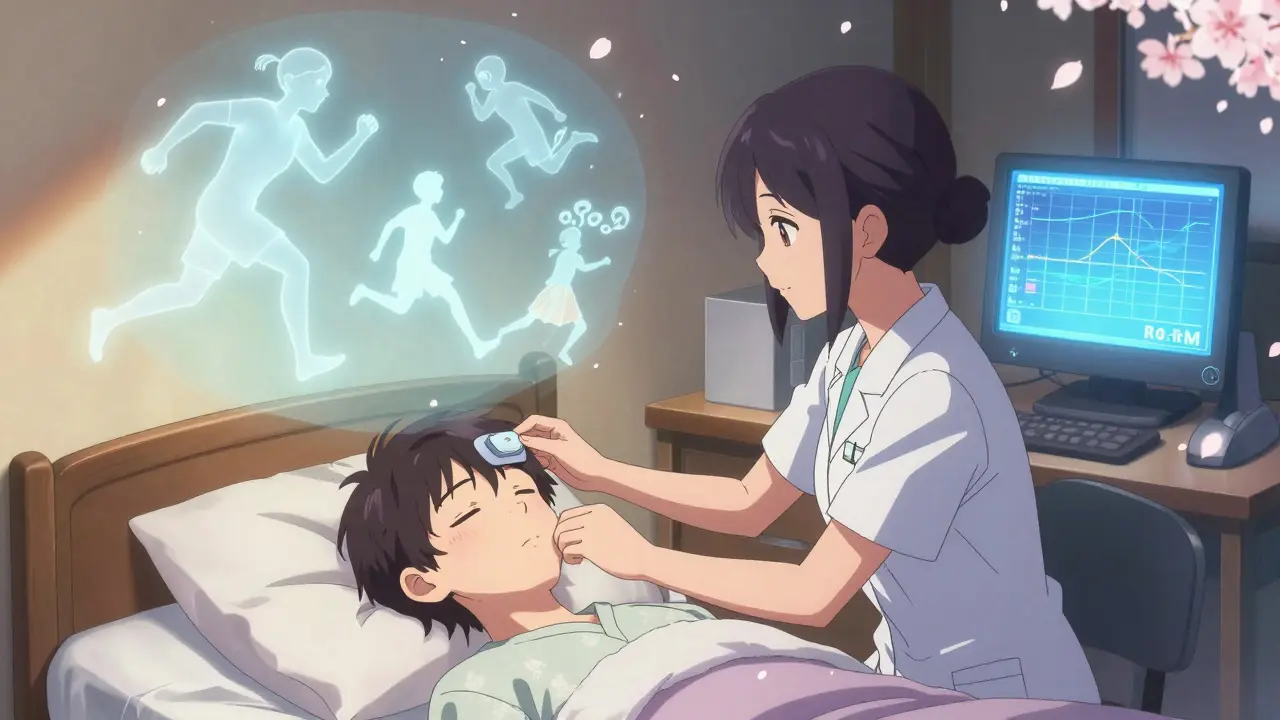
Polysomnography, often called PSG or a sleep study, is a full-night test that records your body’s activity while you sleep. The name breaks down simply: poly means many, somno means sleep, and graphy means recording. So, it’s a multi-parameter sleep recording. Unlike home sleep tests that only check breathing, polysomnography looks at your brain, eyes, muscles, heart, breathing, oxygen levels, and even how you move-all at once. It’s done in a sleep center, usually a quiet, private room that looks like a hotel room but with wires and sensors everywhere. You’ll arrive a couple of hours before your normal bedtime so technicians can set everything up. They’ll attach about 20 sensors to your scalp, face, chest, legs, and fingers. It sounds intense, but it’s painless. No needles. No shocks. Just sticky pads and soft belts. The whole test lasts 6 to 8 hours-enough time to go through several full sleep cycles. A sleep technologist watches you from another room on monitors, making sure the data is clean and stepping in if you need help adjusting a sensor or just want to talk.What Does a Polysomnography Measure?
This isn’t just one thing being tracked. It’s a full-body snapshot of your sleep. Here’s what’s actually being recorded:- Brain waves (EEG): Electrodes on your scalp pick up electrical activity to tell which sleep stage you’re in-light sleep, deep sleep, or REM. This is critical because disorders like narcolepsy mess with how you enter REM sleep.
- Eye movements (EOG): These help detect REM sleep, when your eyes dart around under closed lids. If you’re having nightmares or acting out dreams, this helps spot it.
- Muscle activity (EMG): Sensors on your chin and legs track muscle tone. Twitches, leg jerks, or even sleepwalking show up here.
- Heart rhythm (ECG): Your heart doesn’t stop during sleep. This records irregular beats or drops in heart rate that could signal other health issues.
- Respiratory effort: Two elastic belts around your chest and belly measure how hard you’re trying to breathe. This helps tell the difference between obstructive sleep apnea (blocked airway) and central sleep apnea (brain didn’t signal to breathe).
- Airflow: A tiny tube under your nose or a pressure sensor detects whether air is moving in and out. No airflow? That’s an apnea.
- Blood oxygen (SpO2): A clip on your finger tracks how much oxygen your blood is carrying. If it drops below 90%, that’s a red flag.
- Body position: Are you sleeping on your back? Side? This matters because sleep apnea often gets worse when you’re on your back.
- Audio and video: The room is quietly recorded so technicians can hear snoring, gasping, or even talking and kicking in your sleep.
Who Needs a Polysomnography?
Not everyone who snores needs this test. But if you have symptoms like:- Chronic loud snoring with pauses in breathing (witnessed by a partner)
- Daytime exhaustion that doesn’t improve with more sleep
- Waking up gasping or choking
- Unexplained morning headaches
- Frequent nighttime urination
- Restless legs that wake you up
- Acting out dreams-kicking, yelling, punching
- Unexplained sleepwalking or night terrors
- Obstructive sleep apnea (OSA)
- Central sleep apnea (CSA)
- Narcolepsy
- Idiopathic hypersomnia
- Parasomnias (sleepwalking, night terrors, REM sleep behavior disorder)
- Periodic limb movement disorder
- Unexplained insomnia with suspected underlying causes
What’s a Split-Night Study?
Sometimes, the answer comes fast. If you’re having severe sleep apnea in the first half of the night, the technician might switch you to a split-night study. That means after diagnosing the problem, they’ll wake you up and fit you with a CPAP mask. Then they’ll adjust the air pressure while you sleep to find the right setting to keep your airway open. About 35% of polysomnography studies now follow this model. It saves time, money, and stress-you don’t need to come back for a second night. But it only works if the apnea is bad enough early on. If your breathing issues are mild or irregular, you’ll need a full diagnostic night first.What Do the Results Look Like?
After your test, the raw data-sometimes over 1,000 pages of numbers and waveforms-goes to a board-certified sleep physician. They don’t just glance at it. They spend 2 to 3 hours analyzing every second of your sleep. The final report breaks down:- Total sleep time: How long you actually slept versus how long you were in bed.
- Sleep efficiency: Percentage of time in bed spent asleep. Below 85% is considered poor.
- Sleep stages: How much time you spent in each stage-light, deep, REM. Too little deep sleep? That’s why you feel drained.
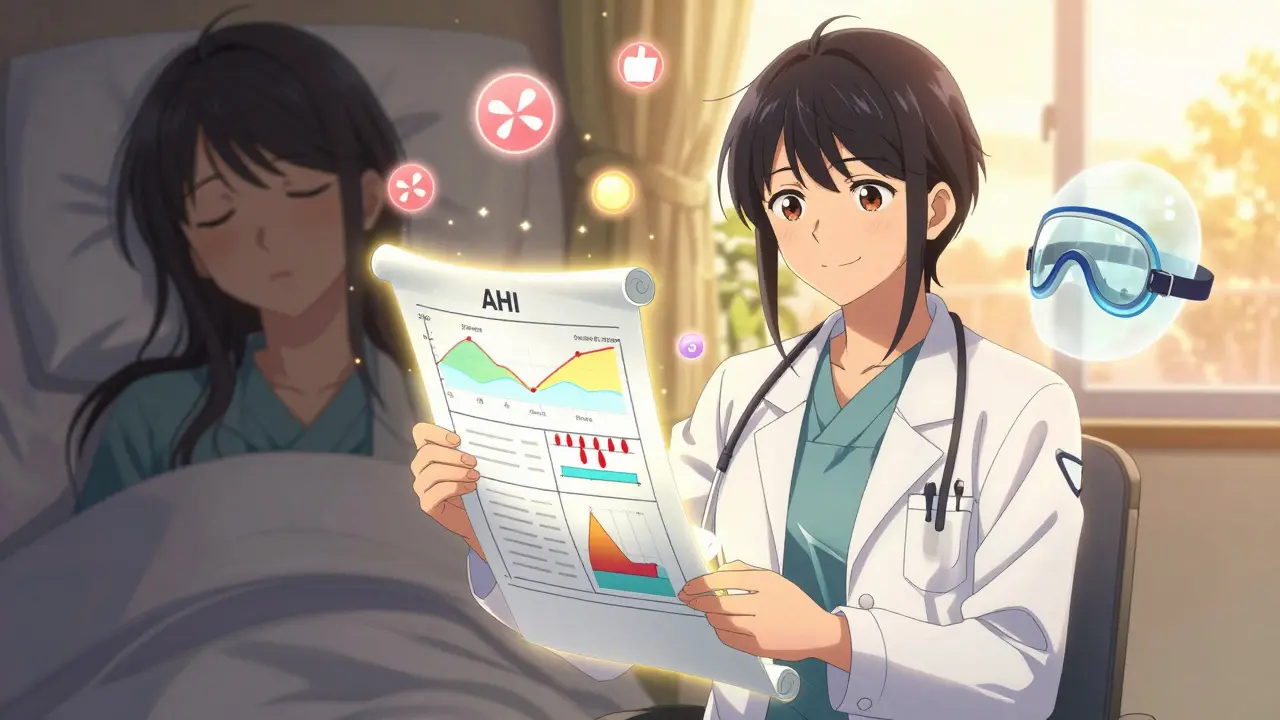
- AHI (Apnea-Hypopnea Index): The number of breathing pauses per hour. Less than 5 is normal. 5-15 is mild, 15-30 is moderate, over 30 is severe.
- Oxygen drops: How low your blood oxygen went and how often.
- Leg movements: Number of limb jerks per hour. Over 15 may point to periodic limb movement disorder.
- Abnormal behaviors: Was there sleepwalking? Screaming? Acting out dreams?
How to Prepare for Your Sleep Study
You don’t need to change your life, but a few simple steps make the test more accurate:- Stick to your normal sleep schedule for at least 3 days before the test.
- Avoid caffeine after noon on the day of your study. That includes coffee, tea, soda, and chocolate.
- Don’t nap in the afternoon.
- Wash your hair and skin-no lotions, oils, or makeup. They interfere with sensors.
- Bring your own pillow, pajamas, and anything that helps you sleep.
- Let the staff know if you take regular medications-they’ll tell you if you should skip any.
What Happens After the Results?
Your doctor will sit down with you and explain the findings. If you have sleep apnea, you’ll likely be prescribed CPAP therapy. If it’s narcolepsy, you might need stimulants or other medications. If you’re kicking your legs at night, iron supplements or muscle relaxants could help. Some people need a follow-up study-like a CPAP titration if you didn’t get one during the split-night test. Others need a Multiple Sleep Latency Test (MSLT) the next day to check for excessive daytime sleepiness, especially if narcolepsy is suspected. The key is: don’t ignore the results. Sleep disorders don’t fix themselves. Left untreated, they raise your risk of heart disease, stroke, diabetes, and depression. But treated? Many people say they feel like they’ve been given back their life.Insurance and Costs
In the U.S., Medicare and most private insurers cover polysomnography if your symptoms meet clinical guidelines-like snoring with witnessed apneas or excessive daytime sleepiness. You’ll usually need a referral from your doctor and sometimes prior authorization. In-lab studies cost between $1,000 and $3,000 without insurance. Home sleep tests are cheaper-$300 to $700-but they’re not always accepted by insurers if your case is complex. Many centers offer payment plans. Ask.What’s New in Sleep Studies?
Technology is improving. New wireless sensors mean fewer wires-down from 20 to just 5 or 6. Some labs now use AI to help flag breathing events or abnormal brain patterns faster. Cloud-based systems let specialists review data remotely, speeding up diagnosis. But the core hasn’t changed. The gold standard is still the in-lab polysomnography. It’s the only test that gives you the full picture. Home tests are great for screening. But if your life is being ruined by poor sleep, you need the full picture.Is a polysomnography painful?
No, it’s not painful. Sensors are taped or clipped to your skin-they don’t pierce or shock you. Some people feel awkward with all the wires, but no one reports pain. The most common complaint is difficulty falling asleep the first night, but most people still get enough rest for accurate results.
Can I use the bathroom during the study?
Yes. Each sensor has a quick-release connector. If you need to go, just press a button, and the technologist will unhook you in seconds. You’ll be given a robe and slippers. It’s completely normal and happens often.
How long does it take to get results?
It usually takes 1 to 2 weeks. The raw data takes 2-3 hours for a sleep specialist to analyze, and they often have a backlog. If your case is urgent-like severe apnea or suspected narcolepsy-your doctor can request expedited review.
Can I bring my partner to the sleep center?
Most centers allow one companion to stay overnight, especially if they’ve witnessed your symptoms. Check with the facility ahead of time. Some have extra beds; others may ask your partner to sleep in a nearby room.
Do I need to stay overnight?
Yes. Polysomnography requires monitoring during your natural sleep cycle, which only happens at night. Daytime naps don’t give the same data. There’s no alternative to an overnight stay for a full diagnostic study.
Are home sleep tests just as good?
No. Home tests only monitor breathing and oxygen. They miss brain activity, leg movements, REM behavior, and other disorders. If you have symptoms beyond snoring and daytime sleepiness-like sudden sleep attacks, nightmares, or unexplained fatigue-a home test won’t find the cause. Polysomnography is still the only way to diagnose the full range of sleep disorders.
Adarsh Dubey
December 24, 2025 AT 09:29Polysomnography is one of those tests that sounds terrifying until you actually do it. I was convinced I wouldn't sleep a wink with all those sensors, but the techs were so chill they made it feel like a weird hotel stay. I slept about 5 hours and they still got everything they needed. No pain, no shocks, just sticky pads and quiet monitoring. Honestly? Worth it if you're tired all the time for no reason.
Also, bring your own pillow. Small thing, huge difference.
Bartholomew Henry Allen
December 25, 2025 AT 22:22Government funded sleep labs are a national priority. Sleep apnea costs the economy billions in lost productivity and healthcare. This test is not a luxury. It is a medical necessity. If you are too lazy to get tested then you are part of the problem. Wake up. Get tested. Stop being a burden.
End of discussion.
Wilton Holliday
December 26, 2025 AT 18:52Just had my first PSG last month and I'm so glad I did! 😊 I thought I was just 'bad at sleeping' but turns out I had moderate OSA. Got my CPAP and honestly? I feel like a new person. No more afternoon naps, no more brain fog, no more waking up gasping. The techs were awesome, the room was cozy, and the whole thing was way less scary than I imagined. If you're on the fence-just do it. Your future self will thank you 🙌
Also, they let me bring my dog's stuffed animal. Small comfort, big help.
Raja P
December 27, 2025 AT 19:27Been through this twice. First time I was nervous as hell. Second time? Barely noticed the wires. Honestly, the hardest part is not having your coffee in the morning. The techs are super nice, they give you a robe, let you use the bathroom anytime, and they even adjust the room temp if you're cold. No needles, no pain. Just a bunch of sensors that don't even feel like they're there after 20 minutes.
And yeah, bring your own pillow. Trust me.
Harsh Khandelwal
December 29, 2025 AT 11:00Let me guess-this is all just a big pharma scam to sell you CPAP machines and sleep meds. You think they really care if you sleep? Nah. They just want you hooked on machines so you keep paying. You know what fixes sleep apnea? Sleeping on your side. Or losing weight. Or not drinking beer before bed. But nah, let's stick 20 wires on you and charge $3k. Classic. The real cure? Stop trusting doctors who profit off your sleep problems. 🤡
Also, why do they record video? Are they watching me dream? Who's viewing this? I'm not that guy.
Andy Grace
December 30, 2025 AT 22:33I did this last year after years of feeling like a zombie. I didn’t sleep much that night-maybe 4 hours-but the data was perfect. What surprised me was how much my body was struggling without me even noticing. The oxygen drops were brutal. I didn’t realize I was waking up 40 times an hour. The report was clear. The treatment worked. I’m not saying it’s easy, but it’s worth the discomfort. Sometimes you need hard data to prove something’s wrong.
And yeah, bring your own pillow.
Delilah Rose
January 1, 2026 AT 22:28I just want to say that I think it’s incredible how much we’ve learned about sleep over the last two decades, and how much more nuanced polysomnography is compared to the old days when they just counted snoring episodes and called it a day. I mean, think about it-your brainwaves, your eye movements, your muscle tone, your heart rhythm, your oxygen levels, your breathing patterns, your body position, even audio and video-all of it, recorded simultaneously, to build a complete picture of your most vulnerable state. It’s like a medical MRI of your unconscious mind. And the fact that they can detect REM behavior disorder or periodic limb movements just by watching how your muscles twitch? That’s science fiction becoming reality. I used to think insomnia was just stress, but now I know it’s often a neurological misfire, and this test is the only way to see it. I’m so grateful for the techs who stay up all night watching screens so we can finally get answers. Honestly, if more people knew how detailed this is, fewer would be scared.
Also, bring your own pillow. Seriously. It helps more than you think.
Spencer Garcia
January 2, 2026 AT 11:27Bring your own pillow. Seriously. It’s the one thing that makes a difference.
Lindsey Kidd
January 3, 2026 AT 03:02Just got my results back-AHI of 22. 😳 I thought I was just a heavy sleeper. Turns out I was waking up every 3 minutes. Got my CPAP and now I’m actually dreaming again. 🌙✨ Also, the tech who helped me? She gave me a sticker that said ‘I survived the sleep lab.’ I framed it. 🥹
PS: Bring your own pillow. And don’t skip the coffee the next morning. You earned it.
Austin LeBlanc
January 3, 2026 AT 17:45You people are so naive. You think they’re helping you? They’re just collecting data for insurance companies and sleep device manufacturers. That ‘sleep architecture’ they talk about? It’s all made up. You’re not sleeping wrong-you’re just being manipulated. Why do you think they need video? To see if you’re faking it? To sell you more meds? I’ve seen the leaks. This isn’t medicine. It’s surveillance with a white coat. And don’t even get me started on CPAP-those machines are just glorified air pumps to keep you dependent. Wake up. The system doesn’t want you to sleep well. It wants you to pay for it.
Also, they don’t care if you bring your pillow. They just want your data.