When you pick up a generic prescription at the pharmacy, you might think the price is simple: lower cost, same medicine. But behind that $4 copay is a tangled web of federal laws, state regulations, and corporate contracts that decide exactly how much the pharmacy gets paid - and who ends up paying the difference. These aren’t just behind-the-scenes details. They directly affect whether you can afford your meds, whether your local pharmacy stays open, and even whether new generic drugs ever reach the market.
How Generic Drugs Got Their Price Tag
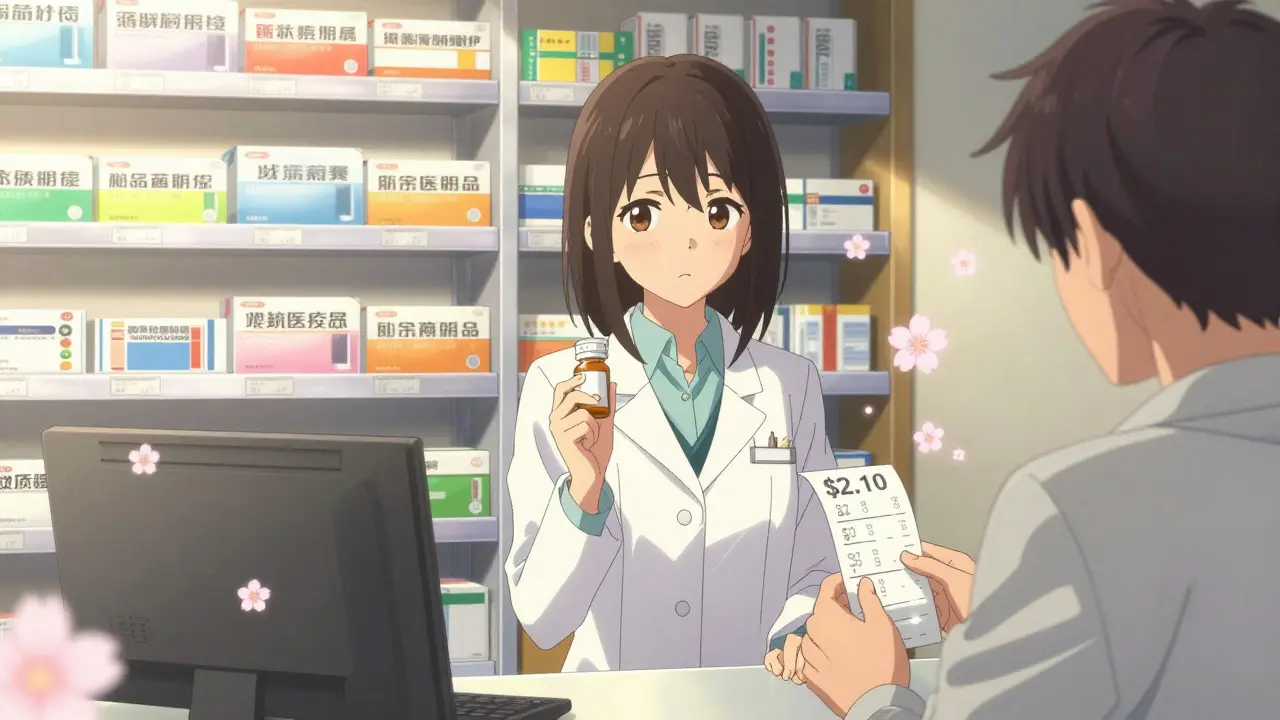
The modern system for paying pharmacies for generic drugs started with the Hatch-Waxman Act of 1984. Before that, bringing a generic drug to market was slow, expensive, and risky. The law changed everything by letting companies skip expensive clinical trials if they could prove their version was the same as the brand-name drug. Suddenly, dozens of generic versions of popular drugs could hit the market at once. But here’s the catch: just because generics are cheaper doesn’t mean pharmacies get paid more. In fact, they often get paid less - and sometimes not enough to cover what they paid for the pills.The two main ways pharmacies get reimbursed for generics are Average Wholesale Price (AWP) and Maximum Allowable Cost (MAC). AWP used to be the standard. It’s a list price set by manufacturers, often inflated, and pharmacies were paid a percentage below that. But AWP became unreliable. Pharmacies were getting paid based on a number that didn’t reflect real market prices. So states and insurers switched to MAC programs. Under MAC, the payer sets a fixed cap - say, $2.10 per 30 tablets of lisinopril. If the pharmacy paid $1.90 for the pills, they keep the 20-cent profit. If they paid $2.30? They eat the loss. No one tells them that until after they’ve filled the prescription.
Who Controls the Money Flow
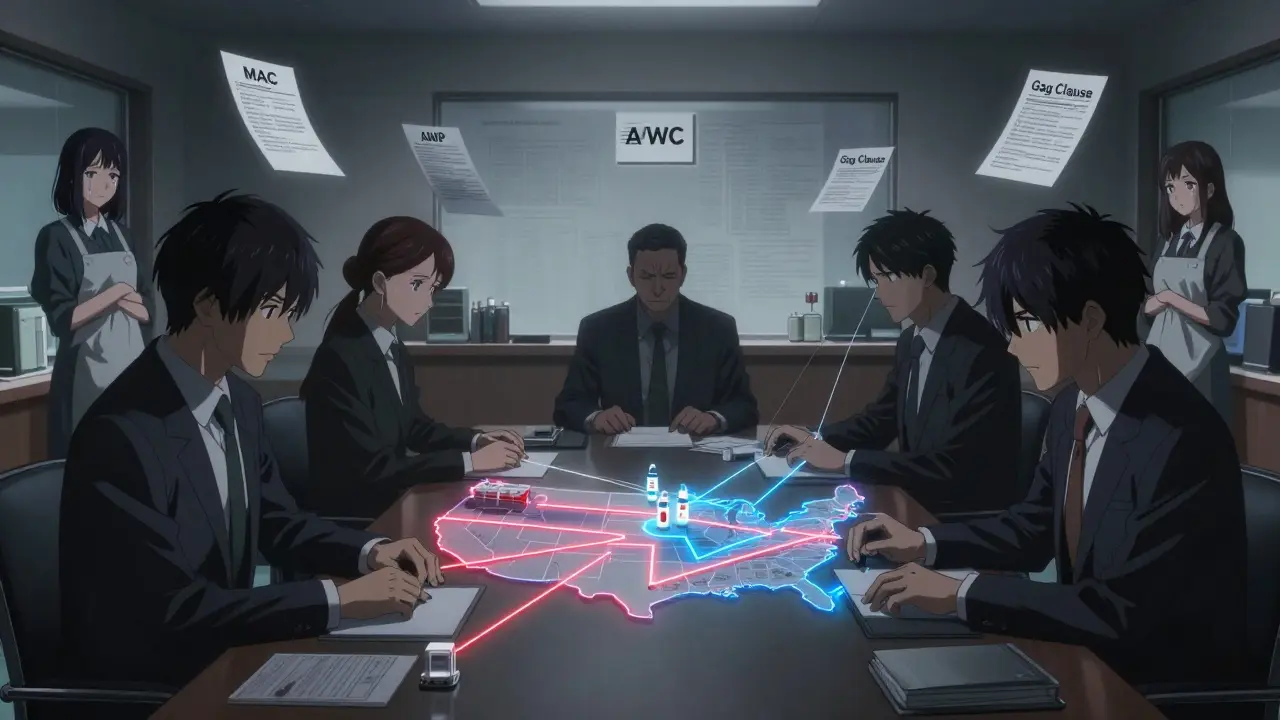
Pharmacy Benefit Managers (PBMs) are the invisible middlemen. CVS Caremark, Express Scripts, and OptumRX handle nearly 80% of all prescription claims in the U.S. They don’t just process claims - they negotiate prices with drugmakers, decide which drugs are covered, and set what pharmacies get paid. Their main source of profit? The “spread.” That’s the difference between what the insurance plan pays the PBM and what the PBM pays the pharmacy. If your plan pays the PBM $5 for a generic, but the PBM only pays the pharmacy $3, the PBM keeps $2. That spread used to be hidden. Pharmacists couldn’t even tell you if paying cash would be cheaper - thanks to “gag clauses” that were only banned in 2018.These same PBMs also create formularies - lists of approved drugs. They put generics on preferred tiers with low copays to push patients toward them. But they also steer patients to their own mail-order pharmacies or affiliated retail chains. Independent pharmacies, especially in rural areas, often get stuck with lower reimbursement rates and fewer patients because they’re not part of the PBM’s network.
Medicare Part D and the Generic Gap
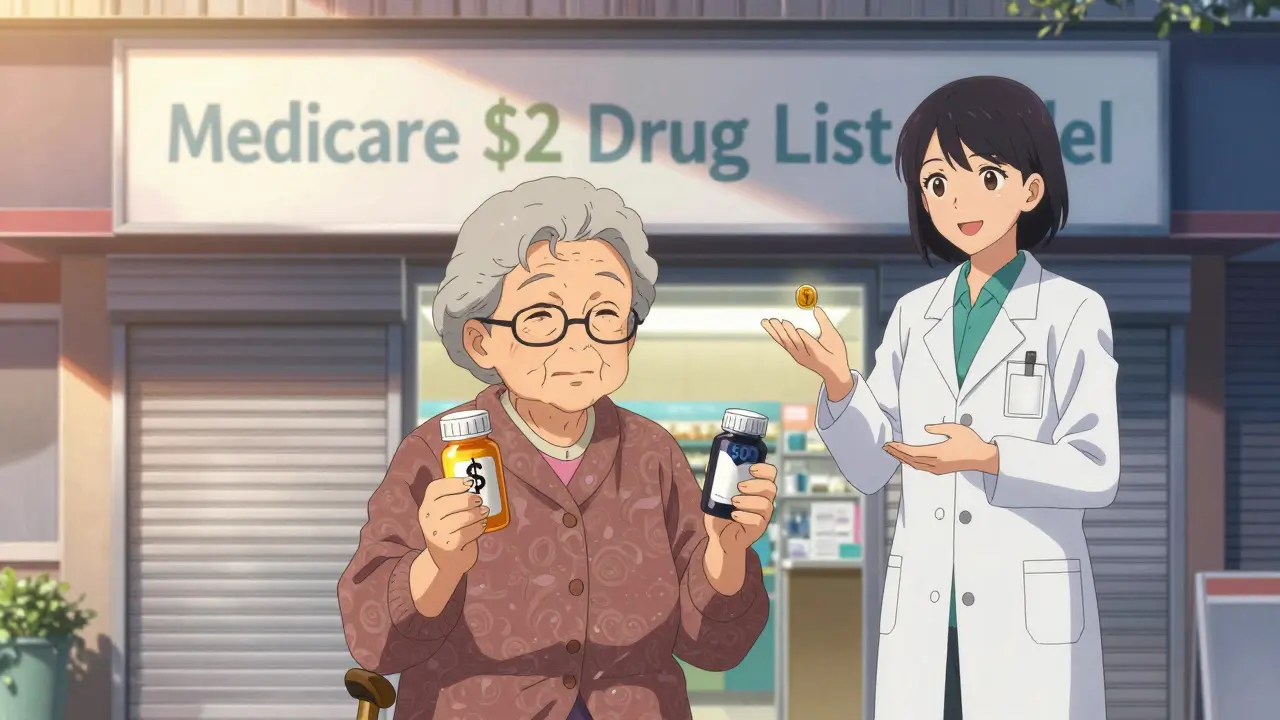
Medicare Part D covers outpatient prescriptions for 50 million seniors and people with disabilities. It’s a patchwork of private plans, each with its own rules. But they all follow federal guidelines. Generics are supposed to be the default. In fact, 84% of prescriptions filled under Part D are generics - yet they only make up 27% of total spending. Why? Because many plans still charge high deductibles. You might pay $500 out of pocket before your generic copay kicks in. Or your plan might require prior authorization for a generic you’ve taken for years - just because the PBM wants you to switch to a different version.There’s also the “donut hole” - a coverage gap where you pay full price after hitting your initial coverage limit. Even though the Inflation Reduction Act is capping out-of-pocket costs at $2,000 starting in 2025, many seniors still struggle with high costs before that cap kicks in. And while the Medicare $2 Drug List Model is being tested to fix this - offering a fixed $2 copay for 100-150 essential generics - it’s still voluntary. Not all plans are signing up.
Medicaid and State-Level Power Plays
Medicaid covers 85 million Americans, and it’s where state laws really shape how generics are paid. Each state runs its own Medicaid program and sets its own Preferred Drug List (PDL). The state’s Pharmacy and Therapeutics Committee picks which generics are preferred - meaning lower copays - and which require prior authorization. Some states even cap reimbursement rates below what the pharmacy paid for the drug. In 2023, the National Community Pharmacists Association found that average generic reimbursement margins had dropped to just 1.4%, down from 3.2% in 2018. Many small pharmacies now operate at a loss on generics, relying on brand-name sales or other services to stay afloat.Forty-four states have passed laws to regulate PBMs - requiring them to disclose spreads, banning gag clauses, and setting minimum reimbursement rates. But enforcement is weak. Pharmacies rarely challenge PBM contracts because they can’t afford to be dropped from the network.
The Hidden Barriers to Generic Competition
You’d think more generic manufacturers mean lower prices. But sometimes, the opposite happens. Brand-name drugmakers now release “authorized generics” - exact copies of their own drugs, sold under a different label. These aren’t new companies entering the market. They’re the original manufacturer undercutting their own patent expiration. This tactic delays true competition. When a generic company finally gets approval, they find the market already flooded with an authorized version - and no one wants to pay more for the “new” generic.Another tactic is “pay-for-delay.” A brand-name company pays the first generic maker to delay launching their version. In exchange, the generic company gets a cut of the brand’s profits for years. The Federal Trade Commission has cracked down on these deals, but they still happen. In 2022, the FTC sued a major pharmaceutical company for paying $1.5 billion to delay a generic version of a $300-a-month heart drug.
What This Means for Patients and Pharmacies
For patients, the system feels random. One month, your generic costs $4. Next month, it’s $15 - no explanation. Your pharmacist says, “I don’t know why,” because they’re not allowed to tell you what the PBM paid them. Some people now skip their meds because they can’t afford the copay. Others pay cash - sometimes cheaper than insurance - but that means they’re not counting it toward their deductible.For pharmacies, especially independents, it’s a survival game. Many are closing. In 2023, over 1,200 independent pharmacies shut down across the U.S. - many because they couldn’t make money on generics. Pharmacies that stay open are spending hours on prior authorizations, filing appeals, and arguing with PBMs over reimbursement rates. A doctor spends 13 hours a week on prior auths. A pharmacy staff spends even more.
The Future: Will It Get Better?
There are signs of change. The Medicare $2 Drug List Model could be a game-changer if it becomes mandatory. It’s modeled after grocery store generics - simple, predictable, low cost. If it works, it could force PBMs to stop hiding spreads and start focusing on real value.The Inflation Reduction Act’s $2,000 out-of-pocket cap will help seniors. The FDA’s GDUFA program is lowering fees for small generic manufacturers, helping new companies enter the market. States are pushing for more transparency. But the biggest hurdle? Power. PBMs and drugmakers still control the rules. Until reimbursement is tied to actual cost - not inflated lists or hidden spreads - patients and pharmacies will keep losing.
For now, if you’re on a generic drug and your cost jumps, ask your pharmacist: “Can I pay cash?” You might be surprised. And if you’re on Medicare, check your plan’s formulary every year. Your “preferred” generic might not be the cheapest anymore.
Betty Bomber
January 26, 2026 AT 03:07Robin Van Emous
January 27, 2026 AT 21:03Angie Thompson
January 29, 2026 AT 14:02Mohammed Rizvi
January 30, 2026 AT 00:51Shawn Raja
January 31, 2026 AT 04:32Ryan W
January 31, 2026 AT 20:56Allie Lehto
February 2, 2026 AT 18:28TONY ADAMS
February 3, 2026 AT 06:14Napoleon Huere
February 4, 2026 AT 04:42