
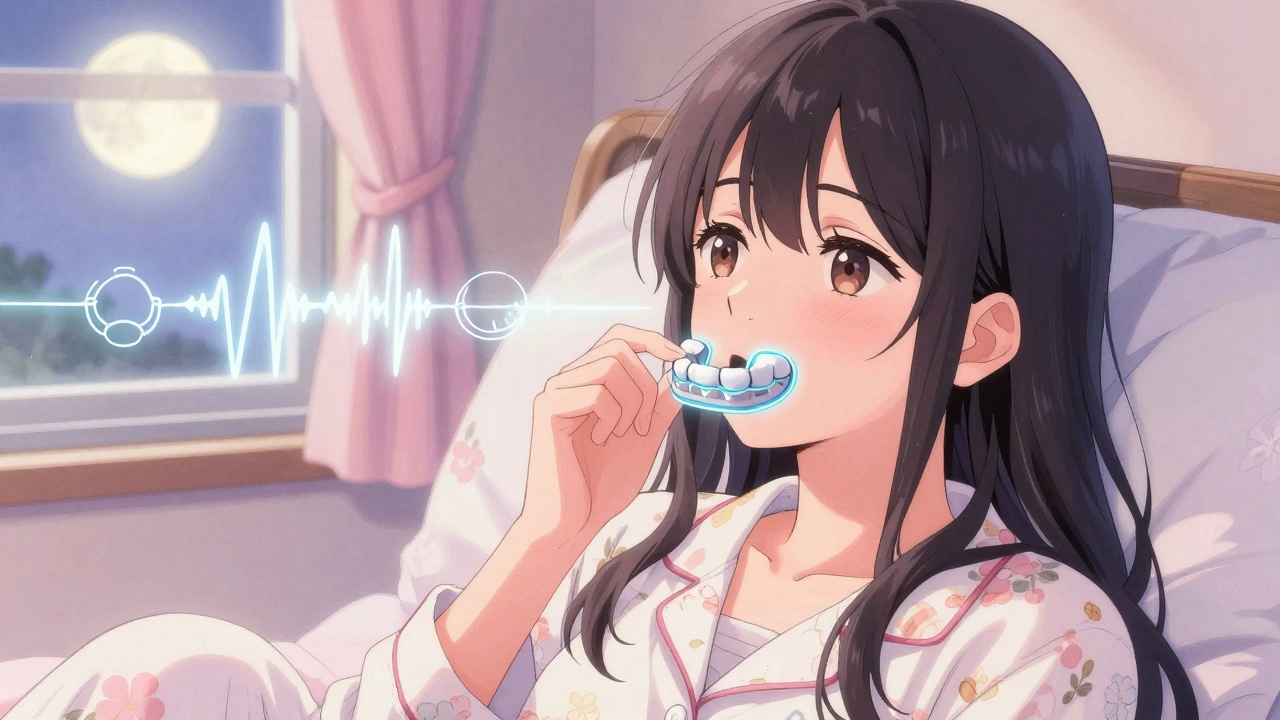
Snoring isn’t just annoying-it can wreck sleep for you and your partner, and sometimes it’s a sign of something bigger. If you’ve tried nasal strips, pillows, or changing your sleep position and nothing stuck, you might be wondering: is there a real solution that doesn’t involve a mask, tubes, or surgery? Enter oral appliance therapy-specifically, mandibular advancement devices (MADs). These aren’t fancy gadgets from a late-night infomercial. They’re FDA-cleared medical devices backed by over 20 years of clinical research, and they work by gently moving your lower jaw forward to keep your airway open while you sleep.
How Mandibular Advancement Actually Stops Snoring
When you snore, it’s because the soft tissues in your throat-your tongue, soft palate, uvula-collapse backward and vibrate as air tries to pass through. This happens mostly when you’re on your back and deeply relaxed. A mandibular advancement device doesn’t block your nose or force air in like a CPAP machine. Instead, it holds your lower jaw slightly forward, which pulls the tongue and other tissues away from the back of your throat. Think of it like pulling a doorstop forward so the door doesn’t slam shut.
Studies show that even a 5mm forward movement of the jaw can reduce snoring volume by up to 70%. The effect is dose-dependent: the more you advance the jaw (within safe limits), the better the results-up to a point. Most effective devices allow adjustments between 3mm and 12mm, with the sweet spot for most people being around 8-10mm. This isn’t guesswork. Dentists who specialize in sleep medicine use precise measurements based on your bite and jaw mobility to set the right amount of advancement.
Custom-made MADs are built from semi-rigid acrylic with titanium connectors, molded directly from dental impressions of your mouth. They’re not one-size-fits-all. Over-the-counter boil-and-bite devices might feel easier to get, but they typically only advance the jaw by 3-5mm and offer about half the effectiveness of custom devices. A 2015 meta-analysis found custom MADs reduced snoring by 72.3%, while OTC versions only hit 48.6%.
Who Benefits Most from This Treatment?
Not everyone who snores is a good candidate. The best results come from people with mild to moderate obstructive sleep apnea-or those who snore without apnea (called primary snoring). If your snoring is loud, frequent, and accompanied by gasping or daytime fatigue, you should get a sleep study first. You need to rule out severe OSA before choosing an oral appliance.
Good candidates usually have:
- At least 6-8 natural teeth in both upper and lower jaws
- No active gum disease or loose teeth
- Healthy temporomandibular joints (TMJ) without chronic pain or clicking
- Adequate jaw mobility to allow forward movement
People with severe anatomical blockages-like those with a Mallampati class IV airway (where you can barely see your tonsils)-are less likely to benefit. Studies show failure rates jump to nearly 40% in these cases. If you’ve tried CPAP and hated it because of the mask, noise, or claustrophobia, MADs are often a game-changer. They’re quiet, portable, and don’t require electricity. Many users report they’re easier to travel with, especially for business trips or camping.
Real-World Effectiveness vs. Other Treatments
Let’s compare what actually works:
| Treatment | Snoring Reduction | Adherence Rate (12 Months) | Key Limitations |
|---|---|---|---|
| Mandibular Advancement Device (Custom) | 65-75% | 76.4% | Requires dental fit; potential jaw changes over time |
| Mandibular Advancement Device (OTC) | 30-50% | 58.1% | Less precise; higher failure rate |
| CPAP Machine | 85-95% | 45.2% | Mask discomfort, noise, travel inconvenience |
| Nasal Dilators | 20-30% | 62.5% | Only helps if nasal obstruction is main cause |
| Positional Therapy | 35-45% | 51.3% | Works only for back-sleepers |
CPAP is still the gold standard for complete snoring and apnea control-but most people quit using it within a year. MADs don’t eliminate snoring as completely, but more people stick with them. That’s why the American Academy of Sleep Medicine gives them a strong recommendation for primary snoring and mild-to-moderate OSA.
What You’ll Experience When You Start Using One
Getting used to a MAD isn’t like putting on a new pair of shoes. It’s more like learning to chew with a mouthguard. Most people report:
- Morning jaw soreness (especially in the first 2-3 weeks)
- Excessive saliva production (your body thinks you’re eating)
- Minor tooth discomfort or pressure
- Difficulty speaking clearly at first
These usually fade within a month. Dentists often recommend wearing the device for an hour or two during the day to get used to the feel before sleeping with it. Some users find that soaking the appliance in warm water for a few minutes before bed helps it conform better to the jaw.
Adjustment isn’t instant. The standard protocol is a 4-6 week titration period. You start with minimal advancement and increase by 1mm every 3-5 days until snoring drops off or you hit your maximum comfortable forward position. Most people reach their ideal setting between 70-80% of their jaw’s full protrusion capacity. This process requires 2-3 visits to a dental sleep specialist, which can cost $150-$300 per visit.
The Hidden Costs and Long-Term Risks
Custom MADs cost between $1,800 and $2,500. Insurance rarely covers them-only about 38% of U.S. plans do. That’s a big barrier for many. Over-the-counter versions cost $99-$150, but they’re less effective and often don’t last more than a year.
The bigger concern is long-term dental changes. About 25% of users who wear MADs daily for 5+ years develop permanent shifts in their bite. This can lead to misaligned teeth, gaps, or even jaw joint problems. Some need braces or dental work to fix it. That’s why regular check-ups with your dentist every 6 months are non-negotiable. They’ll monitor your occlusion and catch changes early.
One user on Reddit shared that after 3 years, his bite felt “off,” and his dentist found his front teeth had drifted forward. He needed minor orthodontics to correct it. That’s not common, but it’s real. If you’re young, have a healthy bite, and only use the device for snoring, the risk is low. But if you’re older or already have dental work, talk to your dentist before starting.

What’s New in 2025?
The field is evolving fast. In 2023, the FDA cleared the SomnoDent EVO 3, the first MAD with built-in sensors that track jaw position and snoring frequency through a smartphone app. It gives real-time feedback so you know if you’re wearing it correctly. In 2024, Sleep Solutions Inc. is launching a device with AI-driven titration-meaning the device adjusts itself over time based on your sleep data.
Researchers are also looking at genetic markers that might predict who responds best to MADs. In the next five years, we may see personalized designs based on your anatomy, muscle tone, and even your sleep posture patterns.
Is It Worth It?
If you’re tired of being the reason your partner sleeps on the couch, and you’ve tried everything else, a custom mandibular advancement device might be the most practical solution you haven’t tried yet. It’s not magic. It doesn’t work for everyone. But for the right person-someone with mild snoring, healthy teeth, and the patience to adjust it-it’s life-changing.
Start with a sleep test. Then see a dentist who specializes in sleep medicine. Don’t buy a cheap device online and hope for the best. The difference between a custom fit and a boil-and-bite isn’t just comfort-it’s effectiveness, safety, and long-term health.
Snoring isn’t just noise. It’s a signal. And now, there’s a quiet, wearable way to answer it.
Can oral appliances cure snoring completely?
No, they don’t cure snoring-they manage it. Most users see a 65-75% reduction in snoring volume, but it typically returns within 48 hours if the device isn’t worn. Unlike surgery, it’s reversible and non-permanent. For complete elimination, CPAP is more effective, but adherence is much lower.
Are over-the-counter snoring mouthpieces worth it?
They’re better than nothing, but not as good as custom devices. OTC models reduce snoring by about 30-50%, while custom MADs achieve 65-75%. They’re also less precise, harder to adjust, and wear out faster. If you’re on a tight budget, try one-but don’t expect the same results as a professionally fitted appliance.
Do I need a sleep study before getting a mandibular advancement device?
Yes. Even if you think you only snore, you could have undiagnosed sleep apnea. A sleep study-either at home or in a lab-rules out moderate or severe OSA. Treating snoring alone without checking for apnea can be dangerous. The American Academy of Sleep Medicine requires this step before prescribing any oral appliance.
How long do custom oral appliances last?
Most last 3-5 years with proper care. They’re made from durable acrylic but can wear down from grinding or improper cleaning. Always clean them daily with a soft brush and mild soap, and store them dry. Avoid hot water or dishwashers-they can warp the material.
Can I use a MAD if I have dentures?
Generally, no. Most MADs require at least 6-8 natural teeth per arch to anchor properly. Full dentures don’t provide enough stability. Partial dentures may work in some cases, but only if they’re well-fitted and supported by natural teeth. Consult a dental sleep specialist before assuming you’re eligible.
What if my jaw hurts after wearing the device?
Mild discomfort in the first 2-3 weeks is normal. If pain lasts longer or gets worse, stop using it and see your dentist. It could mean the advancement is too aggressive, or you have an undiagnosed TMJ issue. Your dentist can adjust the device or recommend a different design. Never force yourself to wear it if it’s causing persistent pain.
ian septian
December 9, 2025 AT 00:01Custom MADs are the only way to go. OTC stuff is a waste of cash.
Larry Lieberman
December 10, 2025 AT 19:21I tried the boil-and-bite for 2 weeks 😅 woke up with a jaw like I’d been chewing concrete. Then I went custom. Game. Changer. 🤫💤
Jennifer Blandford
December 10, 2025 AT 20:18OMG I was the reason my husband slept on the couch for 4 years 😭 Then I got my custom MAD and now we cuddle again. I cried the first night I didn’t hear myself snoring. Like… I didn’t even know I was that loud. This thing is magic. 🥹✨ Also, I bought my partner a matching toothbrush. We’re a whole sleep hygiene couple now. 💕
Stacy Tolbert
December 12, 2025 AT 02:33I hate to say it but I tried this and it made my TMJ worse. Like, I couldn’t open my mouth for three days. My dentist said I was a bad candidate but I ignored him because I was desperate. Now I’m paying for it. Don’t be me. Get checked first. 🙃
Ryan Brady
December 13, 2025 AT 20:56Why are we spending $2k on a mouthguard when we could just duct tape the snorer’s mouth shut? 🇺🇸 Real solutions don’t need a dentist’s signature. Also, CPAP is fine if you’re not a wimp.
Delaine Kiara
December 14, 2025 AT 10:06Okay but have you considered that maybe your jaw is just too small? Or your tongue is genetically lazy? I read a paper once that said 87% of chronic snorers have a recessed mandible. Also, I’ve been wearing a MAD for 7 years and my teeth shifted forward so much my orthodontist called it ‘the snorer’s smile.’ You think you’re fixing snoring but you’re just building a new dental problem. 🤓
Noah Raines
December 14, 2025 AT 16:20Custom MADs work. No debate. I’ve used mine for 3 years. Yeah, my jaw gets sore at first - so what? You don’t get results without a little discomfort. And yeah, insurance sucks. But I paid out of pocket and I sleep like a baby now. My wife says I sound like a kitten. Worth every penny. 🤝
Gilbert Lacasandile
December 16, 2025 AT 10:31I had the same issue as Stacy - TMJ flare-up after two weeks. But my dentist adjusted the device down by 1mm and now it’s perfect. I think people skip the titration process and go too hard too fast. Slow and steady wins the race. Also, cleaning it with soap and water? Lifesaver. I’ve had mine for 4 years and it still looks new.
Taya Rtichsheva
December 16, 2025 AT 13:17lol so the ‘quiet wearable way to answer it’ is a plastic mouth thing that costs more than my laptop? 😏 i got a $30 one off amazon and it’s fine. my wife says i still snore but less like a chainsaw and more like a dying teakettle. i call that progress.
Christian Landry
December 16, 2025 AT 22:24Just got my SomnoDent EVO 3 last week. The app tracks my jaw movement and snore frequency. It told me I was wearing it backward for 3 nights. 🤯 Also, it auto-adjusts by 0.5mm every 3 days. Feels like I’m living in 2050. My dentist called it ‘the Tesla of sleep devices.’ I’m not even joking.