
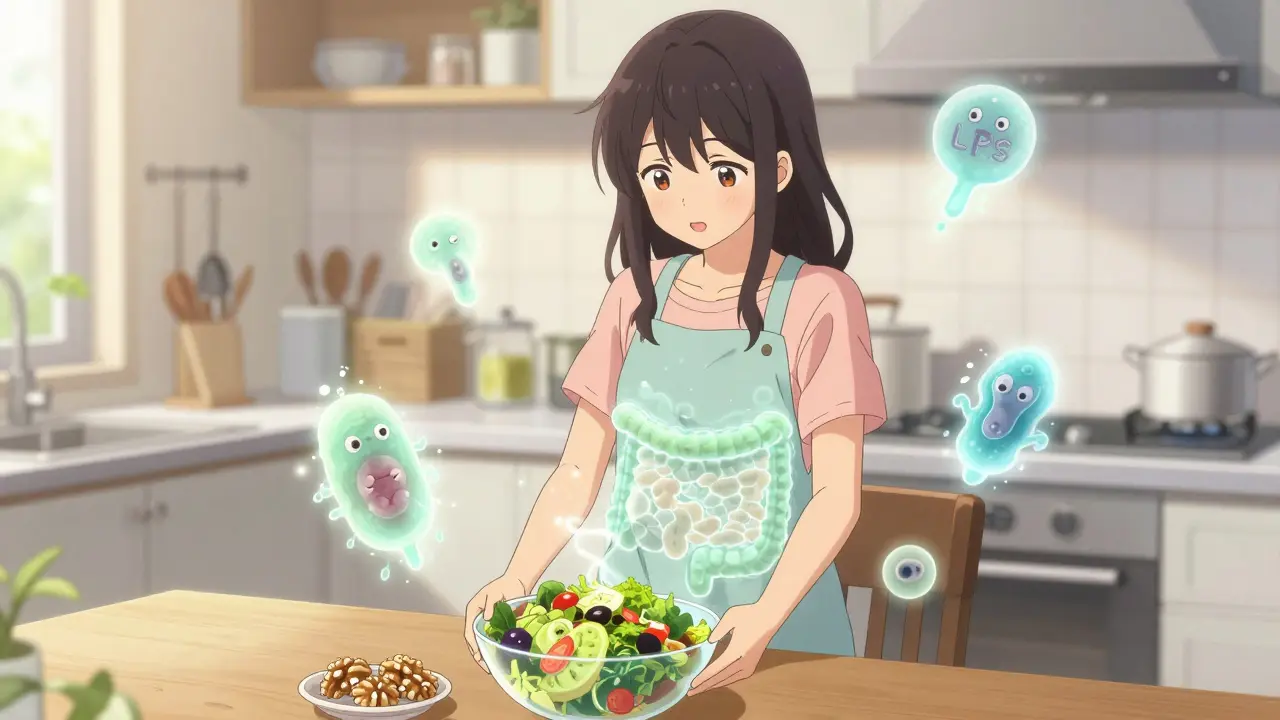
More than one in three adults worldwide now have excess fat in their liver-not from drinking alcohol, but from how they eat. This condition, once called nonalcoholic fatty liver disease (NAFLD), is now more accurately named metabolic dysfunction-associated steatotic liver disease (MASLD). It’s not just about being overweight. It’s about what’s happening inside your gut, how your liver responds, and whether your diet is feeding the problem-or fixing it.
When your liver gets clogged with fat, it doesn’t just sit there quietly. It starts sending out warning signals: elevated liver enzymes, inflammation, and over time, scarring. The good news? You don’t need a drug or surgery to reverse it. The most powerful tool you have is right on your plate-and it starts with losing weight and changing what you eat.
Why Your Gut Is the Missing Piece in NAFLD
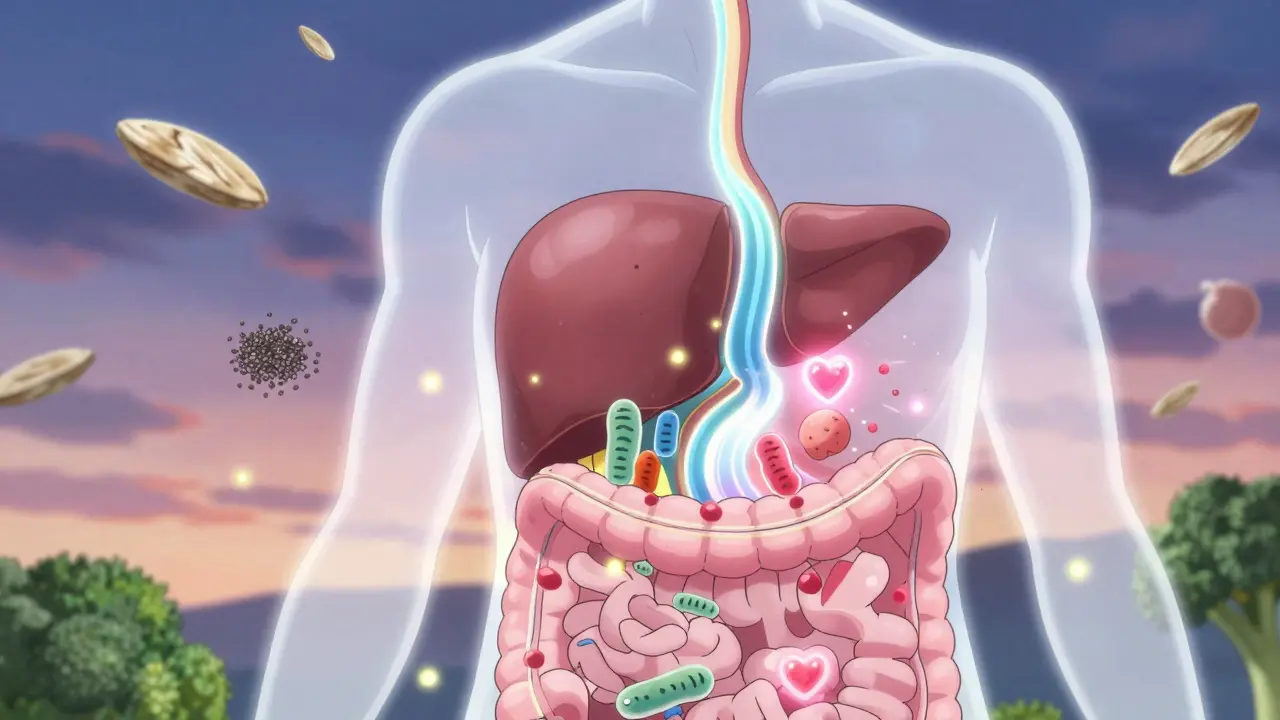
Your gut isn’t just a digestive tube. It’s a living ecosystem of trillions of bacteria, viruses, and fungi. In people with NAFLD, this ecosystem is out of balance. Studies show these individuals have less microbial diversity, meaning fewer types of good bacteria. Their gut lining also becomes more porous, like a broken fence. This lets harmful substances, especially bacterial toxins called lipopolysaccharides (LPS), leak into the bloodstream and head straight to the liver through the portal vein.
In NAFLD patients, LPS levels in the blood are more than twice as high as in healthy people. That’s not a coincidence. These toxins trigger liver inflammation, which turns simple fat buildup into something far more dangerous-nonalcoholic steatohepatitis (NASH). The gut doesn’t just sit back and watch. It actively contributes to fat storage in the liver by altering how your body processes bile acids and produces short-chain fatty acids (SCFAs) like butyrate.
Here’s the kicker: people with NAFLD have 58% less butyrate in their stool than healthy individuals. Butyrate is the fuel that keeps your gut lining strong. Less butyrate means a leakier gut. A leakier gut means more toxins in the liver. It’s a cycle-and it starts in the gut.
Diet Changes That Actually Work
There’s no magic supplement or quick fix. But there are clear, evidence-backed dietary patterns that reverse liver fat. The most effective? A Mediterranean-style diet.
A 2024 clinical trial followed 70 NAFLD patients who ate a Mediterranean diet with 30 grams of walnuts daily for six months. Result? A 32% drop in liver fat. Why? Walnuts are packed with fiber, polyunsaturated fats, and polyphenols-all of which feed good gut bacteria. Olive oil, fatty fish, leafy greens, legumes, and whole grains aren’t just healthy. They’re liver-repairing foods.
Here’s what works:
- Fiber: 25-30 grams per day. Aim for oats, lentils, broccoli, apples, and chia seeds. Fiber feeds bacteria that produce butyrate.
- Healthy fats: 25-35% of daily calories. Olive oil, avocado, nuts, and seeds reduce inflammation. Avoid seed oils like soybean or corn oil.
- Limit fructose. Sugary drinks, fruit juices, and processed snacks spike liver fat. Keep added sugar under 25 grams per day-about one can of soda.
- Avoid ultra-processed foods. These are linked to gut dysbiosis and liver fat accumulation. If it comes in a bag with a long list of unpronounceable ingredients, skip it.
One study found that replacing just one sugary drink per day with water reduced liver fat by 17% over 12 weeks. That’s not a fluke. It’s biology.
Weight Loss: The Most Effective Treatment
Doctors don’t just say “lose weight” to be vague. They say it because the data is overwhelming.
When people with NAFLD lose 5-7% of their body weight, liver fat drops in 81% of cases. Lose 10%? NASH resolves in nearly half of them. That’s not a small change. That’s remission.
How do you get there? Not by starving yourself. By creating a steady calorie deficit-500 to 750 calories per day. That means losing about 0.5 to 1 kilogram (1-2 pounds) per week. Slow and steady works. Crash diets backfire. They cause muscle loss, slow metabolism, and often lead to rebound weight gain.
Combine diet with movement. A study showed that people who added just 150 minutes of brisk walking per week to their diet lost 28 units of ALT (a liver enzyme)-nearly double the reduction from diet alone. Exercise doesn’t just burn calories. It reduces liver fat directly, even without weight loss.
The Mayo Clinic tracked people who followed a structured program (diet, exercise, counseling) for two years. Those who lost 7-10% of their weight kept the fat off in 68% of cases. Those who tried on their own? Only 29% succeeded. Structure matters.

Probiotics and Prebiotics: Helpful, But Not Magic
Probiotics aren’t a cure, but they can help-especially when paired with diet changes.
A double-blind trial of 100 NAFLD patients found that taking a daily mix of Lactobacillus rhamnosus GG, Bifidobacterium longum, and Streptococcus thermophilus for six months cut liver fat by 23% and lowered ALT levels by 31%. That’s comparable to some medications.
Prebiotics-food for good bacteria-also show promise. Taking 10 grams of inulin daily for 12 weeks increased butyrate levels by 47% and reduced liver stiffness (a sign of scarring) by 15%.
But here’s the catch: not all probiotics are the same. Most over-the-counter supplements contain the wrong strains or not enough live bacteria. Look for products with at least 10 billion CFUs and strains backed by clinical trials. And remember: probiotics won’t fix your liver if you keep eating sugar and fried food.
What Doesn’t Work (And Why)
There’s a lot of noise out there. Fad diets. Detox teas. Juice cleanses. None of them work for NAFLD.
- Intermittent fasting (like 5:2) helps some people lose weight, but it doesn’t improve liver fat more than steady calorie reduction. If you can’t stick with it, it’s not worth it.
- Detox supplements have zero evidence. Your liver detoxes itself. You don’t need a $50 bottle of herbs to do it.
- Low-fat diets often replace fat with sugar and refined carbs. That makes NAFLD worse.
- Extreme keto can raise liver enzymes in some people and isn’t sustainable long-term.
The real enemy isn’t fat. It’s excess sugar, especially fructose, and ultra-processed foods that wreck your gut. Fix that, and your liver will thank you.
Barriers and Real-Life Challenges
Let’s be honest: changing your diet is hard. Especially if you’re surrounded by fast food, social gatherings centered around pizza and beer, or if healthy food costs more.
One study found that sticking to a Mediterranean diet costs $150-$200 more per week than a standard diet. That’s not affordable for everyone. And probiotics? $40-$60 a month. Insurance rarely covers them.
But small steps matter. Start with swapping soda for water. Add one extra serving of vegetables to lunch. Take a 20-minute walk after dinner. You don’t need to overhaul everything at once. Consistency beats perfection.
Reddit communities like r/NAFLD show real-world experiences: 63% of users say they feel less bloated and more energetic after switching to whole foods. The top two barriers? Cravings and social pressure. That’s normal. Plan ahead. Bring your own food to parties. Keep healthy snacks on hand. It’s not about willpower-it’s about environment.
The Future: What’s Coming Next
Researchers are now testing defined bacterial mixtures designed to activate liver-protecting pathways. One experimental therapy, VE-117, reduced liver fat by 38% in early trials. The FDA is moving toward approving microbiome-targeted treatments.
But here’s the truth: even the most advanced therapy won’t work if you keep eating the same way. The gut-liver axis is powerful, but it responds to what you feed it. Diet and weight loss remain the only proven, accessible, and lasting treatments.
By 2030, doctors may use gut microbiome tests to guide NAFLD treatment. But for now, the prescription is simple: eat real food, lose weight slowly, move daily, and give your gut the fiber it needs to heal.
Can NAFLD be reversed without medication?
Yes, absolutely. Studies show that losing 5-10% of your body weight through diet and exercise can reverse liver fat and even resolve NASH in many cases. Medications are still experimental. Lifestyle change is the only proven treatment right now.
How much weight do I need to lose to improve my liver?
Losing just 5% of your body weight reduces liver fat in 81% of people. For more significant improvement-like reducing inflammation and scarring-aim for 7-10%. That’s about 10-20 pounds for someone who weighs 200 pounds.
Are probiotics worth taking for NAFLD?
They can help, but only as a support tool. Look for products with at least 10 billion CFUs and strains like Lactobacillus rhamnosus GG and Bifidobacterium longum. Take them for at least 12 weeks. But they won’t work if your diet is full of sugar and processed foods.
Is intermittent fasting better than regular calorie cutting?
Not necessarily. Both can lead to weight loss, but studies show no clear advantage for fasting over steady calorie reduction when it comes to liver fat reduction. The best plan is the one you can stick with long-term.
What foods should I avoid with NAFLD?
Avoid sugary drinks, fruit juices, candy, pastries, white bread, fried foods, and anything with high-fructose corn syrup. Also limit processed meats and trans fats. Focus instead on vegetables, whole grains, legumes, nuts, olive oil, and fatty fish.
Alex MC
March 15, 2026 AT 22:48It's wild how much the gut-liver connection is finally being understood. I’ve been eating more fiber and cutting out soda for three months now, and my energy levels have improved so much I didn’t even realize how tired I was before.
Still, it’s frustrating how little mainstream medicine emphasizes this. It’s all pills and procedures, never ‘eat more broccoli.’
Elsa Rodriguez
March 16, 2026 AT 14:13OMG I’m so done with people who say ‘just lose weight’ like it’s easy 😭 I’ve been trying for 8 years and my liver’s still screaming at me. It’s not laziness-it’s biology, trauma, hormones, and $300 grocery bills.
Also, why is everyone acting like probiotics are magic? I bought that $60 bottle and still ate pizza on Friday. No wonder it didn’t work.
Dylan Patrick
March 17, 2026 AT 15:26One change: swapped soda for sparkling water. Three months later, my ALT dropped 40 points. No magic. Just biology. Your liver doesn’t care about your Instagram. It cares about what you put in your mouth.
Stop overcomplicating it.
Tim Schulz
March 18, 2026 AT 23:27Of course the Mediterranean diet works. It’s basically what rich people ate before capitalism turned food into a commodity.
Meanwhile, I’m over here eating frozen chicken nuggets and calling it ‘survival.’ 😏
Ali Hughey
March 20, 2026 AT 15:50Let’s be real-this whole ‘gut health’ thing is a Big Pharma distraction. They don’t want you to know that liver fat is caused by EMFs from smart meters and 5G towers. The FDA knows. The WHO is covering it up.
I’ve been wearing a copper pendant for 11 months and my liver enzymes are NORMAL. Coincidence? I think not. 🧲⚡️
Also, walnuts? That’s just a Trojan horse for glyphosate. Read the labels. They’re all sprayed.
Don’t trust the ‘science.’
rakesh sabharwal
March 22, 2026 AT 05:11The entire premise is reductionist. You’re conflating correlation with causation by attributing NAFLD solely to dietary patterns, while ignoring systemic metabolic dysregulation mediated by insulin resistance and adipokine signaling cascades. The gut microbiome is merely a downstream effector.
Furthermore, the ‘Mediterranean diet’ is a bourgeois construct. In India, we’ve had NAFLD for decades on rice-and-lentil diets-so why is this suddenly a Western dietary failure? Hypocrisy.
Aaron Leib
March 23, 2026 AT 14:51Small steps are everything. I started with one extra vegetable at dinner. Then I walked after dinner. Then I stopped buying juice. No grand overhaul.
Two years later, I lost 14 lbs. My liver feels better. I’m not cured-but I’m moving.
You don’t need to be perfect. You just need to show up.
Amisha Patel
March 25, 2026 AT 05:06I’ve been trying to eat more fiber but I don’t know what counts. Is avocado fiber? What about hummus? I’m confused.
Also, how much is too much? I don’t want to bloat myself into a balloon.
Kandace Bennett
March 27, 2026 AT 03:38Oh honey, this is why America is falling apart. We’ve been told to eat ‘healthy’ for 30 years, and now everyone’s fat and sick.
Real food? Like what? Kale? Organic quinoa? At $12 a bag? No thanks. I’ll take my $1 burger and my $0.50 soda. At least I’m not paying $400 a month for probiotics that don’t work.
Stop shaming people for eating food. It’s not a moral test. 🇺🇸
douglas martinez
March 29, 2026 AT 03:09Just read a 2023 meta-analysis in Hepatology: 5% weight loss = 81% reduction in liver fat. 10% = 70% chance of NASH resolution.
It’s not theoretical. It’s replicated across 14 countries. The data is solid.
What’s missing isn’t science-it’s access. That’s the real issue.
Kathy Leslie
March 30, 2026 AT 22:52I used to think I was ‘fine’ until my doctor said my liver looked like a greasy pizza. I cried.
Then I started making oatmeal with apples and cinnamon for breakfast. No sugar. Just real food.
Four months later, I feel like I’m wearing a lighter version of myself. Not because I lost weight. Because I stopped fighting my body.
Jinesh Jain
April 1, 2026 AT 14:38My dad had NAFLD. He lost 12% body weight by walking 5km daily and cutting sugar. No supplements. No fancy diet.
He’s 72 now. Liver enzymes normal. Still eats rice. Still eats ghee.
It’s not about the diet. It’s about consistency. And movement. And not giving up.