

If you’re taking multiple medications for conditions like diabetes, high blood pressure, or asthma, you might not realize there’s a free service designed just for you. It’s called Medication Therapy Management, or MTM. This isn’t about getting your pills filled at the pharmacy. It’s about making sure those pills are actually working the way they should - safely and effectively.
What Exactly Is Medication Therapy Management?
MTM is a personalized service offered by pharmacists to help you manage your medications. Think of it as a full health check-up - but for your pills. A pharmacist sits down with you (in person or over video call) and goes through every medication you take: prescriptions, over-the-counter drugs, vitamins, and even herbal supplements. They look for interactions, check if you’re taking things correctly, and find ways to cut costs or simplify your routine.
This isn’t optional. If you’re on Medicare Part D, your plan is required by law to offer MTM if you qualify. You don’t pay extra. It’s covered as part of your prescription drug benefits.
Who Qualifies for MTM Services?
You’re likely eligible if you meet all three of these criteria:
- You take 8 or more Medicare Part D medications
- You have 3 or more chronic health conditions - like heart disease, COPD, depression, or kidney disease
- Your annual drug costs are over $4,430 (this amount is adjusted yearly)
Many people don’t realize they qualify because they think MTM is only for seniors with lots of prescriptions. But if you’re managing several long-term conditions, even if you’re under 65 and on Medicare due to disability, you might still be eligible.
What Happens During a Comprehensive Medication Review?
The heart of MTM is the Comprehensive Medication Review (CMR). This is a one-on-one session - usually once a year - with a pharmacist who specializes in medication safety.
Here’s what you can expect:
- You’ll be asked to bring a list of everything you take - even the aspirin you grab for headaches or the fish oil you started last month.
- The pharmacist will check for dangerous interactions. For example, if you’re on blood thinners and also taking St. John’s Wort, that’s a red flag.
- They’ll ask if you’re having side effects - like dizziness, nausea, or confusion - that you might have brushed off as "just getting older."
- You’ll get a Personal Medication Record - a clear, updated list of all your drugs, doses, and why you take them.
- You’ll also get a To-Do List with simple steps: "Call your doctor about the swelling," or "Switch to the generic version of this pill to save $60/month."
Some people worry this will be a lecture. It’s not. The pharmacist listens. They want to know what’s hard for you. Maybe you can’t swallow big pills. Maybe you forget doses because you’re juggling three different pill boxes. They’ll help you fix it.
What About Ongoing Support?
MTM isn’t a one-time event. After your annual CMR, you’ll get Targeted Medication Reviews (TMRs) every few months. These are shorter check-ins - often done by phone - to follow up on issues from your first review.
For example:
- If you were told to switch to a cheaper version of your blood pressure pill, they’ll call to see if you did - and if you’re still feeling okay.
- If you started a new medication and had stomach upset, they’ll help you figure out whether to keep it, adjust the dose, or try something else.
These aren’t sales calls. They’re safety checks. And they’re free.
Why Does This Matter?
People who use MTM services are 40% more likely to take their medications correctly. That means fewer hospital visits, fewer ER trips, and less risk of dangerous side effects.
One study found that patients in MTM programs saved an average of $1,200 per year on medications - not because they stopped taking them, but because they switched to lower-cost generics or avoided costly complications from missed doses.
And it’s not just about money. It’s about peace of mind. When you understand why you’re taking each pill, you stop feeling overwhelmed. You stop wondering, "Is this one for my heart? Or my joints?" You become the boss of your own treatment.
What If I Can’t Make the Appointment?
If you’re homebound, have mobility issues, or just find it hard to talk on the phone, you’re not out of luck. You can assign a caregiver, family member, or friend to attend the review on your behalf. They’ll get the same information - the Personal Medication Record, the To-Do List, the advice.
And if you’re not contacted by your plan, don’t wait. Call your Medicare Part D insurer and ask: "Am I eligible for Medication Therapy Management?" If they say no, ask them to check again. Sometimes the system misses people.
What If I’m Not on Medicare?
While MTM started with Medicare Part D, it’s spreading. Some Medicaid programs, like Tennessee’s TennCare, now offer MTM to their members. Private insurers and employer plans are starting to include it too.
If you’re not on Medicare, ask your pharmacist: "Do you offer Medication Therapy Management?" Many independent pharmacies now provide it - even if it’s not covered by insurance. Some charge a small fee. Others offer it free as part of their patient care model.

How to Get Started
Here’s what to do right now:
- Check your Medicare Part D plan’s website or call customer service. Search for "MTM" or "Medication Therapy Management."
- Ask: "Am I eligible? If not, why?"
- If you qualify, ask when your first review is scheduled. If you haven’t been contacted, request one.
- Before your appointment, write down every medication you take - including doses and why you take them.
- Write down any questions or concerns: "I feel dizzy after I take my pill," or "This one costs too much."
You don’t need to be an expert. You don’t need to remember every detail. The pharmacist is there to help you sort it out.
Real Impact: What Patients Say
One woman in Durban, 72, was taking 11 medications for diabetes, high blood pressure, and arthritis. She didn’t know why she was on three different pills for her heart. After her MTM session, the pharmacist found two were duplicates. One was outdated. She cut down to eight pills - and saved $80 a month.
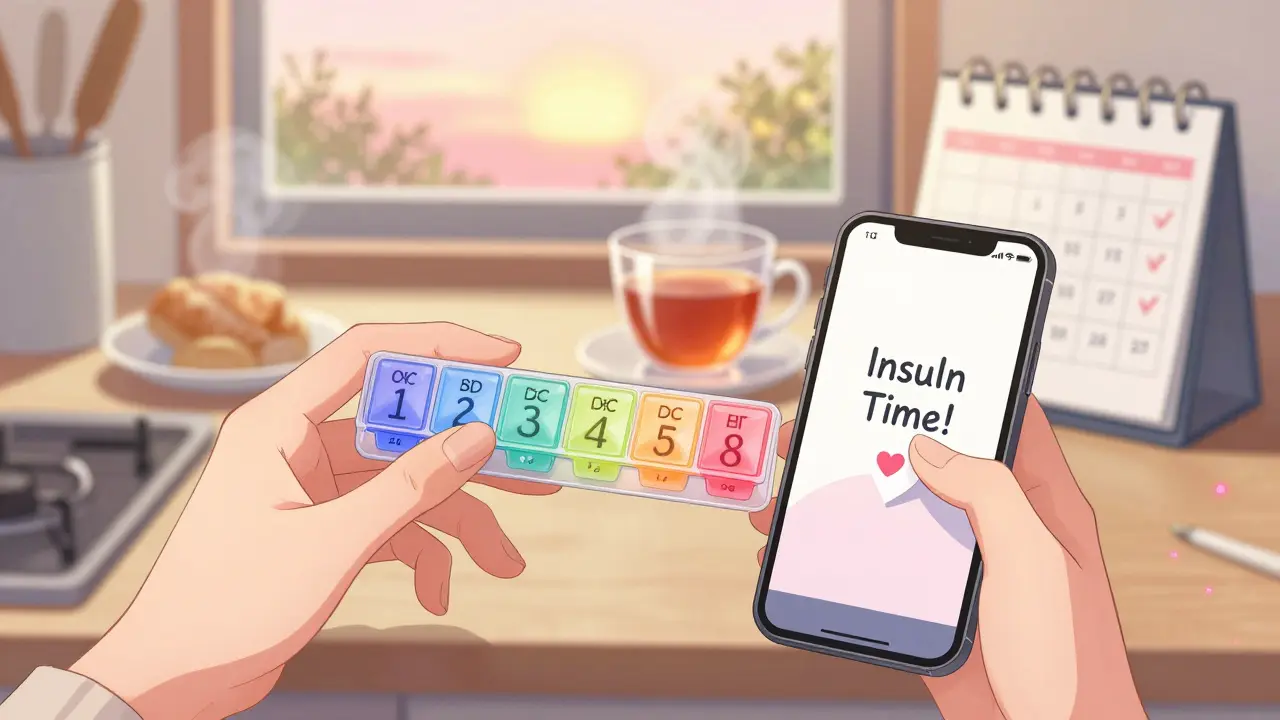
Another man, 68, had been forgetting his insulin. He thought the little blue pill was for his blood sugar. Turns out, it was for his cholesterol. The pharmacist helped him set up a phone alarm and a new pill box with color-coded compartments. He hasn’t missed a dose since.
These aren’t rare stories. They happen every day.
MTM Is Your Right - Not a Bonus
Medication Therapy Management isn’t a perk. It’s a safety net. It’s built into your Medicare plan because the government knows that when patients understand their meds, everyone wins: you stay healthier, hospitals fill fewer beds, and costs go down.
You’ve spent years managing your health. Now it’s time to make sure your medications are working for you - not against you.
Don’t wait for them to call. Call them. Ask for MTM. It’s free. It’s simple. And it could change how you feel every single day.
Is Medication Therapy Management only for seniors?
No. While MTM is most commonly offered through Medicare Part D, you don’t have to be over 65 to qualify. If you’re under 65 and on Medicare due to a disability, and you meet the criteria - taking 8 or more Part D medications, having 3 or more chronic conditions, and spending over $4,430 annually on drugs - you’re eligible. Some Medicaid and private insurance plans also offer MTM to younger adults with complex medication needs.
Do I have to pay for MTM services?
No. MTM services are completely free for eligible Medicare Part D beneficiaries. There are no copays, no extra fees, and no hidden charges. The service is paid for by your Medicare drug plan as part of your coverage. If someone tries to charge you for a Comprehensive Medication Review, it’s not legitimate - contact your plan immediately.
Can my pharmacist change my prescriptions during MTM?
No. Pharmacists can’t change your prescriptions on their own. But they can identify problems - like a drug that’s too expensive, a dangerous interaction, or a dose that’s too high - and then work with your doctor to fix it. They’ll contact your prescriber with recommendations, and your doctor will decide whether to make the change. You’ll be included in that conversation.
What if I don’t have a list of all my medications?
That’s okay. Bring whatever you have - pill bottles, a note on your phone, even a list written on a napkin. The pharmacist can help you build a complete record. Many pharmacies have tools that scan your prescription history. You don’t need to remember every name or dose. Just show up. They’ll do the rest.
How often will I get MTM services?
You’ll get one Comprehensive Medication Review (CMR) every year. On top of that, you’ll receive Targeted Medication Reviews (TMRs) every 3 to 4 months. These are shorter check-ins to follow up on issues from your annual review. Some plans may reach out more often if you have a new medication or a recent hospital stay.
Can I choose who does my MTM review?
Yes. Your Medicare Part D plan will usually assign a pharmacist, but you can request to meet with one at your local pharmacy - especially if you already have a relationship with them. Many MTM services are offered in community pharmacies, not just call centers. Ask your plan if you can choose where your review takes place.
What if I don’t want to participate in MTM?
You can decline. MTM is voluntary. But if you say no, you’ll miss out on free help that could prevent dangerous side effects, save you money, and make your daily routine easier. If you change your mind later, you can always request a review. There’s no penalty for signing up later.
Next Steps: What to Do Today
Don’t wait for a letter or a phone call. Take action now:
- Find your Medicare Part D plan’s customer service number. It’s on your card.
- Call and ask: "Am I eligible for Medication Therapy Management?"
- If yes, ask when your next review is scheduled. If no, ask why - and request a second review.
- Start writing down every medication you take - even the ones you only use once in a while.
- Write down one question you have about your meds. Bring it to your review.
You’re not just a patient. You’re the most important person in your own care. MTM is designed to put you in control. Use it.
Angela Goree
January 4, 2026 AT 03:04Why are we letting pharmacists run our healthcare now? Next they’ll be prescribing our therapy and deciding if we’re ‘worthy’ of treatment. This MTM nonsense is just another government overreach wrapped in a bow. I’ve been on 12 meds for 15 years-no one’s telling me what to do.
erica yabut
January 5, 2026 AT 05:06Oh, how delightfully quaint-a pharmacist, armed with a clipboard and a faint whiff of antiseptic, deigns to perform a ‘Comprehensive Medication Review’ as if we’re mere mortals drowning in a sea of polypharmacy. How dare they presume to untangle the Gordian knot of our pharmacopeia? One wonders if they’ve even read the *Pharmacopoeia of the Postmodern Body*.
And yet, one must admit-there is a certain tragic poetry in the fact that our bodies, once temples of vitality, are now mere data points in a bureaucratic algorithm that calculates our worth by the number of pills we swallow and the dollar amount of our copays. How poetic. How tragic. How *on-brand* for late-stage capitalism.
Vincent Sunio
January 6, 2026 AT 13:29The article contains numerous grammatical inconsistencies, particularly in the inconsistent use of serial commas and improper capitalization of 'To-Do List.' Additionally, the phrase 'you’re the boss of your own treatment' is colloquially inappropriate in a medical context. The term 'Medication Therapy Management' is correctly capitalized, but the acronym 'MTM' is inconsistently introduced. This undermines the credibility of the entire piece.
Furthermore, the claim that patients save $1,200 annually lacks citation. Without peer-reviewed sources, this assertion borders on misleading. The article also fails to address potential conflicts of interest between pharmacists and pharmaceutical manufacturers in the context of generic substitutions.
Shanahan Crowell
January 6, 2026 AT 22:47THIS IS THE BEST THING THAT’S HAPPENED TO MEDICINE IN YEARS!!!
Finally, someone’s listening to us-not just shoving prescriptions at us and calling it a day. I was taking five pills I didn’t even know why I was on, and my pharmacist caught a dangerous interaction between my blood pressure med and a common herb I thought was ‘harmless.’
She saved me from a hospital trip-and my wallet. Thank you, MTM. I didn’t even know I qualified. Call your plan today. Seriously. Do it.
Kerry Howarth
January 8, 2026 AT 22:43Take five minutes to call your insurer. It’s free. It’s simple. It could save your life.
Tiffany Channell
January 10, 2026 AT 07:52Let me guess-the pharmacist is also going to tell me my depression isn’t ‘real’ because my HbA1c is ‘too high’? Or maybe they’ll label my anxiety as ‘non-compliance’ because I skipped a dose during a panic attack?
MTM is just another tool to surveil and shame chronically ill people. They’ll use your medication list to deny you disability. They’ll use your pill count to cut your benefits. This isn’t care-it’s control dressed up in white coats.
Joy F
January 11, 2026 AT 18:32MTM is the last bastion of human connection in a healthcare system that has reduced us to algorithmic data streams-each pill a pixel in a dashboard, each side effect a KPI to optimize.
But here’s the truth: we are not problems to be solved. We are not compliance metrics. We are the living, trembling, sleep-deprived, pill-stuffed souls who still remember what it felt like to taste food before the meds stole our appetite.
The pharmacist doesn’t just review your meds-they review your humanity. And in a world that wants you to disappear into the machine, that’s revolutionary.
So yes, I cried during my CMR. Not because I was weak. Because someone finally saw me.
Haley Parizo
January 12, 2026 AT 08:46They say MTM is free-but who pays the real price? The pharmacist, working 12-hour days with no support staff, forced to play detective for a system that refuses to fund proper care. The patient, who must navigate insurance labyrinths just to get a 30-minute conversation. The system doesn’t care about outcomes-it cares about metrics.
This isn’t care. It’s damage control with a smile.
And yet-I still show up. Because someone has to remind the machine that we’re still human.
Ian Detrick
January 13, 2026 AT 19:17I’ve been a pharmacist for 22 years. I’ve seen patients die because no one checked their interactions. I’ve seen people skip doses because they couldn’t afford them-and then get blamed for ‘non-compliance.’
MTM isn’t perfect. But it’s the first time the system has said: ‘We see you. We’re sorry. Let’s fix this together.’
It’s not about saving money. It’s about saving people.
Angela Fisher
January 13, 2026 AT 21:26They’re tracking us. Every pill. Every call. Every ‘review.’
They’re building a database of who’s ‘compliant’ and who’s not. That data gets sold to insurance companies. Then they use it to deny coverage. I read a whistleblower report-MTM is just Phase One of the Great Medication Purge. They want to make us dependent on their system so they can control who lives and who dies.
My neighbor got her insulin cut after her MTM review. She said the pharmacist ‘recommended’ switching to a cheaper brand. She didn’t know it was counterfeit.
Don’t trust them. Don’t call. Don’t participate. They’re watching.
Neela Sharma
January 14, 2026 AT 14:28In India, we call this ‘pharmacist-led care’-and it’s been saving lives for decades, even without insurance. My aunt in Delhi takes 14 medications. Her local pharmacist sits with her every Sunday, asks how she slept, checks if she’s dizzy, and writes down everything in a notebook.
No app. No portal. Just a human being who remembers her name.
MTM isn’t new. It’s just finally coming to the West.
Let’s not make it bureaucratic. Let’s keep it human.
Shruti Badhwar
January 16, 2026 AT 14:00While the intent of MTM is commendable, its implementation remains suboptimal due to structural inefficiencies in Medicare Part D administration. The lack of interoperability between pharmacy benefit managers and electronic health records creates significant delays in data synchronization, thereby compromising the accuracy of Comprehensive Medication Reviews.
Furthermore, the eligibility threshold of $4,430 in annual drug costs disproportionately excludes patients with high-cost, low-volume regimens-such as those on specialty biologics for autoimmune conditions.
Policy reform is necessary to ensure equitable access.
Brittany Wallace
January 17, 2026 AT 04:40I used to hate taking my meds. Felt like a failure. Like my body was broken.
Then I met my pharmacist. She didn’t judge me. She asked what was hard. I told her I forgot pills because I was scared of the side effects.
She drew me a picture. A little sun for morning pills. A moon for night ones. She gave me a box with stickers.
Now I take them like a ritual. Not a chore.
Thank you for seeing me. I’m not alone anymore.