
MAOI Safety Checker
When someone has tried multiple antidepressants and still feels stuck in deep depression, doctors sometimes turn to MAOIs. These aren't the first drugs you hear about when talking about depression treatment. But for the 15-20% of people with treatment-resistant depression, they can be the difference between continuing to struggle and finally finding relief. The problem? MAOIs come with serious risks if mixed with other common antidepressants. Many patients and even some doctors don’t fully understand how dangerous certain combinations can be. This isn’t just about side effects-it’s about life-or-death interactions.
What Are MAOIs and Why Do They Still Matter?
MAOIs, or monoamine oxidase inhibitors, were the first antidepressants developed in the 1950s. Drugs like phenelzine (Nardil), tranylcypromine (Parnate), and the transdermal selegiline patch (Emsam) work by blocking an enzyme that breaks down serotonin, norepinephrine, and dopamine. This lets those mood-boosting chemicals build up in the brain. Unlike newer antidepressants that mostly target one neurotransmitter, MAOIs affect all three. That’s why they’re so effective for severe, stubborn depression-especially when symptoms include extreme fatigue, oversleeping, or intense emotional sensitivity.
Today, MAOIs aren’t first-line treatments. But they’re still used because they work where others fail. Studies show 40-60% of patients with treatment-resistant depression respond to MAOIs, compared to under 30% with other drugs. The selegiline patch, approved in 2006, made things easier by reducing dietary restrictions at lower doses. Still, most people avoid them because of the risks.
The Deadliest Mix: MAOIs and SSRIs/SNRIs
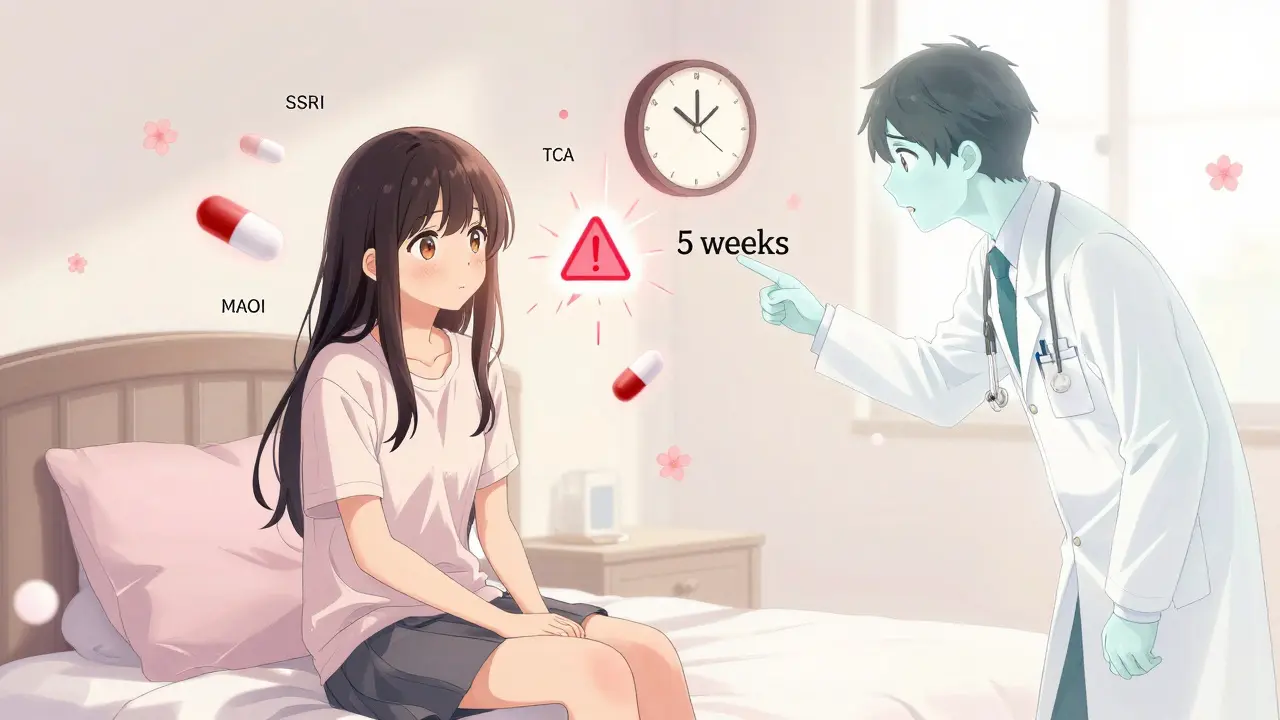
The most dangerous combination you can make with an MAOI is adding an SSRI like fluoxetine (Prozac), sertraline (Zoloft), or an SNRI like venlafaxine (Effexor). This mix can trigger serotonin syndrome-a medical emergency that kills.
Serotonin syndrome happens when too much serotonin floods the brain. Symptoms include high fever, rigid muscles, fast heartbeat, confusion, seizures, and loss of consciousness. In a 1995 study of eight cases where fluoxetine was combined with tranylcypromine, seven ended in death. The FDA requires a boxed warning on MAOI labels: do not use with SSRIs or SNRIs.
Timing matters more than you think. Fluoxetine sticks around in your body for up to five weeks after you stop taking it because of its long-lasting metabolite, norfluoxetine. That means if you switch from Prozac to an MAOI, you must wait at least five weeks. For other SSRIs like sertraline or escitalopram, the wait is 14 days. The same rule applies in reverse: if you’re on an MAOI, you can’t start an SSRI until at least two weeks after stopping the MAOI. Skipping this window is asking for trouble.
What About Tricyclic Antidepressants (TCAs)?
The story with TCAs is more complicated. Older guidelines said never combine MAOIs with TCAs like amitriptyline or nortriptyline. But newer research is changing that.
A 2022 review in PMC found that when done right, combining certain TCAs with MAOIs can be safe and even effective. The key is which TCA you use and how you introduce it. Clomipramine is a hard no-it strongly blocks serotonin reuptake and has been linked to fatal reactions when paired with MAOIs. But nortriptyline? That’s different. A 2009 study from the University of Pennsylvania showed 57% of treatment-resistant patients improved when phenelzine was added to nortriptyline, with minimal side effects.
Here’s the catch: you must start the TCA first-or at the same time as the MAOI. Never add an MAOI after a TCA is already running. That’s when the risk spikes. Only experienced psychiatrists should attempt this, and only after careful monitoring.
Safer Alternatives: What You CAN Combine With MAOIs
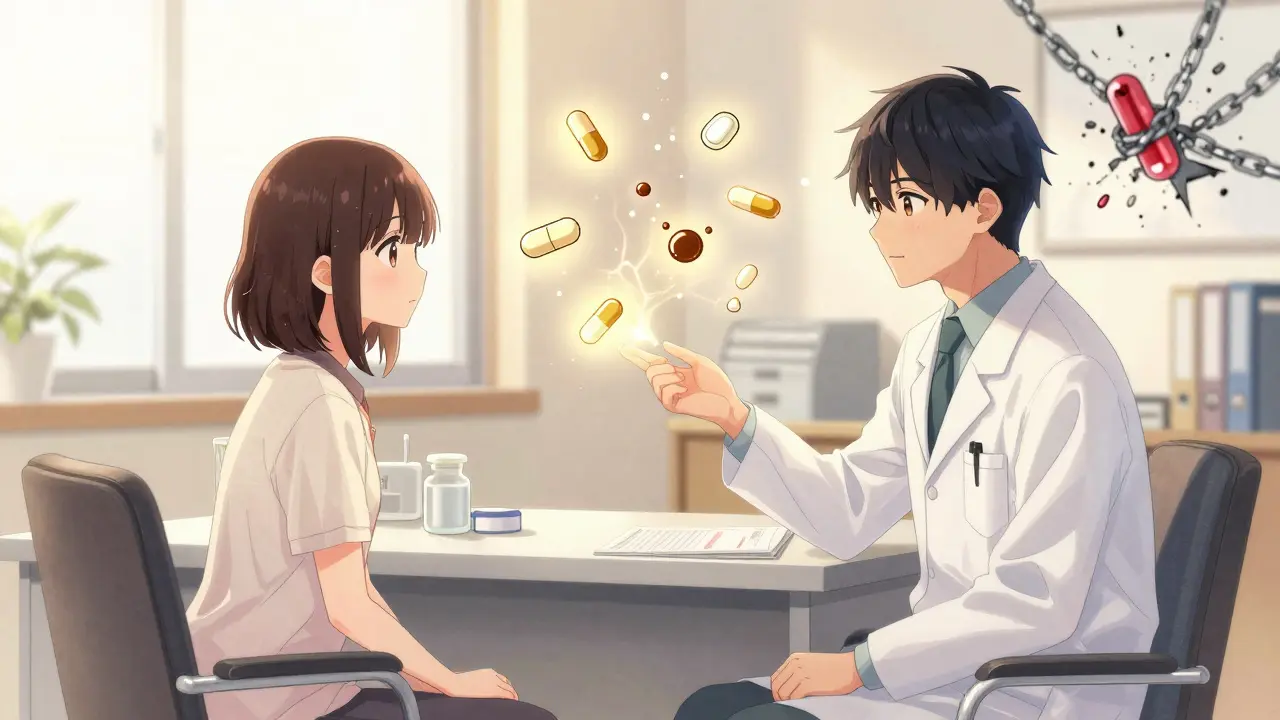
Not all antidepressants are dangerous with MAOIs. Some are actually safe and even helpful when used together. These drugs don’t boost serotonin in a way that triggers serotonin syndrome.
- Bupropion (Wellbutrin) - It works on dopamine and norepinephrine, not serotonin. No known dangerous interaction with MAOIs. Many clinicians prefer it for patients with low energy or lack of motivation.
- Mirtazapine (Remeron) - This one boosts mood by blocking certain receptors, not by increasing serotonin. Multiple case studies show it’s well-tolerated with MAOIs, especially for patients with insomnia or poor appetite.
- Trazodone - Used mostly for sleep, it has mild serotonin effects but not enough to cause problems with MAOIs when taken at standard doses.
Even among TCAs, nortriptyline is a safe option when managed properly. Dr. Kenneth Heilman and others in psychiatric circles now consider these combinations viable for stubborn cases. The bottom line: it’s not about avoiding all combinations-it’s about choosing the right ones.
Other Safe Add-Ons: Sleep, Anxiety, and Beyond
You don’t have to stop everything else when you’re on an MAOI. Many supportive medications are safe to use alongside them:
- Benzodiazepines like lorazepam or clonazepam for anxiety-no dangerous interaction.
- Non-benzodiazepine sleep aids like zolpidem (Ambien) or suvorexant (Belsomra)-safe and commonly used.
- Dopaminergic agents like pramipexole (used for Parkinson’s) have been successfully paired with MAOIs to treat apathy and anhedonia (inability to feel pleasure). These require slow dosing and monitoring for impulse control issues, but they can be life-changing for people who feel emotionally numb.
These aren’t just theoretical. Real patients have improved significantly when their treatment plan included these combinations under careful supervision.
What You Must Avoid: Food and Other Drugs
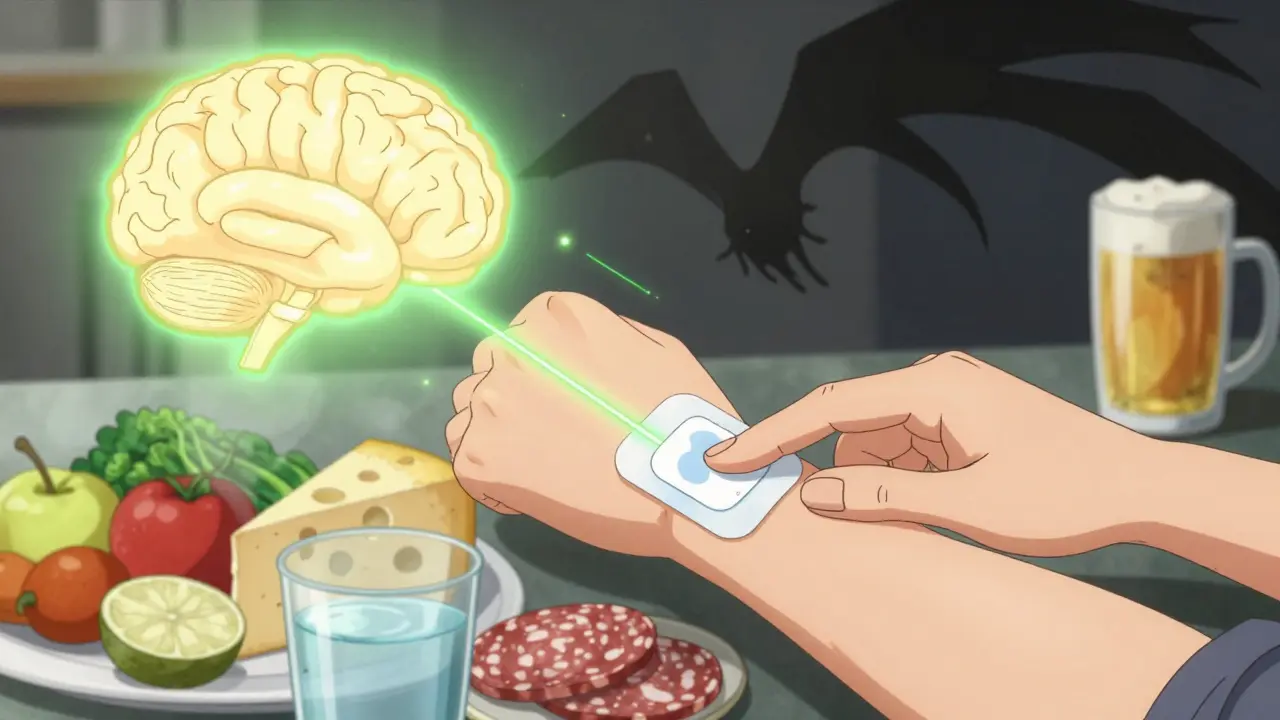
MAOIs aren’t just dangerous with other drugs-they react with certain foods. Tyramine, a compound in aged, fermented, or spoiled foods, can cause a sudden, dangerous spike in blood pressure when MAOIs are active in your system.
Avoid:
- Aged cheeses (cheddar, parmesan, blue cheese) - over 20mg of tyramine per 100g
- Tap beer and homebrewed alcohol - over 10mg per 100ml
- Fermented sausages like salami or pepperoni - over 100mg per 100g
- Overripe fruits, soy sauce, and yeast extracts
The selegiline patch reduces this risk at doses of 6mg/24hr or lower. About 70% of users on this dose don’t need dietary changes. But if you’re on oral MAOIs like Nardil or Parnate, you still need to be strict. And don’t forget: these restrictions last for two weeks after you stop the MAOI. The enzyme takes time to recover.
Stopping MAOIs Isn’t Simple Either
Many people quit MAOIs suddenly because they’re frustrated with side effects or dietary rules. Big mistake.
Stopping abruptly can cause a withdrawal syndrome with symptoms like:
- Restlessness (62% of cases)
- Upset stomach (48%)
- Tingling or burning skin (37%)
- Flu-like symptoms (55%)
- Severe sleep problems (71%)
- Headaches (68%)
Always taper off slowly-over 2 to 4 weeks. Your doctor should guide you. Never cut it out cold turkey.
Why Don’t More Doctors Prescribe MAOIs?
It’s not because they’re ineffective. It’s because they’re complicated.
A 2019 study found only 32% of psychiatry residents felt trained enough to manage MAOIs safely. Many doctors simply don’t know the nuances. They know the warnings, but not the exceptions. They know to avoid SSRIs, but not that mirtazapine or bupropion are safe. They know about tyramine, but not that the patch reduces dietary limits.
That’s changing. More specialists are using MAOIs for treatment-resistant cases, especially when combined with safer partners. The future may include new MAOI derivatives or even combinations with ketamine for faster relief. But for now, the key is knowledge.
Final Thoughts: It’s Not About Fear-It’s About Precision
MAOIs aren’t dangerous because they’re bad drugs. They’re dangerous because they’re powerful-and misunderstood. When used correctly, they save lives. When misused, they can kill.
If you’ve tried three or more antidepressants and still feel hopeless, ask your doctor about MAOIs. But don’t just ask. Ask the right questions:
- Have you treated patients with MAOI combinations before?
- Which antidepressants are safe to combine with MAOIs in my case?
- Will I need dietary changes, and if so, how strict are they?
- What’s the washout period if I switch from my current medication?
There’s no shame in needing something stronger. The real shame is letting fear stop you from getting the help you deserve-when it’s available, if you know how to use it safely.
Jeff Card
March 3, 2026 AT 19:38Been on Nardil for three years now. My doctor and I slowly built up the dose, and I still avoid blue cheese like it's radioactive. But the difference? I can finally sit through a movie without crying or zoning out. It's not magic-it's chemistry. And yeah, the dietary rules suck, but they're way easier than the numbness I felt on every other pill.
Also, bupropion saved my sleep schedule. No serotonin overload. Just enough push to get out of bed. If you're stuck, ask for MAOIs. Just don't skip the washout period. I almost didn't, and it was a nightmare.
Matt Alexander
March 5, 2026 AT 11:10MAOIs aren't scary if you know what you're doing. SSRIs? Never mix. Ever. But mirtazapine? Totally fine. I've seen patients on both, and they sleep better, eat better, and stop staring at walls. The patch version is way easier too. No more worrying about your lunch. Just don't go off it cold. Taper slow. Like, really slow. Your brain needs time to reset.
Deborah Dennis
March 6, 2026 AT 11:00Wow. A whole essay on why doctors are too lazy to prescribe MAOIs? Newsflash: they're not lazy. They're smart. People die from this stuff. And you think I'm gonna trust some Reddit post over 20 years of med school? Go ahead. Take the patch. I'll be over here not dead.
Diane Croft
March 7, 2026 AT 16:33You’re not broken. You’re just waiting for the right key. MAOIs aren’t the endgame-they’re the backup plan. And sometimes, the backup plan is the only one that works. If you’ve tried everything else, don’t give up. Talk to a specialist. Find one who’s actually done this before. You deserve more than numbness.
Mariah Carle
March 8, 2026 AT 03:14There’s a metaphysical layer here, you know? The brain isn’t just a chemical factory. It’s a cathedral of forgotten feelings. MAOIs don’t fix depression-they crack open the tomb where your joy got buried. But you’ve got to be willing to crawl in. Most people are too afraid to dig. They’d rather stay numb than face what’s underneath.
And yet… here we are. Talking about cheese. Funny how salvation comes wrapped in dairy restrictions.
Justin Rodriguez
March 8, 2026 AT 04:31Just wanted to add: if you're switching from an SSRI, the 14-day rule isn't a suggestion. It's a lifeline. I had a friend who skipped it after switching from Lexapro. Ended up in ER with serotonin syndrome. They said it was lucky he made it out alive. Don't be that guy. Or girl. Or non-binary person. Just wait. Always wait.
Megan Nayak
March 9, 2026 AT 18:00Oh, so now we’re romanticizing MAOIs like they’re some kind of ancient warrior potion? ‘It’s not about fear-it’s about precision.’ Wow. What a slogan. Next you’ll tell me the tyramine diet is a spiritual cleanse. Look. I’ve been on four antidepressants. I don’t want to become a human chemistry lab. If this is the ‘last resort,’ maybe the system is broken-not me.
Siri Elena
March 10, 2026 AT 20:37Oh honey. You really think your doctor’s gonna know the difference between nortriptyline and clomipramine? Please. My psychiatrist once asked me if I’d tried ‘that one with the weird name’-and meant Wellbutrin. I’m not mad. I’m just… mildly disappointed in humanity.
But hey, at least the cheese thing is easy. I just eat the good stuff. And then I cry. And then I eat more cheese. It’s a cycle. I’m fine.
RacRac Rachel
March 12, 2026 AT 03:39I was on Parnate for 18 months. Lost 15 pounds because I couldn’t stomach aged cheese. Gained it all back when I switched to mirtazapine. But here’s the thing-I felt human again. Like, truly human. Not just ‘not suicidal.’ But… present. I still don’t eat blue cheese. But I don’t miss it. The peace was worth it.
And yes, tapering off took two months. No regrets. You owe it to yourself to do it right.
Jane Ryan Ryder
March 12, 2026 AT 11:03Why do Americans think every problem needs a drug? You’re depressed? Eat less sugar. Walk outside. Talk to someone. Stop medicating your emotions. MAOIs? More like MAOIs-are-a-lifestyle. You’re not a science experiment. You’re a person.
Chris Beckman
March 13, 2026 AT 02:18So I took nardil with wellbutrin and it was fine. But I didn't tell my doctor because I was scared he'd think i was dumb. I'm not a doctor. But I read a lot. And I did the math. And I waited 6 weeks. And I didn't die. And now I can watch my kid play soccer without wanting to cry. So maybe the rules are more flexible than people say. Just be careful. And don't be a dumbass.
Levi Viloria
March 14, 2026 AT 15:33I’ve been on selegiline patch for two years. No cheese restrictions. No drama. Just… better. I don’t feel like I’m fighting my brain anymore. It’s not perfect. But it’s the first time in 12 years I’ve felt like I’m not just surviving. I think the problem isn’t the drug. It’s the fear. And the lack of education. Most docs just don’t know how to use them right. Not because they’re bad. Just… untrained.
Richard Elric5111
March 15, 2026 AT 08:01It is axiomatic that the pharmacological manipulation of monoaminergic neurotransmission necessitates an epistemological framework grounded in neurochemical homeostasis. The conflation of clinical efficacy with therapeutic safety, particularly in polypharmaceutical regimens, constitutes a profound epistemic risk. MAOIs, as a class, represent a paradigmatic case of therapeutic potency entangled with iatrogenic vulnerability. Therefore, the imperative of precise temporal and pharmacodynamic calibration cannot be overstated.
Dean Jones
March 16, 2026 AT 14:47I’ve been reading up on this for months. The thing no one talks about is how MAOIs don’t just change your brain-they change your relationship with time. When you’re stuck in depression, everything feels like it’s happening all at once. But when the MAOI kicks in? The fog lifts. And suddenly, you can remember what it feels like to be bored. To sit still. To not have to fix everything. That’s the real miracle. Not the serotonin. Not the cheese. It’s the silence. The quiet in your head. That’s what you’re fighting for.
And yeah, I know the washout periods are a pain. But if you’re serious about getting better, you’ll do it. Because the alternative isn’t just worse-it’s invisible. You don’t even realize how numb you are until you feel something again.
Betsy Silverman
March 17, 2026 AT 00:00I’ve been on MAOIs for 5 years. My therapist says I’m her most successful case. I don’t take any other antidepressants. Just the patch. And I still eat cheese. I don’t care about the rules. I’ve been through hell. I deserve a damn sandwich. And you know what? I’m still alive. So maybe the rules are outdated. Or maybe I’m just lucky. Either way, I’m not sorry.