
When your liver is struggling, food isn’t just fuel-it’s medicine. If you’ve been told you have fatty liver, elevated liver enzymes, or early-stage cirrhosis, the right diet can reverse damage, lower inflammation, and bring your numbers back into range. No pills. No surgery. Just real food, eaten the right way. And it works-better than most drugs, with fewer side effects.
What a Liver-Healthy Diet Actually Looks Like
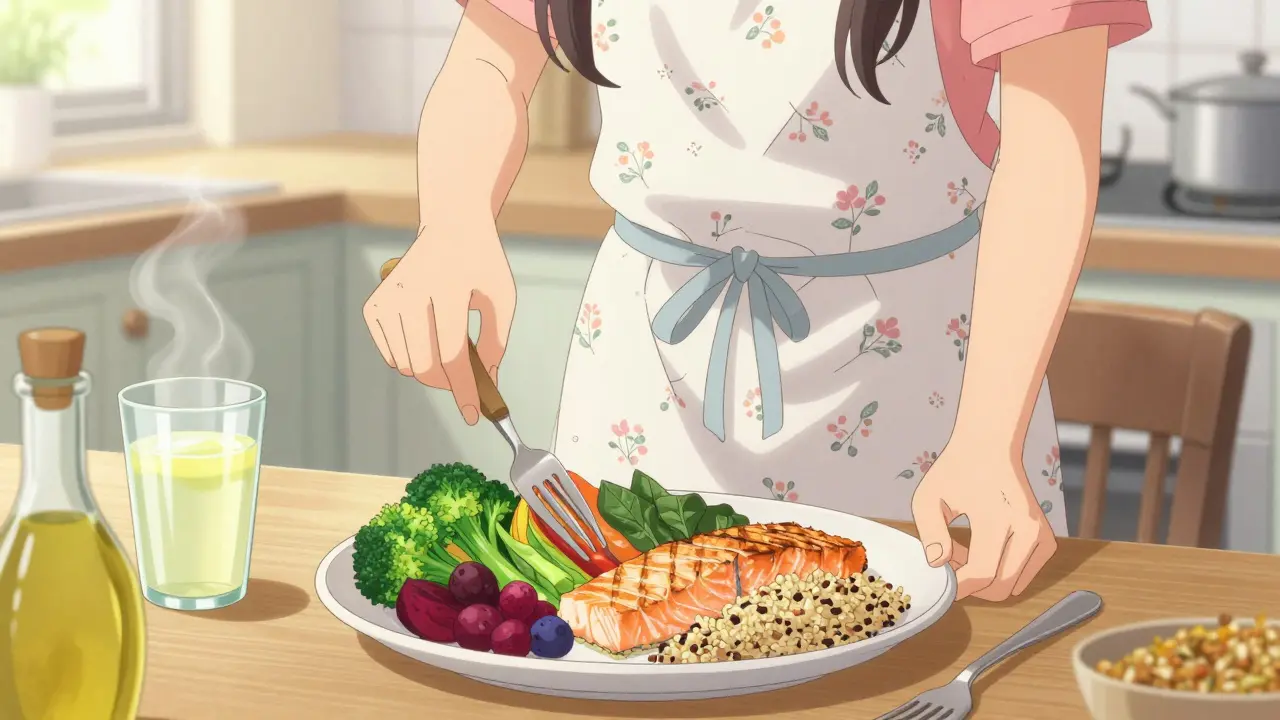
There’s no magic pill for liver disease. But there is a proven eating pattern: the Mediterranean diet. It’s not a fad. It’s not a detox. It’s what people in Greece, Italy, and Spain have eaten for centuries-and what doctors now prescribe for fatty liver disease. This isn’t about cutting out carbs or going keto. It’s about swapping out the bad stuff and adding in the good. A liver-healthy plate looks like this: half filled with vegetables and fruits, one-quarter with lean protein, and one-quarter with whole grains. That’s it. No complicated math. No calorie counting. Just visual cues you can use at every meal. Studies show this approach reduces liver fat by 25-40% in just six to twelve months. In one trial, people with NAFLD saw their ALT levels drop from 112 to 45 U/L-normal range-after nine months of sticking to this plan. That’s not luck. That’s science.What to Eat Every Day
Vegetables and fruits aren’t just filler. They’re your liver’s best friends. Aim for five servings a day-three veggies, two fruits. Color matters. Dark leafy greens, broccoli, Brussels sprouts, beets, blueberries, and apples all pack polyphenols and antioxidants that reduce liver inflammation. Cruciferous veggies like kale and cabbage contain indole-3-carbinol, shown in clinical trials to cut liver fat by 18% in six months. Healthy fats are essential. Olive oil, avocados, nuts, and seeds are your go-to sources. Swap butter for olive oil. Snack on walnuts-just 30 grams a day lowers bad cholesterol by 15% in people with fatty liver. Fatty fish like salmon, mackerel, and sardines give you omega-3s that directly reduce liver fat buildup. Eat them twice a week. Protein shouldn’t be feared. Lean sources like chicken, turkey, tofu, eggs, and legumes help repair liver tissue. Aim for about 3 ounces per meal-roughly the size of a deck of cards. Too little protein can lead to muscle loss, which makes liver disease worse. Too much? That’s rare unless you’re eating steak for every meal. Whole grains like brown rice, quinoa, oats, and barley keep your blood sugar steady. They’re high in fiber, which helps your liver process fat more efficiently. Avoid white bread, white rice, and refined pasta. They spike insulin, which tells your liver to store more fat.What to Avoid Completely
The biggest enemies of your liver? Sugar and processed foods. Sugary drinks are the #1 cause of fatty liver in modern diets. A single 12-ounce soda has 39 grams of sugar-almost 10 teaspoons. That’s not just empty calories. It’s a direct hit to your liver. Soda, energy drinks, sweetened teas, and fruit juices all do the same damage. Water, herbal tea, or sparkling water with lemon are your new best friends. Trans fats are found in fried foods, packaged snacks, margarine, and baked goods. They’re labeled as “partially hydrogenated oils.” Avoid them at all costs. They raise inflammation and make liver scarring worse. Refined carbs like white bread, pastries, and cereal are sugar in disguise. They break down fast, flood your liver with glucose, and turn into fat. Even “healthy” granola bars can have more sugar than a candy bar. Salt isn’t the main villain unless you have advanced cirrhosis. But keeping sodium under 2,000 mg a day helps reduce fluid buildup and bloating. Skip the soy sauce, canned soups, and processed meats. Flavor food with herbs, garlic, lemon, or vinegar instead.
Why the Mediterranean Diet Beats Other Diets
You’ve probably heard of keto, low-fat, or intermittent fasting for liver health. But here’s the truth: none of them beat the Mediterranean diet. A 2021 meta-analysis found the Mediterranean diet reduced liver fat by 32% more than low-fat diets and 18% more than keto diets after one year. Why? Because it doesn’t starve your body. It doesn’t cut out entire food groups. It works with your metabolism, not against it. Keto may drop weight fast, but it can raise LDL cholesterol and stress the liver in some people. Low-fat diets often replace fat with sugar-worse than before. Detox teas and juice cleanses? The American Liver Foundation says they have zero scientific backing. Your liver detoxes itself. You don’t need a $40 bottle of “liver cleanse” to do it. The Mediterranean diet also protects your heart. The same foods that heal your liver lower your risk of heart attack and stroke by 30%. That’s a double win.Real People, Real Results
John, 58, from Ohio, had stage 2 liver fibrosis. His FibroScan score was 12.5 kPa-borderline cirrhosis. He started eating Mediterranean-style: vegetables at every meal, olive oil on salads, fish twice a week, no soda. After nine months, his score dropped to 6.2 kPa. Normal. His ALT levels went from 112 to 45. His doctor asked if he’d started medication. On Reddit’s r/FattyLiver community, 68% of 1,247 people reported more energy within three months. But 42% said it was hard to avoid processed foods because they were cheaper. That’s real. Healthy food doesn’t have to be expensive. Frozen vegetables are just as nutritious. Canned beans are cheaper than meat. Oats cost pennies per serving. Sarah, 47, tried cutting out all sugar and got migraines. Her hepatologist told her to keep 15 grams of natural sugar a day-from berries, not honey or syrup. That’s the key: balance, not perfection.How to Start Without Overwhelming Yourself
You don’t need to overhaul your life overnight. Start with one change: swap soda for water. That alone will cut liver fat over time. Next: add one vegetable to lunch. A side of spinach, a handful of cherry tomatoes, or steamed broccoli. Just one. Then: cook one meal at home using olive oil, whole grains, and lean protein. Even if it’s just grilled chicken with brown rice and roasted veggies. Batch cook on Sundays. Make a big pot of lentil soup or quinoa salad. Freeze portions. Use frozen veggies when fresh ones are too pricey or out of season. Read labels. Look for “added sugars” on the nutrition facts. If it’s more than 5 grams per serving, think twice. Avoid anything with “partially hydrogenated oils.” Use lemon juice, garlic, or herbs instead of salt. A squeeze of lemon on fish or a sprinkle of oregano on roasted potatoes adds flavor without the burden.
Support and Resources
You don’t have to do this alone. The VA Health System offers a free 12-week telehealth nutrition program. The American Liver Foundation has a helpline that handled over 12,000 calls in 2023-most from people asking how to plan meals for shift work or low budgets. New tools are emerging too. The FDA now requires “added sugars” to be listed on nutrition labels. That’s a game-changer. Meal kits like Factor_75 now offer “Liver Health” menus. Community cooking classes in cities like Chicago and Atlanta are cutting the cost of healthy eating by 35%.What’s Next for Liver Nutrition
Science is moving fast. A major trial launching in late 2024 is testing time-restricted eating-eating only within a 10-hour window-combined with the Mediterranean diet. Early results show it cuts liver fat even more than diet alone. Researchers at Mayo Clinic are studying how your gut bacteria predict which foods will work best for you. One person might respond to walnuts. Another might need more fiber from beans. Personalized liver nutrition is coming. By 2030, doctors may track your dietary adherence as closely as they track your liver enzymes. Because here’s the bottom line: food is the most powerful, cheapest, and safest treatment we have for fatty liver disease.Frequently Asked Questions
Can you reverse fatty liver with diet alone?
Yes-especially in early stages. Studies show that following a Mediterranean-style diet can reduce liver fat by 25-40% and normalize liver enzymes within 6-12 months. No medication is needed. Weight loss helps, but even without losing weight, this diet improves liver health.
Is the keto diet good for fatty liver?
Keto may help with short-term weight loss, but it’s not the best long-term choice. Some people see improved liver enzymes, but others experience higher LDL cholesterol and increased liver stress. The Mediterranean diet has stronger evidence for reducing liver fat and inflammation without those risks.
What’s the best breakfast for a fatty liver?
Try oatmeal made with water or unsweetened almond milk, topped with a handful of blueberries and a tablespoon of ground flaxseed. Add a boiled egg on the side. Skip the sugary cereals, pastries, and fruit juices. Even “healthy” granola often has hidden sugar.
Can I drink alcohol if I have fatty liver?
No. Alcohol is toxic to the liver-even small amounts can make fatty liver worse and speed up scarring. If you have NAFLD or MASLD, the safest choice is zero alcohol. Your liver doesn’t need any extra stress.
How long does it take to see results?
Most people notice more energy and less bloating within 3-4 weeks. Liver enzyme improvements show up in blood tests around 3 months. Significant fat reduction in the liver takes 6-12 months. Consistency matters more than perfection.
Are there foods that specifically burn liver fat?
No food “burns” fat like a miracle solution. But certain foods help your liver do its job better: walnuts (reduce LDL), broccoli (lowers liver fat), green tea (reduces oxidative stress), and coffee (linked to lower fibrosis risk). These aren’t cures-they’re supports. The whole pattern matters more than any single food.