

A kidney transplant isn’t just a surgery-it’s a second chance at life. For someone with end-stage renal disease (ESRD), dialysis keeps them alive, but it doesn’t restore quality of life. A transplant can. But it’s not for everyone. And even if you qualify, the journey doesn’t end when you wake up from surgery. The real work begins after.
Who Can Get a Kidney Transplant?
The basic rule is simple: you need to have kidney failure that’s not reversible. That means your glomerular filtration rate (GFR) is at or below 20 mL/min. Some centers, like Mayo Clinic, may consider you even if your GFR is up to 25 mL/min-if your kidneys are crashing fast or you already have a living donor lined up. But you can’t just walk in and ask for one. You have to prove you’re physically and mentally ready to handle the lifelong responsibility that comes with it. Age isn’t a hard barrier. Vanderbilt says age 75 and up is a red flag, but UCLA doesn’t set a cutoff. They look at your heart, your lungs, your strength, and whether you have someone to help you take your meds every day. If you’re 80 but fit, alert, and have a spouse who’ll remind you to take your pills, you might still qualify. If you’re 50 but have uncontrolled diabetes, severe heart disease, or can’t stop smoking, you won’t. Obesity is a major hurdle. A BMI over 35 raises your risk of complications. Over 45? Most centers won’t touch you until you lose weight. Why? Fat makes surgery harder, increases infection risk, and kills grafts faster. Studies show obese patients have a 20% higher chance of losing their new kidney within five years. It’s not about looks-it’s about survival.What Disqualifies You?
Some things are absolute deal-breakers. Active cancer? You’re off the list. Not because they don’t care-you do. But transplant drugs weaken your immune system. If cancer is still lurking, it will come back hard and fast. You need to be cancer-free for at least two years (sometimes five, depending on the type) before they’ll even consider you. Active infections? Same deal. HIV isn’t automatically a no-if your viral load is undetectable and your CD4 count is above 200, some centers will transplant you. Same with hepatitis B-if it’s controlled with medication, you might still qualify. But if you’re still using drugs or drinking heavily? No. Addiction isn’t just a moral issue-it’s a medical one. Missing doses of anti-rejection meds means your body will attack the new kidney. And that’s not just failure. It’s life-threatening. Severe heart or lung disease? If your right heart pressure is over 50 mm Hg, or you need oxygen 24/7, your lungs or heart can’t handle the stress of surgery. Even if your kidneys are failing, your body needs to be strong enough to survive the operation and recovery.The Evaluation Process
Getting approved isn’t a quick checkup. It’s a months-long process. You’ll do blood tests, urine tests, chest X-rays, EKGs, and cancer screenings. They’ll check for viruses like hepatitis and HIV. They’ll type your tissue to see who you match with. They’ll assess your mental health-do you understand what’s coming? Are you depressed? Are you able to follow a complex schedule? They’ll also test your physical strength. At Vanderbilt, they use something called the Fried Frailty Criteria. It’s five simple things: Did you lose weight without trying? Do you feel exhausted most days? Can you grip a hand dynamometer? Can you walk slowly across a room? Are you physically inactive? If you fail three or more, you’re considered frail-and that’s a risk. Frail patients have higher death rates after transplant. And yes-they’ll ask who’s going to drive you to your 7 a.m. clinic visits every month. Who’s going to wake you up if you sleep through your 8 p.m. pill? Who’s going to call the doctor if you feel off? You need a care partner. Not a suggestion. A requirement.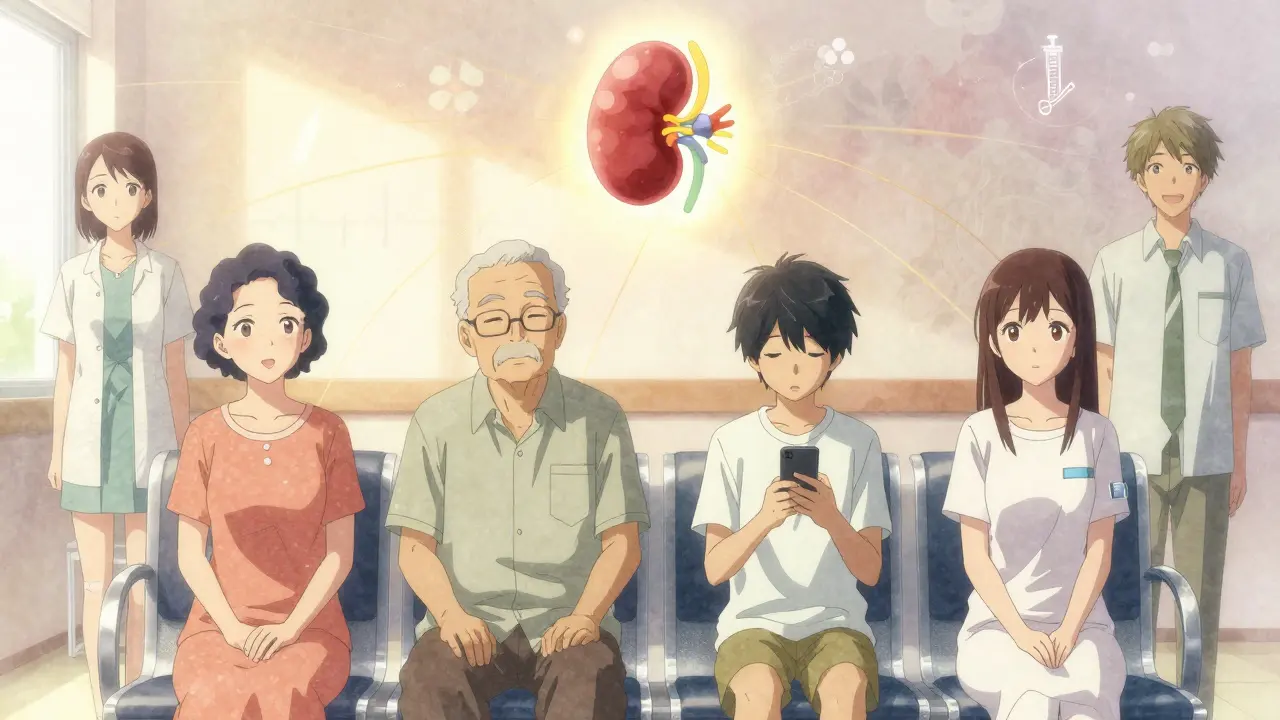
What Happens During Surgery?
The surgery takes about three to four hours. You’re under full anesthesia. The surgeon places the new kidney in your lower belly-usually on the right or left side. They connect its main artery and vein to your blood vessels. Then they stitch the ureter (the tube that carries urine) into your bladder. Your own kidneys? They stay. Unless they’re infected, bleeding, or causing high blood pressure, they’re left in place. The new kidney often starts working right away. You’ll see urine flowing into your bladder during surgery. But not always. About 1 in 5 deceased donor kidneys don’t start working immediately. That’s called delayed graft function. You might need dialysis for a few days or weeks until it wakes up. It’s not failure-it’s normal. Living donor kidneys? They almost always work right away. That’s why they’re the gold standard. The survival rate for living donor transplants is 97% after one year. For deceased donors? It’s 93%. That gap matters.Life After Transplant: The Lifelong Job
You’re not done when you leave the hospital. You’re just starting. You’ll take anti-rejection drugs for the rest of your life. That’s non-negotiable. The standard combo: a calcineurin inhibitor (like tacrolimus), an antiproliferative drug (like mycophenolate), and steroids. Some people get extra drugs at first to calm the immune system right after surgery. These drugs are powerful. They stop your body from attacking the kidney-but they also make you more vulnerable to infections, skin cancer, and diabetes. You’ll need regular blood tests to check drug levels. Too little? Rejection. Too much? Toxicity. Follow-up visits are strict. Weekly for the first month. Then monthly for three to six months. After that? Every three months. And every year, forever. You’ll get blood work, urine tests, and sometimes a biopsy to check for early signs of rejection. You’ll also need to watch your diet. Low salt. Low sugar. Low fat. No grapefruit-it messes with your meds. You’ll need to avoid raw fish, undercooked meat, and unpasteurized cheese. Your immune system is suppressed. A little food poisoning could land you back in the hospital.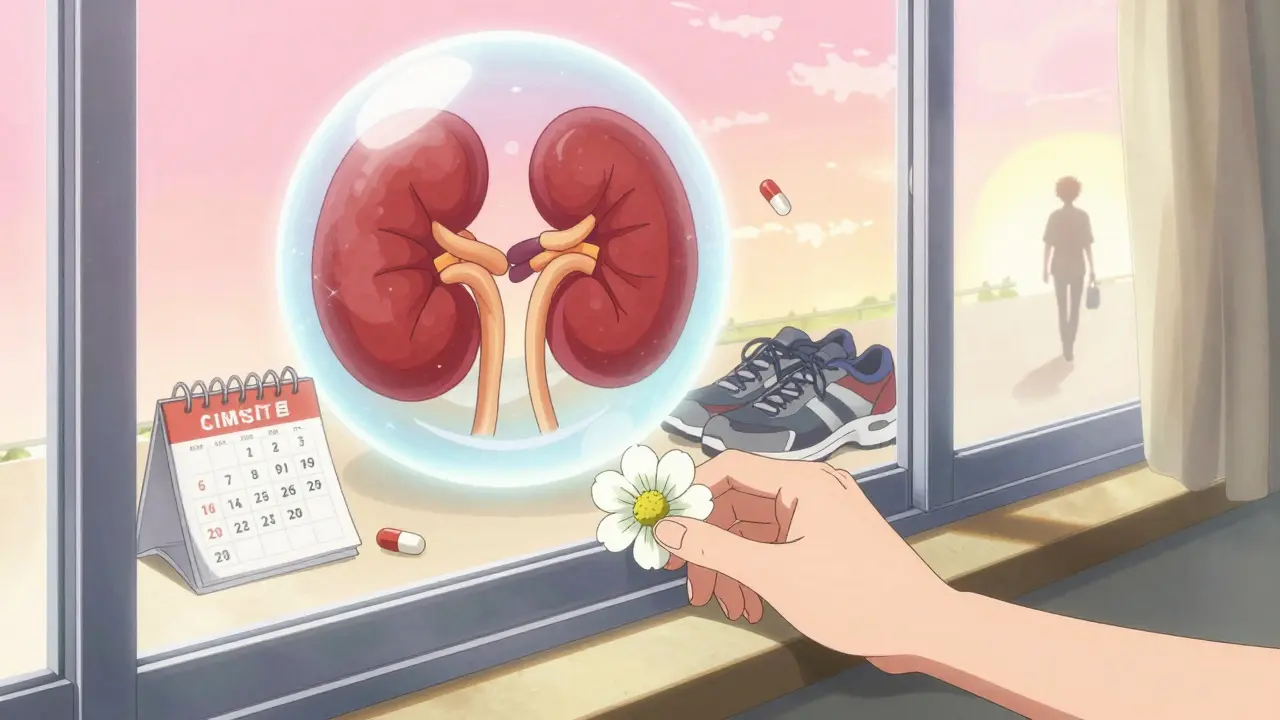
How Long Do Transplants Last?
The numbers are hopeful. For living donor transplants, 85% are still working after five years. For deceased donor kidneys? It’s 78%. That means most people get 10, 15, even 20 years out of their new kidney. Some longer. A few fail sooner. But even if your transplant fails, you can go back on dialysis and get another transplant later. New tools are helping. The Kidney Donor Profile Index (KDPI) helps match kidneys to recipients. A kidney from a 70-year-old donor with high blood pressure? It might not last 20 years-but if you’re 70 and on dialysis, it’s still better than staying on the machine. Studies show even high-KDPI kidneys improve survival and quality of life compared to dialysis.What’s Next for Kidney Transplants?
Researchers are working on ways to reduce or eliminate lifelong immunosuppression. Some trials at Stanford and the University of Minnesota are testing protocols to train the immune system to accept the new kidney without drugs. It’s early, but promising. If it works, it could change everything. Living donation is growing. More people are stepping up-not just family, but strangers. Paired exchange programs match incompatible donor-recipient pairs so both get a kidney. It’s like a swap meet for organs. The goal isn’t just to keep people alive. It’s to let them live. Work. Travel. Play with grandkids. Sleep through the night. That’s what a transplant gives you. But it demands responsibility. It demands discipline. And it demands a team.Can I get a kidney transplant if I’m on dialysis?
Yes. In fact, most people on dialysis are eligible. Being on dialysis doesn’t disqualify you-it often means you’re ready. Many transplant centers prefer to transplant before dialysis starts, but it’s not required. If your kidney function is below 20 mL/min and you’re stable, you can be evaluated. Some even do transplants while on dialysis, without waiting for a break.
How long is the wait for a kidney?
It varies widely. In the U.S., the average wait is 3 to 5 years for a deceased donor kidney. In some regions, it’s longer. But if you have a living donor, you can go straight to surgery. That’s why living donation is so powerful-it cuts the wait to zero. Some people wait 10 years or more. Others get one in months. It depends on your blood type, tissue match, and how rare your antibodies are.
Can I drink alcohol after a kidney transplant?
Moderation is allowed, but it’s risky. Alcohol can damage your liver and interfere with your anti-rejection drugs. Some meds, like tacrolimus, are processed by the liver. Too much alcohol can make those drugs less effective-or more toxic. Most centers say one drink per day, max. But if you have a history of alcohol abuse, you’ll need to prove you’ve been sober for at least six months before transplant-and stay sober after.
What happens if my new kidney fails?
If your transplant fails, you’ll go back on dialysis. It’s not the end. Many people get a second transplant. In fact, about 25% of transplant recipients get a second kidney. Your medical team will help you re-list. You might need to wait again, but your previous transplant doesn’t disqualify you. Some people have three or more transplants over their lifetime.
Can I have children after a kidney transplant?
Yes, many people do. Women who’ve had transplants can get pregnant, but it’s high-risk. Doctors usually recommend waiting at least one year after transplant, and only if your kidney function is stable and your meds are safe during pregnancy. Some immunosuppressants, like mycophenolate, are dangerous in pregnancy and must be switched. Men can father children without issue. Always consult your transplant team before trying to conceive.
Jessica Bnouzalim
January 11, 2026 AT 09:56beth cordell
January 12, 2026 AT 00:57Sumit Sharma
January 12, 2026 AT 22:49Jay Powers
January 14, 2026 AT 11:43Sona Chandra
January 15, 2026 AT 21:13Jennifer Phelps
January 15, 2026 AT 22:52Craig Wright
January 16, 2026 AT 05:16steve ker
January 17, 2026 AT 03:50George Bridges
January 18, 2026 AT 18:25Bryan Wolfe
January 18, 2026 AT 20:03TiM Vince
January 19, 2026 AT 19:11Lauren Warner
January 20, 2026 AT 11:20