

When your immune system is weakened-whether from cancer treatment, an organ transplant, or an autoimmune disease like rheumatoid arthritis or lupus-taking medication becomes a tightrope walk. You need drugs to control your condition, but those same drugs can leave you dangerously exposed to infections that most people shrug off. This isn’t theoretical. It’s daily reality for over 24 million people in the U.S. alone. And the risks aren’t just higher-they’re different.
Why Normal Rules Don’t Apply
Most people get a cold, rest for a few days, and feel better. But for someone on immunosuppressants, that same cold can turn into pneumonia in under 48 hours. Why? Because their immune system isn’t just slower to react-it’s partially turned off. Medications like prednisone, methotrexate, or biologics don’t just calm inflammation. They suppress the very cells that fight bacteria, viruses, and fungi. The problem isn’t just getting sick. It’s not recognizing you’re sick. Corticosteroids like prednisone mask fever, the body’s clearest warning sign. A patient might feel achy and tired, but no fever. No red throat. No cough. Just vague fatigue. That’s not laziness. That’s the immune system being silenced. By the time symptoms become obvious, the infection may already be spreading.How Different Drugs Carry Different Dangers
Not all immunosuppressants are created equal. Each class has its own fingerprint of risks. Corticosteroids like prednisone, dexamethasone, and methylprednisolone are common. They’re cheap, fast-acting, and effective. But at doses over 20mg per day-especially if taken for more than two weeks-they cut infection risk by 60% compared to placebo, according to a 2012 meta-analysis of nearly 4,200 patients. That’s not a small bump. That’s a major leap. Even short bursts for asthma or COPD flare-ups can tip the balance, especially in older adults or those with diabetes. Methotrexate, a workhorse for rheumatoid arthritis, helps nearly 70% of patients control their disease. But half of them quit within a year. Why? Fatigue hits hard within hours of taking it. Mouth sores. Nausea. Hair thinning. And liver damage. That’s why monthly blood tests are non-negotiable. A simple CBC and liver panel can catch trouble before it becomes critical. Azathioprine (Imuran) drops white blood cell counts. That’s its job. But when counts fall too low, the body can’t fight off even harmless bacteria. Patients on this drug report staph infections, herpes zoster (shingles), and rare but deadly conditions like PML-progressive multifocal leukoencephalopathy-caused by the JC virus. This isn’t rare. It’s documented. And it’s fatal in half the cases. Biologics like Humira, Enbrel, or Remicade target specific immune pathways. They’re powerful. But they’re also the most dangerous when it comes to infection. Studies show they’re significantly more likely to cause serious infections than older DMARDs. One Reddit user in r/RheumatoidArthritis shared how she spent two weeks in the hospital after developing tuberculosis while on a TNF inhibitor. Another reported recurring fungal skin infections that didn’t respond to over-the-counter creams. These aren’t outliers. They’re expected outcomes. Calcineurin inhibitors like cyclosporine and tacrolimus are vital after transplants. But they carry unique viral risks: Epstein-Barr virus (linked to lymphoma), hepatitis B reactivation, and polyomavirus (which can destroy kidney transplants). Many patients on these drugs need lifelong monitoring for viral DNA in their blood-not just symptoms.Combining Drugs Multiplies the Risk
Doctors often stack medications. Prednisone plus methotrexate. Tacrolimus plus azathioprine. It’s done to get better control. But here’s the catch: the risk doesn’t add up. It multiplies. A 2021 review in the PMC database found that combining steroids with other immunosuppressants doesn’t just raise infection risk-it creates a perfect storm for opportunistic infections. That’s when normally harmless microbes-like Pneumocystis jirovecii, Nocardia, or CMV-take over. These aren’t the bugs you catch at the office. They’re the ones that live quietly in your lungs or blood until your defenses drop too low. One patient in r/Transplant described his experience: “I was on triple therapy after my kidney transplant. I thought I was being careful. Then I got a fever of 100.4°F. No cough. No sore throat. Just tired. Two days later, I was in ICU with CMV colitis. They said I was lucky I didn’t die.”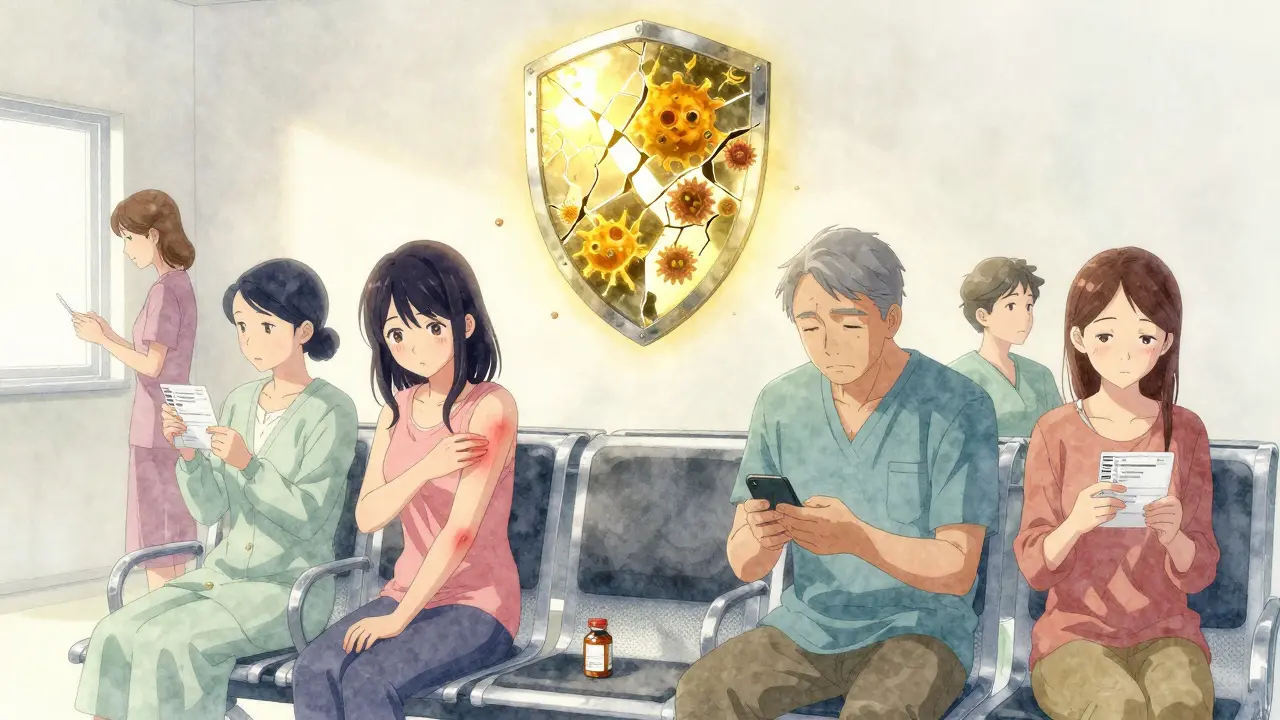
What You Can Do: Practical Steps to Stay Safe
You can’t stop your medication. But you can reduce your risk.- Wash your hands like your life depends on it. At least 20 seconds. Scrub under nails. Between fingers. Use soap and water. If you can’t, alcohol-based sanitizer works-but only if it’s 60% alcohol or higher.
- Wear a mask in crowded places. Hospitals, airports, grocery stores during flu season. The CDC recommends this for immunocompromised people year-round, not just during outbreaks.
- Get vaccinated-before you start treatment. Live vaccines (like MMR, varicella, nasal flu) are off-limits once you’re immunosuppressed. But flu shots, pneumonia shots, and COVID boosters? Vital. Even if they’re less effective, they still lower your chance of severe illness.
- Check your skin daily. A red, painful patch that won’t heal? A blister that looks like shingles? Don’t wait. Call your doctor. These can be early signs of infection.
- Know your baseline. Keep a log of your blood counts, liver enzymes, and kidney function. Know what’s normal for you. A drop in white blood cells from 5,000 to 3,000 might not sound like much. But if it’s your new normal, that’s your new red flag.
Atypical Symptoms Are the Real Trap
Fever? Not always. Cough? Not always. Swelling? Not always. In immunocompromised patients, infections don’t follow the textbook. A urinary tract infection might just mean confusion in an older adult. A lung infection might show up as a headache and dizziness. A skin infection might look like a rash, but be caused by a fungus that only grows in people with weak immunity. Dr. Francisco Aberra’s 2005 research showed that corticosteroids blunt the body’s normal response to infection. That means symptoms are subtle-or absent. That’s why patients often delay care. “I just felt off,” they say. But “off” can mean sepsis is already setting in. The Sepsis Alliance warns: if you’re immunocompromised and feel worse than usual for more than 24 hours, assume it’s infection until proven otherwise. Don’t wait. Don’t self-treat. Go to the ER. Or call your rheumatologist or transplant team immediately.
COVID-19 Changed the Game-But Not the Rules
Early in the pandemic, everyone assumed immunocompromised people would die from COVID-19. It made sense. Less immunity = more virus. Then Johns Hopkins studied 1,200 patients on immunosuppressants. The results stunned doctors: their outcomes were on par with people who weren’t immunosuppressed. Why? Because the immune overreaction-cytokine storm-wasn’t happening. Their bodies didn’t overreact. They just didn’t fight back. That doesn’t mean you’re safe. It means your risk profile changed. You’re less likely to die from a cytokine storm. But you’re more likely to carry the virus longer. That means you can spread it. That means you’re at higher risk for long COVID. That means you need boosters more often. And you still need to avoid exposure.What’s Next: Personalized Immunosuppression
The future isn’t about stopping these drugs. It’s about making them smarter. Newer drugs like JAK inhibitors (tofacitinib, baricitinib) target specific signals in the immune system, not the whole system. That means less broad suppression. Less infection risk. But they’re not risk-free. The FDA still requires black box warnings for blood clots and cancer. Researchers are now looking at pharmacogenomics-testing your genes to predict how you’ll respond to methotrexate or azathioprine. One blood test could tell you if you’re likely to get liver damage or low white counts before you even start the drug. And as antimicrobial resistance grows-WHO predicts 10 million deaths a year from drug-resistant infections by 2050-immunocompromised patients will be hit hardest. A simple UTI could become untreatable. A cut on your finger could lead to sepsis with no antibiotics left.Final Thought: It’s Not About Fear. It’s About Awareness.
Living with immunosuppression isn’t about avoiding life. It’s about navigating it with eyes wide open. Many patients on these drugs live full, active lives. They travel. They work. They raise kids. But they do it with a plan. Know your meds. Know your numbers. Know your risks. And never, ever ignore a feeling that something’s just… off.Can I still get vaccinated if I’m on immunosuppressants?
Yes-but timing matters. Live vaccines (like MMR, chickenpox, or nasal flu) are dangerous and should be avoided once you start immunosuppressants. Inactivated vaccines (flu shot, pneumonia shot, COVID boosters, hepatitis B) are safe and strongly recommended. Ideally, get them before starting treatment. Even if they’re less effective, they still reduce your risk of severe illness. Always check with your doctor before any vaccination.
Do all immunosuppressants cause the same side effects?
No. Each class has a different profile. Corticosteroids cause weight gain, high blood sugar, and mood swings. Methotrexate causes fatigue, nausea, and liver stress. Biologics carry higher infection risk and can trigger new autoimmune issues. Azathioprine lowers white blood cells. Calcineurin inhibitors can damage kidneys. Your doctor should explain which side effects to watch for based on your specific drug.
How do I know if I have an infection when I’m on steroids?
Steroids hide fever, the classic sign. Instead, watch for: unexplained fatigue, confusion, new pain (especially in joints or chest), skin changes (redness, swelling, sores), shortness of breath, or diarrhea. If you feel worse than normal for more than 24 hours-even without fever-assume it’s an infection. Don’t wait. Get checked.
Can I travel if I’m immunocompromised?
Yes, but plan carefully. Avoid areas with high rates of mosquito-borne diseases like dengue or Zika-the CDC specifically warns immunocompromised people are at higher risk. Avoid raw food, untreated water, and crowded events. Carry a letter from your doctor listing your medications and conditions. Bring extra prescriptions. Know where the nearest hospital is. And always wear a mask on planes and in busy airports.
Is it safe to take antibiotics or antivirals while on immunosuppressants?
Yes, but only under medical supervision. Some antibiotics can interact with immunosuppressants-especially calcineurin inhibitors like tacrolimus. Always tell every doctor you see that you’re immunocompromised and list every medication you take. Never self-prescribe antibiotics, even for a “mild” infection. What seems minor can become life-threatening fast.
Why do I need blood tests every month?
Because many immunosuppressants silently damage your body. Methotrexate can harm your liver. Azathioprine can crash your white blood cell count. Cyclosporine can hurt your kidneys. Monthly blood tests catch these problems before you feel sick. Waiting for symptoms means damage is already done. Regular monitoring is your safety net.
chandra tan
January 10, 2026 AT 12:03Bro this hit different. I’m on methotrexate and one time I thought I was just tired from work-turned out I had pneumonia. No fever. Just felt like my bones were made of wet paper. Docs said I got lucky I didn’t end up in ICU. Don’t ignore the ‘off’ feeling. Ever.
Ted Conerly
January 11, 2026 AT 13:27Hands down the most important takeaway: if you're immunocompromised and feel ‘off’ for more than 24 hours, go to the ER. Not tomorrow. Not after work. Now. Your immune system isn't giving you the luxury of a slow burn. It's silently losing the war-and you're the only one who can sound the alarm.
Saumya Roy Chaudhuri
January 12, 2026 AT 02:54Ugh. People still don’t get it. It’s not just about ‘washing hands’-it’s about understanding that your body is basically a compromised server running outdated software. You don’t just ‘avoid germs,’ you live in a sterile bubble. And if you’re not monitoring your CBC every month, you’re playing Russian roulette with your organs.
Aurora Memo
January 13, 2026 AT 11:19I’ve been on biologics for 7 years. The fatigue is real. The fear is real. But so is the life I’ve built-travel, hiking, even adopting a cat. It’s not about fear. It’s about preparation. Know your numbers. Know your limits. And don’t let anyone make you feel guilty for wearing a mask in a grocery store. You’re not being dramatic. You’re being smart.
Mario Bros
January 13, 2026 AT 13:04My mom’s on prednisone and she thought a sore throat was just a cold. Two days later she was in the hospital with strep throat turned sepsis. She’s fine now but man… I wish someone had told her about the ‘no fever’ thing sooner. This post saved my life. Seriously.
Jay Amparo
January 14, 2026 AT 21:23As someone from India, I’ve seen how stigma around chronic illness makes people hide symptoms. My uncle waited 3 weeks before going to the doctor after his transplant because he didn’t want to ‘burden’ anyone. By then, he had a fungal infection in his lungs. Please, if you’re reading this and you’re scared to speak up-talk. Your life matters more than pride.
Dwayne Dickson
January 15, 2026 AT 01:36Let’s be clear: the medical system is not designed for immunocompromised patients. It’s designed for people who can scream loud enough to be heard. The fact that we have to self-advocate for basic monitoring, vaccinations, and infection awareness is a systemic failure. And yet, here we are-still alive, still fighting, still being told to ‘just be grateful.’
Lisa Cozad
January 16, 2026 AT 10:32Just wanted to add: if you’re on JAK inhibitors, watch for leg swelling. Mine started subtly-just a little puffiness. Turns out it was a DVT. No pain. No redness. Just… off. Blood tests caught it. If I’d waited for symptoms? I wouldn’t be typing this.
anthony martinez
January 17, 2026 AT 01:35So let me get this straight. We’re supposed to live in fear of every sneeze, but the system won’t give us better drugs or faster access to diagnostics? Brilliant. Real brilliant. Keep telling us to wash our hands while the pharmaceutical industry profits off our vulnerability. 🤡
Ritwik Bose
January 18, 2026 AT 07:06Thank you for writing this. 🙏 From India, I’ve seen so many patients stop meds because they ‘feel fine’-then end up in the ER with nothing left to save. You’re not alone. We’re all just trying to stay alive, one blood test at a time. 💙
Ian Cheung
January 19, 2026 AT 05:48My cousin got PML on azathioprine. She was 29. No history of anything. Just a routine checkup and boom-brain lesions. They said it was rare. But rare doesn’t mean impossible. And when it happens to you? It’s 100%. Don’t let stats make you feel safe. Stay vigilant. Always.
Jake Nunez
January 19, 2026 AT 19:04My brother’s a transplant recipient. He travels all the time. Always wears a mask. Never eats raw sushi. Carries hand sanitizer like it’s oxygen. And yeah-he’s still alive. It’s not about being paranoid. It’s about being prepared. This post? Nailed it.
Faith Edwards
January 21, 2026 AT 04:04It’s fascinating how society glorifies ‘toughing it out’ while simultaneously ignoring the biological reality that immunocompromised individuals are walking time bombs with a silent fuse. The fact that we must beg for basic healthcare accommodations while influencers post selfies at music festivals is not just tragic-it’s a moral indictment of our collective apathy.