
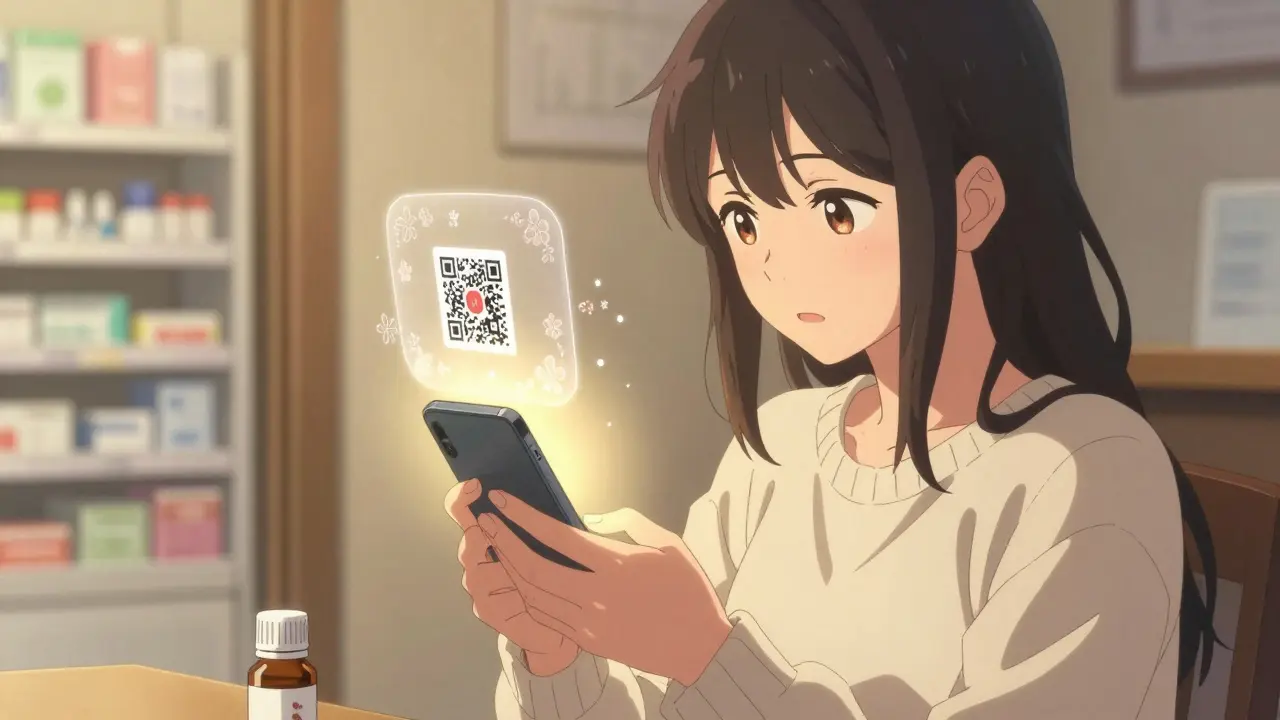
Every year, 1 in 10 medicines in low- and middle-income countries are fake or substandard. That’s not a guess-it’s the World Health Organization’s estimate. These aren’t just ineffective pills. They might contain rat poison, chalk, or the wrong dose of a life-saving drug. And they’re getting harder to spot. If you’re a patient, a pharmacist, or even a caregiver, knowing how to verify drug authenticity isn’t optional-it’s essential.
Why Fake Drugs Are a Silent Crisis
Counterfeit drugs don’t just cost money. They cost lives. A fake antibiotic might not kill you right away, but it lets an infection spread. A fake malaria drug can turn a treatable illness into a death sentence. The global market for fake medicines is worth over $200 billion annually, and it’s growing. Most of these drugs enter through broken supply chains, especially in places with weak regulation. But even in places with strong systems, errors happen. That’s why verification tools aren’t just for governments-they’re for anyone who takes or gives medicine.How the EU FMD System Works
The European Union’s Falsified Medicines Directive (FMD), which started in 2019, is the gold standard. Every prescription medicine package now has a unique 12-digit serial code, a 2D barcode, and a tamper-evident seal. When a pharmacist scans the code before handing over the medicine, it checks against a central EU database. If the code is invalid, duplicated, or expired, the system blocks the sale and alerts the pharmacist. This isn’t just theory. In NHS pharmacies, 70% of staff say the system is quick and easy to use. The scan takes about 3.2 seconds. But it’s not perfect. Early on, 43% of pharmacists accidentally ignored warnings because the pop-up looked like a routine "already dispensed" message. Now, most hospitals use colored alerts and mandatory documentation to fix that. Some are even testing audio alerts-because sometimes you miss the screen when you’re busy.The U.S. Approach: DSCSA and Its Gaps
In the United States, the Drug Supply Chain Security Act (DSCSA) requires every package to have a unique identifier, but it only checks at each point of ownership transfer-like when a wholesaler receives drugs from a manufacturer. It does NOT require verification at the pharmacy counter or when the patient gets the medicine. That’s a major flaw. The FDA admits this gap. In 2022, they said patients are still at risk because fake drugs can slip through after the last official check. That’s why they’re proposing a rule to require patient-level verification by 2027. Until then, U.S. pharmacists can’t rely on the system alone. Many use handheld scanners or QR code apps as a supplement, but it’s not mandatory. That means your safety depends on whether your pharmacy chooses to go beyond the minimum.What You Can Do with Your Phone
You don’t need a lab to check some medicines. Many manufacturers now put QR codes on packaging. Scan it with your phone, and it takes you to the company’s official site to confirm the product’s serial number. In field tests, this method worked with 92% accuracy. In Africa and Asia, SMS verification is common. You text a code from the package to a short number and get a reply. But here’s the catch: in rural areas with poor signal, it fails more than half the time. A 2021 Oxford study found SMS systems only work 68% of the time in places with weak mobile coverage. That’s why portable scanners are becoming more important.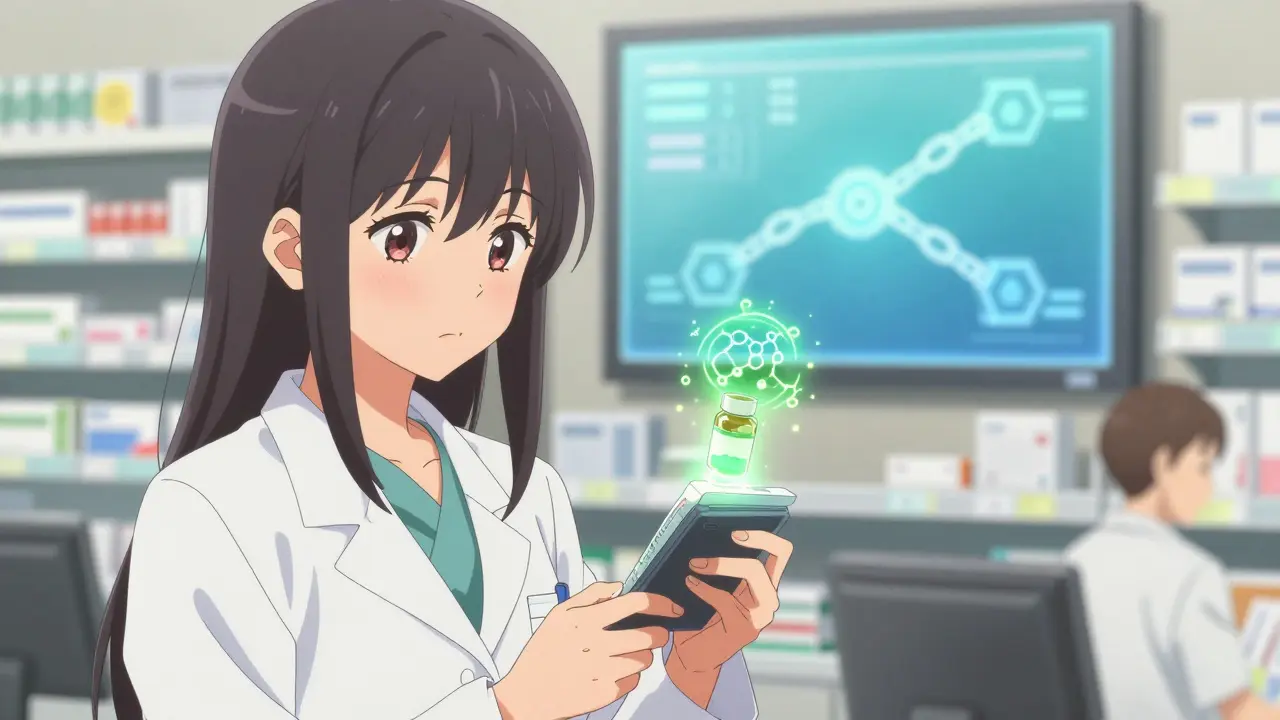
Spectroscopy: The Science Behind the Scanner
If you’ve ever seen a handheld device that looks like a flashlight and glows green or blue when pointed at a pill, that’s spectroscopy. It uses near-infrared (NIR) or Raman light to read the chemical fingerprint of the medicine. Every real drug has a unique spectral signature-like a barcode made of molecules. These devices are getting better. In 2018, they were only 78% accurate in the field. By 2022, that jumped to 92%. The FDA and USP are now building public libraries of these signatures for 1,200 essential medicines. By 2025, health workers in remote clinics will be able to compare any pill against a free, verified database. This is huge. It means a nurse in Ghana or a village pharmacist in India can confirm a drug’s authenticity without sending it to a lab.On-Dose Technologies: Tiny Tags, Big Security
Some companies are putting invisible markers directly on pills. These are called Physical Chemical Identifiers (PCIDs). They could be special pigments, flavors, or even DNA-like molecular tags. You can’t see them, but a scanner can read them. These tags are nearly impossible to copy. Pfizer and other big pharma are testing DNA barcodes in Phase 3 trials. These tags are so precise they can identify a single batch. The catch? They add $0.03 to $0.15 per pill to the cost. That’s why they’re not yet used for cheap generic drugs. But for high-value medicines-like cancer treatments or HIV drugs-they’re becoming standard.Blockchain and the Future
Blockchain isn’t just for cryptocurrency. Some companies are using it to track every step of a drug’s journey-from factory to pharmacy. Each transfer is recorded as a digital "block," and once it’s added, it can’t be changed. Pfizer uses this in 17 countries, and their system has 99.8% verification accuracy. But blockchain isn’t for everyone. Setting it up costs an average of $2.7 million. That’s why only 22% of top pharma companies use it. Smaller pharmacies rely on simpler tools like QR codes. But the trend is clear: the future is connected, traceable, and automated.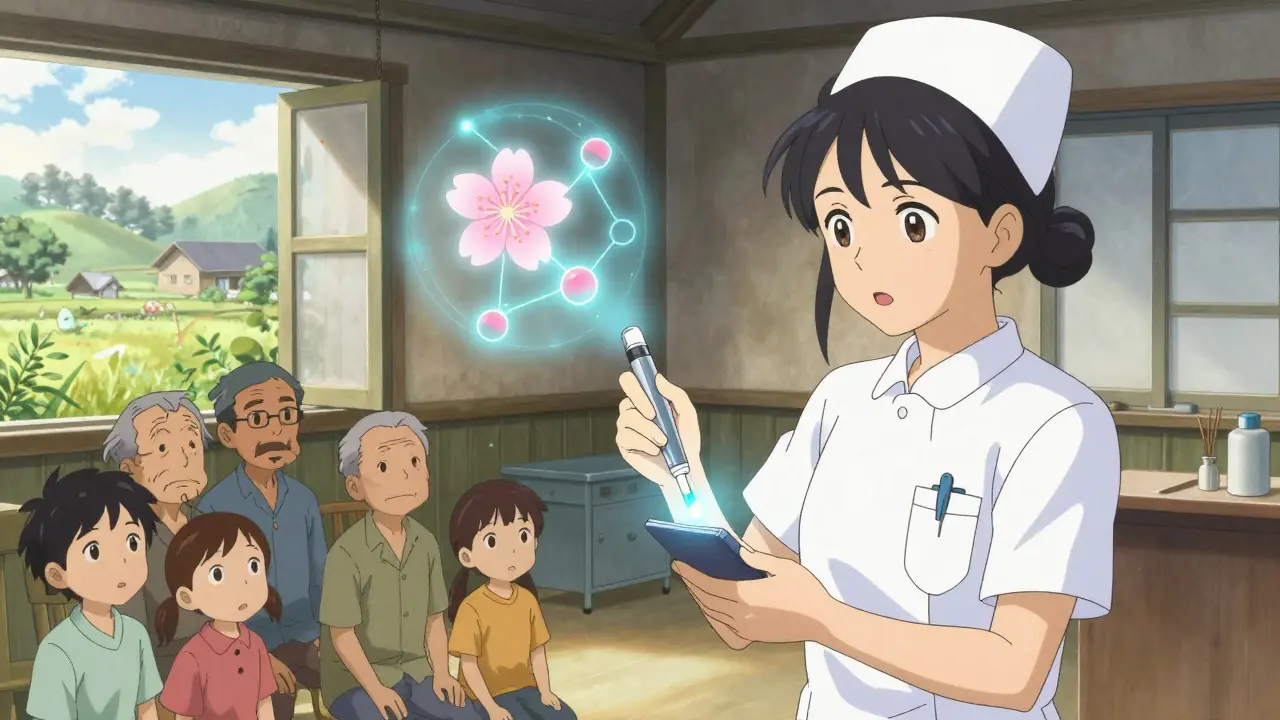
What You Should Do Right Now
You don’t have to be a pharmacist to protect yourself. Here’s what to do:- Check the packaging. Is the seal broken? Are the letters blurry or misaligned?
- Look for a QR code or serial number. Scan it with your phone. If it leads to a website you don’t recognize, stop.
- Buy from licensed pharmacies only. Avoid online sellers who don’t ask for a prescription.
- If you’re in a country with weak regulation, ask your pharmacist if they use a verification system. If they don’t, be extra cautious.
- Report suspicious drugs. In the U.S., use the FDA’s MedWatch program. In the EU, contact your national medicines agency.
What’s Coming Next
The next five years will change everything. The FDA’s new rule will force U.S. pharmacies to verify at the point of sale by 2027. The EU is adding AI to spot unusual patterns in drug movement. The WHO is pushing for low-cost scanners in every primary health clinic. And new technologies like molecular tagging will make fakes nearly impossible to produce. But technology alone won’t fix this. Human error causes 72% of verification failures. A tired pharmacist, a misread code, a skipped scan-these are the real weak points. Training, better alerts, and simple tools matter as much as the tech.Final Thought: Don’t Assume It’s Safe
Just because a drug looks right doesn’t mean it is. Fake medicines are getting smarter. The best protection isn’t luck-it’s action. Use the tools available. Ask questions. Report what you see. Your life, or someone you care about, could depend on it.How can I tell if my medicine is fake just by looking at it?
Sometimes you can spot fake medicine by checking the packaging: look for blurry text, misspelled names, mismatched colors, or broken seals. But many counterfeit drugs look perfect. That’s why visual checks alone aren’t enough. Always use official verification tools like QR codes or serial number checks when available.
Is it safe to buy medicine online?
Only buy from online pharmacies that require a prescription and are licensed in your country. Look for the Verified Internet Pharmacy Practice Sites (VIPPS) seal in the U.S., or the EU’s common logo for licensed online pharmacies. If a site offers drugs at prices that seem too good to be true, they probably are. Many fake drugs come from unregulated online sellers.
Can I use a smartphone app to verify drugs?
Yes-but only if the drug has a QR code or serial number linked to the manufacturer’s official site. Apps that claim to scan pills and identify them without a code are unreliable. Stick to apps provided by the drugmaker or your national health authority. Never trust third-party apps that ask for payment or personal info.
What should I do if I think I’ve been given a fake drug?
Stop taking it immediately. Keep the packaging and any receipts. Contact your pharmacist or doctor to report it. In the U.S., file a report with the FDA’s MedWatch program. In the EU, contact your national medicines agency. Reporting fake drugs helps protect others and improves tracking systems.
Are generic drugs more likely to be fake?
Not necessarily. Generic drugs are held to the same safety standards as brand-name drugs in regulated markets. But because they’re cheaper, they’re more often targeted by counterfeiters-especially in countries with weak oversight. Always verify generic drugs using official tools, just like brand-name ones.
Do I need special equipment to verify drugs?
For most people, no. A smartphone and the QR code on the package are enough. Pharmacists and clinics may use barcode scanners or handheld spectrometers, but those are for professionals. If you’re a patient, focus on checking packaging, scanning codes, and buying from trusted sources.
Why isn’t there a global system to verify all drugs?
Different countries have different laws, budgets, and infrastructure. The EU has a full system; the U.S. is still rolling one out; many low-income countries lack the technology or funding. Global efforts are underway through the WHO and PIC/S, but it takes time. Until then, use the tools available in your region and stay vigilant.
Tony Du bled
December 22, 2025 AT 19:30Just scanned my blood pressure pill with my phone and it worked. Wild that we can do this now with just a QR code.
Kathryn Weymouth
December 24, 2025 AT 12:17It's terrifying how many people assume that if a pill looks right, it is right. I've seen patients refuse to check codes because they 'trust their pharmacy.' But trust isn't verification. The difference between a real and fake drug isn't always visible-it's in the data, the chain, the scan. That’s why tools like the EU’s FMD aren’t bureaucratic red tape-they’re lifelines.
Art Van Gelder
December 26, 2025 AT 00:34Let’s be real-this whole fake drug crisis is a symptom of something way bigger. We’ve turned medicine into a commodity, not a covenant. We optimize for profit, not purity. We outsource production to the lowest bidder and then act shocked when someone slips in chalk instead of calcium. The tech is cool-spectroscopy, blockchain, DNA tags-but it’s all just Band-Aids on a systemic wound. Until we stop treating health as a market and start treating it as a human right, we’re just rearranging deck chairs on the Titanic while people drown in counterfeit antibiotics.
Johnnie R. Bailey
December 27, 2025 AT 14:27As someone who’s worked in global health logistics, I’ve seen how the EU system works in practice-and it’s not perfect, but it’s the closest we’ve got. The real win isn’t the tech-it’s the culture shift. Pharmacists now see verification as part of their duty, not a hassle. That’s cultural change. In places like rural Mexico or Nigeria, we’re starting to see community health workers using low-cost NIR scanners. It’s not glamorous, but it’s saving lives. The future isn’t in Silicon Valley-it’s in a nurse in Ghana holding a $20 device that tells her whether a malaria pill is real.
Candy Cotton
December 28, 2025 AT 16:54Why is the U.S. so behind? Because we let bureaucracy and corporate lobbying dictate public health. The EU has a unified system. We have 50 different state regulations and a pharmaceutical industry that fights every step. The DSCSA is a joke. It’s not a security system-it’s a liability shield for distributors. And don’t get me started on the FDA’s slow roll-out. If this were about national defense, we’d have solved it in six months. But because it’s just poor people dying in Ohio and Mississippi, it’s ‘a priority’-until next quarter’s earnings call.
Herman Rousseau
December 28, 2025 AT 23:27Big thanks to the author for laying this out so clearly. I just shared this with my mom-she buys her diabetes meds online because the price is half what her local pharmacy charges. She didn’t know how dangerous that was. Now she’s checking the QR code every time. Small wins. Also, if you’re in a country with bad infrastructure, don’t wait for the government to fix it. Use what you’ve got: a phone, a trusted pharmacy, and the courage to ask, ‘Is this real?’ That’s activism.
Nader Bsyouni
December 30, 2025 AT 05:31Blockchain? Spectroscopy? You people are overcomplicating this. All you need is a doctor who cares and a pharmacy that doesn’t want to get sued. Technology is just a distraction from the real issue-corruption and greed. We don’t need apps to verify pills. We need to jail the people selling them. End of story.
Vikrant Sura
December 31, 2025 AT 08:3292% accuracy? That’s still 1 in 12 pills that could be wrong. And you think that’s acceptable? Also, who’s paying for all these scanners in rural India? Not the government. Not the pharma. So who? The patient? This whole thing is a scam to sell more gadgets.
Julie Chavassieux
December 31, 2025 AT 20:56And yet… we still let people die. Every day. In silence. No headlines. No hashtags. Just another pill. Another parent. Another child. Another story that fades before it’s even told. We have the tools. We have the science. We have the data. But we don’t have the will. And that’s the real fake drug.