
Every time you pick up a prescription for certain high-risk medications, a small paper booklet should be handed to you - the Medication Guide. It’s not just a formality. It’s your legal right to know the real dangers, side effects, and what you must do to stay safe. But if you’ve ever looked at one, you know they’re often long, confusing, and hard to read. The FDA requires these guides for drugs that can cause serious harm if used incorrectly. Yet, many patients don’t know how to get them, or even that they exist.
What Are FDA Medication Guides?
Medication Guides (MGs) are official patient information sheets approved by the U.S. Food and Drug Administration. They’re not the same as the small print on the pill bottle. These are full-length, FDA-reviewed documents that explain the most serious risks of a drug - things like life-threatening side effects, what to avoid while taking it, and when to call a doctor immediately.
The FDA only requires these guides for drugs that meet one of three strict criteria: the drug has risks so serious they could change whether a patient decides to take it, the patient must follow exact instructions for the drug to work, or the guide could prevent a major health emergency. As of 2011, over 300 drugs required these guides. That number keeps growing as new high-risk medications are approved.
Manufacturers write the guides, but the FDA reviews and approves every word. They must be written in plain English - no medical jargon. Still, studies show many guides fail basic readability standards. A 2012 study found that even though the number of required guides jumped from 40 to 305 in just five years, their quality didn’t improve. Patients were getting more information, but not better information.
How Do You Get a Medication Guide?
The easiest and most common way is through your pharmacy. Every time a pharmacist fills a prescription for a drug that requires a Medication Guide, they must hand you a printed copy - no questions asked. This applies to new prescriptions and refills, as long as you’re picking it up yourself or a caregiver is getting it for you.
But here’s something many people don’t know: you can ask for one even if the pharmacist doesn’t offer it. If you’re taking a drug you think should come with a guide, just say, “Can I get the FDA Medication Guide for this?” The pharmacist is legally required to give it to you.
Pharmacies don’t have to give out guides if you’re getting the medication in a hospital, clinic, or doctor’s office where a nurse or doctor gives it to you directly. But even then, if you ask for it, they must provide it. This rule applies especially to drugs under Risk Evaluation and Mitigation Strategies (REMS) - special safety programs for the riskiest medications.
Can You Get It Electronically?
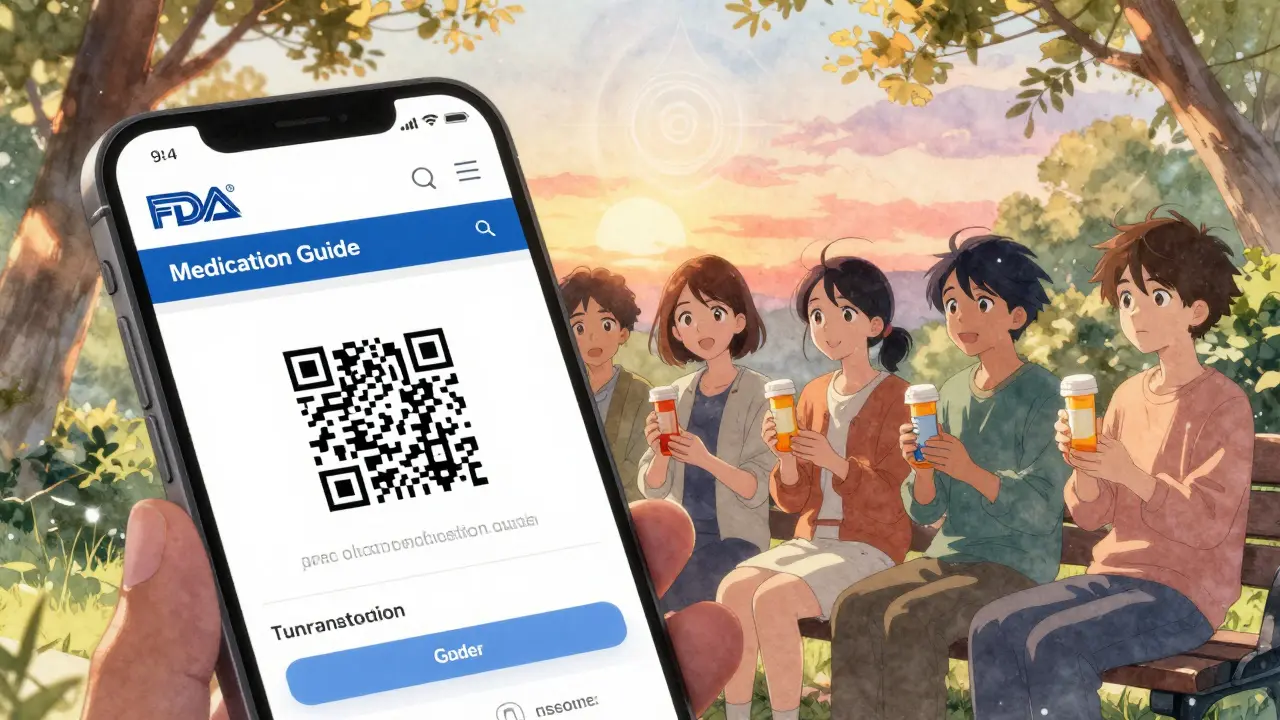
Yes. While paper is still the default, you have the right to ask for an electronic version. You can request it via email, text, or through your pharmacy’s patient portal. Some pharmacies already offer this option, especially if you use online refill services.
But here’s the catch: pharmacists aren’t required to offer electronic delivery unless you ask. Most still hand out paper copies by default. So if you want a digital copy, say so upfront. You can also save it, print it later, or share it with family members.
And if you don’t have a pharmacy that offers this, you can download the guide yourself. The FDA maintains a public database of all approved Medication Guides on its website. Just search by drug name or brand, and you’ll find the official, up-to-date version - no login, no cost, no tricks.
What’s in a Medication Guide?
Every FDA-approved Medication Guide follows a basic structure. It must include:
- The drug’s generic and brand names
- A clear list of the most serious possible side effects
- What to do if you experience those side effects
- How to take the drug correctly - including what to avoid (like alcohol, other meds, or certain foods)
- What to do if you miss a dose or take too much
- Storage instructions
- Who to contact for more information
It’s not meant to be a comprehensive medical textbook. It’s a safety checklist. For example, if you’re taking a drug that can cause liver damage, the guide will tell you exactly which symptoms to watch for - like yellow skin, dark urine, or constant nausea - and when to go to the ER. If you’re on a blood thinner, it will warn you about bleeding risks and what to avoid, like NSAIDs or herbal supplements.
These guides are written for people who aren’t doctors. But too often, they’re still too long. Some are 10 pages. Some use tiny fonts. That’s why the FDA is pushing for a new system.
The Future: Patient Medication Information (PMI)
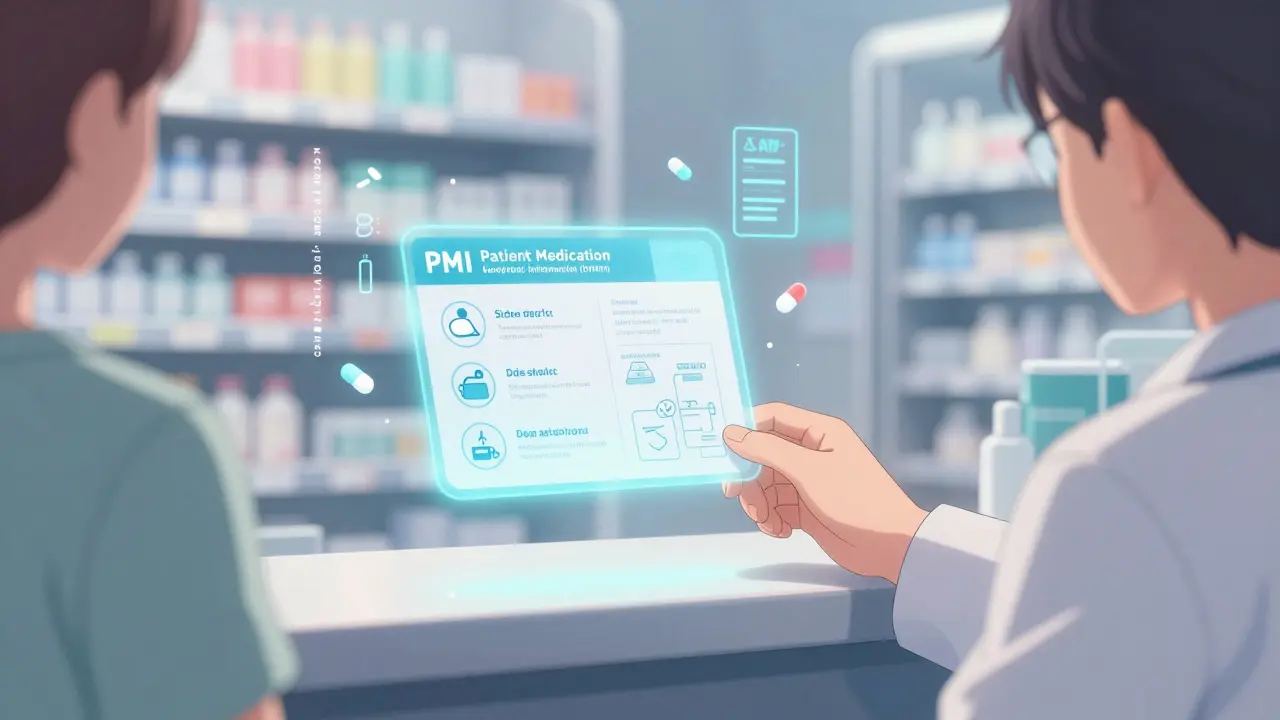
The current Medication Guide system is outdated. In 2023, the FDA proposed a major change called Patient Medication Information (PMI). This new system would replace the messy, inconsistent guides with one standardized, one-page document for every drug that needs it.
Here’s how it works:
- Every PMI will have the same format: bold headings, clear sections, simple language
- It will be stored in a free, public FDA database - accessible anytime on any device
- Pharmacies will be required to give you a QR code that links to the digital version
- Printed copies will still be available on request
This change is coming, but slowly. Drugs approved after the rule takes effect will get PMI right away. Older drugs have until 1 to 5 years to switch, depending on when they were first approved. The goal is to fix the readability crisis - because right now, patients are being given information that’s too hard to understand.
What If Your Drug Doesn’t Come With a Guide?
Not every prescription needs one. Only drugs with serious, specific risks require FDA-approved Medication Guides. Many common medications - like antibiotics, blood pressure pills, or birth control - don’t need them because their risks are well-known and manageable.
But if you’re unsure, check the FDA’s online database. Type in your drug’s name. If a guide exists, you’ll see it. If it doesn’t, your drug doesn’t meet the FDA’s high-risk criteria. That doesn’t mean it’s safe - just that the risks don’t require a separate guide.
Still, always ask your pharmacist or doctor: “Is there any important safety info I should know about this drug?” You don’t need to wait for a guide to ask questions.
Why This Matters
Medication errors are one of the leading causes of preventable harm in the U.S. Many of those errors happen because patients didn’t understand the risks. A Medication Guide isn’t just paperwork - it’s a lifeline. It tells you when to stop taking a drug and call 911. It tells you when to skip a dose. It tells you not to mix it with grapefruit juice, or with your uncle’s painkillers.
When you get a new prescription, don’t just grab the bottle and walk out. Ask for the guide. Read it. Keep it. Share it with your caregiver. If it’s too hard to read, ask for the digital version. If your pharmacy won’t give it to you, ask to speak to the pharmacist in charge - they’re legally obligated to provide it.
The system isn’t perfect. But you have power in it. You have the right to know. And you don’t need to wait for the FDA to fix it - you can act today.
Do I have to pay for a Medication Guide?
No. Medication Guides are provided free of charge by law. Pharmacies cannot charge you for them, whether in paper or electronic form. If someone tries to bill you, ask to speak to a manager - this is a federal requirement under 21 CFR part 208.
Can I get a Medication Guide for an over-the-counter drug?
No. FDA Medication Guides only apply to prescription drugs that meet specific safety criteria. Over-the-counter medications have different labeling rules, and the FDA doesn’t require separate guides for them. Always read the OTC drug facts label - it’s the official safety info for those products.
What if my doctor says I don’t need the guide?
Your doctor can recommend against it, but they cannot block your right to receive it. The FDA says patients always have the right to request a Medication Guide, regardless of what a prescriber says. If your doctor says you don’t need it, you can still ask your pharmacist for a copy. The guide is yours to have.
Are Medication Guides available in languages other than English?
The FDA requires Medication Guides to be written in English. Some manufacturers offer translated versions, but they are not FDA-approved and may not be accurate. If you need help understanding the guide, ask your pharmacist for a translator or contact the drug manufacturer directly - many have patient support lines that offer multilingual assistance.
Can I get a Medication Guide for a drug I took years ago?
Yes. The FDA’s online database includes all approved Medication Guides, even for drugs no longer on the market. If you’re researching a past medication or have concerns about a drug you took in the past, you can still access the official guide from the time it was approved. This is especially useful for long-term side effects or legal cases.
Natasha Sandra
December 26, 2025 AT 08:56OMG YES!!! 🙌 I literally just got a new script for my blood thinner and the pharmacist handed me this tiny booklet like it was nothing... but I read it and it literally saved me from mixing it with turmeric tea 😅 I had no idea it could cause bleeding! Thank you for posting this - I’m telling all my friends to ASK FOR THE GUIDE!!! 💊❤️
Erwin Asilom
December 26, 2025 AT 13:37The FDA’s requirement for Medication Guides is a necessary safeguard, though implementation remains inconsistent. The key issue is not the existence of the guides, but their readability and accessibility. A standardized, one-page Patient Medication Information format, as proposed, would significantly reduce patient error rates. Pharmacies must be held accountable for distribution, and digital access should be the default, not an afterthought.
sakshi nagpal
December 28, 2025 AT 08:37This is an important topic, especially in countries where access to clear medication information is limited. In India, many patients rely on pharmacists’ verbal instructions, which can be inconsistent. The idea of a standardized, digital PMI with QR codes is brilliant - it could bridge literacy gaps and language barriers if translated properly. I hope global health organizations take note of this FDA initiative.
Sandeep Jain
December 29, 2025 AT 08:13i had no idea u could ask for these guides like a boss 😅 i always just took the bottle and left… but last week i asked for the guide for my antidepressant and the pharmacist was like ‘oh u wanna read it?’ like i was weird… but i did and it told me not to drink alcohol with it… which i was doing bc my buddy said it was fine. yeah no. thanks for the heads up.
roger dalomba
December 30, 2025 AT 20:40Wow. A 10-page pamphlet on how not to die. Groundbreaking. Next they’ll tell us to breathe air.
Brittany Fuhs
January 1, 2026 AT 18:14Why are we even letting Big Pharma write these? They’re the ones making the drugs. The FDA should’ve just made them in Chinese and forced us to learn it. At least then we’d know we’re being properly oppressed. 🇺🇸
Steven Destiny
January 2, 2026 AT 18:42THIS IS WHY WE NEED TO STAND UP FOR PATIENT RIGHTS. You don’t have to wait for the system to fix itself - you have the power to ask. I’ve been handing out printed copies of Medication Guides to my neighbors since last year. One lady stopped her statin because the guide warned about muscle damage - she saved her kidneys. Don’t be passive. Be proactive. Your life depends on it.
Becky Baker
January 3, 2026 AT 17:40My cousin in Canada asked for a guide and they said ‘we don’t do that here.’ So I mailed her the PDF from the FDA site. Americans think we’re the only ones who care about safety. Newsflash: we’re not. But we’re the only ones who actually fight for it.
Sumler Luu
January 4, 2026 AT 00:10I appreciate the effort to inform patients, but let’s not pretend this system is flawless. I’ve seen guides printed in 6-point font, with no bolding, and zero visual hierarchy. The FDA’s new PMI proposal is a step forward - but enforcement is everything. If pharmacies aren’t fined for not providing them, nothing changes. I’m not asking for perfection. I’m asking for compliance.