
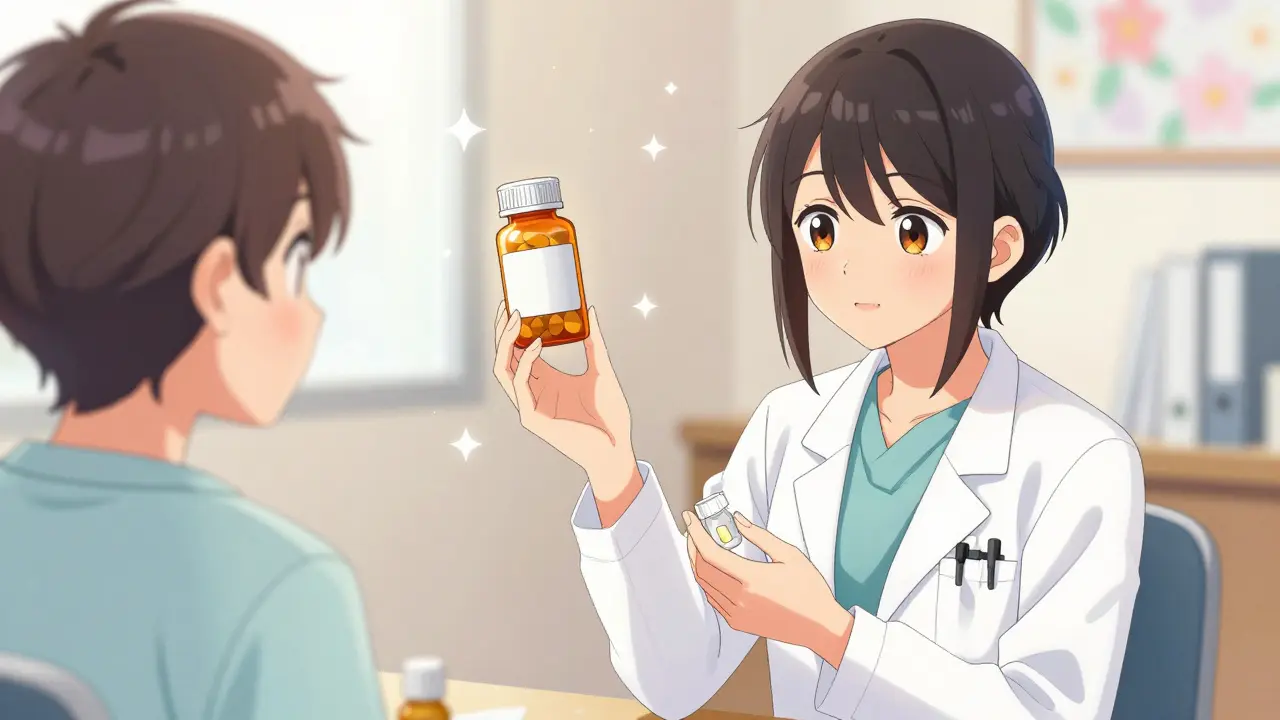
Imagine a scenario where a patient stops taking their life-saving medication not because it stopped working, but because the pill looks different or costs $40 more out of pocket. This isn’t a hypothetical nightmare; it’s a daily reality in many clinics. Patient advocacy by providers regarding the support and promotion of appropriate generic medication use to improve adherence and reduce costs is no longer just a nice-to-have strategy. It is a critical component of modern clinical practice. As healthcare costs spiral, the way physicians and pharmacists communicate about generic drug substitution can mean the difference between a patient staying healthy and falling through the cracks.
The stakes are high. According to data from the Association for Accessible Medicines (AAM), new patient abandonment rates are 266% higher for brand-name drugs compared to generics. Why? Because 90% of generic copays sit under $20, while nearly 40% of brand-name medications exceed that threshold. When you frame this as a financial barrier rather than a clinical one, the role of the provider shifts from prescriber to advocate. You aren’t just writing a script; you are navigating a complex landscape of economics, psychology, and regulatory science.
The Science Behind the Switch: Bioequivalence Explained
To advocate effectively, you first need confidence in the product. The foundation of generic medication trust lies in the rigorous approval process established by the Hatch-Waxman Act of 1984. This legislation created the pathway for generic drugs to enter the market without repeating expensive clinical trials, provided they meet strict standards set by the Food and Drug Administration (FDA).
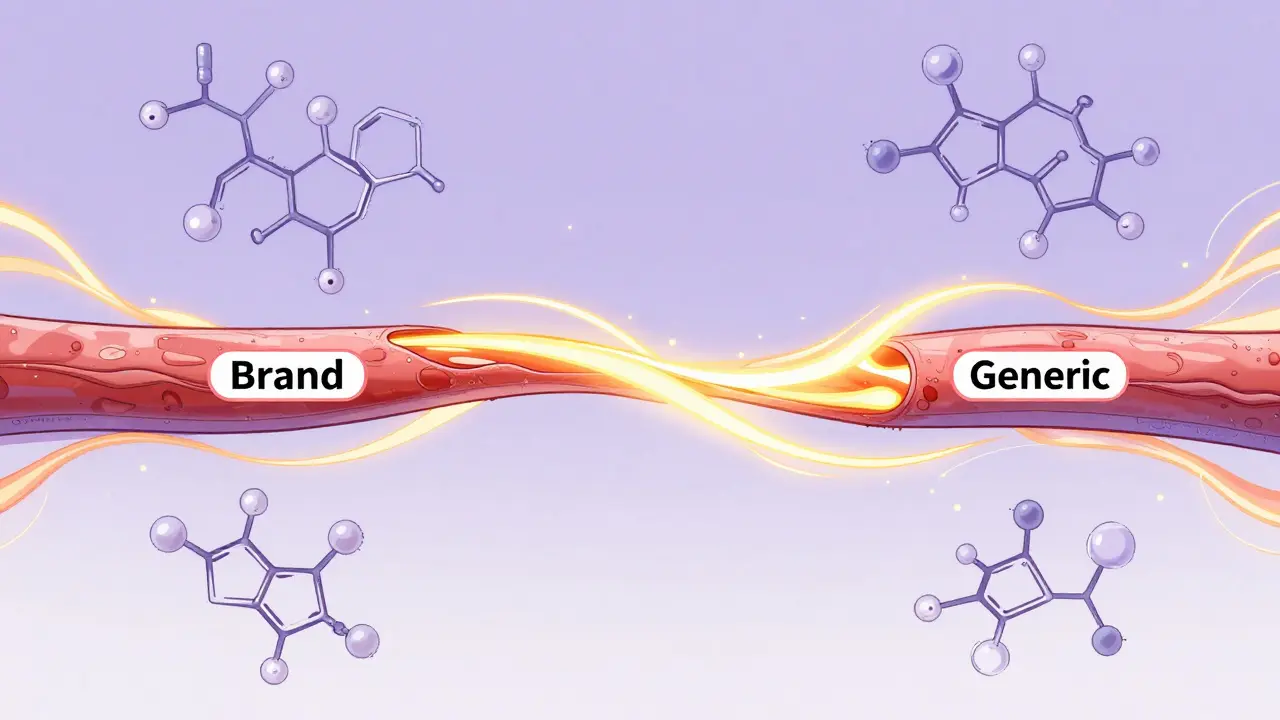
The key concept here is bioequivalence. For a generic drug to be approved, it must demonstrate pharmaceutical equivalence-meaning it has the same active ingredient, dosage form, strength, and route of administration as the reference listed drug (the brand-name original). But it goes further. The FDA requires that the generic’s bioavailability falls within a specific statistical range. Specifically, the 90% confidence interval for the ratio of population geometric means must fall between 80% and 125% for both AUC (area under the curve) and Cmax (maximum concentration).
In plain English, this means the generic drug enters your bloodstream at essentially the same rate and extent as the brand-name version. Dr. Sarah Ibrahim of the FDA emphasized that while inactive ingredients like dyes or binders may differ, manufacturers must prove these differences do not impact safety or efficacy. Understanding this science allows you to counter patient misconceptions with facts, not just reassurance.
| Attribute | Brand-Name Drug | Generic Drug |
|---|---|---|
| Active Ingredient | Original formulation | Identical chemical composition |
| Bioequivalence Standard | N/A (Reference Listed Drug) | Must match brand (80-125% CI for AUC/Cmax) |
| Inactive Ingredients | Proprietary mix (dyes, fillers) | May differ; must be safe/non-interfering |
| Average Copay | Often >$20 (39% exceed this) | Usually <$20 (90% below this) |
| Patient Abandonment Rate | Significantly higher (266% increase) | Lower due to affordability |
The Trust Factor: Overcoming Patient Misconceptions
Even with solid scientific backing, human psychology plays a massive role in medication adherence. A 2015 systematic review published in PMC by Dunne et al. revealed that while opinions on generics have improved, a "strongly held belief" persists among some patients that generics are inferior. This mistrust often stems from anecdotal experiences or misinformation rather than clinical evidence.
Here is where your role as a trusted authority becomes pivotal. Research shows that patient trust in their physician often overrides personal mistrust of generic medicines. If you express confidence in the generic option, patients are far more likely to follow suit. Dr. SS Dunne’s study concluded that enhancing physicians’ positive opinions regarding generics has a multiplier effect on patient acceptance.
However, confusion arises when patients notice physical differences. Pills may look different in color, shape, or size due to varying inactive ingredients. Patients might even be switched between multiple generic manufacturers of the same drug throughout the year. Without preparation, this visual change can trigger anxiety. Proactive counseling is essential. Instead of waiting for the patient to ask, "Why does this look different?" initiate the conversation. Explain that the appearance change is normal and does not affect how the drug works in their body.
Economic Advocacy: Making Cost Visible
Advocacy isn’t just about science; it’s about economics. In the U.S., generic medications now represent 90% of all prescriptions filled, yet they account for only 23% of total prescription drug spending. This disparity highlights their critical role in healthcare affordability. Yet, many patients don’t realize the financial impact until they reach the pharmacy counter.
Providers can bridge this gap by explicitly discussing cost during the visit. Mentioning that a generic alternative could save them $50 or $100 per month transforms the prescription from a medical instruction into a financial benefit. The American College of Physicians (ACP) formally recommended in 2022 that doctors prescribe generic medications whenever possible, acknowledging that cost barriers directly impact therapeutic outcomes.
Administrative hurdles also play a part. Prior authorizations (PAs) for brand-name drugs when generics are available can delay treatment by an average of 2.3 days. The American Academy of Family Physicians (AAFP) supports eliminating PAs for generic drugs to streamline access. By advocating for simpler administrative pathways, you reduce friction for both the patient and the healthcare system.
Nuances and Exceptions: When Brand Names Matter
While the push for generics is strong, blind advocacy can be dangerous. Not all drugs are interchangeable. The most notable exception involves Narrow Therapeutic Index (NTI) drugs. These are medications where small changes in blood concentration can lead to serious adverse effects or loss of efficacy. Examples include warfarin, levothyroxine, and certain anti-seizure medications.
Professional organizations hold nuanced views here. The AAFP opposes mandatory generic substitution, recognizing that therapeutic equivalence doesn’t always translate to clinical interchangeability for NTI drugs. Conversely, the Academy of Managed Care Pharmacy (AMCP) opposes restrictions on generic substitution for NTI drugs, arguing that proper monitoring ensures safety. As a provider, you must know which drugs fall into this category. For NTI medications, consistency is key. If a patient is stable on a specific manufacturer’s generic, sticking with that source may be safer than switching frequently.
Additionally, recent market volatility has introduced new challenges. The American Society of Health-System Pharmacists (ASHP) issued a warning in March 2023 about rising prices for certain essential generic drugs, noting that price spikes could make some medications inaccessible. Advocacy now requires staying informed about market trends, ensuring that the "cheaper" option remains truly affordable and available.

Practical Strategies for Effective Communication
Implementing effective advocacy requires specific communication strategies, especially given time constraints. Primary care physicians average only 13-16 minutes per patient visit. Every second counts. Here are practical steps to integrate generic advocacy into your workflow:
- Preemptive Education: Address potential appearance differences before the patient leaves the office. Say, "Your new pill might look different from the old one, but it works the same way."
- Connect Cost to Compliance: Explicitly state, "This generic option will lower your monthly bill, which helps ensure you can keep taking it consistently."
- Leverage Pharmacist Collaboration: Pharmacists are frontline educators. Encourage them to counsel patients on generic transitions. Dr. Ibrahim noted that pharmacist counseling directly improves usability and compliance.
- Use Authoritative Language: Convey the FDA’s commitment to quality. Phrases like "This generic meets the same strict safety standards as the brand name" build confidence.
- Tailor to the Patient: Recognize diverse needs. For chronic conditions, stability matters more. For acute issues, cost might be the primary driver. Adjust your messaging accordingly.
Dr. Roach highlighted that taking the time to talk with patients about switching increases their confidence. This investment pays dividends by preventing discontinuation therapy, which is far more costly and time-consuming to rectify later.
The Future of Generic Advocacy
As electronic health records evolve, we’re seeing the integration of cost transparency tools. These systems alert providers to significant price differences at the point of prescribing, making advocacy easier and more data-driven. Furthermore, the rise of biosimilars-biologic versions of generic drugs-presents a new frontier. With price differentials exceeding 30%, providers will face similar advocacy challenges in this complex therapeutic category.
The trajectory is clear: personalized communication supported by robust data. The goal isn’t just to cut costs; it’s to optimize health outcomes. When patients afford their medication and trust its efficacy, they adhere to their treatment plans. And when they adhere, they stay healthier, reducing the burden on the entire healthcare system.
Ultimately, patient advocacy by providers is an ethical obligation. It balances clinical excellence with economic reality. By mastering the science of bioequivalence, addressing psychological barriers, and leveraging economic incentives, you empower your patients to take control of their health without breaking the bank.
What is bioequivalence in generic drugs?
Bioequivalence means the generic drug delivers the same amount of active ingredient into the bloodstream over the same period as the brand-name drug. The FDA requires the 90% confidence interval for AUC and Cmax to fall between 80% and 125%, ensuring comparable safety and efficacy.
Why do generic pills look different from brand names?
Generic drugs may contain different inactive ingredients, such as dyes, fillers, or binders. While the active ingredient is identical, these variations can change the pill’s color, shape, or size. These differences do not affect the drug’s performance.
Are there any risks to switching from brand to generic?
For most drugs, there are no significant risks. However, for Narrow Therapeutic Index (NTI) drugs like warfarin or levothyroxine, small changes in concentration can matter. Providers should monitor patients closely when switching NTI drugs and consider maintaining consistency with a specific manufacturer if needed.
How much money can generics save patients?
Generics typically cost significantly less. Data shows 90% of generic copays are under $20, whereas 39% of brand-name copays exceed $20. On average, generic competition reduces prices to about 15% of the original brand price within one year of entry.
Should I always prescribe generics?
The American College of Physicians recommends prescribing generics whenever possible. However, exceptions exist for NTI drugs or cases where a patient has had adverse reactions to specific inactive ingredients in a generic formulation. Clinical judgment and patient history should guide the decision.
What is the Hatch-Waxman Act?
Passed in 1984, the Hatch-Waxman Act established the regulatory framework for generic drug approval in the U.S. It allowed generics to bypass lengthy clinical trials if they demonstrated bioequivalence to the brand-name reference drug, accelerating market entry and lowering costs.
Why do patients abandon brand-name prescriptions more often?
Cost is the primary driver. Higher copays for brand-name drugs create a financial barrier that leads to non-adherence. Studies show abandonment rates are 266% higher for brand-name drugs compared to generics due to these out-of-pocket expenses.
How can providers improve patient confidence in generics?
Providers should proactively explain bioequivalence, address appearance differences before they arise, and highlight cost savings. Building trust through clear, authoritative communication helps overcome patient misconceptions and improves adherence.