
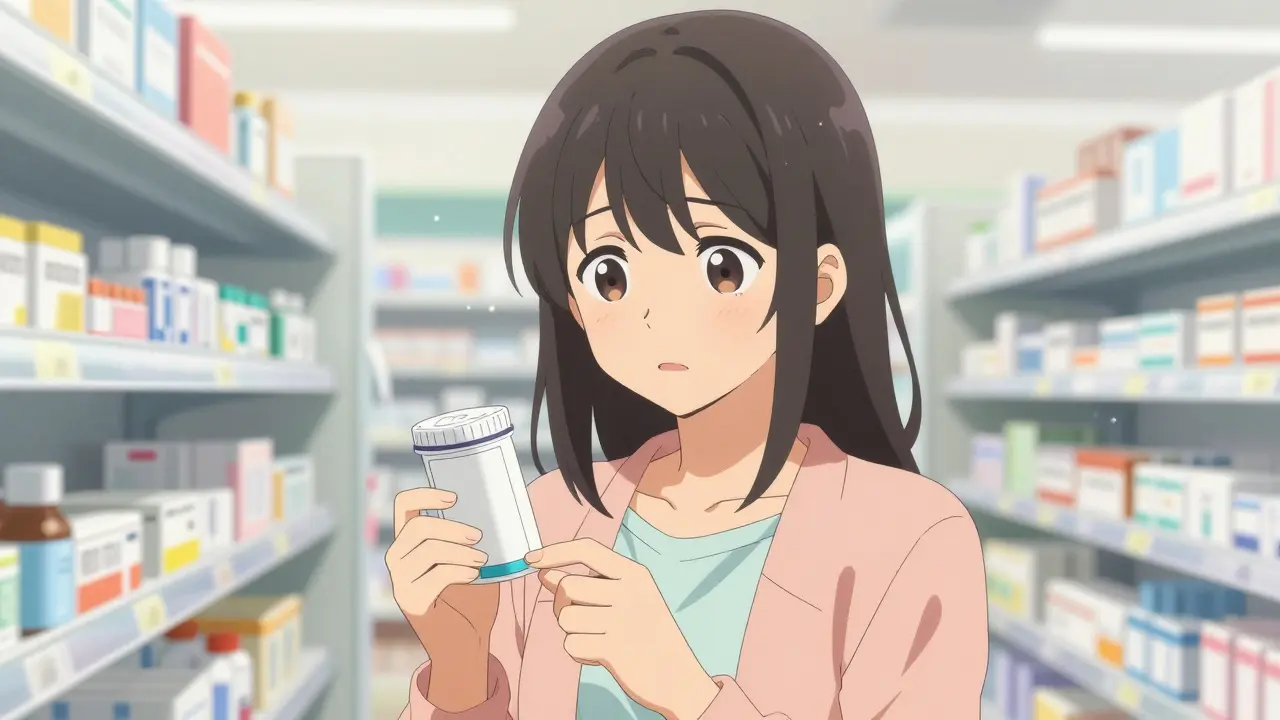
Imagine a patient picking up their prescription, looking at the pill bottle, and deciding not to buy it. Not because they don't need the medicine, but because the price tag is too high or the pill looks different from what they are used to. This scenario plays out in pharmacies across the country every day. For healthcare providers, this isn't just a billing issue; it is a clinical crisis. When patients abandon their prescriptions, chronic conditions worsen, hospital visits increase, and trust erodes.
The solution often lies in a simple switch: moving from expensive brand-name drugs to affordable generic medications. But simply writing "dispense as written" or leaving the decision entirely to the pharmacist isn't enough. Effective patient advocacy requires active communication, education, and strategic prescribing. It means bridging the gap between regulatory science and patient reality.
The Trust Gap: Why Patients Hesitate
You might wonder why patients resist generics when the evidence supports them. The answer is rarely about chemistry; it is about perception. Many patients hold a strongly held belief that if a drug costs less, it must work less well. A systematic review published in PMC by Dunne et al. in 2015 confirmed this, noting that while opinions have improved, mistrust remains, particularly among those who feel their health is fragile.
This hesitation creates a barrier known as "new patient abandonment." Data from the Association for Accessible Medicines (AAM) in 2019 revealed a stark statistic: new patient abandonment rates are 266% higher for brand-name drugs compared to generic drugs. Why? Because cost is the primary driver. In that same study, 90% of generic copays were under $20, whereas only 39% of brand-name medications fell into that low-cost bracket. For a provider, this means that advocating for a generic isn't just about following guidelines; it is about removing the financial obstacle that stops a patient from getting better.
Understanding Bioequivalence: The Science Behind the Switch
To advocate effectively, you need to understand what you are selling. The foundation of generic approval is the concept of bioequivalence. Under the framework established by the Hatch-Waxman Act of 1984, a generic drug must demonstrate two things: pharmaceutical equivalence and bioequivalence.
Pharmaceutical equivalence means the generic has the same active ingredient, dosage form, strength, and route of administration as the reference listed drug (the brand name). Bioequivalence is more technical. The FDA requires that the 90% confidence interval for the ratio of population geometric means for both AUC (area under the curve) and Cmax (maximum concentration) falls between 80% and 125%. In plain English, this means the generic enters the bloodstream at a similar rate and extent as the brand-name drug.
Dr. Sarah Ibrahim, speaking with the FDA in November 2023, emphasized that "a generic drug must show bioequivalence to the brand-name, or reference listed drug." She also noted that while inactive ingredients-like dyes or fillers-might differ, manufacturers must prove these differences do not compromise safety or efficacy. When you explain this to a patient, you aren't guessing; you are citing rigorous regulatory standards that ensure therapeutic consistency.
| Feature | Brand-Name Drug | Generic Drug |
|---|---|---|
| Active Ingredient | Original formulation | Identical to brand |
| Bioequivalence Standard | N/A (Reference Listed Drug) | Must match brand (80-125% CI) |
| Inactive Ingredients | Proprietary mix | May differ (color, shape, filler) |
| Average Copay | Often >$20 (39% under $20) | Usually <$20 (90% under $20) |
| Patient Abandonment Risk | High (266% higher than generic) | Low |

Communication Strategies That Work
Knowing the science is half the battle; communicating it is the other. Dr. Roach, also cited in the FDA interview, pointed out that taking the time to talk with patients about switching can significantly increase their confidence. The key is proactive counseling rather than reactive defense.
Patients often notice changes first. A pill might be a different color, shape, or size due to different inactive ingredients. If a patient sees this without explanation, they may assume something is wrong. Instead, initiate the conversation before they ask. You might say, "I've switched your prescription to a generic version. It works exactly the same way, but the pill might look different because of the coloring agent. Let me know if you have any questions."
- Address Cost Directly: Don't assume patients know generics are cheaper. Explicitly state, "This will likely lower your copay from $50 to $5, which helps you stay on track with your treatment."
- Leverage Authority: Remind patients that the FDA holds all approved products to high standards of quality, safety, and efficacy. As Dr. Ibrahim noted, conveying this commitment protects public health.
- Normalize the Switch: Mention that generics represent 90% of all prescriptions filled in the United States (AAM 2022 data). Framing it as the norm reduces anxiety.
Time is a constraint. Primary care physicians average only 13-16 minutes per patient visit. However, Dr. Ibrahim argues that this brief investment pays dividends. Addressing confusion now saves far more time later when trying to get a patient back on track after they discontinue therapy due to uncertainty or side effects attributed incorrectly to the generic.
Navigating Clinical Nuances and Exceptions
Advocacy does not mean blind substitution. There are clinical scenarios where brand-name products remain necessary. The American Academy of Family Physicians (AAFP), in a policy statement dated January 12, 2023, explicitly opposes mandatory generic substitution. They recognize that therapeutic equivalence doesn't always translate to clinical interchangeability for certain Narrow Therapeutic Index (NTI) drugs.
NTI drugs have a very small window between effective dose and toxic dose. Small variations in absorption could theoretically impact outcomes. While the Academy of Managed Care Pharmacy (AMCP) opposes legislation restricting safe generic substitution of NTI drugs, the AAFP's stance highlights the need for individualized judgment. As a provider, you are the patient's advocate. You must consider the patient's individual medical and financial circumstances.
If a patient has been stable on a specific brand for years and shows no adverse reactions, forcing a switch might introduce unnecessary risk. Conversely, if a patient cannot afford the brand, the ethical obligation shifts toward finding an accessible alternative, potentially including patient assistance programs or carefully monitored generic trials.

The Economic Landscape and Future Trends
The role of generics in healthcare affordability is undeniable. According to AAM 2022 data, while generics account for 90% of prescriptions, they make up only 23% of total prescription drug spending. Generic competition typically reduces prices to approximately 15% of the original brand price within one year of entry. This economic pressure is essential for sustainable healthcare systems.
However, the landscape is shifting. The American Society of Health-System Pharmacists (ASHP) issued a warning in March 2023 about rising generic drug prices for certain essential medications. They cautioned that this trend could make some medications inaccessible, creating a paradox where the solution to affordability becomes part of the problem. Additionally, administrative barriers like prior authorizations (PA) can delay care. Studies show PA requirements increase time to therapy by 2.3 days on average. The AAFP supports eliminating PAs for generic drugs to streamline access.
Looking ahead, electronic health records (EHRs) are incorporating cost transparency tools. These alerts notify providers of significant price differences at the point of prescribing, empowering you to make real-time decisions that benefit both clinical outcomes and patient wallets. Furthermore, the rise of biosimilars-generic versions of complex biologic medications-presents new advocacy challenges. With price differentials exceeding 30%, the principles of generic advocacy will extend into this newer therapeutic category.
Conclusion: Advocacy as a Core Competency
Supporting appropriate generic use is not a peripheral task; it is central to competent medical practice. It combines clinical knowledge, economic awareness, and empathetic communication. By understanding bioequivalence, addressing patient misconceptions proactively, and navigating exceptions with care, providers can reduce abandonment rates, improve adherence, and maintain trust. As Dr. Ibrahim concluded, "We already know it, but it's important for health care providers and pharmacists to share their knowledge with patients." Your voice is the most powerful tool in ensuring that affordable, effective care reaches those who need it.
What is the difference between brand-name and generic drugs?
The main difference is cost and appearance. Generic drugs contain the same active ingredient, strength, and dosage form as the brand-name drug. They must meet the same strict FDA standards for safety, effectiveness, and quality. However, generics may have different inactive ingredients, such as dyes or fillers, which can change the pill's color or shape. Generics are significantly cheaper because they do not require the same extensive research and development costs as the original brand.
Why do patients sometimes refuse generic medications?
Patients often refuse generics due to mistrust or misinformation. Some believe that a lower price means lower quality. Others may have had negative experiences with different inactive ingredients causing minor side effects, or they simply prefer the familiarity of the brand-name pill's appearance. Lack of clear communication from providers about the scientific equivalence of generics also contributes to this hesitation.
When should a provider avoid prescribing a generic?
Providers should exercise caution with Narrow Therapeutic Index (NTI) drugs, where small changes in blood concentration can lead to toxicity or lack of efficacy. In these cases, consistent dosing from a single manufacturer (often the brand) may be preferred. Additionally, if a patient has a documented allergy to a specific inactive ingredient found in the generic but not the brand, the brand-name drug should be prescribed.
How much money can generics save patients?
Generics can save patients substantial amounts. According to 2019 data, 90% of generic copays were under $20, compared to only 39% of brand-name medications. Over time, generic competition drives prices down to approximately 15% of the original brand price within a year of market entry. This affordability directly impacts medication adherence, as high costs are a leading cause of prescription abandonment.
What is bioequivalence?
Bioequivalence is a regulatory standard required for generic drug approval. It ensures that the generic drug enters the bloodstream at a similar rate and extent as the brand-name drug. Specifically, the 90% confidence interval for the ratio of population geometric means for AUC (total exposure) and Cmax (peak concentration) must fall between 80% and 125%. This guarantees that the generic will have the same clinical effect and safety profile as the reference listed drug.
How can providers improve patient acceptance of generics?
Providers can improve acceptance by proactively discussing the switch before the patient notices changes. Explain that the pill may look different due to inactive ingredients but works the same way. Highlight the cost savings explicitly, connecting affordability to long-term health goals. Reassure patients by citing FDA regulations and the fact that generics account for 90% of prescriptions filled in the U.S., normalizing their use.