

Every time you touch a doorknob, pick up your phone, or help your kid wipe their nose, you’re handling germs. Not all of them are dangerous-but enough are to make hand hygiene the single most powerful tool you have to keep your family healthy. And it’s not about being obsessive. It’s about doing it right.
Why Hand Hygiene Works-And Why Most People Get It Wrong
In 1847, Ignaz Semmelweis made a shocking discovery: doctors who washed their hands before delivering babies cut maternal death rates from 18% to just 1%. He didn’t know about bacteria yet, but he knew something changed when hands were clean. Today, we know exactly why: hands carry pathogens like norovirus, influenza, and SARS-CoV-2 from surfaces to mouths, eyes, and food. The CDC says proper handwashing reduces respiratory illnesses by 16-21% and gastrointestinal illnesses by 31% in homes. That’s not a guess. That’s data from millions of households. But here’s the problem: most people think they’re washing their hands well. A 2023 NHS audit found only 49% of households properly cover all hand surfaces. Fingertips? Missed in 68% of cases. Thumbs? 57% skipped. Between fingers? Nearly half didn’t get there. And the average wash? Just 8.2 seconds-far short of the 20-30 seconds needed to kill germs effectively.Soap and Water vs. Hand Sanitizer: What Actually Works
You’ve probably heard: “Sanitizers are just as good as soap.” Not true. They’re different tools for different jobs. Soap and water is your first line of defense. It physically removes dirt, grease, and germs-including stubborn ones like norovirus and C. difficile spores, which alcohol can’t kill. The CDC recommends using 3-5 mL of soap (about the size of a nickel to quarter) under clean, running water. Temperature? Doesn’t matter as much as you think. A 2017 mSphere study showed cold water (60°F/15°C) removes germs just as well as hot water, saves energy, and reduces scald risk. The key? Rubbing. You need friction to lift microbes off your skin. Alcohol-based hand sanitizers (60-95% ethanol or isopropanol) are faster and more convenient. They kill 99.99% of enveloped viruses like flu and COVID-19 in under 15 seconds, according to ASTM testing. But they fail completely if your hands are visibly dirty or greasy. The CDC found their effectiveness drops to just 12% when hands aren’t clean. And if the alcohol content is below 60%, it’s useless. Many cheap brands skimp on this-check the label. One big mistake? Using sanitizer as a replacement for washing. A 2022 Cleveland Clinic survey found 78% of households do this. That’s dangerous. If you’ve handled raw chicken, changed a diaper, or touched a public rail, soap and water are non-negotiable.The 6-Step Technique That Actually Reduces Germs by 90%
The World Health Organization didn’t invent handwashing. But they did figure out the most effective way to do it. The 6-step technique isn’t optional-it’s proven. A 2022 WHO update confirmed it reduces bacterial counts by 90% compared to simpler methods. Here’s how to do it correctly, in order:- Palm to palm
- Right palm over left dorsum (back of hand) with interlaced fingers, then switch
- Palm to palm with fingers interlaced
- Back of fingers to opposing palms with fingers interlocked
- Rotational rubbing of right thumb clasped in left palm, then switch
- Rotational rubbing of fingertips in opposite palm, then switch
Where and When to Wash-The Real-Life Rules
You don’t need to wash your hands 20 times a day. But you do need to wash them at the right moments:- After coming home-This is critical. Your shoes and bags carry germs from outside. Wash before touching anything inside.
- Before preparing food-The USDA says this cuts foodborne illness risk by 78%. Don’t skip this, even if you’re just slicing fruit.
- After using the bathroom-Fecal-oral transmission is how diarrhea spreads. Washing here reduces transmission by 47%.
- After handling pets-Pets carry zoonotic germs. That’s 3.2 million infections a year in the U.S. alone.
- After coughing, sneezing, or blowing your nose-Don’t let those droplets live on your hands.
Hand Hygiene for Kids-And How to Make It Stick
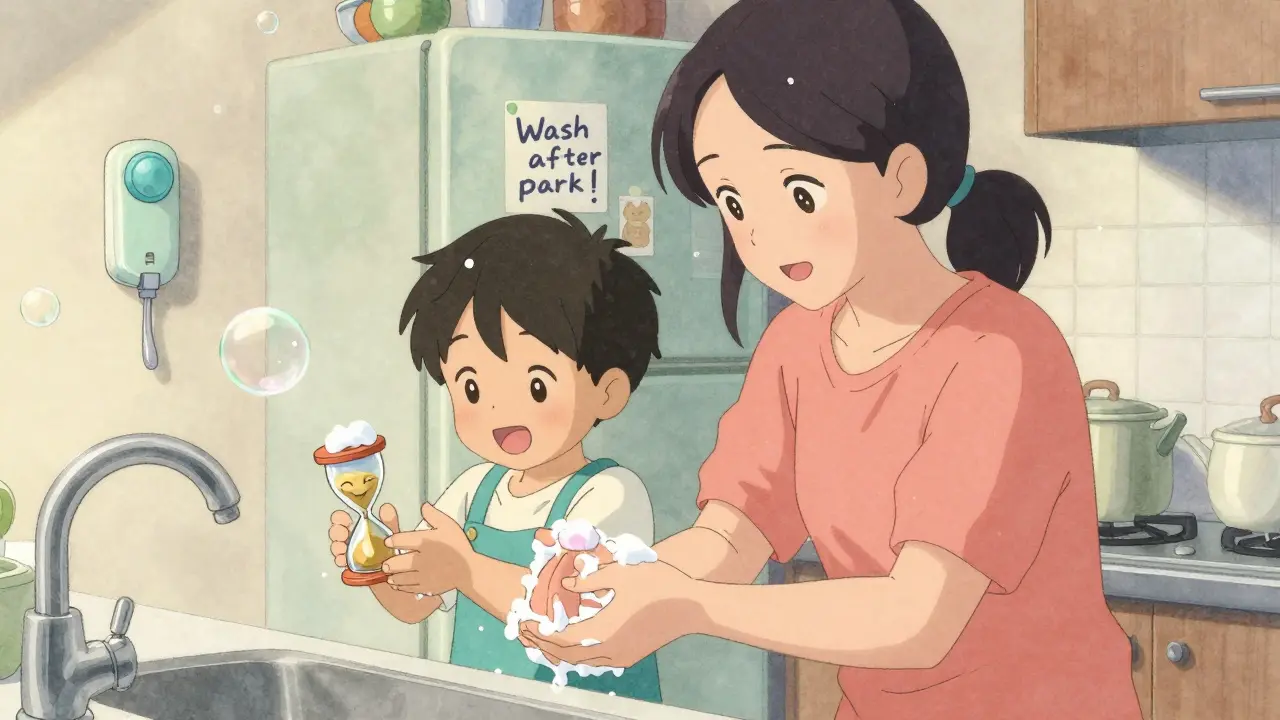
Kids don’t care about germs. They care about fun. So make it fun. A 2021 Pediatrics study found children wash for an average of just 8.2 seconds. That’s not enough. The WHO’s “Clean Care is Safer Care” program showed that using visual posters (like the 6-step technique illustrated with cartoon hands) boosts compliance from 28% to 63% in elementary schools. You can download free posters from the Minnesota Department of Health in 24 languages. Try these tricks:- Use a 20-second sand timer. Amazon reviews show families cut colds from 6 to 2 per year after using one.
- Sing a short song-“Happy Birthday” twice, or make up one about “washing the germs away.”
- Let them choose their soap color or scent. Kids are more likely to wash if they feel involved.
- Set a routine: “We wash hands right after we come in from the park.” Habit stacking works. A 2022 Behavioral Medicine study found it takes 21 days of consistent practice to make it automatic.
What Not to Buy-And the Hidden Dangers of “Antibacterial” Products
You’ve seen the bottles: “Kills 99.9% of germs!” “Antibacterial!” Don’t fall for it. In 2016, the FDA banned 19 antibacterial ingredients-including triclosan-from consumer soaps because they offered no extra benefit over plain soap. Worse, they may contribute to antimicrobial resistance. A 2019 Environmental Science & Technology study found households using antibacterial soaps had 2.7 times more resistant bacteria. Same goes for “antibacterial” hand sanitizers. If it doesn’t say 60-95% alcohol on the label, don’t trust it. The FTC fined 12 companies $2.8 million in 2022 for false claims. And skip the fancy dispensers unless you need them. Smart dispensers that track usage? Cool tech-but not necessary. A simple pump bottle works fine. The real investment is in behavior, not gadgets.
What to Do When You Don’t Have Soap or Running Water
Globally, 1 in 3 households lacks basic handwashing facilities, according to WHO/UNICEF. In low-resource areas, people use “tippy taps”-a simple, low-cost device made from a plastic bottle hung from a stick, with a foot pedal to release water. It uses 90% less water than a faucet but still removes germs effectively. At home, if your sink is broken or you’re camping:- Use alcohol-based sanitizer with at least 60% alcohol.
- If you have no sanitizer, use ash and water. Studies in Nepal and Kenya show it reduces pathogens by up to 80% when soap isn’t available.
- Never skip washing after using the bathroom or before eating. Find a way.
Protecting Your Skin-Because Dry Hands Can Be a Problem Too
Frequent washing can dry out your skin. A SurveyMonkey study of 5,000 homes found 28% reported irritation. For healthcare workers washing 20+ times a day, dermatitis hits 68%. Solution? Moisturize right after washing. A 2020 Dermatology Practical & Conceptual study showed applying lotion immediately after drying reduces dermatitis by 62%. You don’t need expensive cream-just any fragrance-free moisturizer. Keep one by every sink.Why This Matters More Than Ever
Hand hygiene isn’t just about avoiding colds. It’s about preventing deaths. Dr. William Schaffner of Vanderbilt says proper handwashing prevents 1.8 million child deaths annually from diarrheal diseases worldwide. The WHO projects universal adoption could cut global deaths from respiratory and diarrheal diseases by 27% by 2030. And the cost? Just $1.27 per person per year for soap and water. The CDC estimates that every dollar spent on hand hygiene saves $16 in healthcare costs. That’s the highest return on investment of any public health measure ever measured. You don’t need expensive gadgets. You don’t need to be perfect. You just need to wash your hands the right way, at the right times, every time.Is hot water better than cold water for handwashing?
No. Cold water (around 60°F/15°C) removes germs just as effectively as hot water, according to a 2017 study in mSphere. Hot water doesn’t kill more germs-it just uses more energy and increases the risk of burns. The key is friction and duration, not temperature.
Can I use hand sanitizer instead of soap and water?
Only if your hands aren’t visibly dirty or greasy. Hand sanitizer kills germs but doesn’t remove dirt, grease, or spores like norovirus or C. difficile. If you’ve handled food, changed a diaper, or touched public surfaces with visible grime, always use soap and water. Sanitizer is a backup, not a replacement.
How do I know if my hand sanitizer has enough alcohol?
Check the ingredient label. It must say 60-95% ethanol or isopropanol. If it says “antibacterial,” “kills 99.9% of germs,” or doesn’t list alcohol percentage, it’s not reliable. The FDA requires this info on all over-the-counter sanitizers since 2021.
Why do I need to wash for 20 seconds?
Studies show it takes 20-30 seconds of rubbing to reduce germs by 90%. Washing for only 5 seconds removes less than half the bacteria. The WHO’s 6-step technique requires this time to cover every surface-fingertips, thumbs, between fingers. Use a timer or sing “Happy Birthday” twice to make sure.
Are antibacterial soaps better than regular soap?
No. The FDA banned triclosan and 18 other antibacterial chemicals in consumer soaps in 2016 because they offer no extra benefit and may promote antibiotic resistance. Plain soap and water are just as effective and safer. Don’t pay extra for “antibacterial” claims.
How can I teach my kids to wash their hands properly?
Make it fun and visual. Use a 20-second sand timer, let them pick their soap color, and play a short song while they wash. Post the WHO’s 6-step handwashing poster near the sink. Studies show visual aids boost compliance from 28% to 63%. Consistency matters-do it every time they come in from outside or before meals.
What if I don’t have running water at home?
Use alcohol-based hand sanitizer with at least 60% alcohol. If that’s not available, ash and clean water can reduce germs by up to 80%, as proven in low-resource settings. The WHO recommends “tippy tap” handwashing stations-simple, low-water devices made from a bottle and a stick-that work without running water. Never skip hand hygiene, even if you have to improvise.
Can handwashing cause skin damage?
Frequent washing can dry out skin, especially with harsh soaps or hot water. But this is preventable. Apply a fragrance-free moisturizer right after drying your hands. Studies show this reduces dermatitis by 62%. If your skin cracks or bleeds, switch to a gentler soap and moisturize more often. Don’t stop washing-just protect your skin while you do.
Prakash Sharma
January 7, 2026 AT 19:41Finally someone says it right! In India, we’ve been washing hands with ash for generations-before it was cool. You think soap is the only way? Nah. Ash, water, and a little grit? That’s real hygiene. No fancy bottles, no alcohol scams. Just survival wisdom passed down. And guess what? It works. The WHO should’ve cited us first.
Manish Kumar
January 9, 2026 AT 00:04Think about it-handwashing isn’t just about germs, it’s about the metaphysics of cleanliness. We live in a world obsessed with surface-level purity, but what are we really cleansing? The ego? The fear? Semmelweis was a martyr not just for medicine, but for truth in a world that prefers ignorance dressed in white coats. The 20-second rule? It’s not hygiene-it’s mindfulness. A ritual. A pause between chaos and calm. We don’t wash hands to kill bacteria-we wash them to remember we’re mortal. And yet, we touch doorknobs again five seconds later. The tragedy isn’t the germs-it’s the repetition.
Aubrey Mallory
January 10, 2026 AT 13:04Love this breakdown. Especially the part about faucet recontamination-so many people don’t even realize they’re undoing their work. And for parents? The sand timer trick? Life-changing. I used to yell at my kids to wash longer. Now we sing ‘Baby Shark’ twice. They actually ask for it. No more battles. Just clean hands and happy kids. Also-moisturizer after? Non-negotiable. Dry, cracked skin = more entry points for germs. Don’t punish your hands.
christy lianto
January 12, 2026 AT 08:59Just washed my hands. Right now. After reading this. And I’m not even done. But seriously-this is the most useful thing I’ve read all month. I used to think sanitizer was fine. Now I know I’ve been lying to myself. And the 6-step technique? I tried it. Felt weird. Felt like I was doing yoga with my fingers. But my hands feel… cleaner. Like, actually cleaner. Not just ‘I did it’ clean. Real clean. I’m telling my whole family. Even my dad. He’s 72 and still thinks soap is for ‘city folks.’
Dave Old-Wolf
January 14, 2026 AT 08:36Wait-so cold water works just as good? I always thought hot water was better. My mom used to scold me for using cold. Guess she was wrong. Also, ash? I didn’t know that was a thing. That’s wild. I live in the city, so I never thought about alternatives. But if the sink breaks, I’m trying ash. Just to see. And the 6-step thing? I’m gonna print that poster. Put it by the bathroom. My roommate’s a germaphobe but washes like a robot. Maybe this’ll help.
swati Thounaojam
January 14, 2026 AT 09:10soap good. sanitizer bad if dirty. wash 20 sec. moisturizer. ash works. done.
Donny Airlangga
January 14, 2026 AT 14:53Man, I never thought about the faucet thing. I’ve been touching it every time. That’s so dumb. I’m getting a paper towel holder today. Also, the WHO 6-step thing looks complicated, but I tried it while waiting for my coffee to brew. Took 30 seconds. Felt weird, but my hands felt… smoother? Like I actually cleaned them. Not just rinsed. I’m gonna keep doing it. Even if my coworkers stare.
Molly Silvernale
January 16, 2026 AT 07:33Handwashing… it’s not just hygiene-it’s a quiet rebellion against chaos. A daily ritual of control in a world that offers none. We scrub our palms like prayers. We rub our thumbs like rosaries. We count seconds like monks counting breaths. And still-no one notices. No parades. No medals. Just a quiet, damp sink, and a person who didn’t get sick today because they took twenty seconds to care. Maybe that’s the most radical thing we do anymore.
Kristina Felixita
January 17, 2026 AT 02:40OMG YES. I live in a house with 3 kids and a dog and a husband who thinks ‘wiping his hands on his jeans’ counts as hygiene. So I printed the WHO poster, put it next to the sink with glitter glue and stickers, and now they all do it together. Even the dog sits there like he’s waiting his turn. We sing a made-up song: ‘Scrub scrub scrub the germs away, don’t forget your thumbs today!’ It’s silly. It works. And I bought those foot-pedal faucets for the bathrooms. Worth every penny. My skin thanks me. The kids don’t miss school anymore. I’m basically a superhero now. (Also, no antibacterial soap. Ever. I’m done.)
Joanna Brancewicz
January 17, 2026 AT 14:37Surfactant-mediated mechanical removal > biocidal agents. Alcohol-based sanitizers lack efficacy against non-enveloped viruses and organic load. Soap disrupts lipid membranes and physically displaces pathogens via shear force. Hydration protocols post-wash mitigate TEWL and preserve stratum corneum integrity. Evidence-based compliance hinges on behavioral reinforcement, not product marketing.
Evan Smith
January 19, 2026 AT 10:08So… I’ve been doing it wrong my whole life? And now I have to sing ‘Happy Birthday’ twice just to wash my hands? Cool. I’ll just start doing it while I’m on Zoom calls. ‘Hey boss, just washing my hands-gotta kill the germs, you know?’ They’ll think I’m weird. But I’ll be alive. And that’s the win.