
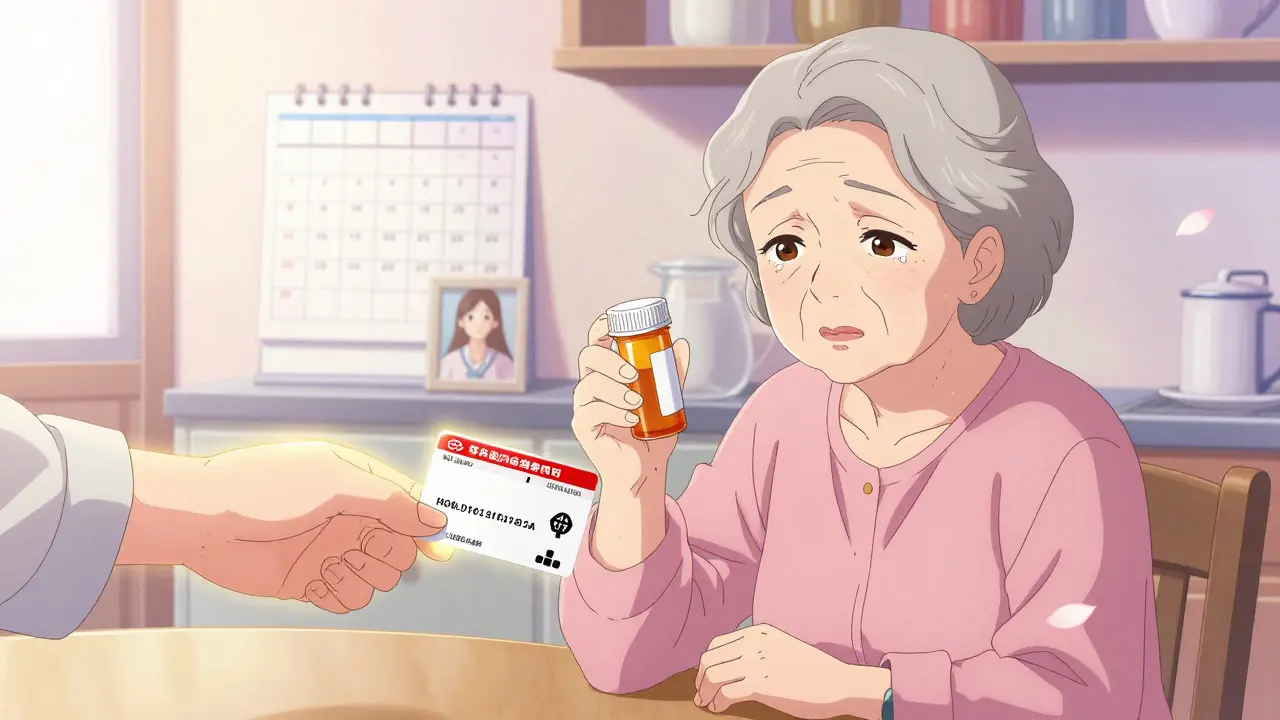
Getting prescription drugs shouldn’t mean choosing between food and medicine. But for millions of Americans, that’s the reality-until they find help through state and federal medication assistance programs. In 2026, these programs are more important than ever. Drug prices keep climbing, especially for insulin, heart meds, and cancer treatments. While Medicare Part D covers a lot, it doesn’t cover everything-and many people still pay hundreds or even thousands out of pocket each year. That’s where state programs come in.
What Are State Pharmaceutical Assistance Programs (SPAPs)?
State Pharmaceutical Assistance Programs, or SPAPs, are government-run efforts designed to help people afford their prescriptions. They’re not the same as Medicaid, though they often work alongside it. These programs target specific groups: seniors 65+, people with disabilities, and low-income individuals. Some states even cover people who earn just above Medicaid limits but still can’t afford their meds.
There are 32 states with active SPAPs as of 2025. But don’t expect them all to look the same. In New Jersey, the PAAD program gives you a $5 copay for generics and $7 for brand-name drugs. In Pennsylvania, PACE covers both your Medicare Part D premiums and any drugs Medicare doesn’t. California’s Medi-Cal Rx adds 127 specialty drugs to the list that Medicare won’t touch. Meanwhile, Wyoming’s program has a budget of just $15 million-barely enough to help a fraction of those in need.
The big difference? Eligibility. Some states only help people over 65. Others include younger adults with disabilities. Income limits vary wildly. In New Jersey, you can earn up to $37,000 as a single person and still qualify. In other states, the cutoff is under $20,000. Assets matter too-your savings, car, or home equity might disqualify you if they’re above the state’s limit.
Medicare Extra Help: The Federal Backup
If you’re on Medicare and struggling with drug costs, Extra Help is your best federal friend. It’s run by Social Security and cuts your out-of-pocket costs dramatically. In 2025, if you qualify, you pay $0 for your Part D premium and deductible. Generic drugs cost $4.90 per prescription. Brand-name drugs? Just $12.15.
The income limits for 2025 are $23,475 for a single person and $31,725 for a couple. Resource limits are $17,600 and $35,130 respectively. That includes your bank accounts, stocks, and real estate (not your primary home or one car). But here’s the catch: if you’re on Medicaid, SSI, or a Medicare Savings Program, you get Extra Help automatically. No application needed.
Extra Help is more generous than most state programs-but it’s also stricter. Many people who earn too much for Medicaid but still can’t afford their meds fall into a gap. That’s where SPAPs step in. Some states, like Pennsylvania, require you to apply for Extra Help first. Then PACE pays what’s left. It’s a two-step process that can take up to four months to sort out.
How These Programs Work Together
Imagine you’re a 72-year-old in New Jersey with diabetes. You’re on Medicare Part D. Your insulin costs $120 a month. Without help, that’s $1,440 a year. With PAAD, you pay $7 per script. If you get three scripts a month, that’s $252 a year-saving you over $1,100.
PAAD also pays your Part D premium if it’s under $34.70. So you don’t pay that either. Now, if you live in Texas and your insulin is $150 a month, and your state doesn’t have a strong SPAP, you might only get partial help-or none at all.
California’s program is different. Even if you’re on Extra Help, Medi-Cal Rx adds drugs Medicare won’t cover. For example, if your doctor prescribes a specialty drug for multiple sclerosis, Medicare might say no-but California says yes. That’s the kind of flexibility state programs can offer.
But coordination is messy. If you move from New York to Florida, your PAAD-style coverage might disappear. A 2024 study from the Medicare Rights Center found that 63% of people who moved between states had a gap in coverage. Some went weeks without meds while waiting for new paperwork to process.
What’s New in 2026?
Big changes are coming. Starting in 2025, Medicare Part D beneficiaries hit a $2,000 annual out-of-pocket cap. That means no matter how expensive your drugs are, you won’t pay more than that in a year. That’s a huge win for people on Extra Help.
Also, if you’re on Extra Help or Medicaid, you can now switch your drug plan once a month instead of once a year. That’s huge if your meds change or your pharmacy stops carrying your drug.
CMS is rolling out a new standardized Extra Help application by January 2026. It’s supposed to cut processing time by 30%. Right now, applications take 90 days on average. People are paying full price for heart meds, insulin, or antidepressants while waiting. That’s not just inconvenient-it’s dangerous.
States are also expanding. California, Texas, and Florida are adding more specialty drugs to their formularies. By 2027, 12 more states are expected to launch or expand SPAPs. But there’s a warning: drug prices for specialty meds are rising 12.3% a year. State budgets are only growing 4-6%. Seven states could run out of money by 2026.
Who Can Apply and How?
You don’t need to be rich to qualify. You just need to be struggling. Here’s how to start:
- Check if you’re eligible for Medicare Extra Help. Go to ssa.gov/benefits/medicare/prescriptionhelp/ and use the online screening tool. It takes five minutes.
- Find your state’s SPAP. Search for “[Your State] Pharmaceutical Assistance Program.” Most state health department websites have a dedicated page.
- Gather documents: Social Security card, proof of income (tax return or pay stubs), proof of assets (bank statements), and a list of your prescriptions.
- Apply. For Extra Help, use Form SSA-1020. For state programs, you’ll need their form-some are online, others require mail-in.
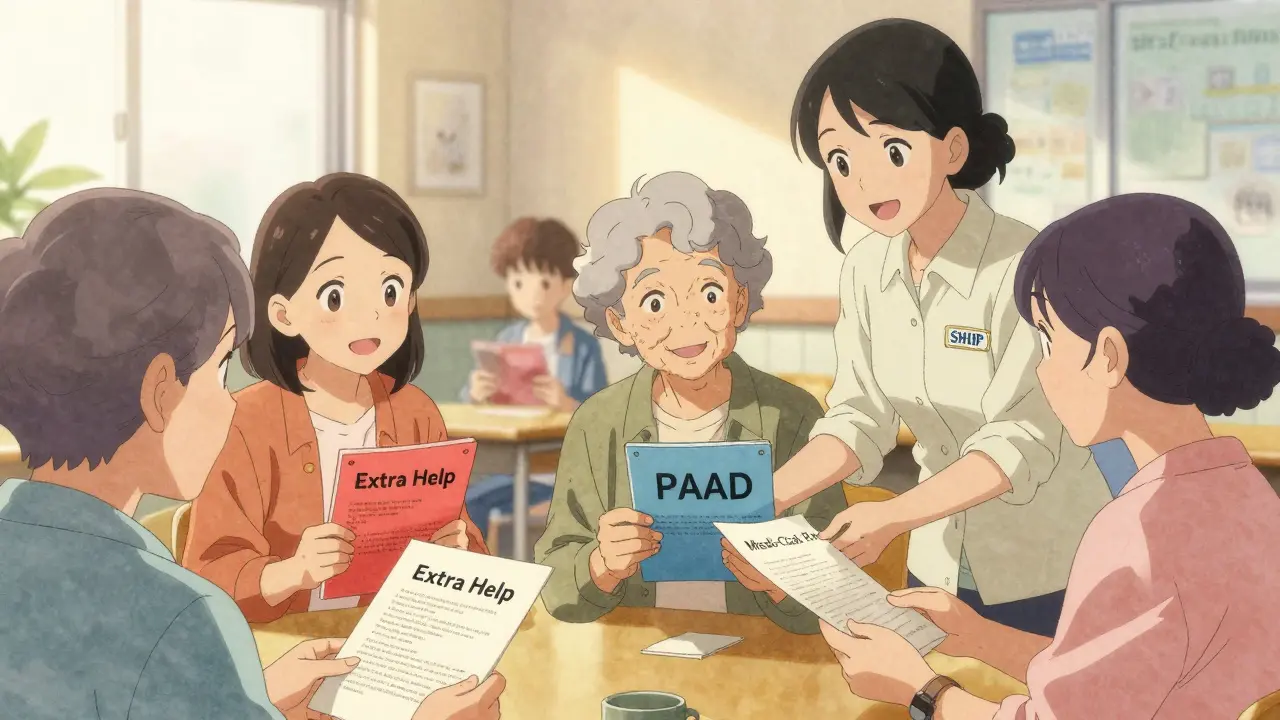
- Call SHIP. Every state has the State Health Insurance Assistance Program. They offer free, one-on-one help. There are 14,000 trained counselors. Call 1-800-MEDICARE and ask for your local SHIP office.
Don’t wait. The average applicant spends 8.5 hours filling out forms. But if you get help from SHIP, that drops to under two hours. And you’re more likely to get approved.
Real Stories, Real Struggles
A woman in New Jersey posted on a PAAD Facebook group: “My brand-name diabetes drug costs $7 a script. Without PAAD, it would be $180. I’ve been saving $2,000 a year.”
But another user in Ohio wrote: “I applied for Extra Help in October. I got approved in February. I paid $1,100 out of pocket for my blood pressure meds in the meantime. I almost skipped doses.”
A retired teacher in Pennsylvania said: “I thought I didn’t qualify because I had $18,000 in savings. But PACE counted my house and car as exempt. I got help. My monthly drug bill dropped from $320 to $20.”
These aren’t rare cases. KFF found that 28% of Medicare beneficiaries still struggle to afford their meds. But among those enrolled in assistance programs, that number drops to 11%.
Why So Many People Miss Out
Only 42% of eligible people enroll. Why? Complexity. Confusion. Fear.
One woman in Florida told a counselor: “I didn’t apply because I thought I had too much money. But I didn’t know my 401(k) didn’t count.”
Another said: “I didn’t know I could get help if I was on Medicare. I thought it was only for people on Medicaid.”
And then there’s the paperwork. Applications ask for bank balances, asset values, prescription lists, and income proof. If you’re 78, have arthritis, and your eyesight is fading, this is overwhelming.
That’s why SHIP exists. And why you shouldn’t try to do it alone.
What to Do If You’re Denied
Denials happen. Maybe your income was misreported. Maybe you missed a document. Or maybe your state’s formulary doesn’t cover your drug.
Here’s what to do:
- Request a written denial letter. It must explain why you were turned down.
- Appeal within 60 days. Most states allow appeals. Some have fast-track options for life-saving drugs.
- Ask for a formulary exception. If your drug isn’t on the list, your doctor can request it be added. Many states approve these if the drug is medically necessary.
- Look for patient assistance programs from drugmakers. Companies like Novo Nordisk and Eli Lilly offer free insulin to qualifying patients.
Don’t give up. One man in Michigan was denied Extra Help because his pension was listed as income. He appealed, provided a letter from his retirement fund showing it was non-taxable, and got approved. He now pays $5 a month for his heart medication.
Final Thoughts
Government medication assistance programs aren’t perfect. They’re patchwork, confusing, and underfunded in some places. But they work. People are saving thousands every year. Lives are being saved.
If you or someone you know is struggling with prescription costs, don’t assume you’re out of luck. The help is out there. You just have to ask for it-and know where to look.
George Rahn
January 24, 2026 AT 12:12The federal government has turned healthcare into a bureaucratic obstacle course designed to exhaust the elderly before they even reach the finish line. Meanwhile, pharmaceutical CEOs sip champagne on yachts funded by the desperation of diabetic grandmothers. This isn’t policy-it’s a moral failure dressed in clipboards and legalese. We’ve normalized suffering as a cost of doing business, and that’s the real scandal.
Ashley Karanja
January 24, 2026 AT 23:34What strikes me most isn’t just the disparity in access-it’s the epistemological rupture between policy design and lived experience. The systems are built on actuarial logic, yet human beings are nonlinear, emotionally complex, and temporally vulnerable entities. When a 78-year-old with arthritis must choose between insulin and heating oil, we’re not witnessing a fiscal deficit-we’re witnessing the collapse of a social contract written in the language of efficiency, not empathy. The real innovation isn’t in formularies-it’s in recentering care as a human right, not a conditional privilege.
Karen Droege
January 25, 2026 AT 11:28Canada doesn’t have this problem. We don’t make seniors fill out 17 forms just to get their blood pressure meds. If you’re in Canada and on OAS or GIS, your drug coverage is automatic-no asset tests, no waiting periods, no ‘you’re just above the cutoff’ nonsense. I know this because my mom got her cancer meds for $5 a month here. In the U.S., she’d have sold her house to afford them. Stop romanticizing patchwork systems. This isn’t ‘state innovation’-it’s a national shame. Fix it. Or shut up.
Shweta Deshpande
January 26, 2026 AT 14:44I’m from India and I’ve seen how people here manage chronic illness without insurance. They share pills, barter with pharmacies, and sometimes just go without. But hearing about Americans having to choose between food and medicine… it breaks my heart. You have so much here-why is this still happening? Please don’t think it’s normal. It’s not. You deserve better.
Simran Kaur
January 26, 2026 AT 19:06My aunt in Punjab takes insulin and pays $2 a month for it. No bureaucracy. No forms. Just a doctor, a vial, and a community that refuses to let anyone die because they’re ‘too rich’ for help. I wish the U.S. had that kind of soul. Not just policies-soul. You’re not broken because you need help. The system is broken because it makes you feel guilty for asking.
Neil Thorogood
January 27, 2026 AT 20:42So let me get this straight: you’re telling me a 72-year-old in Texas has to wait 4 months for help while her heart meds cost $300 a pop… and the solution is to ‘call SHIP’? 😂😂😂 I’m not even mad. I’m just impressed. The American healthcare system is like a Roomba that keeps bumping into the same wall and calling it ‘innovation.’
Jessica Knuteson
January 28, 2026 AT 02:19Angie Thompson
January 28, 2026 AT 11:17My grandma just got approved for PAAD after 6 months. She cried. I cried. She’s paying $7 for insulin now. That’s not policy-that’s dignity. If you think this isn’t worth fighting for, you’ve never had to choose between your meds and your groceries. You’re not just saving money-you’re saving lives. And that’s worth every minute of paperwork.
James Nicoll
January 30, 2026 AT 00:47They say ‘the market will fix it.’ But the market doesn’t care if you die. It just cares if you pay. And when the state steps in to patch the holes? They make you prove you’re worthy of living. That’s not assistance. That’s performance art with a welfare checklist.
John Wippler
January 31, 2026 AT 13:28I used to think this was just about money. Now I know it’s about time. Time to fill out forms. Time to wait for approvals. Time to beg for exceptions. Time lost is time you can’t get back-and for people with chronic illness, time is the most expensive thing of all. If we truly valued life, we wouldn’t make people jump through hoops to stay alive. We’d just give them the help. No questions. No forms. No waiting.
bella nash
February 1, 2026 AT 14:37