
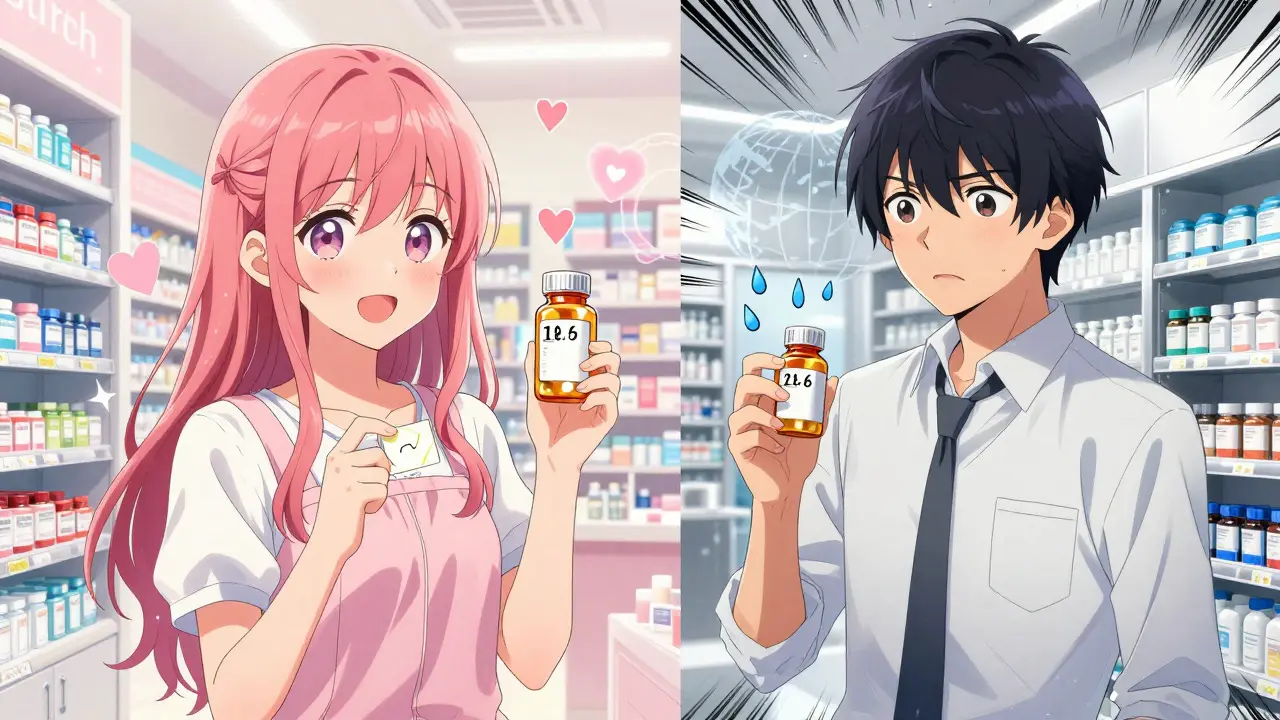
Imagine walking into a pharmacy in London and buying a blood pressure pill for $2. Now imagine buying the exact same medication in Zurich for $15. The active ingredient is identical, yet the price tag tells two very different stories. This isn't just about shopping habits; it’s a reflection of how Generic availability is shaped by local laws, cultural trust, and regulatory hurdles across the globe. While generics account for half to ninety percent of prescriptions worldwide, the experience of accessing them varies wildly depending on where you live. For patients, this means potential savings or unexpected shortages. For manufacturers, it represents a complex maze of approval processes that can take years to navigate.
The Global Landscape of Generic Medicines
Generic drugs are pharmaceutical products containing the same active ingredients as brand-name drugs but typically sold at lower prices after patent expiration. They form the backbone of modern healthcare systems, especially in countries with public funding models. However, the term "global market" is misleading because there isn't really one unified market. Instead, we have fragmented regional markets with distinct rules. In the United States, over 90% of prescriptions are filled with generics. In contrast, Switzerland sees only about 17% generic utilization. These numbers aren't random; they result from decades of policy decisions regarding generic substitution, which is the practice of pharmacists swapping a prescribed brand-name drug for a cheaper equivalent.
The scale of this industry is massive. Global generic drug expenditure reached approximately $450 billion in 2023. Yet, despite this volume, price disparities remain shocking. A single molecule can cost 600% more in one country than another. This gap exists because each nation sets its own reimbursement rates, tax structures, and competition levels. When you look at the data, you see that Northwestern Europe leads in adoption, while Southern Europe lags behind. Italy, for instance, had a generic utilization rate of just 19% in recent comparisons, whereas the UK hit 83%. This divergence highlights how local healthcare culture dictates economic outcomes.
Why Prices Differ So Dramatically
You might wonder why the same pill costs so much more in some places. It comes down to three main drivers: regulation, competition, and currency strength. In the US, the Food and Drug Administration (FDA) requires rigorous testing to prove that a generic works the same way as the original. This process, known as demonstrating bioequivalence, ensures the drug releases into the bloodstream at similar rates. Because this standard is high, fewer companies enter the market, which can keep prices higher than in regions with looser entry barriers. Conversely, in India, the barrier to entry is lower, leading to fierce competition. As a result, Indian generic prices average 63% lower than those in Belgium for comparable drugs.
Competition intensity also plays a huge role. In the US, 66% of off-patent drugs have at least two generic manufacturers competing for sales. In Norway, that number drops to 23%. More competitors usually mean lower prices, but not always. Sometimes, too many players drive margins so thin that companies stop producing certain drugs, leading to shortages. This is a paradox: the mechanism designed to save money can sometimes break the supply chain if margins become unsustainable. Dr. Rena Conti of the University of Chicago noted that excessive price competition has led to manufacturing consolidation, which ironically undermines the cost savings generics were meant to provide.
| Region/Country | Generic Utilization Rate | Avg. Price Differential vs. US | Key Regulatory Feature |
|---|---|---|---|
| United States | >90% | Baseline | ANDA pathway, strict FDA inspections |
| United Kingdom | 83% | ~60% lower | Mandatory substitution policies |
| Switzerland | 17% | ~250% higher | High patient preference for brands |
| India | High (Producer) | ~63% lower than EU | Flexible licensing, high manufacturing volume |
The Role of Manufacturing Hubs
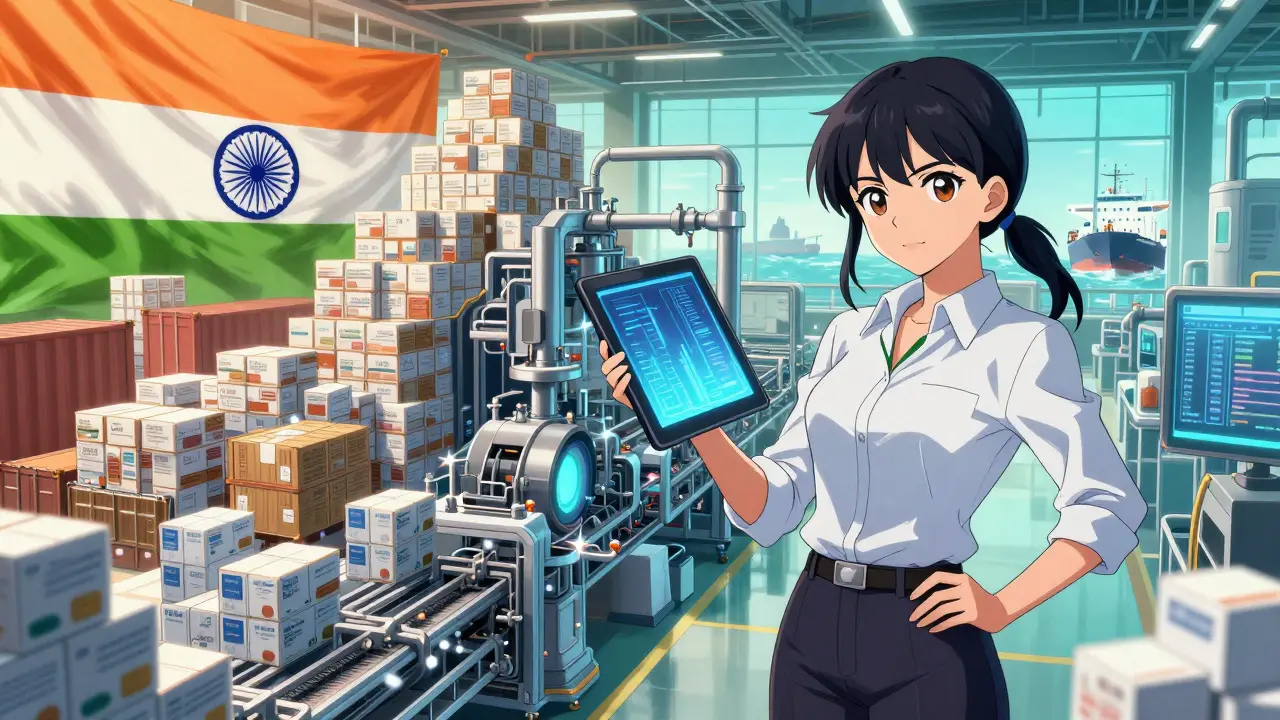
When you buy a generic, where was it made? Often, the answer is India or China. India produces about 20% of the world's generic drug volume and supplies 40% of the generics consumed in the US. This dominance stems from skilled labor, established infrastructure, and flexible intellectual property laws. Companies like Cipla and Sun Pharma have built global reputations, though quality concerns occasionally surface. A 2023 study found that some Indian-manufactured generics were associated with higher rates of adverse events compared to US-made versions, particularly for older drugs. This doesn't mean all Indian drugs are bad, but it does mean that sourcing matters. Patients traveling between countries often report side effects when their prescription is filled with a different manufacturer's version, even if the active ingredient is the same.
China is rapidly catching up. The number of Chinese facilities approved by the FDA grew from 12 in 2010 to 187 in 2023. This expansion adds another layer of complexity to the global supply chain. During the pandemic, India temporarily restricted exports of 26 active pharmaceutical ingredients, causing shortages in 22 countries. This event highlighted how reliant the world is on a few key manufacturing hubs. If one hub stumbles, the ripple effects are felt globally, from antibiotics to antifungals. Supply chain resilience is now a top priority for regulators and hospitals alike.
Regulatory Fragmentation and Its Costs
One of the biggest barriers to smooth global access is regulatory fragmentation. Even within Europe, getting a generic approved in France doesn't automatically get it approved in Germany. Each country has its own agency, its own list of acceptable excipients (inactive ingredients), and its own reimbursement rules. The European Medicines Agency (EMA) tries to harmonize these processes, but national authorities still hold significant power. This fragmentation adds 18 to 24 months to market entry timelines. For a company developing a new generic, those extra two years can mean missing the peak sales window. It effectively extends the monopoly of the originator brand, keeping prices high longer than necessary.
In the US, the system is centralized under the FDA, but it has its own quirks. The FDA conducts pre-announced inspections for foreign facilities, unlike the unannounced checks for domestic plants. Critics argue this creates a quality oversight gap. If a factory knows an inspection is coming, they can clean up just in time. This difference in approach affects how we view the safety of imported generics. Despite these challenges, the US remains the largest market by revenue, accounting for 32% of global generic spending. This high value attracts manufacturers, but it also invites scrutiny over whether the prices are truly justified given the lack of government price negotiation.

Future Trends: Biosimilars and AI
The next frontier in generic medicine is biosimilars. Unlike small-molecule generics, which are chemically simple, biologics are complex proteins. Creating a biosimilar is harder and more expensive, but the potential savings are huge. Analysts project that biosimilars will reach a $60 billion market by 2028. At launch, they are typically 50% cheaper than their reference brand biologics. However, uptake is slower because doctors and patients are often hesitant to switch from a trusted biologic to a "similar" one. Regulatory hurdles are also more complex, requiring proof of interchangeability rather than just bioequivalence.
Technology is also changing the game. Artificial intelligence is being used to optimize drug formulations, potentially cutting development timelines from three to five years down to 18 to 24 months. If this holds true, we could see faster entry of new generics, which would increase competition and lower prices. Meanwhile, policy shifts are underway. The US Inflation Reduction Act includes provisions to speed up generic reviews, and the EU aims for 80% generic utilization by 2030. These moves suggest a global trend toward greater efficiency and cost containment. The question isn't whether generics will dominate, but how quickly the world can align its rules to make them accessible and affordable everywhere.
Frequently Asked Questions
Are generic drugs exactly the same as brand-name drugs?
They contain the same active ingredient and must meet the same safety and efficacy standards. However, they may differ in inactive ingredients, color, shape, or flavor. These differences rarely affect therapeutic performance but can sometimes cause minor allergic reactions or taste differences for sensitive patients.
Why are generic drugs so much cheaper in some countries?
Price differences stem from local regulations, competition levels, and government reimbursement policies. Countries with mandatory generic substitution and high competition, like the UK and India, tend to have lower prices. Others, like Switzerland, allow higher prices due to strong brand loyalty and less aggressive cost-containment measures.
Does the country of manufacture matter for quality?
Yes, it can. While major manufacturers in India and China produce high-quality drugs, inspection protocols vary. The FDA uses unannounced inspections for US facilities but pre-announced ones for foreign sites. This can lead to slight variations in quality control consistency, though most imported generics meet strict international standards.
What is the difference between a generic and a biosimilar?
Generics are copies of small-molecule drugs and are chemically identical to the brand. Biosimilars are copies of large-molecule biologics (like insulin or antibodies). Because biologics are complex, biosimilars are "similar" rather than identical, and they require more extensive clinical testing to prove they work the same way as the original.
How long does it take for a generic to enter the market after a patent expires?
It varies by region. In the US, it can take 3 to 6 months for a new generic to gain significant market share. In Europe, regulatory fragmentation can add 18 to 24 months to the process. Once approved, achieving 80% market penetration typically takes another year or two, depending on local prescribing habits and insurance coverage.