

You’re out on a run. The air is crisp. Your heart rate climbs. Then, suddenly, your chest feels like it’s wrapped in tight bands. You cough. You wheeze. You slow down to a walk because breathing just became hard work again.
If this sounds familiar, you aren’t alone. This isn’t necessarily "asthma" in the traditional sense. It’s likely Exercise-Induced Bronchoconstriction, or EIB. EIB is a temporary narrowing of the airways that happens during or right after physical activity, causing shortness of breath, coughing, and chest tightness. While up to 90% of people with asthma experience this, it also affects 9-30% of the general population-including elite athletes who have no other respiratory issues.
The good news? You don’t have to quit exercising. In fact, avoiding exercise can lead to weight gain and social withdrawal in nearly 70% of undiagnosed cases. With the right mix of warm-ups, environmental tweaks, and precise inhaler use, 95% of people with EIB can participate fully in sports and fitness without limitations.
Why Does Exercise Trigger Airway Narrowing?
To stop EIB, you first need to understand what causes it. It’s not an allergy to running or gym equipment. It’s physics and biology colliding.
When you exercise, you breathe faster and harder. Most of this air comes through your mouth, bypassing your nose. Your nose is designed to warm and humidify air before it hits your lungs. When you skip that step, cold, dry air rushes directly into your lower airways.
This rapid airflow causes heat and water loss from the lining of your airways. As the airways lose moisture, they react by swelling and tightening-a process called bronchoconstriction. Mast cells in the airway walls release inflammatory chemicals, making the tubes narrower. This usually peaks 3 to 15 minutes after you stop exercising, but symptoms can linger for up to an hour.
Think of it like stepping out of a hot shower into a freezing room. Your skin reacts instantly. Your airways do the same thing when exposed to dry, cold air during heavy breathing.
Non-Drug Strategies That Actually Work
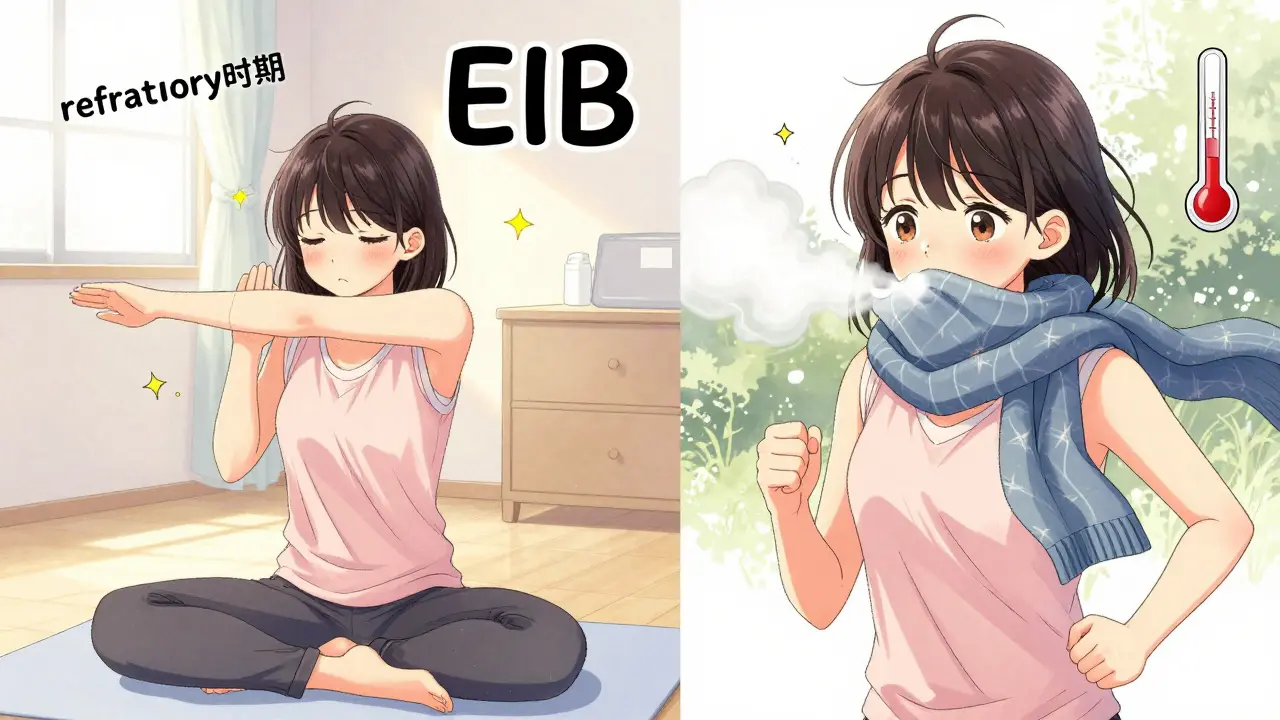
Before reaching for medication, there are several proven ways to reduce the severity of EIB. These strategies rely on creating a "refractory period"-a window of time where your airways are less likely to constrict.
- The Warm-Up Protocol: Don’t jump straight into high-intensity cardio. Start with 10 to 15 minutes of moderate activity (like brisk walking or light jogging). Follow this with a 5-minute rest. Studies show this induces a refractory period that lasts up to 2 hours, significantly reducing bronchoconstriction during your main workout.
- Nose Breathing: Try to breathe through your nose as much as possible, especially during low-to-moderate intensity phases. Your nose acts as a natural filter and humidifier. If you must mouth-breathe during intense sprints, consider using a scarf or mask to trap heat and moisture.
- Environmental Control: Cold, dry air is the enemy. Exercising in temperatures below 10°C (50°F) or humidity under 40% increases EIB risk by 73%. On cold days, move your workout indoors. Check pollen counts; if they exceed 9.7 grains/m³, indoor exercise is safer.
- Choose Your Sport Wisely: Not all sports trigger EIB equally. Sports with short bursts of activity (football, baseball, wrestling, sprinting) require less minute ventilation and trigger EIB in only about 22% of susceptible people. Endurance sports (cross-country skiing, ice hockey, long-distance running) keep you breathing heavily for longer, triggering EIB in up to 85% of cases.
Some people try heat-exchange masks (like the Nike E+ Mask). However, research shows these are only about 42% effective compared to standard medication. They can help slightly, but they shouldn’t replace medical treatment if you have moderate to severe symptoms.
Inhaler Use: Timing Is Everything
If lifestyle changes aren’t enough, medication is highly effective. The American Thoracic Society strongly recommends specific protocols based on years of clinical data.
| Medication Type | Example Drug | Timing | Effectiveness |
|---|---|---|---|
| Short-Acting Beta-Agonist (SABA) | Albuterol | 5-20 mins pre-exercise | 80-90% |
| Inhaled Corticosteroid (ICS) | Fluticasone | Daily maintenance | 50-60% symptom reduction |
| Leukotriene Receptor Antagonist | Montelukast | Daily pill | 30-40% improvement |
| Mast Cell Stabilizer | Cromolyn Sodium | 15-20 mins pre-exercise | 60-70% |
First-Line Treatment: SABAs
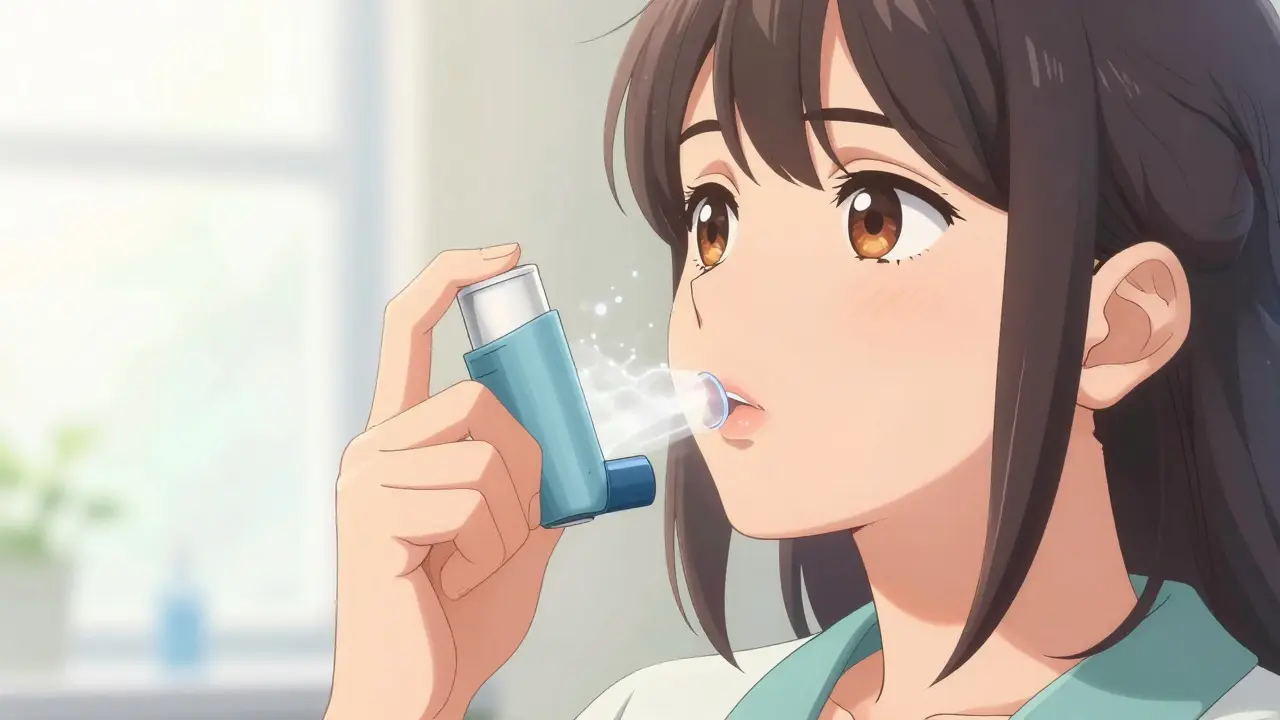
For most people, a Short-Acting Beta-Agonist (SABA) like albuterol is the go-to solution. Here’s how to use it correctly:
- Dose: Typically 2 puffs (90 mcg per puff).
- Timing: Take it 5 to 20 minutes before you start exercising.
- Duration: Protection lasts 2 to 4 hours.
This approach prevents symptoms in 80-90% of cases. However, proper technique is critical. Up to 63% of management failures are due to bad inhaler technique, not bad medicine. Always use a spacer if available-it increases lung delivery by 70%. After inhaling, hold your breath for 10 seconds. This simple step boosts drug deposition by 30%.
When SABAs Aren’t Enough
About 35% of patients still experience symptoms despite using albuterol. For them, daily Inhaled Corticosteroids (ICS) are recommended. These reduce underlying inflammation. A typical dose is 200-400 mcg of fluticasone equivalent daily. Alternatively, leukotriene receptor antagonists (LTRAs) like montelukast (10mg daily) offer 30-40% improvement and come in pill form, which some prefer over inhalers.
Note: Mast cell stabilizers (cromolyn sodium) work well but require frequent dosing (every 4-6 hours), making them less practical for most active people today.
Avoiding Common Pitfalls
Even with the right meds, small mistakes can undermine your progress.
Storage Matters: Keep your inhaler at room temperature (20-25°C). If it drops below 10°C, the propellant becomes 40% less effective. Never leave your inhaler in a car on a cold day. Bring it inside 10 minutes before you plan to use it.
Spacer Maintenance: Spacers degrade over time. Plastic buildup reduces efficiency by 25% after 12 months. Replace your spacer every 6 months for best results.
The "Masking" Risk: Dr. Robert Lemanske Jr., a key figure in ATS guidelines, warns that relying solely on SABAs can mask worsening inflammation in 15-20% of patients. If you find yourself needing your rescue inhaler more than twice a week, or if symptoms last longer than 4 hours post-exercise, see a doctor. You may need daily anti-inflammatory therapy.
Fitness as Medicine
It might seem counterintuitive, but getting fitter actually helps EIB. Research shows that for every 1-MET improvement in your VO2 max (a measure of cardiovascular fitness), EIB severity drops by 12%.
Why? Because fit people reach their target heart rate with less total air movement. Their bodies are more efficient. So, while you might need to start slow and use your inhaler, consistent training will eventually make your airways more resilient. Just remember: consistency beats intensity when managing EIB.
FAQ: Your Top Questions Answered
Is exercise-induced bronchoconstriction the same as asthma?
Not exactly. While all asthmatics can experience EIB, many people with EIB do not have chronic asthma. EIB is a transient reaction to exercise, whereas asthma involves ongoing airway inflammation. However, the treatments overlap significantly, and both respond well to bronchodilators and corticosteroids.
How soon should I take my inhaler before working out?
For short-acting beta-agonists like albuterol, take it 5 to 20 minutes before starting exercise. This allows the medication to relax the airway muscles just as you begin to breathe heavily. Do not wait until you feel symptoms start.
Can wearing a mask prevent EIB?
Wearing a scarf or specialized heat-exchange mask can help by warming and humidifying the air you breathe. However, studies show masks are only about 42% effective compared to 89% for albuterol. They are a helpful adjunct but not a replacement for medication if you have moderate to severe symptoms.
What is the best sport for someone with EIB?
Sports with intermittent bursts of activity are generally better tolerated. Football, baseball, swimming (due to warm, humid air), and sprinting trigger EIB in fewer people than endurance sports like marathon running or cross-country skiing, which require sustained heavy breathing.
Do I need a prescription for albuterol?
Yes, in most countries including the US and South Africa, albuterol requires a prescription. It is important to get a proper diagnosis from a healthcare provider to rule out other conditions and ensure you are using the correct dosage and device.
Why does cold air make my breathing worse?
Cold air holds less moisture than warm air. When you inhale cold, dry air rapidly during exercise, your airways lose heat and water quickly. This triggers a reflexive tightening of the muscles around the airways (bronchoconstriction) to protect the delicate lung tissue.
Should I use a spacer with my inhaler?
Highly recommended. Using a spacer increases the amount of medication that reaches your lungs by 70% compared to using the inhaler alone. It also helps coordinate breathing with actuation, reducing throat irritation and systemic side effects.
Can supplements like Vitamin C help?
Some limited evidence suggests Vitamin C (500mg daily) may reduce symptoms by 48% in people with low baseline levels, and Omega-3s may reduce bronchodilator use. However, major health organizations like the Mayo Clinic note insufficient evidence to recommend them as primary treatments over established medications.