
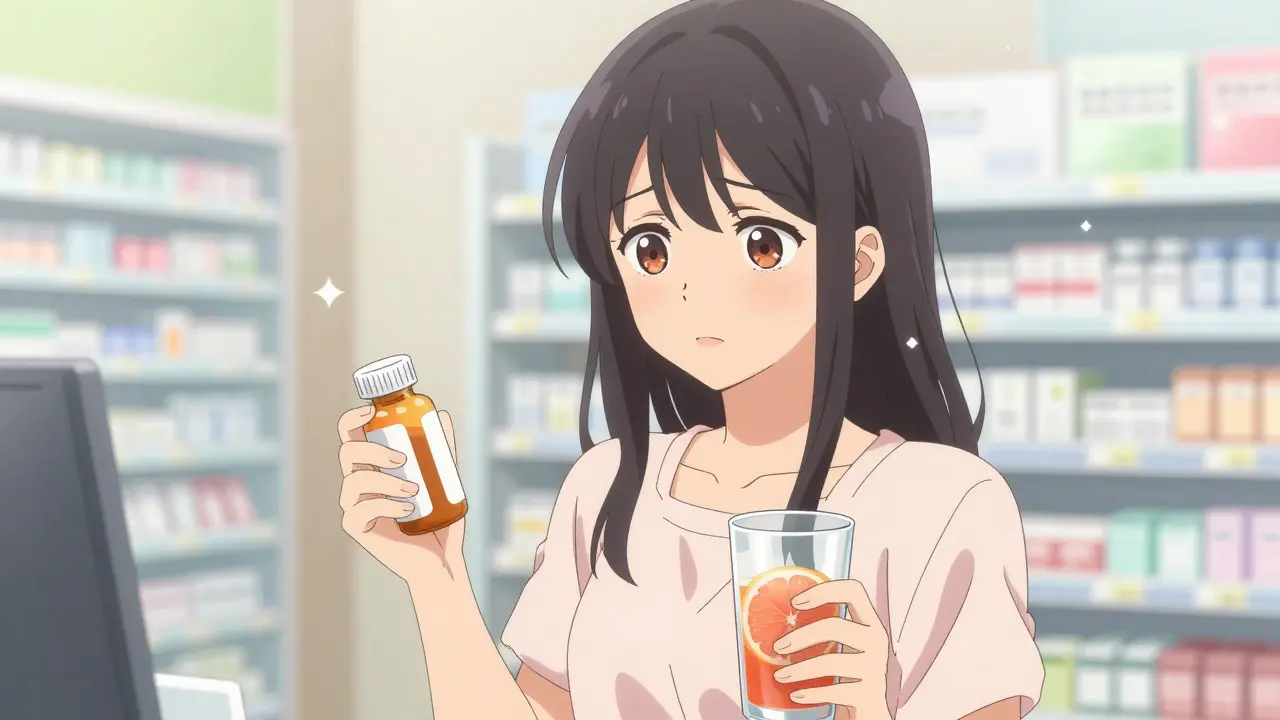
You trust your doctor. You trust the pharmacist who hands you the prescription. And you definitely trust that the medication in your hand has been tested thoroughly before reaching the shelves. But here is a hard truth: clinical trials do not catch every danger. In fact, they miss most of them.
When we talk about drug interactions discovered post-market, we are referring to adverse reactions between medications, foods, or conditions that only become visible after a drug is widely used by the general public. These aren't just minor side effects like drowsiness. We are talking about life-threatening complications, hospitalizations, and even deaths caused by combinations that looked safe on paper but failed in the real world.
This isn't a flaw in the system; it's a limitation of science. Clinical trials are controlled environments with small groups of people. The real world is messy, complex, and unpredictable. Understanding what happens after approval is crucial for anyone managing multiple medications.
Why Clinical Trials Miss the Danger Zones
To understand why these interactions slip through the cracks, you have to look at how drugs are approved. Before a new medicine hits the market, it goes through Phase 1, 2, and 3 clinical trials. These studies typically involve between 1,000 and 5,000 participants. While that sounds like a lot, it’s a drop in the ocean compared to the millions of people who will eventually take the drug.
The participants in these trials are also carefully selected. Researchers often exclude children, the elderly, pregnant women, and people with multiple chronic conditions. They want to see if the drug works without other variables interfering. But in reality, your patient looks nothing like the trial participant. You might be taking five different prescriptions, drinking grapefruit juice with breakfast, and managing high blood pressure alongside diabetes.
Dr. Robert Temple, former Deputy Center Director for Clinical Science at the FDA, noted that "the real world population may look quite different from the clinical trial population." He emphasized that trials are often short-lasting six to twelve months-and rarely reflect long-term chronic use. This gap is where post-marketing surveillance (PMS) becomes the hero of patient safety.
The Three Types of Hidden Interactions
Not all interactions are created equal. When monitoring systems flag a potential issue, it usually falls into one of three categories defined by health data aggregators like GoodRx:
- Drug-Drug Interactions: One medication changes how another is metabolized. For example, one drug might speed up the liver enzyme responsible for breaking down another, rendering the second drug ineffective. Or worse, it might block that enzyme, causing toxic levels of the second drug to build up in your blood.
- Drug-Condition Interactions: A medical condition affects how a drug works, or vice versa. Taking certain beta-blockers, for instance, can mask the symptoms of low blood sugar in diabetic patients, leading to dangerous drops in glucose without warning signs.
- Drug-Food Interactions: Foods or beverages interfere with medication metabolism. The classic example is grapefruit juice, which blocks CYP3A4 enzymes in the gut. If you take atorvastatin (Lipitor) with grapefruit juice, your body can’t break down the statin properly. Levels of the drug in your blood can rise by up to 15-fold, significantly increasing the risk of muscle damage.
Real-World Examples: When Monitoring Saves Lives
History provides stark examples of why this late-stage detection matters. Consider benfluorex, sold as Mediator in France. It was prescribed for obesity and diabetes for over 30 years. It wasn't until after approximately 5 million patients had used the drug that researchers linked it to severe valvular heart disease. The drug was withdrawn in 2009, but the delay cost thousands of lives.
More recently, we saw issues with Exalgo (hydromorphone hydrochloride extended-release). After being on the market for 18 months, reports emerged that consuming alcohol with the pill caused "dose dumping"-releasing the entire dose at once rather than slowly. This led to accidental overdoses and deaths. The FDA issued warnings and required packaging changes only after these post-market signals were analyzed.
Even common medications carry hidden risks. Data from the FDA Adverse Event Reporting System (FAERS) between 2015 and 2020 showed 2,847 reports of rhabdomyolysis (severe muscle breakdown) associated with statin-drug interactions. A significant portion involved combining simvastatin with azole antifungals like fluconazole. Fluconazole inhibits the CYP3A4 enzyme, causing simvastatin levels to spike 3 to 10 times higher than intended. Many patients ended up in the emergency room with kidney damage, unaware that their fungal infection treatment was turning their cholesterol med into a toxin.
How the System Detects These Risks
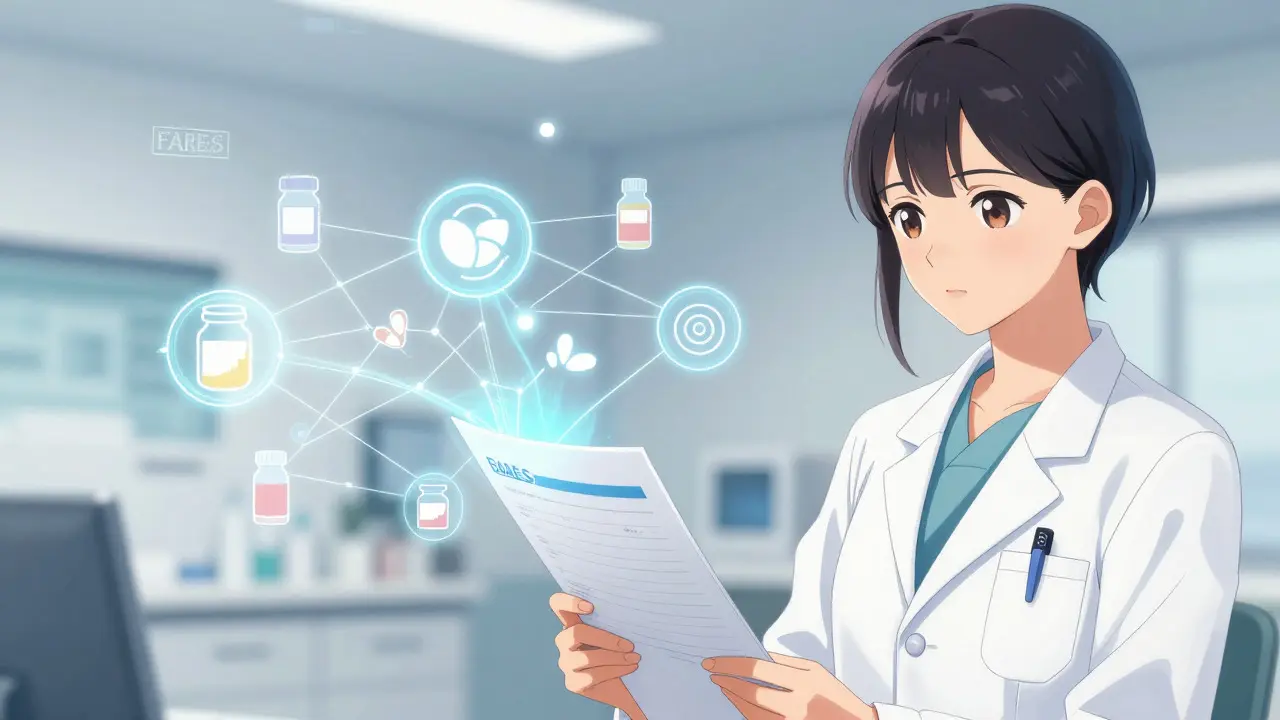
If trials don't catch everything, how do we know when a problem arises? We rely on pharmacovigilance-the science of detecting, assessing, understanding, and preventing adverse effects or any other drug-related problems.
In the United States, the primary tool is FAERS, which replaced the older AERS system in 2012. Doctors, pharmacists, and patients can submit reports of adverse events. However, underreporting is a massive challenge. Estimates suggest that 90% to 95% of actual adverse events are never reported. To combat this, the FDA launched the Sentinel Initiative in 2008. This active surveillance system monitors over 300 million patient records across 18 data partners, including insurance claims and electronic health records, to detect safety signals faster than waiting for voluntary reports.
Internationally, the European Medicines Agency uses EudraVigilance, which analyzes over 2.1 million annual reports. Since a 2017 upgrade, it utilizes AI pattern recognition to identify clusters of similar adverse events more quickly. These systems work together to create a global safety net.
The Human Element: Patients and Providers
Technology helps, but human vigilance remains critical. Healthcare providers use tools like the Naranjo Algorithm to assess whether a specific drug actually caused an adverse reaction. This algorithm scores factors like timing, dechallenge (did symptoms stop when the drug stopped?), and rechallenge (did symptoms return when the drug restarted?). Accurately applying this requires specialized training, highlighting the expertise needed in pharmacovigilance.
For patients, the best defense is communication. Online communities like Reddit’s r/pharmacy offer glimpses into real-world experiences. Users frequently share stories of near-misses, such as avoiding ciprofloxacin with blood pressure meds due to QT prolongation risks, thanks to interaction checkers. Conversely, negative experiences highlight gaps in care, such as a patient experiencing life-threatening bleeding after starting apixaban (Eliquis) while taking St. John's Wort, an herbal supplement not always flagged in initial consultations.
| Feature | Pre-Market Clinical Trials | Post-Market Surveillance |
|---|---|---|
| Population Size | 1,000 - 5,000 participants | Millions of users |
| Duration | 6 - 12 months (typically) | Years to decades |
| Diversity | Limited (excludes elderly, comorbidities) | High (real-world demographics) |
| ADR Detection Rate | ~50-60% of common reactions | ~70-80% of serious reactions |
| Primary Goal | Efficacy and basic safety | Rare events and long-term risks |

The Economic and Regulatory Impact
The stakes are high, both medically and financially. The Institute of Medicine estimated in 2006 that adverse drug events cost the U.S. healthcare system $3.5 billion annually, with interaction-related events making up about 30% of that total. Today, those numbers are likely much higher.
Regulators are responding. The FDA now mandates post-approval studies for nearly 46% of novel drug approvals. The Risk Evaluation and Mitigation Strategies (REMS) program ensures that manufacturers implement plans to manage known risks. Globally, the market for pharmacovigilance services grew from $5.8 billion in 2020 to $7.3 billion in 2022, driven by these strict requirements. Companies like Parexel report billions in revenue dedicated solely to helping pharmaceutical firms navigate these safety landscapes.
What You Can Do Right Now
Understanding that post-market interactions exist empowers you to take control of your health. Here is how to stay safe:
- Maintain a Master List: Keep an updated list of all prescriptions, over-the-counter meds, vitamins, and supplements. Share this with every healthcare provider you visit.
- Use One Pharmacy: Using a single pharmacy allows their software to automatically check for interactions across all your medications. Splitting prescriptions between multiple pharmacies breaks this safety net.
- Ask About Food: Always ask your pharmacist, "Are there any foods or drinks I should avoid with this medication?" Don't assume grapefruit juice is the only culprit.
- Report Side Effects: If you experience unexpected symptoms after starting a new drug, report it to your doctor and consider submitting a report to FAERS. Your voice contributes to the data that protects others.
- Check Before You Buy: Use reputable interaction checkers online, but verify results with a professional. Tools powered by the FDA's Drug Interaction API process millions of queries daily to provide accurate alerts.
The discovery of drug interactions post-market is not a failure-it is the final, ongoing phase of ensuring your safety. By staying informed and communicating openly with your healthcare team, you turn passive patient status into active partnership.
Why aren't all drug interactions found during clinical trials?
Clinical trials involve small groups of healthy volunteers (1,000-5,000 people) and last for short periods (6-12 months). They exclude people with multiple conditions or those taking many other drugs. Rare interactions or those requiring years to develop often go undetected until millions of diverse patients use the drug in the real world.
What is FAERS and how does it help?
FAERS (FDA Adverse Event Reporting System) is a database where doctors, pharmacists, and patients can report side effects. It helps regulators identify patterns of harm that weren't seen in trials. Combined with the Sentinel Initiative, it allows for faster detection of safety signals.
Can food really interact with my medication?
Yes. Grapefruit juice is the most famous example, blocking enzymes that break down drugs like statins, leading to toxic levels. Other foods like leafy greens (high in Vitamin K) can interfere with blood thinners like warfarin. Always ask your pharmacist about dietary restrictions.
How common are post-market drug withdrawals?
According to recent data, about 4% of new medications are removed from the market post-approval due to safety concerns, and nearly 20% receive black box warnings. This highlights the importance of continuous monitoring.
Should I stop taking my medication if I read about an interaction online?
No. Never stop prescribed medication without consulting your doctor. Online information can be generic. Your doctor knows your specific health history and can determine if the risk applies to you or if a dosage adjustment is needed instead.