
Have you ever picked up a new prescription and felt completely lost staring at the small white sticker on the bottle? You are not alone. That tiny piece of paper is packed with critical information that keeps you safe, yet it often looks like a jumble of codes, abbreviations, and legal text. Understanding what each part of your Rx medication label means is not just about reading; it is about preventing dangerous mistakes.
In the United States, medication errors contribute to approximately 7,000 deaths annually. A significant portion of these errors stems from miscommunication between the pharmacy label and the patient. By breaking down every section of your label, you can take control of your health and ensure you are taking the right medicine, in the right way, at the right time.
The Basics: Who Is This For?
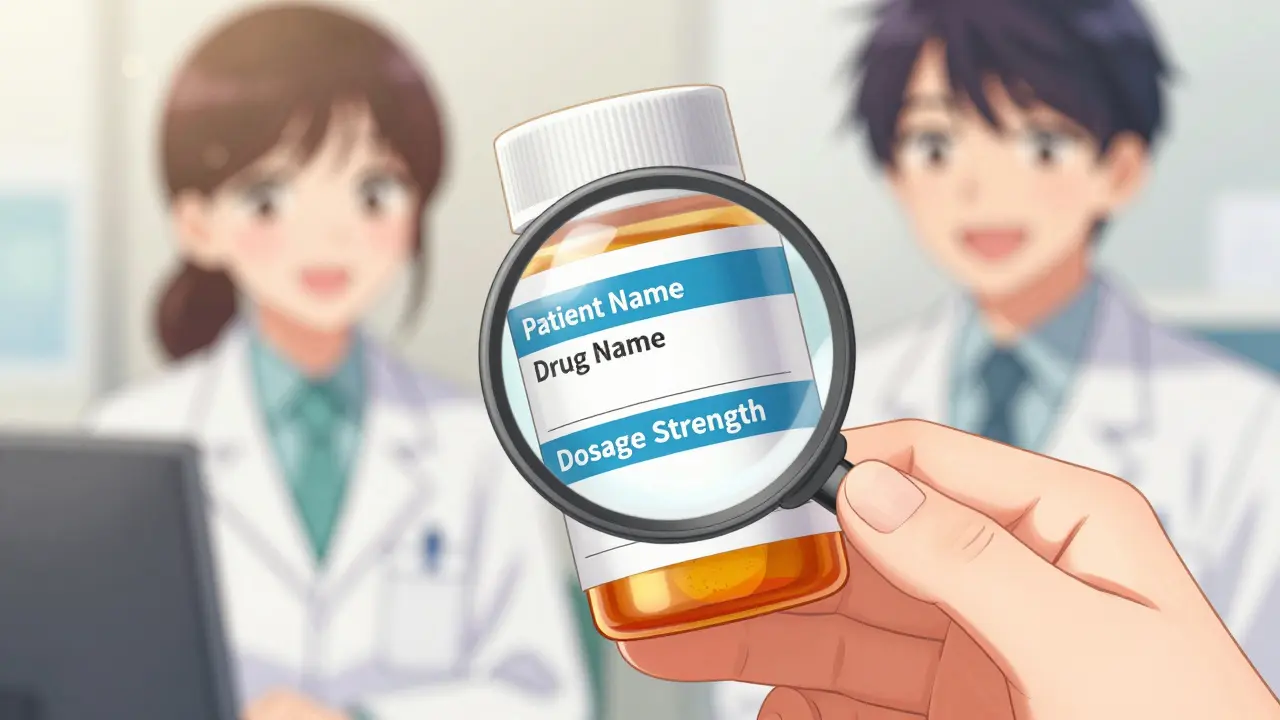
Patient Name Verification is the first line of defense against medication mix-ups, ensuring the drug is dispensed to the correct individual.
The very top of the label usually features your name in bold letters. This seems obvious, but it is a vital safety checkpoint. Pharmacies handle thousands of prescriptions daily. If you see a name that is not yours, do not ignore it. Return it immediately. This simple check prevents the scenario where one person accidentally takes another’s heart medication or insulin.
Next, look for the Prescriber's Name. This is the doctor who authorized the treatment. Knowing this helps if you have questions about why you were prescribed this specific drug. Below that, you will find the Pharmacy Information, including the store’s address and phone number. Save this number in your phone. It is faster to call your pharmacist than to wait for a callback from your doctor’s office for urgent dosage questions.
What Are You Taking? Names and Strengths
This section is where confusion often starts. Your label will list two names for the same drug: the Brand Name and the Generic Name.
- Brand Name: The marketing name created by the manufacturer (e.g., Abstral).
- Generic Name: The scientific name of the active ingredient (e.g., fentanyl).
You might notice both listed on your label. They are the same medicine. The generic version contains the exact same active pharmaceutical ingredient as the brand-name version but costs less. Always verify that the generic name matches what your doctor discussed with you.
Right next to the name is the Dosage Strength. This tells you how much active drug is in each pill or liquid dose. For example, "50 mg" means 50 milligrams. Do not assume all pills look the same. A 10 mg tablet and a 20 mg tablet might look identical in color and shape. Relying on memory instead of reading the strength leads to accidental overdoses.
The Instructions: How to Take It
The "Sig" or directions section is the most important part for your daily routine. It dictates frequency and method. Look for phrases like "Take 1 tablet by mouth twice daily."
Avoid guessing based on abbreviations. Some pharmacies still use shorthand like "q.d." (once a day) or "b.i.d." (twice a day). If you do not know what an abbreviation means, ask your pharmacist to write it out in plain English. Misinterpreting "take every 4 hours" as "take four times a day" can lead to serious side effects.
Recent studies show that 78% of patients report taking medications incorrectly because they misunderstood the instructions. Clear, written directions reduce this risk significantly. If the label says "with food," do it. If it says "on an empty stomach," follow that rule strictly to ensure the drug works properly.
Safety Codes: NDC and Rx Numbers
You will see two types of numbers that seem random but serve specific purposes.
- Rx Number: This is a unique identifier for your specific prescription event. Use this number when calling for refills. It ensures the pharmacist pulls up the correct record instantly.
- NDC (National Drug Code): This is a 10- or 11-digit code required by the FDA since 1987. It identifies the manufacturer, the product, and the package size. This code allows for tracking recalls. If a batch of medication is found to be contaminated, health authorities use the NDC to locate affected patients quickly.
Expiration Dates and Storage
The expiration date is not a suggestion; it is a hard deadline. After this date, the medication may lose potency or become unsafe. Most oral solids expire 12-18 months after dispensing, depending on stability data. Never take expired antibiotics, as reduced potency can lead to antibiotic resistance.
Storage instructions are equally critical. Many labels say "Store at room temperature" or "Keep below 25°C (77°F)." Storing insulin in a hot car or placing aspirin in a humid bathroom cabinet can degrade the drug before it even reaches the expiration date. Check the label for specific warnings like "Protect from light" or "Do not freeze."
Warnings and Visual Aids
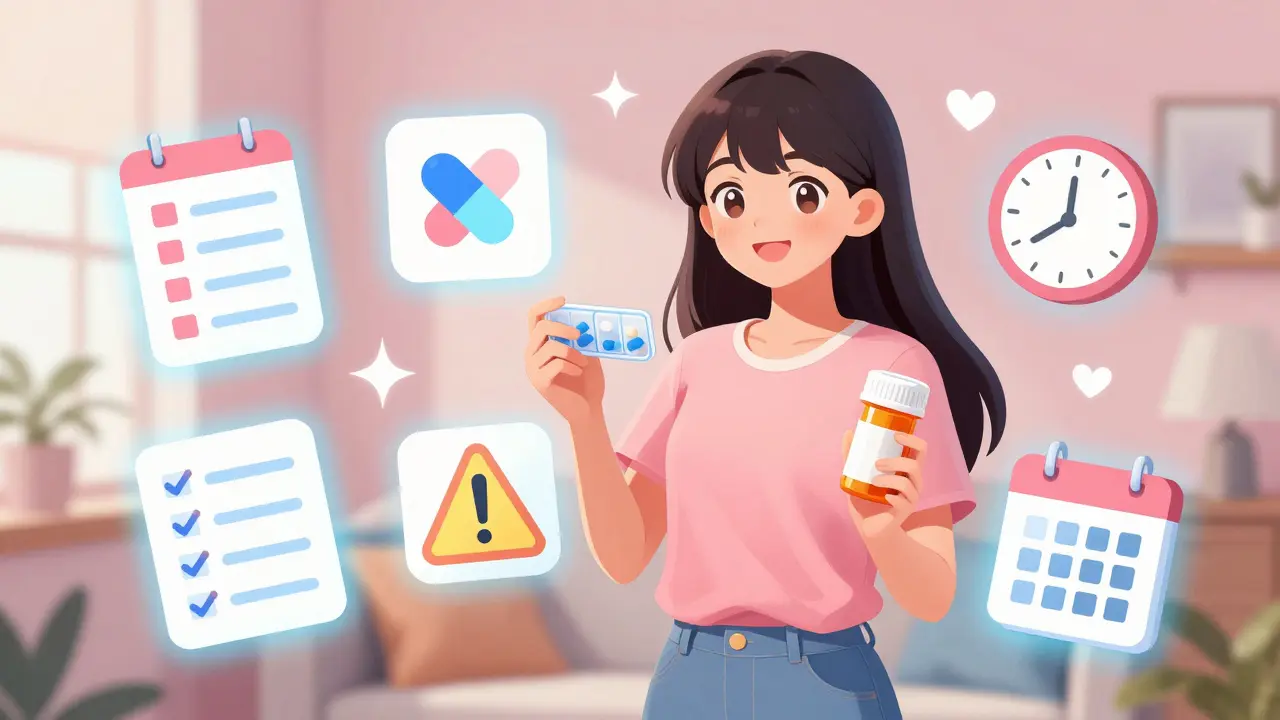
Modern labels increasingly include warning sections and visual aids. The USP General Chapter <17> recommends high-contrast text and pictograms to help patients with limited health literacy. Look for symbols indicating drowsiness, alcohol interactions, or pregnancy risks. These icons provide a quick visual cue that complements the written text.
If you see a "Medication Guide" or "Patient Package Insert" inside the box, read it. These documents provide detailed information about serious risks that cannot fit on the small bottle label. They are mandatory for certain high-risk drugs, such as those affecting mood or blood clotting.
Comparison: Prescription vs. OTC Labels
| Feature | Prescription (Rx) Label | Over-the-Counter (OTC) Label |
|---|---|---|
| Regulation | FDA Physician Labeling Rule | FDA Drug Facts Final Rule (1999) |
| Primary Audience | Patient and Healthcare Provider | General Consumer |
| Key Sections | Patient Name, Rx#, Prescriber, Sig | Active Ingredients, Purpose, Warnings, Directions |
| Complexity | High (Individualized) | Standardized (Uniform Format) |
| Error Risk | Mix-up with other patients' meds | Dosage miscalculation by user |
Pro Tips for Reading Your Label
To maximize safety, adopt a routine. When you pick up a new prescription, perform a five-point check:
- Is my name correct?
- Is the drug name what I expected?
- Is the dosage strength clear?
- Do I understand the instructions?
- Is the expiration date reasonable?
If anything is unclear, ask your pharmacist to use "tall man lettering" for similar-sounding drugs (e.g., predniSONE vs. predniSOLONE) or to add the indication (reason for use) to the label. Including the reason for use has been shown to reduce wrong-drug errors by 55%. Do not hesitate to ask for clarification. Your pharmacist is there to help you navigate these details safely.
Why does my label have two different names for the same drug?
The two names represent the Brand Name (the trademarked name by the manufacturer) and the Generic Name (the scientific name of the active ingredient). Both refer to the same medication. The generic name is standardized across all manufacturers, while the brand name varies. Using both helps prevent confusion if you switch between brands and generics.
What should I do if I miss a dose?
Check the label for specific instructions. If it does not say, call your pharmacist. Generally, if it is close to the next scheduled dose, skip the missed one and do not double up. Doubling doses can lead to toxicity. Your pharmacist can provide personalized advice based on the drug's half-life.
Is it safe to take medication past the expiration date?
No. The expiration date guarantees the full potency and safety of the drug until that point. Afterward, the chemical structure may break down, reducing effectiveness or creating harmful byproducts. This is especially dangerous for life-saving drugs like nitroglycerin or insulin. Dispose of expired meds properly through a pharmacy take-back program.
What does the NDC number tell me?
The National Drug Code (NDC) is a unique identifier for the manufacturer, the specific product, and the package size. It is used for inventory tracking, insurance billing, and recall notifications. If a safety issue arises with a specific batch, the NDC helps identify exactly which bottles are affected.
How can I make my label easier to read?
Ask your pharmacist for large-print labels or simplified language. You can also request that the "indication" (reason for use) be printed on the label, which helps prevent mix-ups. Additionally, using pill organizers with days of the week can supplement the label instructions for complex regimens.