
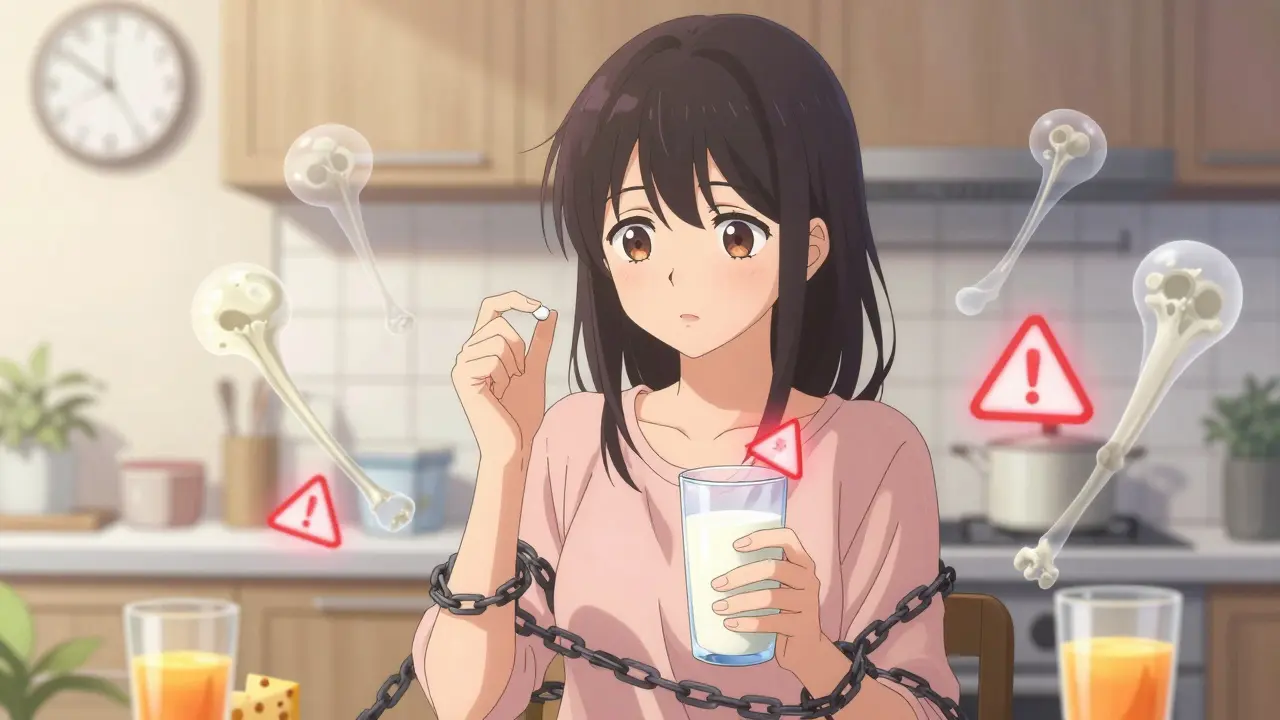
Bisphosphonate Absorption Checker
How Food Affects Your Bisphosphonate
Bisphosphonates like Fosamax and Actonel need to be taken on an empty stomach with plain water to work properly. Eating or drinking certain foods can block absorption by 80-90%.
Check your current routine to see if you're accidentally blocking your medication's effectiveness.
⚠️ Critical Absorption Issue
Proper Absorption
Imagine taking your medicine every morning like clockwork, only to find out months later that it did absolutely nothing. For millions of people on bisphosphonates to treat osteoporosis, this isn’t a hypothetical-it’s a real, common, and avoidable mistake. The problem? dairy products. A glass of milk, a slice of cheese, even a spoonful of yogurt can turn your daily pill into a costly waste of money and time.
Why Your Bone Medication Isn’t Working
Bisphosphonates like alendronate (Fosamax) and risedronate (Actonel) are among the most prescribed drugs for preventing bone fractures. They work by slowing down the cells that break down bone, helping to keep bones dense and strong. Studies show they can cut the risk of spine fractures by up to 70% and hip fractures by nearly half. But here’s the catch: these drugs are absorbed so poorly by the body to begin with that even small mistakes can wipe out nearly all their benefit. Research from Zielińska et al. (2022) found that eating just 30-40 grams of cheese, egg yolk, or bran with a bisphosphonate can block 80-90% of absorption. That means if you take a 70mg dose of alendronate with your morning oatmeal and milk, your body might only get 7mg of the drug. You’re not just skipping benefits-you’re risking fractures because your bones never got the protection they needed. The science is simple: bisphosphonates bind tightly to calcium, magnesium, and other minerals in food. These minerals are everywhere in dairy, but they’re also in fortified orange juice, cereals, and even some bottled waters. When they meet in your stomach, they form an insoluble complex that your body can’t absorb. The result? The drug passes right through you, unchanged.The 30-Minute Rule That Changes Everything
The FDA and leading medical groups agree: take bisphosphonates on an empty stomach, with plain water only. No coffee. No juice. No food. Not even a crumb. Here’s what you need to do:- Take your pill first thing in the morning, before eating or drinking anything else.
- Swallow it with 6-8 ounces of plain water-no sparkling, no mineral, no flavored.
- Stay upright (sitting or standing) for at least 30 minutes after taking it. Lying down increases the risk of the pill getting stuck in your esophagus.
- Wait a full 30 minutes (for alendronate) or 60 minutes (for ibandronate) before eating, drinking, or taking any other medication.
Dairy Isn’t the Only Culprit
Most people know dairy is a problem. But many don’t realize how many other foods interfere. Calcium-fortified orange juice? A no-go. Tofu made with calcium sulfate? Avoid it before your dose. Even whole grain breads with added minerals can interfere. The problem isn’t just milk-it’s anything with calcium, iron, zinc, or magnesium. A 2023 review in StatPearls confirmed that coffee, tea, and carbonated drinks can also reduce absorption, though not as severely as dairy. Still, if you’re trying to get every bit of benefit from your pill, even these minor offenders should be avoided for at least 30 minutes after dosing. One patient on Drugs.com shared: “I took my Fosamax with my morning coffee and a banana. For six months, I thought it was working. Then my DEXA scan showed no change. My doctor asked if I drank milk with it. I didn’t even think about it.”
Who Struggles the Most
Adherence to these rules isn’t easy. The National Osteoporosis Foundation found that 41% of patients find the requirements “very difficult” to follow. For people over 65, it’s even harder-53% report struggling versus 32% of those aged 50-64. Why? Morning nausea, joint pain that makes it hard to sit upright, memory issues, or simply forgetting. Reddit user u/OsteoWarrior wrote: “I took my Fosamax with orange juice for three months thinking it was fine. My bone density didn’t improve. My doctor was furious.” But it’s not all bad news. People who build routines succeed. One user on r/HealthyHabits said: “I keep a glass of water by my bed. I take the pill at 6am, wait until 6:30am, then have my coffee with oat milk. My last scan showed a 4.2% improvement.”Alternatives If You Can’t Stick to the Rules
If you’ve tried and failed to follow the strict timing-maybe you forget, maybe you get sick, maybe you just can’t sit still for half an hour-you’re not alone. And you don’t have to give up on treatment. Injectable options like denosumab (Prolia) and teriparatide (Forteo) don’t care what you eat. They’re given once every 6 months or once a day, respectively, and work just as well regardless of food. The catch? They cost 300-500 times more than generic alendronate. While alendronate runs about $4 a month, Prolia can cost $1,500-$2,000 per dose. That’s why many insurance plans require you to try bisphosphonates first. But if you’re consistently missing doses or eating with your pill, the cost savings vanish. You’re still paying for a drug that doesn’t work.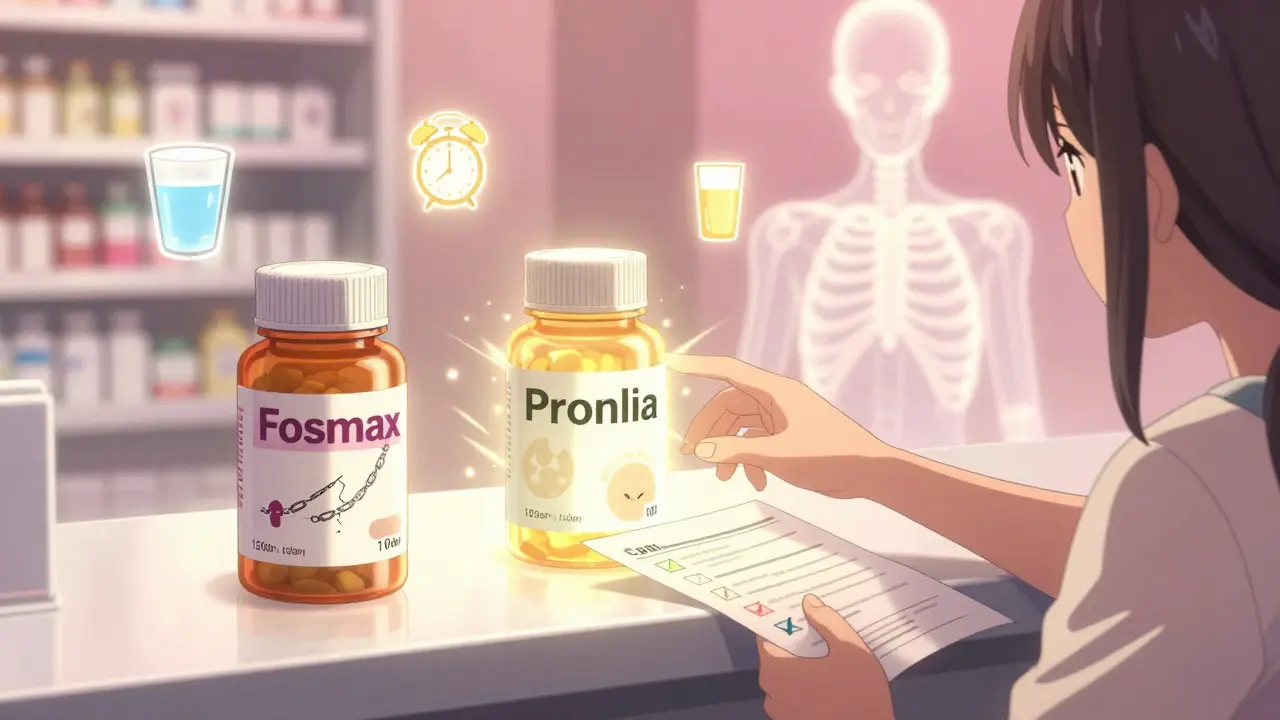
New Hope on the Horizon
There’s good news coming. In April 2023, the FDA approved Atelvia, a delayed-release version of risedronate that can be taken with food-though still not with dairy. It’s not a magic fix, but it’s a step forward. Even better? A new bisphosphonate prodrug called BPS-804 is in phase 3 trials. Early data presented at the 2023 American Society for Bone and Mineral Research meeting shows it has 3-4 times higher absorption and doesn’t interact with food at all. If approved by late 2025, it could change the game.What You Can Do Today
You don’t need to wait for new drugs. Start now:- Set a daily alarm labeled “BISPHOSPHONATE TIME” for 6:00 a.m. or whenever you take it.
- Keep a dedicated glass of water next to your bed-only for your pill.
- Use a pillbox labeled “Before Breakfast” and keep it separate from other meds.
- Write down your breakfast time and stick to it. If you eat at 7:00 a.m., your pill must be taken by 6:30 a.m.
- Ask your pharmacist for a printed guide. Studies show counseling improves adherence by 37%.
Bottom Line
Bisphosphonates are powerful. But they’re also fragile. A single glass of milk can erase months of effort. The difference between a successful treatment and a failed one often comes down to one thing: what you drink with your pill. It’s not about being perfect. It’s about being consistent. If you can’t follow the rules, talk to your doctor about alternatives. But if you can-stick to plain water, wait 30 minutes, and stay upright. Your bones will thank you.Can I take bisphosphonates with water from the tap?
Yes. Plain tap water is fine. Avoid mineral water, sparkling water, or water with added calcium or magnesium. The key is that the water should have no added minerals or flavor. If you’re unsure, stick to filtered or bottled still water labeled "purified" or "distilled."
What if I accidentally take my pill with milk?
Don’t panic. Skip your dose that day and wait until tomorrow to take it correctly. Never take a double dose to make up for it. Taking too much at once can irritate your esophagus. Just reset your routine. Consistency over time matters more than one slip-up.
Does almond milk or oat milk interfere?
It depends. Many plant-based milks are fortified with calcium. Check the label. If it has more than 100mg of calcium per serving, avoid it until after your 30-60 minute window. Unfortified versions without added calcium are usually safe-but always check the nutrition facts.
Can I take other medications with bisphosphonates?
No. Even vitamins, antacids, or iron supplements can interfere. Wait at least 30-60 minutes after your bisphosphonate before taking anything else. If you take multiple daily pills, ask your pharmacist for a schedule that separates them properly.
Why do I have to stay upright after taking the pill?
Bisphosphonates can irritate the esophagus if they linger there. Staying upright helps the pill move quickly into your stomach. Lying down increases the risk of esophageal ulcers or inflammation, which is why the FDA requires this warning on all labels.
Is there a bisphosphonate I can take with food?
Yes-Atelvia (delayed-release risedronate) is approved to be taken with food, but not with calcium-rich foods. It still requires avoiding dairy, fortified juices, or supplements. It’s not a free pass, but it gives more flexibility for those who struggle with morning fasting.
How do I know if my bisphosphonate is working?
The only way to know is with a DEXA scan, typically done every 1-2 years. If your bone density hasn’t improved or has worsened, food interference may be the cause. Talk to your doctor about your routine. Many patients assume the drug is working when it’s not.