
Right now, if you or someone you know needs a simple IV fluid like saline or dextrose, or a life-saving cancer drug like cisplatin, there’s a real chance your pharmacy won’t have it in stock. This isn’t a rare event-it’s the new normal. As of early 2026, over 270 medications remain in short supply across the United States, with some shortages dating back to 2021. These aren’t minor inconveniences. They delay cancer treatments, force hospitals to ration life-supporting fluids, and push doctors to use less effective alternatives-all because the system that makes and delivers medicine has cracked under pressure.
What’s Actually in Shortage?
The drugs most affected aren’t obscure or experimental. They’re the ones you’ve heard of, the ones you’ve been prescribed, or the ones used in emergency rooms every day. Here’s what’s currently hard to find:- 5% Dextrose Injection (Small Volume Bags) - Used for hydration, delivering medications, and maintaining blood sugar levels. Shortage since February 2022, not expected to resolve until August 2025.
- 50% Dextrose Injection - Critical for treating severe low blood sugar. Shortage since December 2021, with no resolution until September 2025.
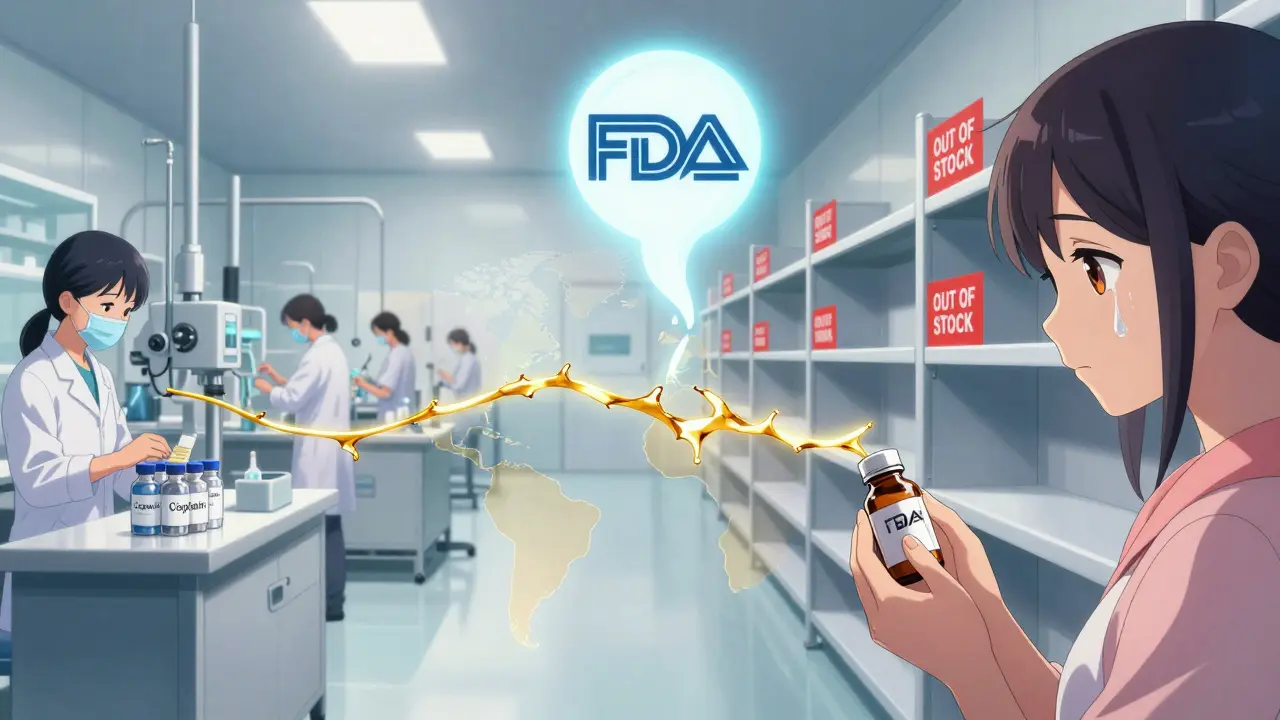
- Cisplatin - A cornerstone chemotherapy drug for testicular, ovarian, and lung cancers. A 2022 FDA inspection shut down a major Indian manufacturing plant that supplied half of the U.S. market. Rationing is now routine in hospitals.
- Vancomycin - A go-to antibiotic for serious infections. Shortages have been recurring since 2023, with spikes during flu season.
- Levothyroxine - The most common thyroid medication. Demand has jumped 30% since 2020, and manufacturers can’t keep up.
- ADHD medications (methylphenidate, amphetamine salts) - Prescriptions have surged, and production hasn’t kept pace. Some patients report waiting weeks for refills.
- GLP-1 agonists (e.g., semaglutide, liraglutide) - Used for weight loss and type 2 diabetes. Demand exploded after 2022, and supply chains weren’t built for this scale.
These aren’t random glitches. They’re symptoms of a deeper problem. Nearly 60% of the active ingredients in U.S. drugs come from just two countries: India and China. When a factory in Hyderabad fails an FDA inspection-or when a shipping port in Shanghai shuts down due to political tensions-hospitals across America feel the ripple.
Why Are These Shortages So Persistent?
You might think, “Why can’t they just make more?” But it’s not that simple. Most of these drugs are generics-cheap, off-patent versions of older medications. They make up 90% of all prescriptions filled in the U.S., but they only bring in 20% of the industry’s revenue. That means manufacturers operate on razor-thin margins: often just 5-8% profit per dose.Compare that to brand-name drugs, which can earn 30-40% margins. No wonder companies focus on profitable drugs and walk away from low-margin ones. When a plant breaks down or a raw material shipment gets delayed, there’s little financial incentive to rush repairs or find new suppliers. Some manufacturers simply stop making the drug altogether.
Then there’s the manufacturing complexity. Injectable drugs-like saline, antibiotics, and chemo-are especially hard to make. They require sterile environments, precise mixing, and rigorous testing. One tiny contamination can shut down a whole production line for months. And there are very few facilities in the U.S. that can do this. Most of the world’s sterile injectables come from just a handful of plants in India and China.
The FDA tries to help. In 2025 alone, it stepped in to prevent about 200 potential shortages by warning manufacturers early. But it can’t force a company to produce more. It can’t demand a factory fix its quality issues. And it can’t override international supply chain bottlenecks. That’s why the American Medical Association calls this a national security threat-not because of war, but because we’re dangerously dependent on foreign production for medicines that keep people alive.
How Are Hospitals and Pharmacies Coping?
When a drug vanishes, the chaos hits fast. Pharmacists spend an average of 10+ hours per week just tracking down alternatives. Nurses scramble to find substitutes. Doctors have to call in new prescriptions, often with less effective options.Here’s what’s happening on the ground:
- Rationing - In Ohio, hospitals now prioritize cisplatin for patients with testicular cancer, where it’s most effective, and delay treatment for others.
- Substitution - 47 states allow pharmacists to swap in similar drugs without a new prescription. But not all substitutes are equal. A 2024 study found that 12% of substitutions led to side effects or reduced effectiveness.
- Inventory audits - Hospitals are doing daily checks on IV fluids, but many lack the budget to stockpile more than a few days’ supply.
- Delayed care - Cancer patients are waiting an average of 14.7 days longer for treatment because of shortages. Some skip doses. Others travel hundreds of miles to find a pharmacy that has stock.
One pharmacist in Florida told a reporter, “I’ve had to tell a mother we don’t have the saline her child needs for chemotherapy. That’s not a conversation you ever want to have.”
What’s Being Done to Fix This?
There are some efforts to fix the system-but they’re slow, underfunded, or patchwork.The FDA launched a new portal in January 2025 where providers can report shortages not yet listed. In its first three months, it received over 1,200 reports and acted on 87% of them. That’s progress, but it’s still reactive, not preventive.
Some states are stepping up. New York is testing a public online database that shows which pharmacies have which drugs in stock. Hawaii now allows Medicaid to use foreign-approved versions of drugs during shortages. These are smart moves-but they only help in those states.
The real fix? It needs to be national:
- Financial incentives - Tax breaks or subsidies to bring API manufacturing back to the U.S. or allied countries.
- Mandatory stockpiles - Require hospitals and distributors to keep 30-60 days of critical drugs on hand.
- Transparent reporting - Force manufacturers to report production issues, export bans, and demand spikes to a central system before shortages hit.
The Congressional Budget Office warns that without major changes, the number of shortages will stay above 250 through 2027. And if proposed tariffs on Chinese and Indian pharmaceuticals go through, the number could spike to 350 or more.
What You Can Do
If you’re a patient, here’s what helps:- Call ahead to your pharmacy before picking up prescriptions-especially for chronic meds like thyroid pills or ADHD drugs.
- Ask your doctor if there’s a therapeutically equivalent alternative. Don’t assume all versions are the same.
- Keep a list of your medications and dosages. If you need to switch brands or forms, having this info helps your pharmacist.
- Use the ASHP Drug Shortages Database (or ask your pharmacist for it) to check current status.
There’s no easy fix. But awareness helps. When patients speak up, when pharmacists report delays, when doctors push back on substitutions-it adds pressure. And pressure, eventually, leads to change.
Which medications are currently in the most critical shortage?
The most critical shortages involve sterile injectables like 5% and 50% Dextrose, saline solutions, cisplatin (a key chemotherapy drug), vancomycin (an essential antibiotic), and levothyroxine (used for thyroid conditions). These are not optional-they’re life-sustaining. Hospitals have begun rationing cisplatin and delaying non-emergency IV fluid use. Dextrose shortages affect everything from emergency glucose treatment to delivering other IV medications.
Why are generic drugs more likely to be in shortage than brand-name drugs?
Generic drugs make up 90% of prescriptions but only 20% of pharmaceutical revenue. Manufacturers earn just 5-8% profit on them, compared to 30-40% for brand-name drugs. When production costs rise or a factory has quality issues, companies often stop making generics because it’s not worth the financial risk. Brand-name drugs have higher margins, more domestic production, and stronger supply chains, so they’re less likely to disappear.
Can I get my medication from another country if it’s unavailable in the U.S.?
Legally, importing medications from other countries is restricted under U.S. law, with very few exceptions. However, some states like Hawaii have started allowing Medicaid to cover FDA-approved versions of drugs from Canada or the EU during shortages. These are pilot programs and not widely available. Most patients cannot legally order drugs from overseas pharmacies without risking safety and legal consequences.
How do drug shortages affect cancer treatment?
Cancer treatment is one of the hardest-hit areas. Drugs like cisplatin, doxorubicin, and etoposide are essential for treating testicular, ovarian, lung, and lymphoma cancers. When these are in shortage, hospitals must ration them based on survival likelihood. Patients may wait weeks for treatment, receive lower doses, or be switched to less effective alternatives. A 2024 survey found that 31% of cancer patients experienced treatment delays due to shortages, with an average delay of nearly 15 days per interruption.
Are there any signs that the shortage situation is improving?
There’s been modest progress. In the first quarter of 2025, 63 shortages were resolved, mostly in antimicrobial drugs. The FDA’s early intervention efforts have improved resolution times by 15% compared to 2023. But new shortages keep emerging-especially in hormonal agents and CNS drugs like ADHD medications. The underlying causes-overseas manufacturing, low margins, and lack of stockpiling-haven’t changed. So while some drugs are back in stock, the overall trend remains unstable.
Ethan Zeeb
March 1, 2026 AT 12:38They keep talking about 'manufacturing issues' like it's some accident. It's not. It's a calculated decision. Companies stopped making generics because they're profitable only if you ignore labor, regulation, and infrastructure costs. They outsourced everything to India and China because they could. Now the whole system's a house of cards. And no one wants to admit we built this on the backs of exploited workers and lax oversight.
Stop pretending this is a 'supply chain problem.' It's a moral failure.
Darren Torpey
March 2, 2026 AT 17:40Man, this whole situation feels like watching your car’s engine melt while someone hands you a glitter sticker and says ‘Try this!’
We’re literally rationing life-saving IV fluids like they’re concert tickets. Cisplatin shortages? Vancomycin? Levothyroxine? These aren’t luxury items-they’re oxygen for people who can’t breathe without them. And yet we treat it like a glitch in a video game instead of a national emergency. Someone’s gotta light a fire under Congress. We need a Manhattan Project for medicine. Not more reports. More factories. More dignity.
Lebogang kekana
March 2, 2026 AT 17:59Bro, I’m from South Africa-we’ve been living this for decades. No access? No backup? No choice? Welcome to the real world.
Here’s the truth: America acts like it’s immune to this because it’s rich. But rich doesn’t mean invincible. When your insulin, your antibiotics, your chemo drugs vanish, your money doesn’t save you. It just makes you panic harder. We need global solidarity, not just ‘let’s fix it in Ohio.’ This is a global crisis. And we’re all just waiting for our turn to get hit.
Jessica Chaloux
March 3, 2026 AT 09:28I just cried reading this. My mom’s on levothyroxine. We had to drive 90 miles last week because three pharmacies said ‘out of stock.’ She’s 72. She shouldn’t have to do that. I’m so angry. I’m so scared. I don’t know what to do. 😭
marjorie arsenault
March 4, 2026 AT 19:24If you’re a patient, here’s what actually works: Build relationships with your pharmacist. Know your meds. Ask for alternatives. Keep a printed list. Don’t wait until you’re out. Call ahead. Every single time.
And if you’re a provider? Document every shortage. Report it. Push back. Be loud. Change doesn’t come from politicians-it comes from patients and professionals refusing to stay silent. We’ve got to turn frustration into action, one prescription at a time.
Deborah Dennis
March 6, 2026 AT 09:08Shivam Pawa
March 7, 2026 AT 05:17Diane Croft
March 7, 2026 AT 12:00Donna Zurick
March 7, 2026 AT 20:33Tobias Mösl
March 8, 2026 AT 15:09Let’s be real. This is all a psyop. The government let China and India control our medicine supply so they could hold us hostage. The FDA? A puppet. The pharmaceutical CEOs? Complicit. The ‘shortages’? A distraction so we don’t notice the real crisis: the death of American manufacturing.
They’re not ‘running out’-they’re being *strategically removed*. And when you finally run out of cisplatin? That’s when the real control begins. Wake up. This isn’t incompetence. It’s control.
tatiana verdesoto
March 9, 2026 AT 14:29I’ve been a nurse for 18 years. I’ve seen shortages before. But this? This is different.
I held a 9-year-old’s hand while we waited 3 days for saline because the hospital’s last bag was being used for a cancer patient. The kid didn’t cry. She just asked, ‘Will my mom be okay?’
We need to stop treating this like a news story. It’s a human story. And we’re failing them. Every. Single. Day.