

Taking a pill every day for years isn’t just a habit-it’s a full-time job. For people managing conditions like high blood pressure, diabetes, rheumatoid arthritis, or heart failure, medication isn’t optional. Miss a dose? You risk a stroke, a hospital visit, or worse. But here’s the hard truth: medication adherence is one of the biggest failures in modern healthcare. Studies show nearly half of people on long-term meds don’t take them as prescribed. Why? It’s not laziness. It’s burnout, fear, confusion, cost, or just plain exhaustion from living with a chronic condition day after day.
Why Your Body Needs Consistent Meds
Chronic diseases don’t take days off. High blood pressure doesn’t magically fix itself after a few pills. Diabetes won’t disappear because you skipped your insulin one morning. These conditions are silent, slow-moving threats. When you don’t take your meds as directed, your body pays the price. The CDC found that poor adherence directly leads to more hospital stays, higher death rates, and billions in wasted healthcare spending. In the U.S. alone, nonadherence costs the system $100-300 billion every year. That’s not just a statistic-it’s someone’s uncle who ended up in the ER because he forgot his heart meds. Or your neighbor who had a stroke because she couldn’t afford her blood thinner.
But here’s the good news: sticking to your meds doesn’t have to feel like a prison sentence. There are real, research-backed ways to make it easier. Not just reminders or fancy pill boxes. Real coping strategies that change how you think, feel, and act around your treatment.
The Five Ways People Cope (And Which Ones Actually Help)
Not all coping styles are created equal. Researchers looked at over 15 studies and found five main ways people deal with long-term medication. Some work. Some backfire. Here’s what the data says:
- Problem-solving / Active coping - This is the winner. People who tackle barriers head-on-like figuring out how to afford meds, setting phone alarms, or talking to their doctor about side effects-had 78% higher adherence rates. They don’t wait for things to get better. They fix them.
- Emotion-focused coping - This is about managing the emotional weight. Journaling, talking to a friend, or using mindfulness to deal with anxiety about taking meds every day. This helped 69% of people in studies. It’s not denial-it’s emotional hygiene.
- Seeking understanding - People who ask questions: “Why do I need this?” “What happens if I skip it?” “Are there cheaper options?” They’re not being difficult. They’re taking control. Studies show this leads to better trust and consistency.
- Support seeking - Asking family, joining a patient group, or getting help from a pharmacist. When people feel supported, they stick with it. Team-based care models that include pharmacists and social workers boosted adherence to 89%-up from 74% in regular care.
- Problem avoidance - This one’s dangerous. Ignoring side effects, pretending you’re fine, or just not thinking about it. Half the studies showed this led to worse adherence. It’s like ignoring a leak in your roof. It doesn’t go away. It gets worse.
Here’s what’s surprising: in one study of rheumatoid arthritis patients, those who stuck to their meds had higher scores on active coping and self-encouragement. But when researchers adjusted for age, income, and how long they’d had the disease, those coping scores didn’t matter as much. That tells us something important: coping strategies help-but they don’t work in a vacuum. If you’re struggling to pay rent or can’t get to the pharmacy, no amount of positive thinking will fix that.
What Works in Real Life (Not Just in Studies)
Let’s cut through the theory. What do people actually do to stay on track?
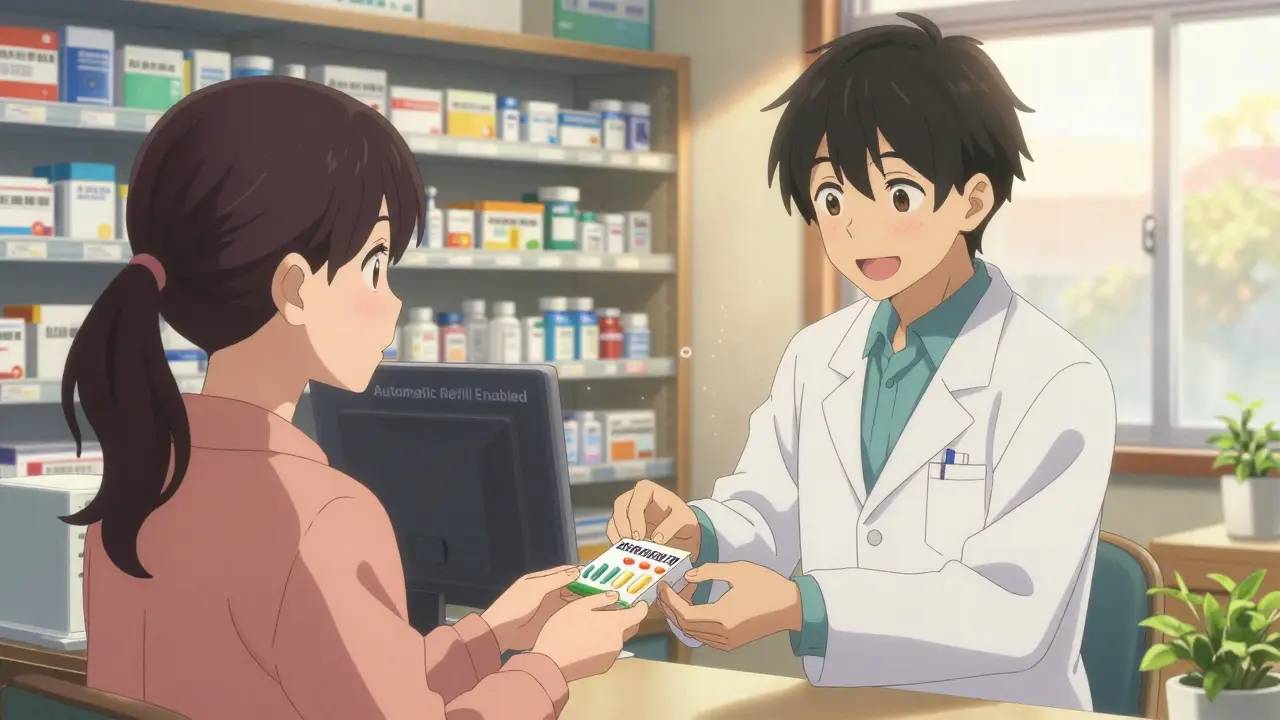
- Use one pharmacy - Getting all your meds from one place means one pharmacist knows your whole list. They can catch interactions, remind you when refills are due, and even help you find discounts.
- Ask for combination pills - If you’re taking five pills a day, ask your doctor if any can be combined. One pill instead of three? That’s a game-changer. Simpler regimens = better adherence.
- Set up automatic refills - Most pharmacies offer this. No more running out because you forgot. Set it and forget it.
- Use a pill organizer with alarms - Not just a box. Get one with a flashing light and sound. Some even text you. If you’re forgetful, tech helps.
- Bring a friend to appointments - One person hears what the doctor says. The other remembers it. Two sets of ears beat one every time.
- Find out about assistance programs - RxAssist.org, patient assistance programs from drug makers, or local social workers can cut your costs by 70% or more. You don’t have to pay full price.
One woman in Durban I spoke with (not a patient, but a community health worker) told me about a man in his 60s with diabetes. He was skipping his meds because he was ashamed. He thought people would judge him for being “sick.” She didn’t lecture him. She asked, “What would make it easier?” He said he’d feel better if he could take his pills after tea, like his mom used to. So they changed his schedule. He started taking them daily. His A1C dropped from 9.8 to 6.9 in six months.
When Coping Strategies Fall Short
Let’s be honest: sometimes, the problem isn’t your mindset. It’s your wallet. Or your transportation. Or your job that doesn’t let you take time off. Research shows that women, older adults, and people with shorter disease duration tend to adhere better. Why? Maybe because they have more support, more time, or fewer competing demands. But what if you’re a single dad working two jobs? What if you live 30 kilometers from the nearest pharmacy? What if your meds cost more than your rent?
That’s where systems need to change. Doctors and pharmacists can’t fix poverty. But they can help you navigate it. Ask for:
- Generic versions of your meds
- Step therapy (try the cheaper option first)
- Mail-order prescriptions
- Help from a social worker
And if your doctor doesn’t ask about cost? Ask them. Say: “I’m trying to take my meds, but I can’t afford them. Can we find another way?” That simple sentence opens doors most people never even try.
What You Can Do Today
You don’t need to overhaul your life. Start small.
- Write down your top three reasons for skipping meds. Is it cost? Side effects? Forgetting? Write them down. Naming it takes away its power.
- Call your pharmacy. Ask if you can switch to automatic refills or a pill organizer.
- Ask your doctor: “Can any of these pills be combined?”
- Find one person you can talk to about this-friend, family, support group. You don’t have to do it alone.
- Check RxAssist.org or ask your pharmacist about patient assistance programs. You might be eligible and not even know it.
Remember: adherence isn’t about willpower. It’s about design. Design your life so taking your meds is the easiest choice-not the hardest one.

What’s Next for Medication Adherence
Research is moving fast. Scientists are now building tools to measure how people cope-so doctors can match support to your style. If you’re an avoider, you get different help than someone who’s overwhelmed by emotions. In the future, your pharmacist might ask: “What’s your coping style?” instead of “Why didn’t you take your pill?”
But right now, the best tool you have is awareness. You’re not failing. You’re human. And there are real, practical ways to make this easier. You don’t need to be perfect. You just need to be consistent. One pill. One day. One step at a time.
Why do people stop taking their long-term medications?
People stop for many reasons: cost is the biggest one-many can’t afford their prescriptions. Side effects, forgetfulness, feeling fine and thinking they don’t need the meds anymore, or not understanding why the pills matter. Some avoid taking them because of shame, fear, or distrust in the healthcare system. It’s rarely about laziness.
Can changing how I think about my meds help me take them?
Yes. Studies show that shifting from avoidance to active problem-solving-like planning how to fit pills into your routine or talking to your doctor about side effects-can boost adherence by nearly 80%. It’s not about being positive. It’s about being strategic. If you treat your medication plan like a project you’re solving, not a chore you’re enduring, you’re more likely to stick with it.
Are pill organizers worth it?
For people who forget doses, yes. But not all organizers are equal. Simple plastic boxes don’t help much. Look for ones with alarms, flashing lights, or smartphone alerts. Some even send texts when you miss a dose. The best ones combine visual cues with reminders. If you’re taking four or more pills a day, an organizer is one of the cheapest and most effective tools you can use.
Can my pharmacist help me with adherence?
Absolutely. Pharmacists are trained to spot medication problems. They can help you switch to combination pills, find cheaper alternatives, set up automatic refills, or connect you with financial aid. Many pharmacies now offer medication therapy management-free sessions where they review your whole list and fix issues. Ask for it. Most people don’t know it’s available.
What if I can’t afford my meds?
You’re not alone. Many drug companies offer free or low-cost programs. Websites like RxAssist.org list assistance options by name. Your pharmacist can help you apply. Also, ask your doctor about generic versions. Sometimes switching from brand to generic cuts the cost by 80%. And if you’re on government assistance, check if your state or local health department has programs for medication access. There’s help-just ask.
How long does it take to build a medication routine?
It varies. For most people, it takes 2-3 months to make it automatic. The key is consistency, not perfection. Miss a day? Don’t quit. Just reset. Link taking your meds to something you already do daily-like brushing your teeth or drinking morning coffee. That creates a habit loop. Over time, it becomes part of who you are-not something you have to force.
Final Thought: This Is About Your Life, Not Your Pills
Long-term medication isn’t about being obedient. It’s about staying alive, staying active, staying in control. Your health doesn’t care how much you suffer. It only responds to consistency. So don’t wait for motivation. Build systems. Ask for help. Use the tools. And remember-you’re not fighting your body. You’re working with it. One pill at a time.
Joe Grushkin
February 15, 2026 AT 01:28Virginia Kimball
February 16, 2026 AT 08:09Chiruvella Pardha Krishna
February 17, 2026 AT 16:35Sarah Barrett
February 18, 2026 AT 05:35Kaye Alcaraz
February 19, 2026 AT 18:40Charlotte Dacre
February 20, 2026 AT 00:47Esha Pathak
February 21, 2026 AT 15:19Mike Hammer
February 23, 2026 AT 11:02Daniel Dover
February 23, 2026 AT 15:20Kapil Verma
February 24, 2026 AT 02:10Mandeep Singh
February 24, 2026 AT 19:05Josiah Demara
February 25, 2026 AT 19:43