
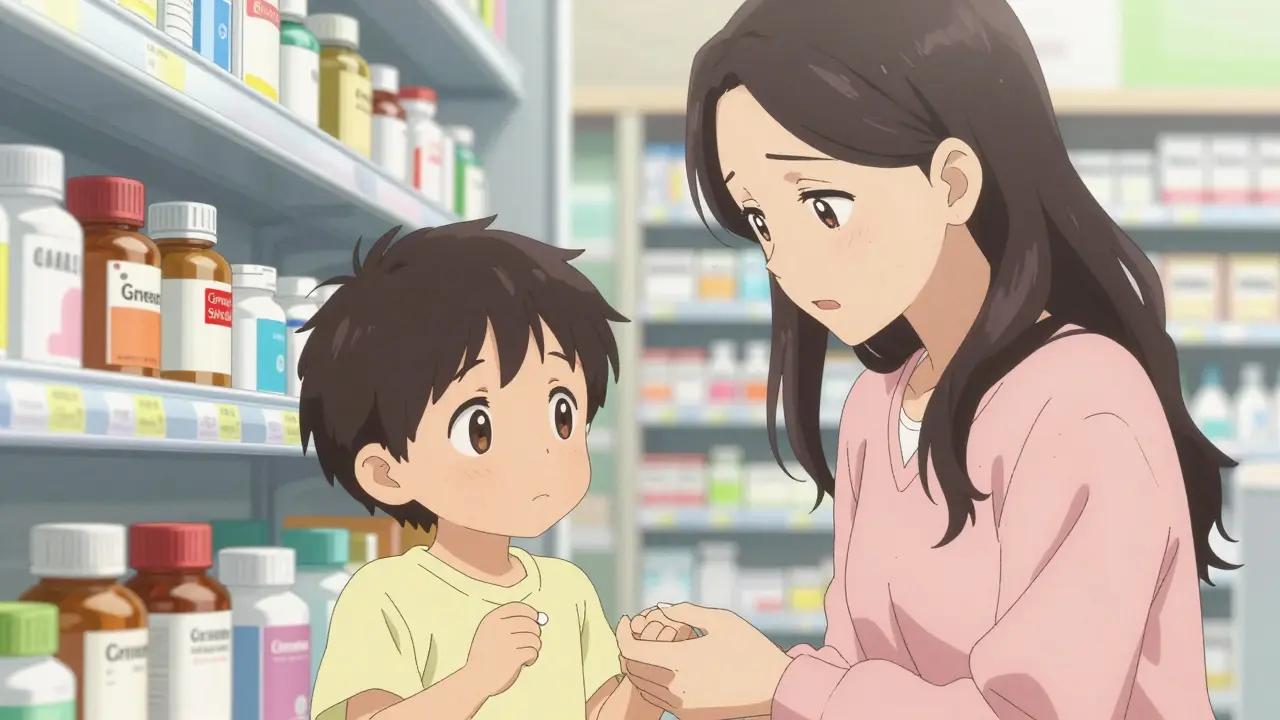
When a child’s prescription switches from a brand-name drug to a generic, most parents assume it’s the same medicine-just cheaper. But for kids, that assumption can be dangerous. Unlike adults, children aren’t just small versions of grown-ups. Their bodies absorb, process, and respond to drugs differently. And when a switch happens without warning or proper oversight, the consequences can be serious-especially for kids with chronic conditions like asthma, epilepsy, or heart disease.
Why Generic Switches Are Riskier for Kids
The FDA says generics must be bioequivalent to brand-name drugs. That means the active ingredient is the same, and the body absorbs it within a range of 80% to 125% of the original. Sounds fair, right? But that 45% window is wide enough to cause problems in children. Take tacrolimus, a drug used after organ transplants. A 2015 study found that pediatric heart transplant patients had, on average, a 14% drop in blood levels after switching to the generic version. That might not sound like much, but in transplant care, even small dips can trigger rejection. The same risk applies to epilepsy drugs like phenytoin or blood thinners like warfarin-medications with narrow therapeutic indices where tiny changes in dosage can mean the difference between control and crisis. Children’s bodies are still developing. Their liver enzymes, kidney function, and gut absorption change dramatically as they grow. A drug that works perfectly in a 10-year-old might behave completely differently in a 3-month-old. For example, omeprazole (used for reflux) is broken down mainly by the CYP2C19 enzyme, which isn’t fully developed until after six months. A generic version that’s approved for adults may not be therapeutically equivalent in a baby-even if the label says it’s the same.What’s Really Driving the Switch?
Most switches aren’t driven by doctors or parents. They’re made by insurance companies and pharmacy benefit managers trying to cut costs. This is called non-medical formulary switching (NMFS). It’s not about what’s best for the child-it’s about what’s cheapest for the insurer. In the U.S., generics make up 90% of all prescriptions filled. That’s great for savings-$2.2 trillion saved between 2009 and 2019, according to the Generic Pharmaceutical Association. But when insurers force a switch, they rarely consider whether the child can actually take the new version. A pill that’s easy for an adult to swallow might be too big for a toddler. A liquid suspension might taste terrible, making a child refuse it. A new inhaler device might look different, and if the child doesn’t use it right, they get none of the medicine. A 2020 study from PolicyLab at Children’s Hospital of Philadelphia found that after a formulary switch, asthma medication adherence dropped by 15-20% among children. Why? Because caregivers got confused. The color changed. The shape changed. The name on the bottle changed. And no one told them why.Therapeutic Areas Where Switching Is Most Dangerous
Some drugs are just too risky to swap without careful planning. The FDA and pediatric experts flag these categories as high-risk for children:- AEDs (antiepileptic drugs) - Even small fluctuations in blood levels can trigger seizures.
- Psychiatric medications - Antidepressants and ADHD drugs can cause mood swings or withdrawal symptoms if switched abruptly.
- Cardiac drugs - Drugs like digoxin or beta-blockers require precise dosing.
- Immunosuppressants - Tacrolimus, cyclosporine, and mycophenolate are critical after transplants.
- Oncology drugs - Chemotherapy regimens are finely tuned; substitutions can reduce effectiveness or increase toxicity.
State Laws Vary Wildly-And Most Don’t Protect Kids
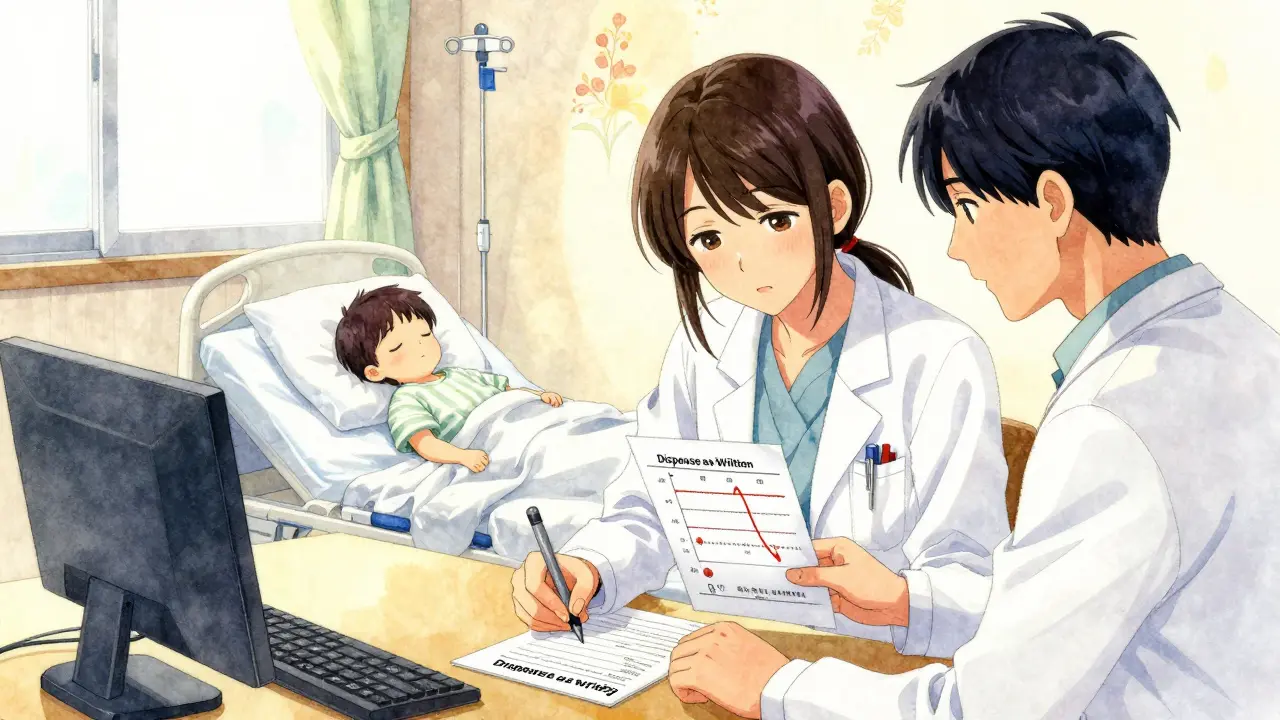
When a pharmacist fills a prescription, state laws determine whether they can swap a brand for a generic without telling anyone. The rules are all over the map. - 19 states require pharmacists to automatically substitute generics. No notice. No consent. - 7 states and Washington, D.C., require the parent or caregiver to give consent before switching. - 31 states require only notification-often just a sticker on the bottle. A 2009 study showed that states requiring consent had 25% fewer generic substitutions. That tells you something: when parents are involved, switches happen less often. And that’s a good thing. In California, a 2022 law now requires Medicaid plans serving children to have a pediatric review committee before making any formulary changes. That’s a step forward. But most states still treat children like afterthoughts.Inactive Ingredients Matter More Than You Think
Generics have the same active ingredient. But they can have different fillers, dyes, flavors, or preservatives. For most adults, that doesn’t matter. For some kids, it does. A child with a rare allergy might react to a dye in one generic version but not another. A child with reflux might gag on a new flavor and stop taking the medicine altogether. A child with a feeding tube might have a clog if the suspension’s viscosity changes. Nationwide Children’s Hospital’s 2015 guidance warns: “In rare cases, inactive ingredients in a generic medication might cause reactions.” And those reactions often show up right after a switch-when no one’s looking for them.What Parents Should Do
You can’t always stop a switch. But you can protect your child.- Ask why. When your pharmacist says, “Your insurance changed your prescription,” ask: “Is this safe for my child? Has it been tested for kids this age?”
- Check the appearance. If the pill looks different, or the liquid smells odd, or the inhaler doesn’t click the same way-don’t assume it’s fine. Call your doctor.
- Keep a log. Note any changes in behavior, sleep, appetite, or symptoms after a switch. Even small things matter.
- Request a prior authorization. If your child is on a critical medication, ask your doctor to write “Do Not Substitute” or “Brand Necessary” on the prescription. It’s legal, and insurers must honor it if the doctor explains why.
- Know your rights. In some states, you can demand consent before a switch. Ask your pharmacist what the law is in your state.
What Doctors and Pharmacists Need to Do Better
Pediatricians aren’t always trained to spot switching risks. A 2018 survey found only 37% of pharmacists routinely discussed switching issues with parents of children on chronic meds. Doctors need to:- Prescribe with intent. If a drug is critical, write “Dispense as Written” or “Brand Necessary.”
- Document the reason. Not just “asthma,” but “child on brand-name albuterol since age 2, stable for 3 years, no history of adverse reaction.”
- Communicate. When a switch happens, call the parent. Send a note. Don’t assume they’ll read the pharmacy’s letter.
- Check the child’s age and condition before dispensing.
- Explain changes in plain language-not pharmacy jargon.
- Teach proper use of devices. If the inhaler changed, show the parent how to use it. Don’t just hand it over.
The Bigger Picture: Why This Isn’t Fixed Yet
The FDA approved the Hatch-Waxman Act in 1984, which set up the modern generic drug system. But it was designed for adults. Pediatric bioequivalence testing? Not required. The Biopharmaceutics Classification System (BCS)? Made for adults. Even today, only 12% of generic approvals between 2010 and 2020 included pediatric-specific data. The FDA’s 2020 Drug Competition Action Plan acknowledged “issues associated with generic drugs used in children.” But it hasn’t changed the rules. Meanwhile, insurers keep pushing switches because they save money. And children keep getting caught in the middle. A 2023 meta-analysis in Pediatrics found that children with chronic conditions who experienced medication switches had an 18% higher rate of hospitalization than those who stayed on the same drug. That’s not just a statistic. That’s a child in the ER. A parent terrified. A family disrupted.What’s Changing-And What’s Next
There’s hope. The American Academy of Pediatrics is finalizing new guidelines on generic prescribing for children, expected in late 2024. The FDA’s Pediatric Formulation Initiative is pushing for better child-friendly versions of drugs. The PREEMIE Reauthorization Act includes funding for pediatric drug development. But real change won’t come from guidelines alone. It needs:- Regulatory reform: Pediatric-specific bioequivalence standards for high-risk drugs.
- Insurance accountability: Bans on non-medical switches for children on critical meds.
- Provider education: Training for doctors and pharmacists on pediatric pharmacology.
- Parent power: Better communication, clear consent, and the right to refuse unsafe switches.
Are generic medications always safe for children?
Not always. While generics contain the same active ingredient as brand-name drugs, they may differ in inactive ingredients, dosage forms, or absorption rates-factors that matter more in children. For drugs with narrow therapeutic windows-like those used for epilepsy, transplants, or heart conditions-even small changes can lead to serious health risks. Always consult your child’s doctor before accepting a switch.
Can I refuse a generic switch for my child?
Yes. You can ask your doctor to write “Dispense as Written” or “Brand Necessary” on the prescription. In some states, pharmacists are legally required to get your consent before switching. Even if not required, you have the right to say no. If your child is stable on a medication, changing it for cost reasons is not always medically justified.
Why does my child’s medication look different after a switch?
Generics are made by different manufacturers, and they can use different colors, shapes, sizes, or flavors. These changes don’t affect the active ingredient, but they can confuse children and caregivers. A child might refuse a pill because it looks unfamiliar. A liquid might taste worse, leading to missed doses. Always check with your pharmacist if the appearance changes-especially if your child has trouble taking their medicine.
What should I do if my child’s symptoms change after a switch?
Contact your child’s doctor immediately. Changes in behavior, sleep, appetite, seizures, breathing, or mood could signal that the new medication isn’t working the same way. Keep a log of symptoms and when they started. This helps your doctor determine if the switch is the cause-and whether to return to the original medication.
Is there a list of drugs that shouldn’t be switched for children?
There’s no official public list, but experts agree that drugs with narrow therapeutic indices are high-risk. These include tacrolimus, phenytoin, warfarin, levothyroxine, certain epilepsy medications, and immunosuppressants. If your child takes one of these, ask your doctor whether switching is safe and whether the brand version is necessary. Always get it in writing.
Charlotte N
January 3, 2026 AT 12:00I switched my son's epilepsy med last year and didn't realize until his seizures got worse that the generic looked different and tasted like chalk. No one told us. Now I check every bottle like a hawk. It's scary how little info you get.
Why don't pharmacies just hand you a sheet explaining the changes? Like, here's what changed, here's what to watch for. It's not hard.
Catherine HARDY
January 3, 2026 AT 18:17They're not just switching meds-they're running a social experiment on our kids. Insurance companies don't care if a child has a seizure or gets hospitalized. They just want to cut costs. You think this is about science? No. It's about profit margins and boardroom bonuses. They're gambling with children's lives and calling it 'cost-effective.'
And don't even get me started on the 'inactive ingredients.' Those are the real toxins. They test them on rats, sure-but never on a 2-year-old with a compromised liver. Who signed off on this? Who's accountable?
bob bob
January 4, 2026 AT 19:07Man, this hits hard. My niece is on tacrolimus after her heart transplant. We had a switch last winter and she went from stable to crashing in 48 hours. The pharmacist didn't even say anything different was happening. Just handed us the bottle like it was a new flavor of cough syrup.
Doctors need to be way more proactive. If it's a life-or-death med, just write 'DO NOT SUBSTITUTE' in bold. And pharmacists? Stop treating parents like they're dumb. Explain it like you're talking to a human, not a barcode scanner.
Vicki Yuan
January 6, 2026 AT 11:55There's a critical gap in pediatric pharmacology education for both providers and insurers. The FDA's bioequivalence standards were designed for adults, and the 80–125% window is simply not appropriate for children, especially those under five. Their metabolic pathways are not linear extensions of adult physiology.
Studies show that even a 10% fluctuation in tacrolimus levels can trigger rejection in pediatric transplant recipients. Yet, we still allow automatic substitutions without pediatric-specific data. This isn't negligence-it's systemic failure. We need mandatory pediatric bioequivalence trials for high-risk drugs, not just adult extrapolations.
Also, the term 'generic' is misleading. It implies interchangeability. It's not. It's a different formulation with the same active ingredient. Language matters.
Uzoamaka Nwankpa
January 8, 2026 AT 06:22This is why I don't trust Western medicine. In Nigeria, we don't have this problem because we don't have insurance companies controlling everything. If a child needs a specific medicine, the family pays for it or finds a way. No one swaps it because of a 'formulary.'
Here, it's all about money. Children are just numbers on a spreadsheet. I read this and I feel sick. Not because I don't understand-it's because I understand too well.
They'll keep doing this until a child dies. Then they'll make a press release and move on.
Enrique González
January 8, 2026 AT 18:10My kid’s on an inhaler for asthma. Switched generics last month. The new one didn’t click right. He’d press it and nothing came out. Took me three days to realize it wasn’t him-he was just confused because the mechanism felt different. I called the pharmacy. They said, 'Oh, that’s just a different brand.' No warning. No demo.
Why don’t they just hand out a video link? Or a QR code? Something. It’s not rocket science. Just show people how to use it. We’re not all pharmacists.
Aaron Mercado
January 9, 2026 AT 16:09THIS IS A SCANDAL. A COMPLETE AND UTTER SCANDAL!!!
Our children are being used as guinea pigs for corporate greed!!! I swear to GOD if my daughter had a seizure because some insurance exec decided to save $0.75 per pill, I would take my gun and go to their office and I would NOT stop shooting until they begged for mercy!!!
Why isn't this on 60 Minutes?! Why isn't the Attorney General investigating?! Why are we letting this happen?! 'Dispense as Written' should be the DEFAULT for ALL pediatric prescriptions-PERIOD!!!
And someone needs to jail the CEO of CVS right now. I'm not even kidding. I'm not mad-I'm FURIOUS.
And don't tell me 'it's just a generic'-my kid's brain doesn't care about your quarterly earnings report!!
saurabh singh
January 9, 2026 AT 22:38Bro, this is real. In India, we don’t have this problem because most meds are sold without brand names-just generics. But here’s the thing: we also don’t have insurance companies pushing switches. Parents pay out of pocket, so they pick what works.
But I get it-when you’re in the US and your insurance forces a switch, it’s a trap. I’ve seen kids stop taking meds because the new one tasted like metal. No one told the parents it might taste different.
So here’s my tip: if your kid’s on a critical med, get a prescription with 'Do Not Substitute' written by hand. Make the doctor sign it. And if the pharmacy still switches it? Call your state’s pharmacy board. They have to answer to someone.
And hey-if you’re a pharmacist reading this? Don’t just hand out pills. Talk to the parents. Ask if the kid’s had any weird reactions. It takes 30 seconds. Could save a life.