
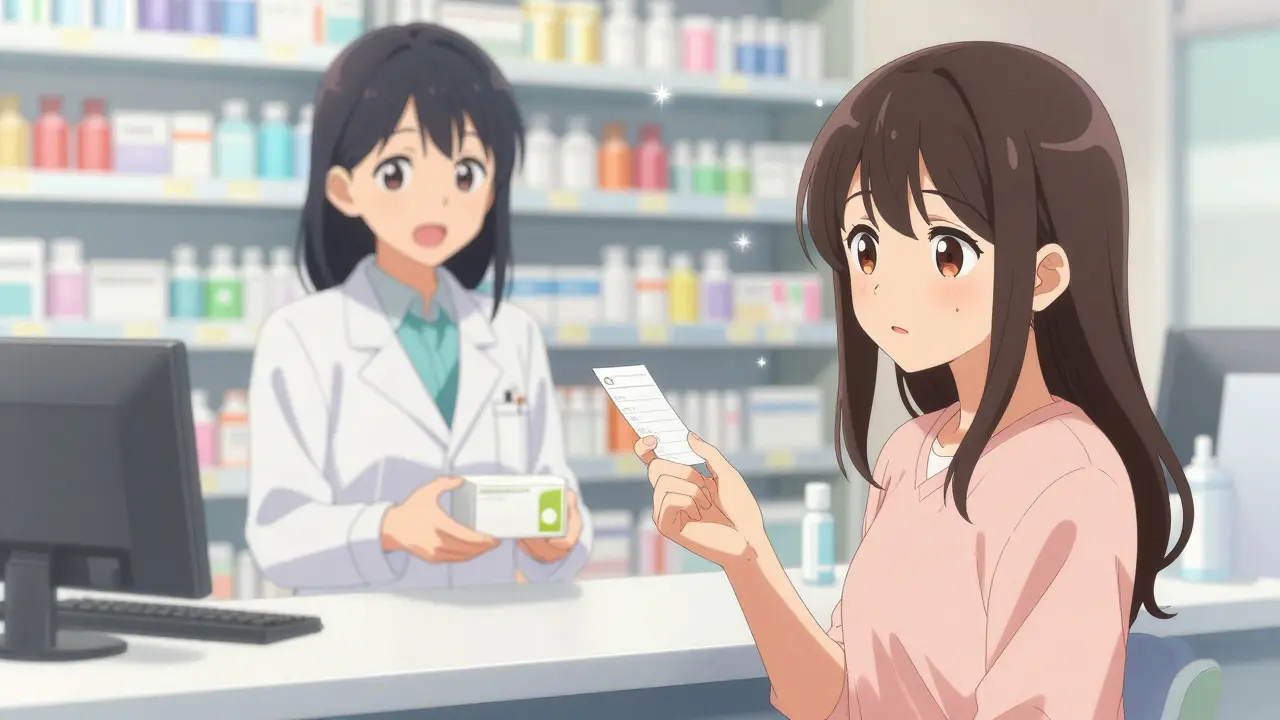
You’ve probably seen it happen at the pharmacy counter. You hand over a prescription for a well-known brand-name medication, and the pharmacist hands back a box with a different logo, often at a fraction of the cost. It’s a moment that triggers immediate questions in many of us: Is this really the same medicine? Will it work just as well? And most importantly, is it safe?
The short answer is yes. For the vast majority of patients, generic drugs are clinically equivalent to their brand-name counterparts. However, the full picture involves some nuance regarding how these medications are regulated, manufactured, and monitored. Understanding the difference between 'identical' and 'bioequivalent' can help you make informed decisions about your health without unnecessary anxiety or expense.
What Exactly Makes a Drug 'Generic'?
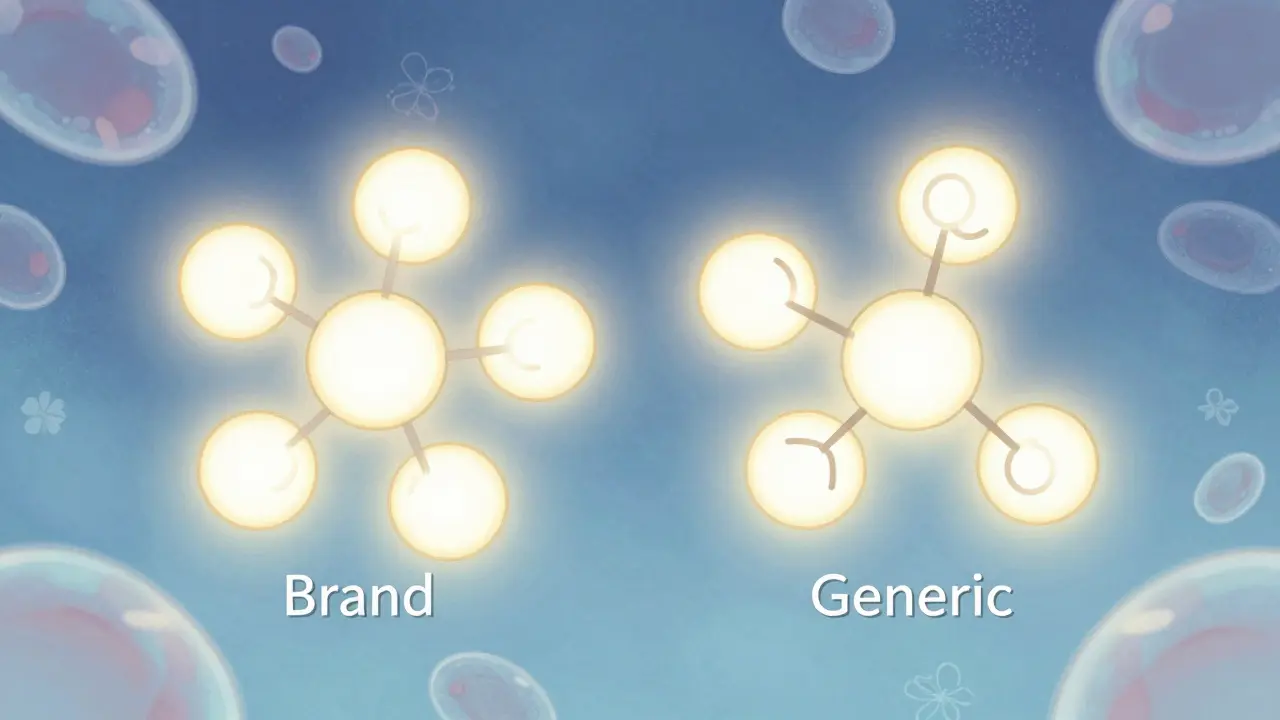
To understand why generics are considered safe, we first need to look at what they actually are. A generic drug is not a copycat product made with lower-quality ingredients. By law, specifically under frameworks like the U.S. Hatch-Waxman Act of 1984, a generic must contain the exact same active ingredient as the brand-name drug. This means the molecule that does the actual healing-whether it’s lowering blood pressure, killing bacteria, or stabilizing mood-is chemically identical.
The regulations require pharmaceutical equivalence. This means the generic must match the brand in strength, dosage form (like a tablet or capsule), and route of administration (such as oral or topical). The only areas where differences are allowed are in inactive ingredients, known as excipients. These include fillers, binders, colors, and flavors. While these don’t affect the drug’s primary action, they can influence how the pill dissolves or how it looks.
The core requirement for approval is bioequivalence. Regulatory bodies like the U.S. Food and Drug Administration (FDA) require manufacturers to prove that the generic drug enters the bloodstream at a similar rate and extent as the brand-name version. Specifically, the 90% confidence interval for pharmacokinetic parameters like Cmax (maximum concentration) and AUC (area under the curve) must fall within an 80-125% range compared to the reference listed drug. In practical terms, this ensures that the body receives the same amount of active medication over time.
The Economic Impact: Why Generics Dominate
The shift toward generics isn't just about safety; it's about accessibility. When a brand-name drug's patent expires, other manufacturers can produce generic versions. This competition drives prices down dramatically. According to IQVIA data from 2023, generics accounted for approximately 90% of all prescriptions dispensed in the United States but represented only about 18-25% of total pharmaceutical spending.
This disparity highlights the value proposition. The average savings for a patient switching from brand to generic is often between 80% and 85%. For chronic conditions requiring lifelong medication, such as hypertension or high cholesterol, this cost reduction can be life-changing. It allows healthcare systems to treat more people with the same budget and reduces the financial burden on individuals who might otherwise skip doses due to cost.
| Feature | Brand-Name Drug | Generic Drug |
|---|---|---|
| Active Ingredient | Original proprietary formula | Identical chemical structure |
| Inactive Ingredients | Specific to manufacturer | May differ (fillers, dyes) |
| Bioequivalence Standard | N/A (Reference Product) | 80-125% confidence interval |
| Cost | High (patent protected) | Low (competitive market) |
| Regulatory Approval | Full clinical trials (NDA) | Bioequivalence studies (ANDA) |
Clinical Evidence: What Do the Studies Say?
If generics are so similar, why do debates persist? The clinical evidence is largely reassuring, but it also reveals specific scenarios where caution is warranted. A landmark 2020 study published in *Nature Scientific Reports* by Kesselheim et al. analyzed nearly all insured persons in Austria from 2007 to 2012. The findings were striking: generic medications were associated with significantly fewer deaths in 10 of 17 investigated drugs and fewer major adverse cardiac and cerebrovascular events (MACCE) in 11 of 17 drugs. After adjusting for treatment probabilities, generic formulations showed 40.6 deaths per 1,000 patient-years compared to 45.8 for branded medicines.
This suggests that for many common conditions, generics perform just as well, if not better, possibly due to improved manufacturing processes or simply because patients stay on therapy longer due to lower costs. However, other studies highlight potential issues. A 2017 Canadian study published in *Circulation: Cardiovascular Quality and Outcomes* found increased adverse events after the introduction of generics for three blood pressure medications: losartan, valsartan, and candesartan. Among older adults, there was an 8% to 14% increase in adverse events in the month following generic availability.
Why the discrepancy? Often, it comes down to the specific drug class and individual patient sensitivity. Most drugs have a wide therapeutic window, meaning small variations in absorption have no clinical impact. But for some, even minor differences matter.
The Exception: Narrow Therapeutic Index Drugs
Not all medications are created equal when it comes to substitution. The concept of a narrow therapeutic index (NTI) drug is crucial here. These are medications where the difference between a therapeutic dose and a toxic or ineffective dose is very small. Examples include warfarin (a blood thinner), levothyroxine (for thyroid conditions), phenytoin (for seizures), and certain anti-epileptics.
For NTI drugs, the FDA acknowledges that while generics meet the standard 80-125% bioequivalence criteria, strict consistency is preferred. The American Thyroid Association, for instance, recommends consistent use of either brand or generic levothyroxine without frequent switching. Patient reports support this caution. On forums like Reddit, users frequently share experiences where switching to a generic levothyroxine caused their TSH levels to spike, indicating reduced effectiveness despite the same milligram dosage.
Similarly, a 2013 review in the *Journal of Clinical Pharmacy and Therapeutics* documented cases where 30% of patients discontinued generic treatment due to side effects or inefficacy after switching from brands, particularly with antibiotics like ciprofloxacin. While these cases represent a minority, they underscore that 'bioequivalent' does not always mean 'clinically indistinguishable' for every single patient.
How to Navigate Generic Substitution
So, how do you decide whether to accept a generic? First, check the FDA Orange Book. This resource lists therapeutic equivalence codes. An 'AB' rating means the generic is considered therapeutically equivalent to the brand. If you see a 'B' rating, it may indicate that bioequivalence was established through clinical endpoints rather than standard pharmacokinetic studies, which is common for complex generics like inhalers or topical creams.
Pharmacists play a key role here. In all 50 U.S. states, pharmacists can substitute generics unless the prescriber writes 'Dispense as Written' or 'Brand Medically Necessary.' However, a 2021 study found that only 43% of physicians routinely checked Orange Book ratings before prescribing. This gap in awareness means patients should advocate for themselves.
- Monitor Your Response: If you switch to a generic, pay attention to how you feel. Keep a log of any new side effects or changes in symptom control.
- Ask About Consistency: For NTI drugs, ask your pharmacist if they can source the same manufacturer consistently. Some pharmacies rotate suppliers, which can lead to subtle changes in inactive ingredients.
- Communicate with Your Doctor: If you experience issues, don't just stop taking the medication. Contact your healthcare provider. They may adjust the dose or authorize a brand-name exception if medically necessary.
- Check for Allergies: Since inactive ingredients differ, if you have allergies to certain dyes or fillers, inform your pharmacist. They can select a generic with compatible excipients.
Future Outlook and Regulatory Oversight
Regulatory agencies are aware of these concerns. The FDA’s Generic Drug Program Strategy, updated in 2022, focuses on enhanced quality oversight and complex generics. With GDUFA III (2023-2027), the FDA has set goals for faster reviews while maintaining rigorous standards. The agency issued 17 Import Alerts in 2022 for generic manufacturers due to quality concerns, showing that oversight is active and continuous.
Looking ahead, the global generic pharmaceutical market is projected to grow significantly, reaching $661.4 billion by 2030 according to Grand View Research. As more patents expire, including those for blockbuster drugs worth billions, the reliance on generics will only increase. This makes understanding their safety profile not just a personal health issue, but a public health imperative.
The consensus among experts remains strong. Dr. Niteesh Choudhry of Harvard Medical School stated that 'the existing data are reassuring' regarding generic drug quality. While theoretical concerns exist regarding excipients and manufacturing processes, the overwhelming evidence supports the safety and efficacy of generics for the vast majority of patients. The key is informed usage: knowing when a generic is a perfect substitute and when extra caution is warranted.
Can I trust generic drugs for serious conditions like heart disease?
Yes. Extensive clinical evidence, including large-scale studies like the one published in Nature Scientific Reports, shows that generics for cardiovascular drugs are just as effective and safe as brand-name versions. They often result in better outcomes due to higher adherence rates driven by lower costs.
Why do some doctors still prescribe brand-name drugs?
Doctors may prescribe brand names for several reasons. First, for narrow therapeutic index drugs where consistency is critical. Second, due to habit or lack of awareness about generic availability. Third, in cases where patients have reported specific adverse reactions to generic excipients. Finally, some insurance plans may have preferred brand contracts, though this is less common now.
What are inactive ingredients, and do they matter?
Inactive ingredients are non-medical components like fillers, binders, and colorants. They generally do not affect the drug's therapeutic action. However, they can cause allergic reactions in sensitive individuals or affect how quickly the drug dissolves. For most people, they are irrelevant, but for those with severe allergies or sensitivities, checking the ingredient list is important.
Is it safe to switch between different generic manufacturers?
For most drugs, yes. All approved generics must meet the same bioequivalence standards. However, for narrow therapeutic index drugs like levothyroxine or warfarin, it is advisable to stick with one manufacturer to avoid subtle variations in absorption. If you notice changes in symptoms after a switch, consult your doctor.
How much cheaper are generic drugs compared to brands?
On average, generic drugs cost 80-85% less than their brand-name equivalents. In some cases, especially with multiple generic competitors, prices can drop by up to 90%. This significant savings helps reduce overall healthcare costs and improves access to essential medications.
What is the FDA Orange Book?
The FDA Orange Book is a database that lists approved drug products along with their therapeutic equivalence evaluations. It helps healthcare providers determine if a generic is interchangeable with a brand-name drug. An 'AB' rating indicates therapeutic equivalence, while other ratings may suggest limitations or the need for clinical evaluation.