

When your nose starts running, your eyes itch, and your throat feels tight, you reach for an antihistamine. But not all antihistamines are the same. Two main types exist - first-generation and second-generation - and choosing the wrong one can leave you groggy, ineffective, or even at risk. If you’re trying to manage allergies without wrecking your day, understanding the difference isn’t just helpful - it’s essential.
What Antihistamines Do (And Why It Matters)
Allergies happen when your body overreacts to something harmless - pollen, dust, pet dander - by releasing histamine. That chemical triggers swelling, itching, sneezing, and runny nose. Antihistamines block histamine from binding to H-1 receptors, stopping those symptoms before they spiral. Both first- and second-generation drugs do this. But how they do it, and what else they affect, is where everything changes.
First-Generation Antihistamines: The Old Standbys
These are the ones you’ve seen in old commercials: Benadryl (diphenhydramine), Chlor-Trimeton (chlorpheniramine), and Phenergan (promethazine). They hit the market in the 1940s and became household names because they worked - fast.
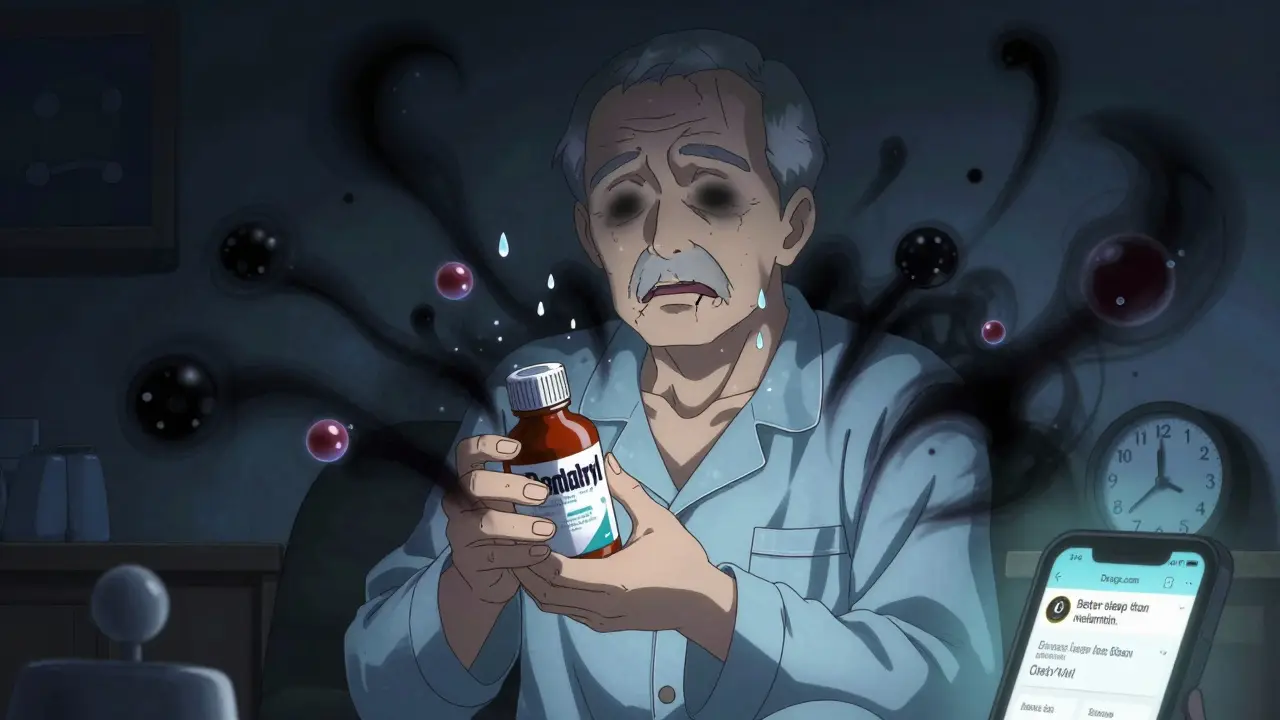
They cross the blood-brain barrier easily. That’s why they make you sleepy. In fact, 50-60% of people who take them report drowsiness. That’s not a side effect - it’s built into the design. For some, that’s useful. If you’re lying in bed with a severe allergic reaction or can’t sleep because your nose is blocked, a night-time dose of diphenhydramine can be a lifesaver. Over 52% of users on Drugs.com say it gives better sleep than melatonin.
But here’s the catch: it doesn’t just affect your brain. It also blocks acetylcholine, another neurotransmitter. That’s why you get dry mouth (30% of users), trouble urinating (5-7% of older adults), and blurred vision. Worse, studies show it can slow reaction times by 25% - like driving while mildly intoxicated. A 2022 JAMA Internal Medicine study warned that long-term use in seniors is as risky as low-dose benzodiazepines.
They also don’t last long. You need to take them every 4-6 hours. That means three or four doses a day just to keep symptoms under control. Compliance? Only 60% of people stick to that schedule. Miss a dose? Symptoms come roaring back.
Second-Generation Antihistamines: The Modern Choice
These came along in the 1980s to fix the problems of the old ones. Claritin (loratadine), Zyrtec (cetirizine), and Allegra (fexofenadine) were designed to stay out of the brain. They’re bulkier, more polar, or use special transport systems that keep them from crossing into the central nervous system.
The result? Minimal drowsiness. Only 10-15% of users feel sleepy - and even that’s usually at higher-than-recommended doses. That’s why they’re called “non-drowsy.” But don’t be fooled. Take double the dose, and yes, you’ll still feel it. The FDA warns that 20% of users experience sedation at supratherapeutic levels.
They last longer. One dose lasts 12-24 hours. That means once-daily dosing. And people stick to it. In 2023, 85% of patients on second-generation antihistamines took their pill every day. That’s huge for chronic conditions like allergic rhinitis.
They’re also more effective for nasal symptoms. A 2022 meta-analysis in the Journal of Allergy and Clinical Immunology found second-generation drugs reduced symptoms by 60-70%, compared to 50-60% for first-generation. Cetirizine (Zyrtec) even outperformed loratadine (Claritin) by 15-20% in moderate-to-severe cases, according to European Academy data.
Cost, Availability, and Real-World Use
First-generation antihistamines are dirt cheap. A bottle of 100 diphenhydramine tablets costs $4-6. That’s why they’re still in most cold-and-flu combos - they’re affordable and work fast. But second-generation generics? They’re $10-15 for 30 tablets. Brand names like Zyrtec or Claritin can hit $25 a month. For people without insurance, that’s a barrier.
Yet, despite the price, second-generation drugs dominate prescriptions. In 2023, over 70% of all antihistamine prescriptions were for these newer versions. Why? Doctors prefer them. The American Academy of Allergy, Asthma & Immunology says they should be first-line for chronic allergies. And it’s not just doctors - 82% of physicians recommend them as the initial choice.
But here’s the twist: first-generation still rules the OTC aisle. Why? Because they’re in multi-symptom products. If you have a runny nose, cough, and fever, you grab the one with diphenhydramine. It’s not always the best choice - but it’s convenient.
When to Use Which
It’s not about which is “better.” It’s about which fits your life.
- Use first-generation if: You need fast relief during a sudden flare-up (like a bee sting or accidental exposure), you’re using it at night for sleep, or you’re treating motion sickness or nausea. They’re still the gold standard for acute, short-term use.
- Use second-generation if: You have daily allergies, work, drive, or care for children. You need consistent relief without brain fog. You’re managing symptoms long-term. You want to avoid the dry mouth, urinary issues, or cognitive fog that comes with older drugs.
Some people use both. Take a second-generation pill in the morning for all-day control, then a low-dose first-generation at night to help with sleep. That’s a common strategy - and it works.
The Hidden Problem: Delayed Onset
One thing most people don’t tell you: second-generation antihistamines take longer to work. While Benadryl kicks in in 30 minutes, Zyrtec or Claritin can take 1-3 hours. That’s why new users get frustrated. They take it in the morning expecting instant relief - and nothing happens. They think it’s broken.
The truth? They’re not meant to be emergency drugs. They’re preventive. If you know you’re going to be around cats or pollen, take it the night before or early in the morning. Don’t wait until you’re sneezing uncontrollably.

What’s Next? The Rise of Third-Generation
Even second-generation drugs aren’t perfect. They still don’t do much for nasal congestion. That’s why new combo drugs are hitting the market - like fexofenadine plus pseudoephedrine in one extended-release pill. And newer agents like bilastine (approved in Europe, not yet in the U.S.) show 20% better congestion relief than current options.
Desloratadine and levocetirizine - the purified forms of loratadine and cetirizine - are gaining traction. Their prescriptions rose 12% in early 2024. They’re not dramatically better, but they’re more predictable and slightly more potent.
Real User Experiences
Reddit’s r/Allergies community has over 125,000 members. In 2023-2024, 68% of users said they switched from Benadryl to Zyrtec or Claritin because “I can’t function at work with brain fog.” One user wrote: “I used to nap after lunch. Now I don’t. That’s life-changing.”
On Amazon, second-generation antihistamines average 4.2 stars. The top praise? “Non-drowsy.” The top complaint? “Didn’t work fast enough.”
Meanwhile, first-generation users say things like: “Benadryl saved me during my worst allergy attack.” Or: “It’s the only thing that helps me sleep when my nose is blocked.”
The data doesn’t lie - context decides.
Final Advice: Don’t Guess. Match the Drug to Your Life
If you’re young, healthy, and have mild allergies - start with a second-generation antihistamine. Pick cetirizine if your eyes itch. Pick fexofenadine if your stomach gets upset easily. Pick loratadine if you want the cheapest option.
If you’re older, have trouble urinating, or take other meds (especially sedatives or heart drugs), talk to your pharmacist. First-generation antihistamines can interact dangerously.
If you’re dealing with sudden, severe reactions - keep diphenhydramine on hand. But don’t use it daily. It’s not built for that.
And if you’re still unsure? Ask your pharmacist. In 2023, 78% of antihistamine users said they consulted a pharmacist before choosing - and most said it helped them avoid side effects.
Are first-generation antihistamines safe for long-term use?
No, not for most people. Long-term use of first-generation antihistamines like diphenhydramine is linked to cognitive decline in older adults and can mimic the effects of low-dose benzodiazepines. They’re designed for short-term or occasional use - not daily, year-round management. If you need daily allergy control, second-generation options are safer and more effective.
Can second-generation antihistamines make you sleepy?
Yes - but rarely at standard doses. While they’re labeled "non-drowsy," up to 20% of people feel sleepy if they take more than the recommended dose. Some individuals are also more sensitive. Cetirizine (Zyrtec) has a slightly higher chance of causing drowsiness than loratadine (Claritin) or fexofenadine (Allegra), especially in people with kidney issues.
Why do some people still use Benadryl if it causes drowsiness?
Because it works fast, it’s cheap, and it helps with sleep. For nighttime allergy relief, motion sickness, or sudden hives, its sedative effect is a feature, not a bug. Many people use it strategically - once a day at bedtime - and avoid daytime use entirely.
Which second-generation antihistamine is the strongest?
Cetirizine (Zyrtec) has the highest efficacy in clinical trials for moderate-to-severe allergic rhinitis, outperforming loratadine and fexofenadine by 15-20%. It’s also the most effective for eye itching. Fexofenadine is gentler on the stomach. Loratadine is the most affordable. Strength depends on your symptoms.
Do antihistamines lose effectiveness over time?
No, they don’t build tolerance. If a second-generation antihistamine stops working, it’s likely because your allergies have worsened, your exposure increased, or you’re taking it incorrectly (like waiting until symptoms start). Switching between different second-generation drugs can help reset your response.
Can I take a first- and second-generation antihistamine together?
Yes - but only under guidance. Some people take a second-generation pill in the morning for all-day control and a low-dose first-generation at night to help with sleep. Never combine them without checking for interactions. Avoid doing this if you’re elderly, have kidney or liver disease, or take other sedatives.
Greg Scott
February 18, 2026 AT 04:24Second-gen is the way to go unless you're crashing hard at night. I used to take Benadryl daily and felt like a zombie. Switched to Zyrtec and suddenly I could focus at work. Game changer.
Michaela Jorstad
February 18, 2026 AT 04:55Thank you for this breakdown-it’s so easy to just grab whatever’s on the shelf. I’ve started keeping both on hand: Claritin in the morning, and just a tiny diphenhydramine at night if my sinuses are screaming. It’s been a game-changer for my sleep and my productivity.
Caleb Sciannella
February 18, 2026 AT 17:57As someone who’s lived in three countries and dealt with wildly different allergens-from ragweed in Ohio to olive pollen in Crete-I can say with certainty that second-generation antihistamines are the most consistent solution across environments. The non-drowsy label isn’t marketing fluff; it’s science. I’ve watched friends who stubbornly clung to Benadryl for ‘its fast action’ end up in ERs from dizziness while driving. The data doesn’t lie, and neither do the 85% adherence rates. This isn’t about preference-it’s about sustainable health.
Davis teo
February 19, 2026 AT 04:38Y’all are acting like this is some kind of revelation. I’ve been on Zyrtec since 2018. Benadryl? That’s what your grandpa takes when he can’t find his glasses. I once saw a guy try to drive himself to the hospital after taking two Benadryl because he ‘thought it’d help more.’ Bro, you were already in the hospital. In your mind.
Courtney Hain
February 21, 2026 AT 03:19Let’s be real-pharma companies pushed second-gen because they make more money. But here’s the thing: they also quietly removed the warning labels about long-term cognitive risks. Did you know cetirizine was originally developed as a metabolite of hydroxyzine? And hydroxyzine? It’s a sedative. The ‘non-drowsy’ claim is a loophole. They just tweaked the molecular structure so it doesn’t trigger the same FDA alerts. And don’t even get me started on how they market fexofenadine as ‘gentle on the stomach’-it’s just that the liver metabolizes it slower, so it hangs around longer, not because it’s safer. Big Pharma doesn’t care if you’re foggy for 20 years as long as you keep buying it.
Scott Dunne
February 21, 2026 AT 04:05Ireland has banned first-gen antihistamines for drivers since 2015. The UK follows similar guidelines. The fact that Americans still use diphenhydramine like it’s candy is frankly embarrassing. You wouldn’t let someone drink and drive. Why are you letting them take a drug that slows reaction time by 25% and call it ‘convenient’? This isn’t innovation-it’s negligence.
Ashley Paashuis
February 22, 2026 AT 11:21I appreciate how thorough this is. One thing I’d add: for people with kidney impairment, fexofenadine is often the safest choice because it’s mostly excreted unchanged through the gut, not the liver. Cetirizine, while potent, requires renal clearance-so if you’re on dialysis or have CKD, it can build up. Always check with your pharmacist. I’ve seen too many elderly patients end up confused or falling because they didn’t adjust the dose. Knowledge is power-and so is a good pharmacist.
Liam Crean
February 24, 2026 AT 06:56I used to think I was just tired because I’m old. Turns out, I was taking Benadryl every night for years. After switching to Claritin, I realized I’d been napping after dinner for no reason. I’m 64, and I just started hiking again. It’s not magic-it’s just not poisoning your brain anymore.
Oana Iordachescu
February 24, 2026 AT 16:06⚠️ I’ve read the JAMA study. I’ve read the FDA’s 2023 warning. I’ve read the European Academy data. And I still think someone is manipulating the data. Why? Because the same companies that make second-gen antihistamines also own the clinical trial labs. The ‘non-drowsy’ claim? It’s based on a 10mg dose. But what if you’re 110 lbs? What if you’re on SSRIs? What if you’re diabetic? The studies don’t account for real-world polypharmacy. I’ve seen three people in my town with ‘Zyrtec-induced confusion.’ They were told it was ‘just aging.’
Robert Shiu
February 25, 2026 AT 21:33THIS. This is the kind of info people need. I used to be the guy who took Benadryl at 9am because ‘it’s just one pill.’ Then I crashed at 11. My boss thought I was lazy. Turns out, I was drugged. Now I take fexofenadine, I’m alert, I’m productive, and I actually enjoy spring again. Don’t suffer in silence. Educate yourself. Your brain will thank you.
Chris Beeley
February 27, 2026 AT 16:47Let me tell you something about American healthcare. We have a 12-year-old boy in Lagos who can name all the active ingredients in every antihistamine on the market. He reads the FDA monographs in his spare time. Meanwhile, Americans are still calling Benadryl ‘the sleepy pill’ like it’s a party trick. We’ve outsourced our critical thinking to marketing slogans. The fact that you need a PhD just to choose an allergy pill? That’s not innovation. That’s failure. And the fact that you’re all celebrating second-gen like it’s a miracle? It’s just the next tier of the same pyramid. The real solution? Allergen immunotherapy. But you won’t hear that from the guy selling 99-cent diphenhydramine.