
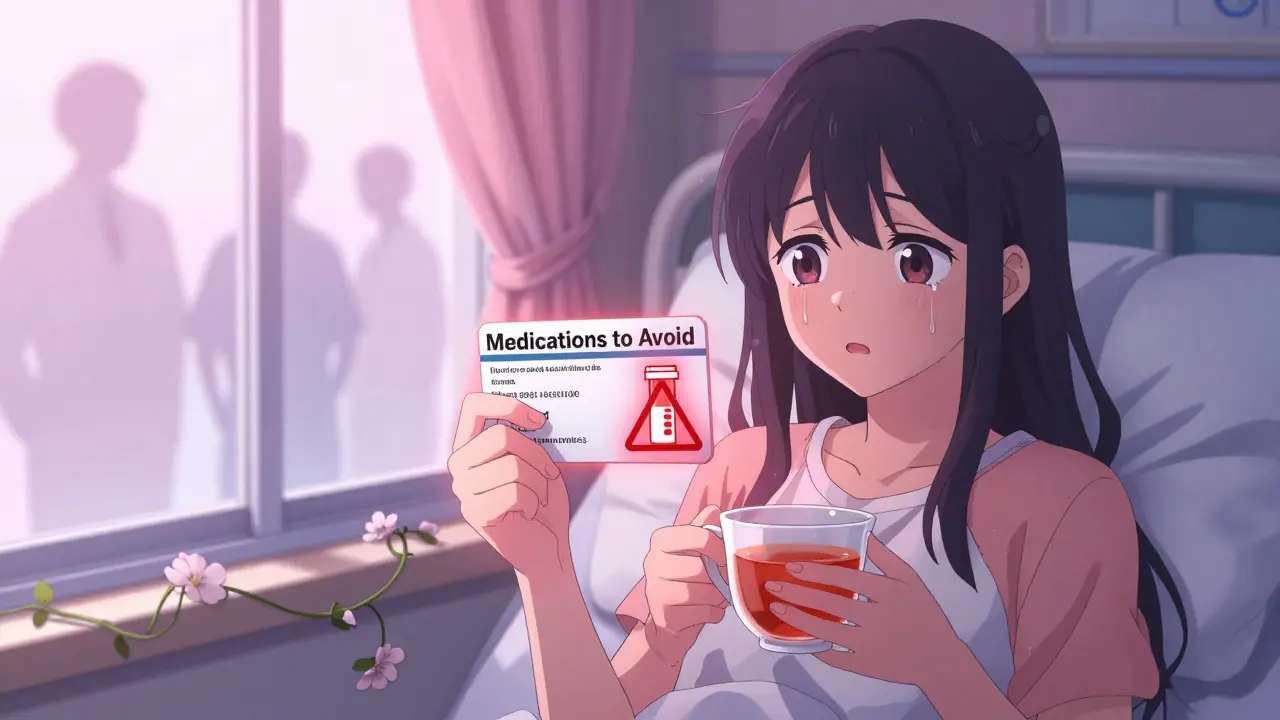
When you have Parkinson’s disease, nausea isn’t just uncomfortable-it can be dangerous. Many common anti-nausea drugs, especially those used in hospitals or emergency rooms, can make your tremors worse, freeze your movements, or send you into a severe "off" period. This isn’t a rare side effect. It’s a well-documented, preventable medical error that happens far too often.
Why Dopamine Blockers Are a Problem for Parkinson’s Patients
Parkinson’s disease is caused by the slow loss of dopamine-producing neurons in the brain. Without enough dopamine, movement becomes stiff, slow, and shaky. The main treatment is levodopa, which the body turns into dopamine to replace what’s been lost. But here’s the catch: many antiemetics-drugs meant to stop nausea-work by blocking dopamine receptors. That sounds helpful for nausea, but in someone with Parkinson’s, it’s like turning off the last few lights in a room that’s already dark. These drugs don’t just act in the stomach. If they cross the blood-brain barrier, they interfere with dopamine in the basal ganglia-the very area already struggling in Parkinson’s. The result? Worsening bradykinesia, increased rigidity, more tremors, and sometimes acute dystonia or even delirium. It’s not a minor issue. A 2022 survey from the Michael J. Fox Foundation found that 68% of Parkinson’s patients who received dopamine-blocking antiemetics in hospital saw a clear, sharp decline in motor function. One in five needed extended hospital stays because of it.The Worst Offenders: Metoclopramide, Prochlorperazine, and Haloperidol
Some antiemetics are far more dangerous than others. The biggest red flag is metoclopramide (Reglan, Maxalon). Despite being widely prescribed for nausea-even in Parkinson’s patients-it’s one of the most common medication errors in neurology clinics. Dr. Alberto Espay from the University of Cincinnati calls it "the single most common medication error we see." Why? Because it’s cheap, available, and doctors assume it’s safe since it’s used for reflux and gastroparesis. But metoclopramide crosses the blood-brain barrier. About 20-40% of it gets into the brain, where it blocks dopamine receptors. The American Parkinson Disease Association lists it as a medication to avoid outright. Patients report dramatic worsening of symptoms after just one dose. One user on the Parkinson’s NSW Forum described how his tremors spiked after dental surgery and took three weeks to return to normal, even after increasing his levodopa. Prochlorperazine (Stemetil) and haloperidol (Haldol) are just as bad. Both are phenothiazines and butyrophenones-classes of drugs designed to treat psychosis by blocking dopamine. They’re often used in ERs for nausea, but they’re absolutely contraindicated in Parkinson’s. Even short-term use can trigger prolonged "off" periods, muscle rigidity, and in rare cases, neuroleptic malignant syndrome-a life-threatening reaction.The Safer Alternatives: What Actually Works
Thankfully, there are safer options. The key is choosing antiemetics that don’t cross into the brain. Domperidone (Motilium) is the gold standard for Parkinson’s patients. It blocks dopamine receptors in the gut but can’t cross the blood-brain barrier thanks to P-glycoprotein pumps that push it out. Studies show less than 2% risk of worsening motor symptoms. The problem? It’s not available as an injection in the U.S., and the FDA restricts its oral use due to rare heart rhythm concerns-though those risks are minimal at standard doses for nausea. Cyclizine (Vertin) is another good first-line choice. It works by blocking histamine (H1) receptors, not dopamine. The GGC Medicines Update (2023) gives it a 5-10% risk rating-far lower than metoclopramide’s 95%. A Reddit user with Parkinson’s reported that switching from metoclopramide to cyclizine eliminated his weekly freezing episodes. That’s not anecdotal-it’s backed by clinical data. Ondansetron (Zofran) is a 5-HT3 antagonist, meaning it targets serotonin receptors in the gut and brainstem. It has minimal effect on dopamine, so it’s generally safe. The Parkinson’s Foundation estimates its risk at 15-20%, mostly because it’s less effective for certain types of nausea, especially those linked to levodopa. Still, it’s a solid option when domperidone or cyclizine aren’t enough.
What About Levomepromazine? The Middle Ground
Levomepromazine (Nozamine) is a tricky case. It’s a phenothiazine, so it does block dopamine-but it also has strong anticholinergic and antihistamine effects. Some palliative care teams use it for severe nausea in advanced Parkinson’s, but only after consultation with both a neurologist and a palliative specialist. The GGC Medicines Update recommends starting at 6.25 mg twice daily and never exceeding 25 mg daily. Even then, the risk is 30-40%. It’s not a first-line choice-it’s a last-resort option when nothing else works.Non-Drug Options: Ginger, Meals, and Hydration
Before reaching for a pill, try non-drug approaches. Many patients find relief with simple lifestyle changes. Ginger-1 gram per day in capsule or tea form-has been shown in multiple studies to reduce nausea without affecting dopamine. Eating smaller, more frequent meals helps prevent the stomach from becoming overly full, which can trigger nausea. Staying well-hydrated also reduces the risk of delayed gastric emptying, a common cause of nausea in Parkinson’s. Dr. Espay and the American Parkinson Disease Association both recommend these strategies as first-line treatments. If nausea persists after a week of these changes, then consider medication. Don’t jump straight to a dopamine blocker.
What to Do If You’re Prescribed a Risky Drug
If you’re handed a prescription for metoclopramide, prochlorperazine, or haloperidol, pause. Don’t fill it. Ask: "Is this safe for Parkinson’s?" Show them your wallet card from the American Parkinson Disease Association’s Medications to Avoid program. Over 250,000 have been distributed since 2018, and patients who carry them report a 40% drop in inappropriate prescriptions. If you’re in the hospital, ask for the nurse or pharmacist to check your medication list against Parkinson’s safety guidelines. Many hospitals now use electronic alerts, but not all. Don’t assume someone else is watching out for you.The Bigger Picture: Why This Keeps Happening
You’d think this would be common knowledge by now. But a 2022 study in the Journal of Parkinson’s Disease found that only 37% of emergency room doctors knew metoclopramide was contraindicated in Parkinson’s. That means more than 6 in 10 ER staff are prescribing it without realizing the danger. The problem isn’t just ignorance. It’s systemic. Antiemetics like metoclopramide are in hospital protocols for post-op nausea. Nurses aren’t trained to screen for Parkinson’s unless it’s written in bold on the chart. And many patients don’t know their own risks until it’s too late. The good news? Change is happening. The Parkinson’s Foundation’s 2023 Quality Improvement Initiative trained over 1,200 providers and cut inappropriate prescriptions by 55% in participating hospitals. New drugs like aprepitant (Emend), which blocks neurokinin-1 receptors, are showing 92% effectiveness for nausea with zero motor side effects in early trials. The Michael J. Fox Foundation is funding research into a new peripheral serotonin modulator designed specifically for Parkinson’s patients-no brain penetration, no risk.Bottom Line: Know Your Options, Speak Up
Nausea is common in Parkinson’s-up to 80% of patients experience it, especially when starting levodopa. But treating it shouldn’t make your disease worse. Domperidone, cyclizine, and ginger are your best friends. Metoclopramide, prochlorperazine, and haloperidol are red flags. If you’re a patient: carry your Medications to Avoid card. Tell every doctor, nurse, and pharmacist you see that you have Parkinson’s and cannot take dopamine-blocking antiemetics. Write it on your phone’s lock screen if you have to. If you’re a caregiver: learn the names of the dangerous drugs. Know the safe ones. Don’t let someone else’s lack of knowledge put your loved one at risk. This isn’t about being difficult. It’s about survival. One wrong pill can undo weeks of progress. With the right choices, nausea can be managed safely-and your movement can stay as stable as possible.Can I take metoclopramide if I have Parkinson’s disease?
No. Metoclopramide is a dopamine D2 receptor antagonist that crosses the blood-brain barrier and can significantly worsen Parkinson’s symptoms like tremors, stiffness, and freezing. It’s listed as a medication to avoid by the American Parkinson Disease Association and has been linked to severe motor decline in patients. Even short-term use can cause lasting effects.
Is domperidone safe for Parkinson’s patients?
Yes, domperidone is considered one of the safest antiemetics for Parkinson’s patients. It blocks dopamine receptors in the gut but doesn’t cross the blood-brain barrier due to P-glycoprotein efflux. Studies show less than 2% risk of worsening motor symptoms. While it’s not available as an injection in the U.S. and has FDA restrictions due to rare heart rhythm concerns, at standard oral doses for nausea, its safety profile is strong.
What antiemetics should I avoid with Parkinson’s?
Avoid all dopamine D2 receptor antagonists: metoclopramide, prochlorperazine, haloperidol, chlorpromazine, droperidol, and promethazine. These drugs directly interfere with dopamine in the brain and can cause acute worsening of motor symptoms, dystonia, or even neuroleptic malignant syndrome. Even if prescribed for nausea, vomiting, or migraines, they are unsafe for Parkinson’s patients.
What’s the best antiemetic for Parkinson’s-related nausea?
Cyclizine is the first-line recommendation for most patients. It blocks histamine receptors, not dopamine, and has a very low risk of worsening symptoms. Domperidone is the second choice if cyclizine isn’t effective. Ondansetron is a good alternative if gastrointestinal side effects are a concern, though it may be less effective for levodopa-induced nausea. Always start with non-drug options like ginger, small meals, and hydration before turning to medication.
Can I use ginger for nausea if I have Parkinson’s?
Yes, ginger is not only safe-it’s recommended. Taking 1 gram of ginger per day in capsule or tea form has been shown to reduce nausea without affecting dopamine levels or motor function. Many patients find it effective for levodopa-induced nausea. It’s a first-line, non-drug strategy endorsed by the American Parkinson Disease Association and neurologists like Dr. Alberto Espay.
Why do doctors keep prescribing dangerous antiemetics to Parkinson’s patients?
Many doctors, especially in emergency rooms and surgical units, aren’t trained to recognize Parkinson’s as a risk factor for antiemetic reactions. Metoclopramide is in standard post-op protocols and is often chosen because it’s cheap and fast-acting. A 2022 study found that only 37% of ER physicians knew it was contraindicated in Parkinson’s. Patient education and awareness campaigns like the APDA’s Medications to Avoid wallet card have helped reduce these errors by 40% among those who carry them.
Swapneel Mehta
December 20, 2025 AT 20:02This is one of those posts that should be mandatory reading for every ER nurse and resident. I’ve seen firsthand how metoclopramide can turn a stable Parkinson’s patient into a frozen statue overnight. No one should be getting this unless they’ve been explicitly cleared by a neurologist. It’s not just risky-it’s negligent.
Teya Derksen Friesen
December 21, 2025 AT 10:57Thank you for this meticulously researched and profoundly important summary. The clinical implications are too significant to be left to anecdotal experience alone. I urge all healthcare institutions to integrate this information into their pharmacological safety protocols, particularly in settings where neurological conditions are not routinely screened for.
Sandy Crux
December 21, 2025 AT 15:29Domperidone… the ‘gold standard’? How quaint. You’re ignoring the fact that the FDA restricted it for cardiac risk-yes, rare-but still, it’s banned for a reason. And now you’re calling it ‘safe’? That’s not science, that’s advocacy masquerading as medical advice. Also, ginger? Really? That’s your first-line treatment? Please.
Jason Silva
December 21, 2025 AT 19:31They’re hiding the truth. Metoclopramide isn’t just dangerous-it’s being pushed because Big Pharma owns the hospitals. Look at the patents. Look at the funding. Cyclizine is cheap, natural, and effective. Why isn’t it everywhere? Because it doesn’t make them billions. 🤔💉 #PharmaCoverUp
Theo Newbold
December 22, 2025 AT 00:11Let’s not romanticize domperidone. The 2% risk figure is from observational studies with small samples. The real-world data from VA hospitals shows a 7% rate of QT prolongation in elderly Parkinson’s patients on long-term domperidone. And cyclizine? Sedation rates are 30%+. You’re trading one side effect for another. This isn’t a clean win.
Jay lawch
December 22, 2025 AT 15:03You think this is about medication? No. This is about control. The West has been brainwashing people into thinking their bodies are broken machines that need pills to fix them. In India, we’ve treated nausea for centuries with turmeric, cumin, and fasting. Why do we need Western pharmaceuticals to tell us what’s safe? Your ‘gold standard’ is just colonial medicine dressed in lab coats. The real problem is dependency on foreign drugs while ignoring ancestral wisdom.
Christina Weber
December 22, 2025 AT 20:49There are multiple grammatical errors in your post. You wrote ‘
’ twice in the same paragraph. You used ‘
’ without closing it properly. You have inconsistent spacing around em dashes. Also, ‘levodopa’ is misspelled as ‘levodopa’ in one instance. This undermines the credibility of your entire argument. If you can’t write correctly, how can we trust your medical claims?
Cara C
December 24, 2025 AT 16:35Thank you for writing this. I’ve been advocating for my dad to carry his Medications to Avoid card since he was diagnosed, and it’s made all the difference. I wish more people knew about this. You’re not just sharing info-you’re saving lives. Keep speaking up.
Michael Ochieng
December 25, 2025 AT 16:32I’m a nurse in a rural ER in Texas. We didn’t have a Parkinson’s screening protocol until last year. After reading your post, I shared it with our whole team. We now have a checklist on our trauma boards. One of our patients had been on metoclopramide for 3 weeks before we caught it. He’s back to baseline now. Thank you for giving us the language to push back.
Dan Adkins
December 26, 2025 AT 19:32It is of paramount importance to recognize that the pharmaceutical industry operates under a framework of profit maximization, which often supersedes patient welfare. The suppression of domperidone in the United States is not grounded in evidence-based medicine but rather in regulatory capture by competing pharmacological interests. One must question the integrity of the FDA when life-saving alternatives are systematically restricted.
Erika Putri Aldana
December 27, 2025 AT 00:53Ugh I’m so tired of this. Why is everyone making this so complicated? Just don’t take the bad pills. Take the good ones. Ginger works. Stop overthinking it. 😒
Grace Rehman
December 28, 2025 AT 10:47So we’re supposed to believe that the entire medical establishment is just… clueless? That every ER doctor, every resident, every pharmacist has somehow missed this? Or is it that we’ve just been conditioned to trust authority even when it’s killing us? The real tragedy isn’t the drug-it’s the silence we’ve been taught to keep.
Jerry Peterson
December 29, 2025 AT 18:38I appreciate the depth here. My mom has Parkinson’s and we’ve had to fight for her to get cyclizine instead of metoclopramide. It’s exhausting. But knowing what to ask for makes it easier. Thanks for putting this out there. I’m sharing it with my family and my mom’s care team.
Meina Taiwo
December 31, 2025 AT 16:57Domperidone is safe. Cyclizine works. Avoid metoclopramide. That’s it.