

Medication-induced anaphylaxis doesn’t wait for a good time. It strikes fast-sometimes within seconds of taking a pill, getting an injection, or even during an IV drip. You might feel fine one moment, then suddenly struggle to breathe, your throat swells, or your body goes cold and shaky. This isn’t a panic attack. This is anaphylaxis, and epinephrine is the only thing that can save your life. Delaying it by even a few minutes can be deadly.
What Happens During a Medication-Induced Anaphylactic Reaction?
Anaphylaxis from drugs like penicillin, NSAIDs, chemotherapy, or contrast dye isn’t just a bad rash. It’s your immune system going into overdrive, flooding your body with chemicals that cause blood vessels to leak, airways to close, and your heart to struggle. Symptoms can come on fast and mix together: wheezing, swelling of the tongue or throat, a hoarse voice, dizziness, or sudden collapse. About 1 in 5 people won’t even break out in hives or get a red rash-so if you’re having trouble breathing or feel like you’re going to pass out, don’t wait for skin symptoms to appear.
Medications are responsible for 20-30% of all anaphylaxis cases in hospitals, and antibiotics alone cause nearly half of all fatal cases in the U.S. The reaction doesn’t care if you’ve taken the drug before without issue. One dose can be fine. The next can kill.
The First Step: Lay Them Flat-No Exceptions
When someone shows signs of anaphylaxis, the first thing you do is lay them flat on their back. Not sitting up. Not standing. Not leaning against a wall. Flat. This isn’t optional. Standing or even sitting upright during anaphylaxis can cause blood pressure to crash, leading to sudden cardiac arrest. Studies show 15-20% of deaths happen because the person was allowed to stand or walk after symptoms started.
There are two exceptions:
- If they’re having trouble breathing, let them sit up with legs stretched out-this helps them get more air.
- If they’re unconscious or pregnant, roll them onto their left side. This keeps the airway open and prevents the baby from pressing on major blood vessels.
- For young children, hold them flat in your arms. Don’t let them sit upright.
Getting the position right matters as much as giving the right medicine. Most bystanders get this wrong. In one study, 55% of people tried to help by letting the person sit or stand-exactly what they shouldn’t do.
The Lifesaver: Epinephrine Injection
Epinephrine is the only treatment that reverses the life-threatening parts of anaphylaxis. Antihistamines like Benadryl? They help with itching or hives-but they do nothing for breathing or blood pressure. Steroids? They’re for preventing a second wave, not saving someone right now.
Inject epinephrine into the outer thigh, through clothing if needed. Use the auto-injector you’ve been told to carry: EpiPen, Auvi-Q, or Adrenaclick. The dose is 0.3 mg for adults and children over 30 kg. For kids between 15-30 kg, use the 0.15 mg version. Don’t wait to confirm the diagnosis. If you’re unsure, give it. Research shows 70% of fatal cases involved delayed or missed epinephrine.
Hold the injector against the thigh for 10 full seconds. Many people pull it away too soon. You need that full time to deliver the full dose into the muscle. Injecting into fat instead of muscle reduces effectiveness by up to 40%.

Call for Help-Then Give a Second Dose If Needed
Call emergency services immediately after giving the first shot. In South Africa, dial 10177. In the U.S., call 911. Don’t wait to see if symptoms improve. Even if they seem better, the reaction can come back worse-called a biphasic reaction. That happens in up to 20% of cases, sometimes hours later.
If symptoms don’t improve after 5 minutes, or if they get worse, give a second dose of epinephrine. Some guidelines say you can give another dose every 5-10 minutes if needed. There’s no maximum limit. It’s better to give too much than too little. The risk of side effects like a racing heart is far lower than the risk of dying.
Studies show that in hospitals, it takes an average of 8.2 minutes to give epinephrine-even though the goal is under 5 minutes. In homes and public places, delays are even longer. Don’t be part of that statistic.
What Not to Do
Don’t give antihistamines instead of epinephrine. They’re not a substitute.
Don’t try to make them drink water or eat something. They might choke.
Don’t wait to see if it’s “just a bad reaction.” Anaphylaxis doesn’t get better on its own.
Don’t assume it’s asthma or a panic attack. Many people die because someone mistakes it for something else.
Don’t leave them alone. Even if they seem okay after the shot, they need to be monitored. Emergency responders will take them to the hospital for at least 4 hours. For medication-induced cases, some experts now recommend 6-8 hours because the risk of a second wave is higher than with food allergies.
Special Cases: Beta-Blockers and Obesity
If the person takes beta-blockers-for high blood pressure, heart issues, or migraines-epinephrine may not work as well. These drugs block the effects of adrenaline. In these cases, higher doses may be needed. Some patients require two or even three doses before symptoms improve.
Obesity also changes how epinephrine works. Studies show that people with a BMI over 30 often need more epinephrine to reach the right blood levels. While current auto-injectors are dosed by weight, new research is looking at using BMI instead. Until then, stick to the standard doses-but be ready to give a second shot sooner if needed.
Prevention and Preparedness
If you’ve had a reaction before, get an allergy action plan from your doctor. Carry two epinephrine auto-injectors at all times. One might not be enough. Store them at room temperature-don’t leave them in a hot car or freezing bag.
Teach your family, coworkers, and friends how to use the injector. Most people who survive anaphylaxis are saved by someone else, not themselves. The 2023 FAACT survey found that 68% of people with allergies carry epinephrine, but only 41% feel confident using it. Practice with a trainer device. Watch a video. Do it once a month.
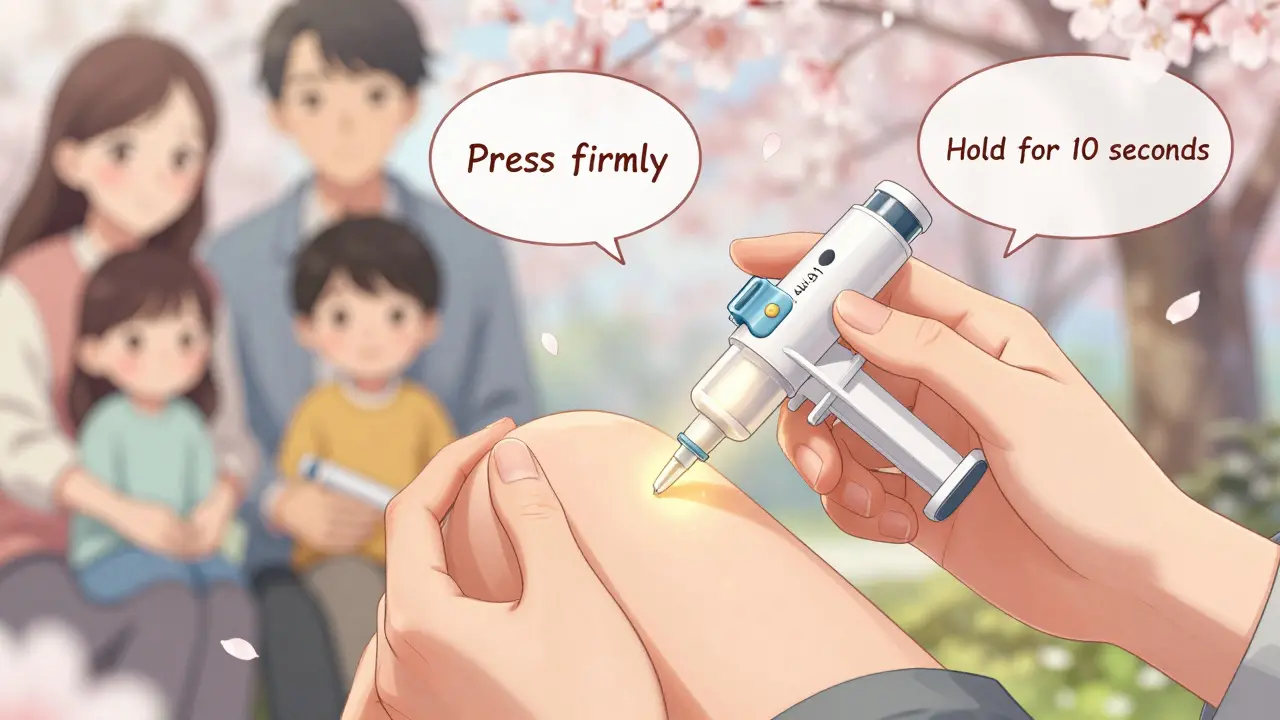
Newer auto-injectors like the Auvi-Q 4.0 give voice instructions during use. They say things like, “Press firmly against the thigh,” and “Hold for 10 seconds.” These reduce user error from 37% down to 11%.
Final Reality Check
Anaphylaxis from medication is rare-but deadly. And the biggest killer isn’t the drug. It’s hesitation. Fear of side effects. Doubt. Waiting to see if it gets worse. The data is clear: epinephrine saves lives. Its risks are tiny compared to the risk of doing nothing. In 35,000 cases, only 10 people had serious side effects from epinephrine.
If you’re ever in doubt-give the shot. Lay them flat. Call for help. Give a second shot if needed. Stay with them until paramedics arrive.
This isn’t a drill. It’s your only chance to stop a death.
Can anaphylaxis happen hours after taking a medication?
Yes. While most reactions happen within minutes, up to 20% of cases experience a second wave of symptoms-called a biphasic reaction-anywhere from 1 to 72 hours later. This is why hospital observation for at least 4 hours is mandatory. For medication-induced cases, the risk is even higher, and some guidelines now recommend 6-8 hours of monitoring.
Can I use an epinephrine auto-injector on someone else?
Yes. Epinephrine auto-injectors are designed to be used by anyone, even without medical training. If someone is having anaphylaxis and you have an injector, use it on them. The law protects bystanders who act in good faith. In South Africa and most countries, Good Samaritan laws shield you from liability when helping in an emergency.
Why not just give Benadryl or a steroid pill instead?
Benadryl and steroids don’t reverse airway swelling, low blood pressure, or shock-they only help with skin symptoms like itching or hives. In anaphylaxis, the real danger is your airway closing or your heart failing. Epinephrine is the only drug that reverses those life-threatening effects. Giving antihistamines instead of epinephrine has been linked to higher death rates.
What if I’m not sure it’s anaphylaxis?
Give the epinephrine anyway. The ASCIA First Aid Plan says: “If in doubt, give adrenaline.” Between 2015 and 2020, 35% of preventable anaphylaxis deaths happened because someone waited for confirmation. Epinephrine is safe. The worst side effect is a racing heart-which is temporary. The worst outcome of waiting? Death.
Can I reuse an epinephrine auto-injector?
No. Auto-injectors are single-use devices. Once activated, the needle is exposed and the dose is delivered. Even if you think some medicine is left, it’s not safe or effective to try to reuse it. Always replace used injectors immediately. Keep two on hand at all times.
Do I need to go to the hospital if I feel better after the shot?
Yes. Even if you feel fine, you need to be monitored. Symptoms can return without warning. The hospital will check your blood pressure, oxygen levels, and heart function. They may give you IV fluids, oxygen, or additional medications to prevent a second reaction. Leaving early puts you at risk of sudden collapse hours later.
Neil Ellis
January 22, 2026 AT 19:29Man, I wish I’d known this stuff when my cousin had that reaction at the dentist last year. She panicked, they gave her Benadryl, and she nearly coded. Epinephrine isn’t just medicine-it’s a lifeline you carry like a flashlight in a power outage. I started carrying two EpiPens in my bag after this. Not because I’m scared-but because I refuse to be the person who hesitates when someone’s gasping for air.
Hilary Miller
January 24, 2026 AT 04:15Just saved someone’s life last week with this exact protocol. Flat on the ground, epinephrine, second dose at 7 minutes. Paramedics said I did everything right. Don’t overthink it. Just act.
Malik Ronquillo
January 25, 2026 AT 00:09Why do people still think Benadryl works for anaphylaxis? Like… do you also use a Band-Aid to stop a hemorrhage? This post should be mandatory reading for every high school student. Or at least every person who owns a pharmacy.
shivani acharya
January 26, 2026 AT 00:59So let me get this straight-pharma companies make these auto-injectors so expensive so you have to buy two… and then they tell you to carry them everywhere… but your insurance won’t cover them? And now you’re telling me if I’m obese or on beta-blockers, the magic bullet might not even work? This isn’t medicine. This is a rigged game where your life depends on how much money you have and how lucky your body is.
Sarvesh CK
January 27, 2026 AT 11:23It is fascinating how cultural attitudes toward emergency intervention vary globally. In some regions, the instinct is to wait for authority, to defer to medical expertise-even when seconds count. Yet the science is unequivocal: epinephrine administered promptly by any bystander, regardless of training, dramatically increases survival. The real barrier is not biological, but psychological and sociocultural. We must reframe emergency response not as a medical act, but as a civic duty, as fundamental as calling 911 or pulling someone from a burning car. Education must shift from passive awareness to active preparedness, and community training programs should be as ubiquitous as fire extinguishers.
Brenda King
January 28, 2026 AT 21:55I’m a nurse and I still get nervous using the trainer pen 😅 I practiced with my kids every Sunday for a month. Now they can do it blindfolded. If you’re scared to use it-practice. It’s not magic. It’s just science with a needle.
Keith Helm
January 29, 2026 AT 09:13Per CDC guidelines, epinephrine should be administered intramuscularly in the anterolateral thigh. Subcutaneous administration reduces bioavailability. This is non-negotiable.
Daphne Mallari - Tolentino
January 30, 2026 AT 14:43It is regrettable that the general populace continues to conflate allergic reactions with non-life-threatening dermatological manifestations. The conflation of antihistaminic efficacy with anaphylactic intervention represents a profound and dangerous misunderstanding of immunopathophysiology. Epinephrine is not merely a therapeutic option-it is the sine qua non of survival in this context. One must question the adequacy of public health messaging when laypersons still believe that diphenhydramine is a viable alternative.
Ryan Riesterer
February 1, 2026 AT 01:12Interesting that BMI-based dosing is being studied. Pharmacokinetic studies in obese populations show reduced Vd and altered clearance of epinephrine. Standard 0.3mg may be subtherapeutic in >35 BMI. We need dosing algorithms calibrated to lean body mass, not just weight bands. Also, beta-blocker interactions are underreported in clinical guidelines-especially with non-selective agents like propranolol.
Alec Amiri
February 1, 2026 AT 19:32Bro, you’re telling me I’m supposed to inject someone with adrenaline and then just… wait? Like, what if they have a heart attack from the epinephrine? I’m not risking it. I’ll just call 911 and hope they get there before they die.
Margaret Khaemba
February 3, 2026 AT 17:24My dad’s on beta-blockers and has an EpiPen. He says he’s scared to use it because he’s worried it’ll make his heart race too much. I showed him the stats-10 side effects out of 35,000 cases. He still won’t carry it. I’m just… heartbroken.